
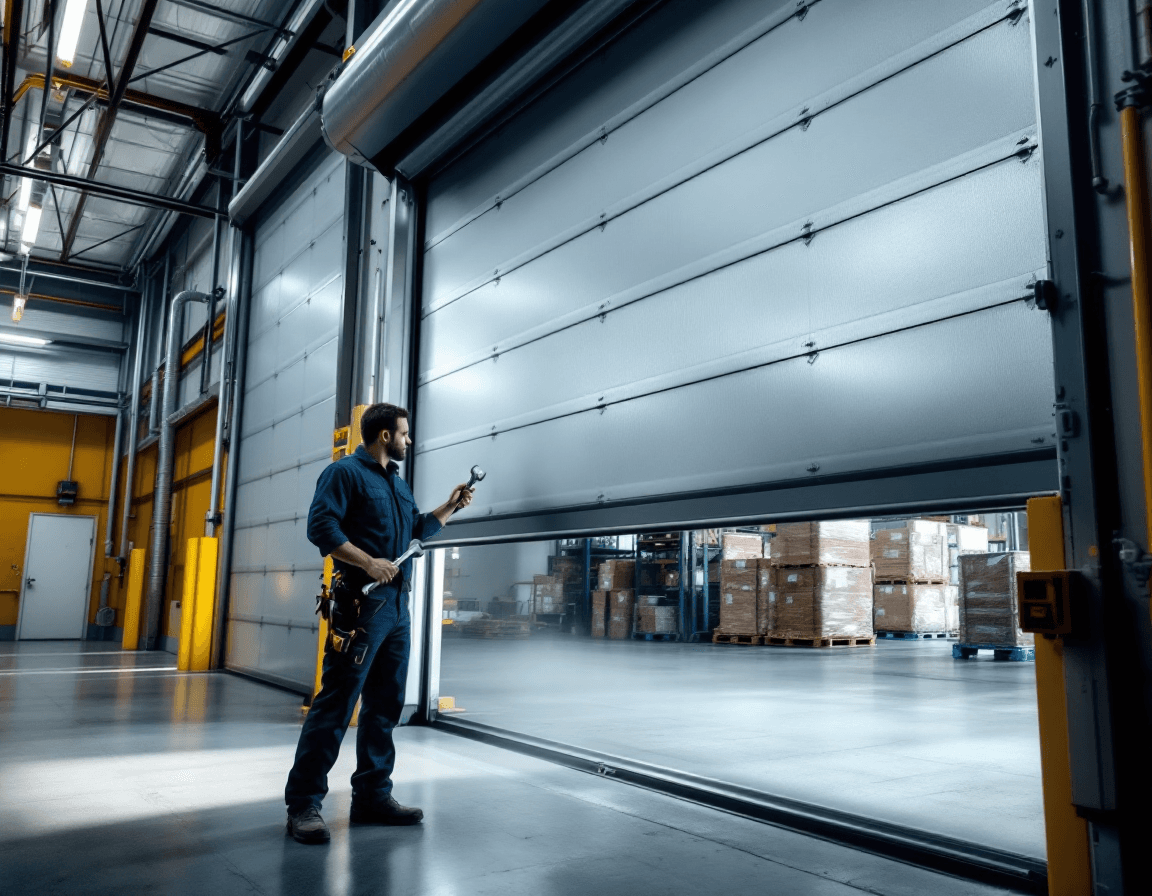
Commercial overhead door repair in Tukwila, WA is a different job from fixing a residential garage door, and the difference shows up the moment a loading dock goes quiet. Tukwila sits in the middle of one of the busiest freight corridors in the Puget Sound region, with warehouses, distribution spaces, and light manufacturing clustered along the arterials that link to I-5, I-405, and SR-518. When a dock door stops, trucks back up, drivers wait, and a shift that was supposed to move pallets starts losing money by the hour. Seattle Garage Door Fix handles sectional overhead doors, rolling steel doors, commercial operators, and preventive maintenance for businesses across the area, and our technicians plan every visit around getting your opening usable again as quickly as safety allows.
Facility managers in Tukwila usually call us from a few familiar situations: a door that will not close fully at the end of a shift, a rolling steel shutter that has come off its guide tracks, or an operator that clicks and then does nothing. Some calls come after a forklift clips a bottom section during a rushed morning run, and others come from a team that has noticed the door taking longer and longer to cycle. Each of these has a different cause and a different urgency level, so we start by understanding how your building uses its openings before recommending any work. That approach keeps repairs focused on what actually limits your operation rather than on replacing parts that still have service life left.
Because commercial doors are heavy, high-cycle equipment, the right repair decision depends on more than a quick look at the panels. We consider the door type, the age and condition of the springs and drums, the controls and safety sensors, and the surrounding structure such as the header, jamb, and floor slab. This page explains how we think through those factors for Tukwila businesses, which warning signs deserve attention, and how a preventive maintenance plan can keep your docks running through the wet months when a Pacific Northwest winter tests every component. If your door is down right now, call (888) 799-3819 and tell us what you are seeing.
Why Tukwila Dock Doors Work Harder Than Most
A dock door in a busy Tukwila facility may open and close dozens or even hundreds of times on a single working day, depending on the operation. Each cycle flexes the springs, pulls on the cables or lift chains, and asks the motor and controls to start and stop under load. Residential doors are designed for a much lighter schedule, which is why a commercial opening that works fine for a few years in a quiet setting can wear out far sooner once it is tied into a full-time distribution routine. Understanding this cycle count is the first step in choosing the right repair or upgrade.
Tukwila's industrial zones also bring their own pressures. Trucks maneuver in tight yards, trailers sometimes creep against the bottom bar while a driver is still positioning the dock leveler, and pallet jacks and forklifts move constantly near the openings. Vibration from heavy traffic on nearby arterials can loosen fasteners over time, and the constant flow of freight means the door is rarely given a quiet moment for lubrication or inspection. We see more worn hinges, stretched cables, and misaligned tracks on doors in these environments than on doors in low-traffic service bays.
Many businesses in the area also run mixed schedules that include early morning receiving, midday restocking, and late evening shipping. A door that is reliable at 8 a.m. may behave differently after an hour of repeated cycling when the motor heats up or a roller begins to bind. Our technicians often run a door through several full cycles while watching the track, the panel joints, and the operator's response, because intermittent faults are some of the hardest to diagnose from a single inspection. Good repair work in a setting like this means testing under realistic conditions rather than assuming everything is fine because the door moved once.
Warning Signs Your Commercial Opening Is Losing Ground
Most commercial door failures announce themselves well before the door stops completely. The trick is recognizing the early signals and scheduling service before a minor noise becomes a dead dock during a peak receiving window. Operators and facility staff are often the first to notice changes, since they hear the door every day and know how it normally sounds. When something shifts, it is worth a call even if the door still works.
Here are the signs we most often see on Tukwila commercial doors that deserve prompt attention:
- The door hesitates, stops partway, or reverses without a clear obstruction in the opening.
- Panels or sections make grinding, popping, or scraping sounds that were not present a few months ago.
- The door sits crooked, rises unevenly, or shows a visible gap along one side of the track.
- Rolling steel curtains drift sideways, slap against the guide channels, or leave the track at the bottom of the travel.
- The operator runs longer than usual before reaching the fully open or fully closed position.
- Safety sensors or edge detectors trigger inconsistently, especially in wet or dusty conditions.
Any one of these signs can have several causes, and some of them involve high-tension components that should only be handled by trained professionals. If you notice a combination of symptoms, or if the door has taken a hit recently, treat it as a priority rather than waiting for a convenient day. Documenting when the problem appears, whether it happens on cold mornings, during heavy rain, or after a particular shift, gives our technicians useful clues before they even arrive.
Sectional Overhead Doors: Track, Rollers, and Panel Alignment
Sectional overhead doors are the most common style on loading docks and warehouse bays across the region. They consist of horizontal panels hinged together that travel up vertical tracks and then curve onto horizontal tracks overhead. Because the weight of the entire door is carried through rollers and tracks, even a small misalignment can cause uneven loading that accelerates wear. Many of the calls we receive in Tukwila start with a door that looks fine from the outside but is binding somewhere along the track.
Common sectional door problems include worn or cracked rollers, bent track sections, loose track brackets, and panel joints that have shifted out of square. Rollers that have flattened or cracked will chatter and drag, and they can pull the panel off line if one side is worn more than the other. Track brackets that were fastened into aging masonry or steel framing can loosen over years of cycling, especially in buildings that have experienced seasonal movement. A technician who checks the track plumb, level, and square to the opening can often correct several issues in one visit.
Panel replacement is sometimes necessary, particularly after impact damage, but it is not always the first answer. We look at whether a single section is cracked through, whether the insulation core has separated, or whether the panel is simply out of alignment because of a track problem. Replacing a panel without correcting the track can leave you with a new section that is quickly stressed again. When a full section must be swapped, we match the profile, thickness, and hinge style so the door continues to fold and seal properly.
Rolling Steel Doors That Jam, Bind, or Leave the Track
Rolling steel doors are common in warehouses, storefronts, and service entrances around Tukwila because they coil into a compact housing and provide strong security when closed. They differ from sectional doors in that the curtain is made of interlocking slats that wrap around a barrel above the opening, and it runs in side guides rather than on rollers. The mechanics are robust, but the guides, slats, and barrel can all fall out of step if the door is struck, neglected, or subjected to uneven tension. A rolling steel door that has come off its track is a serious safety concern, not something to force back into place.
When a rolling steel curtain jams, the first priority is keeping people clear of the opening and the barrel area. Many jams come from debris in the guide channels, bent slats from a previous impact, or a shifted guide that is pinching the curtain. Technicians inspect the slats for kinks, check the guide angles and fasteners, and verify that the curtain is seated evenly on both sides before the operator is tested. In some cases the barrel or counterbalance must be adjusted, and that work requires proper tension handling and should be performed only by licensed professionals.
Because rolling steel doors often serve as security barriers, we also pay attention to lock and latch components when we service them. Bottom bars, locking hardware, and safety edges all affect how the door seats and how reliably it can be secured at closing time. If your rolling door has been slow to close or does not latch cleanly, the issue may be in the guides rather than the lock itself, and a targeted inspection will save time and unnecessary parts.
Commercial Operators and Controls: When the Motor Quits
Commercial operators are the motors that lift and lower heavy doors on a schedule that would overwhelm a residential unit. They are paired with control panels, limit switches, safety reversing devices, and in many buildings, integration with dock equipment or access systems. When an operator fails, the symptoms can range from a complete lack of response to a door that lifts only partway before stopping. Diagnosing the cause requires separating mechanical problems from electrical ones, which is why we test both before recommending a repair.
Operator failures often trace back to a few predictable sources. Limit settings can drift, causing the door to stop short or overrun its travel. Contactors and relays wear out after long service, and moisture or dust can corrode terminals in buildings where the control panel is exposed to the environment. Photoeye sensors may be misaligned or dirty, which prevents the door from closing even when the opening is clear. Each of these faults is fixable, but only after accurate testing confirms which component is actually responsible.
Safety devices deserve special attention. Commercial doors are required to have reversing mechanisms that stop and reverse the door when an obstruction is detected, and those systems must be tested after any repair. We never recommend bypassing safety devices to keep a door moving, even temporarily, because the risk to employees and vehicles is too high. If your operator is cycling but the safety sensors are intermittently faulting, that is a warning to address the root cause promptly.
Forklift Strikes and Damaged Sections: Triage Before You Tape It Off
Forklift impact is one of the most common causes of commercial door damage in busy facilities. A forklift tine catching a bottom panel, a pallet jack clipping a track bracket, or a trailer backing into a guide can all leave the door damaged in ways that are not immediately obvious. Some damage is cosmetic, while other damage compromises the door's ability to travel, seal, or stay secured. The best response is a calm, structured check before anyone attempts to run the door again.
If your team discovers impact damage, start by taking the door out of service and keeping people away from the opening. Do not attempt to force the door open or closed if it is bent, binding, or hanging unevenly, because that can drive a damaged panel or track deeper into the frame. Photograph the damage from several angles and note the time and any visible cause, since that information helps us prepare the right parts and crew. Then contact a repair provider who can assess the door safely and estimate the scope of work.
Here is a practical triage sequence that facility teams can follow until a technician arrives:
- Disconnect power at the operator or switch the door to manual lockout following your site's lockout procedure.
- Check the opening for people, pallets, or equipment that could shift when the door is touched.
- Look for bent tracks, displaced hinges, cracked panels, or torn curtain slats without attempting to correct them.
- Record what you see, including whether the door hangs level and whether any cables, chains, or springs appear damaged.
- Place a clear barrier or caution sign until the door is repaired and tested.
Once the door is assessed, we determine whether individual panels, track sections, or the operator need replacement, and we coordinate the work to minimize downtime. Many impact repairs can be completed in a single visit when parts are available, but complex damage involving the spring system or structural framing may require additional planning. Clear communication about what is down and what is still usable helps your team keep operations moving while repairs are underway.
Throughput Problems: When the Door Works but Holds You Back
Not every commercial door problem is a breakdown. Sometimes the door runs, but it is simply too slow to support the flow of trucks, carts, or forklifts your operation requires. A dock door that takes forty seconds to open may not seem unreasonable on paper, yet when it is cycled dozens of times per shift, that delay adds up to real lost time. Throughput issues often develop gradually, as wear, misalignment, and aging operators reduce speed without causing an outright failure.
Speed problems usually have identifiable causes. Operator capacity may no longer match the door's weight after panels were upgraded or insulation was added. Track friction increases as rollers age, and lubrication that was adequate years ago may no longer be enough under current use. In some cases, the door was installed with a speed setting that suited a lighter schedule, and adjusting it or upgrading to a faster operator can restore the pace your team expects. We evaluate these factors before proposing any change so that the door remains safe and compliant.
Throughput upgrades should also consider the surrounding workflow. Faster doors pair well with clear sightlines, well-placed sensors, and dock equipment that works in harmony with the opening. Sometimes a modest adjustment to controls or a roller upgrade produces a noticeable improvement without a full door replacement. We will tell you honestly when a full upgrade is the better investment and when targeted service will meet your goals.
Weather, Moisture, and the Pacific Northwest Factor
Western Washington's climate influences commercial doors in ways that are easy to underestimate. Long stretches of wet weather, damp mornings, and fine drizzle that lingers for days can accelerate corrosion on steel components, especially where galvanizing has been scratched or where moisture collects in track channels and hinge knuckles. Seals and weatherstripping can stiffen or crack during cold snaps and then soften again in mild, damp weather, changing how the door fits the opening from one season to the next. Buildings near the Green River and other low-lying areas may also experience higher humidity, which contributes to rust and wood-frame movement around openings.
Winter storms bring wind-driven rain that can find its way into operator housings and control enclosures if seals are compromised. We frequently find dirt, moss, and leaf debris packed into track corners on doors that sit under eaves or near landscaping. Debris restricts roller movement and can trap water against steel, starting corrosion that is invisible until the door begins to bind. A seasonal inspection that clears debris, checks drainage, and confirms that enclosures are sealed can prevent many of these problems.
Spring and fall are also good times to review how the door reacts to temperature swings. Metal expands and contracts slightly with changing temperatures, and a door that was adjusted during a warm stretch may behave differently once the weather cools. Our technicians consider these seasonal shifts when setting limits and checking balance, aiming for reliable performance across the full range of conditions your building experiences. For high-cycle openings, a schedule that accounts for the Pacific Northwest rhythm of the year often prevents emergency calls during the busiest months.
Preventive Maintenance Contracts Built Around Your Shifts
A preventive maintenance contract gives your facility a planned schedule of inspections, adjustments, lubrication, and minor repairs before small issues become costly downtime. For businesses in Tukwila, the value is especially clear during peak seasons, when a single dead dock can ripple through an entire week of shipments. Contract work is scheduled around your operating hours so technicians can complete inspections without disrupting receiving or shipping. Each visit produces a clear record of door condition, which helps you plan budgets and spot trends early.
A typical commercial maintenance visit includes checking track alignment, roller condition, hinge and bracket tightness, panel seating, and the operator's performance under load. Safety devices are tested for correct reversing behavior, and controls are inspected for loose wiring, worn contactors, and signs of moisture intrusion. Rolling steel doors receive attention to guide alignment, slat condition, and barrel operation. Any high-tension spring or cable work identified during inspection is flagged for licensed repair scheduling rather than handled informally.
We tailor contract scope to the number of openings, cycle frequency, and environment at your facility. A distribution center running around the clock may need more frequent visits than a light assembly site that opens its docks only during standard business hours. Preventive maintenance is not one-size-fits-all, and we will recommend a schedule that matches your real usage rather than a generic template. Many clients find that the savings come less from avoiding a single repair and more from keeping every opening running reliably through the year.
Safety Rules for Your Facility Team and What We Leave to Licensed Techs
Safety is central to every commercial door repair. Torsion springs, extension springs, cables, and drums store enormous mechanical energy, and improper handling can cause serious injury or property damage. For that reason, these components should only be inspected, adjusted, or replaced by licensed professionals who have the right tools and training. Facility staff should never attempt to wind springs, release tension, or remove drums, even if a video or forum post suggests it is simple.
Facility teams can still play an important role in keeping doors safe. Keep the area around each opening clear of pallets, carts, and debris, and ensure that employees understand the door's operating controls and emergency stop procedures. Report unusual noises, visible damage, or inconsistent sensor behavior immediately, and do not allow vehicles to strike the door as a way of testing it. Lockout and tagout procedures should be followed whenever anyone works near the operator or door hardware, and maintenance records should be kept current for inspections and audits.
When repairs require technical intervention, we explain each step, outline what is being tested and why, and confirm that safety devices function correctly before returning the door to service. We believe clear communication protects both your team and our technicians. If we recommend that a component be replaced for safety reasons, we will explain the risk in plain language so you can make an informed decision about timing and budget.
Getting a Custom Commercial Quote Without Slowing Operations
Every commercial door project is different, so we provide custom quotes rather than flat rates. A proper estimate considers door type, size, cycle frequency, operator condition, access constraints, and whether the work can be done during off-hours to minimize disruption. We aim for fast turnaround on quotes because downtime costs money, and a clear, detailed proposal helps you approve repairs without unnecessary back-and-forth. Our goal is to give you options that match your timeline and budget while keeping the door safe.
To help us prepare an accurate quote, have a few details ready when you call. Note the door type if you know it, such as sectional or rolling steel, along with the approximate opening size and whether the door is powered by a commercial operator. Describe the symptom in your own words, including when it started and whether it is getting worse. If the door was damaged, photos and a brief description of the incident can speed up parts planning considerably.
Once we have the information, a technician can usually discuss likely causes, recommended repairs, and rough scheduling expectations. For urgent situations such as a fully disabled loading dock, we prioritize getting your opening assessed and stabilized so your team can plan the rest of the day. When the best fix is a planned replacement, we will say so and help you schedule it around your busiest periods. Call Seattle Garage Door Fix at (888) 799-3819 to describe your commercial door issue and request a custom quote for your Tukwila facility.