
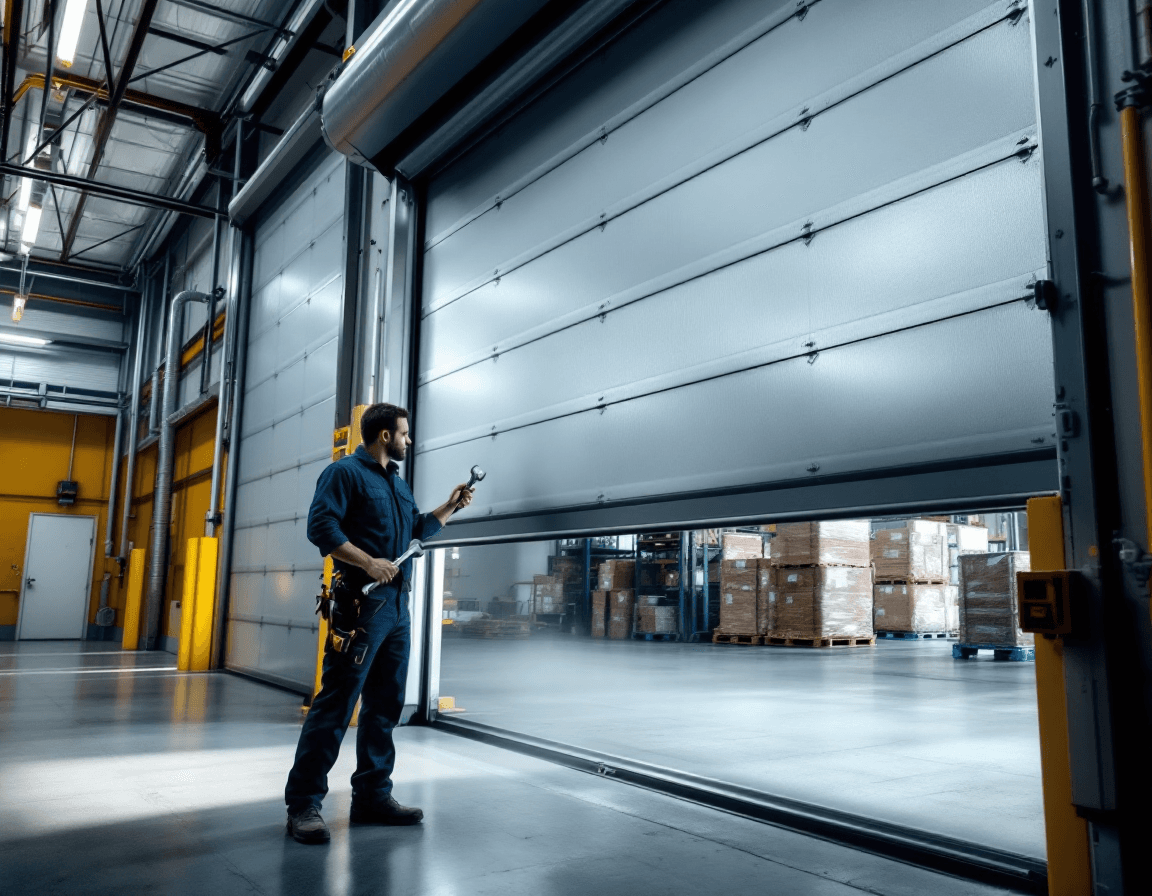
Commercial Overhead Door Repair in SeaTac, WA keeps freight, delivery, and production moving for businesses along the airport corridor, and when a loading door stops working, the cost shows up within hours. SeaTac sits in the middle of some of the busiest logistics territory in Western Washington, with warehouses, distribution centers, cargo operations, and light manufacturing packed around Sea-Tac International Airport, the Port of Seattle's industrial footprint, and the major arterials that link them to I-5 and I-405. A door that fails at 6 a.m. can hold up a full truck schedule, leave drivers idling in the yard, and push outbound orders into the next business day. Our team focuses on getting commercial doors back into service quickly while doing the work correctly the first time.
Commercial doors are a different category of equipment from the residential garage doors most people picture. They are larger, heavier, cycled far more often, and usually tied into access control, safety sensors, and building management systems. A typical loading dock door may open and close dozens of times in a single shift, and a rolling steel door at a receiving bay can see constant impact from pallet jacks and forklifts. Because of that workload, small problems such as a worn roller, a misaligned photo eye, or a sagging section tend to escalate quickly if they are ignored. Our approach treats every commercial call as a question of uptime, safety, and long-term reliability rather than a simple part swap.
Whether you manage a single warehouse bay near Angle Lake or a row of dock doors serving a larger facility near Bow Lake, this page explains what we see most often, how we diagnose problems, and how a preventive maintenance agreement can reduce emergency calls. We also explain how custom commercial quotes work, what factors affect turnaround time, and why spring and cable work should always be handled by trained, licensed professionals. If your door is down right now, call us at (888) 799-3819 and we will help you sort out the fastest safe path back to operation.
Why Loading Doors in SeaTac Face Different Wear Patterns
Doors in the SeaTac industrial corridor live a demanding life. Many of them are located on busy truck courts where trailers are backed in at all hours, and the same door may be used by carriers, contract drivers, and in-house staff with very different habits. Heavy traffic means the door's rollers, hinges, bottom seals, and track alignment take a steady beating, and wear accumulates faster than in a typical residential setting. We often find that a door which looked fine during a routine walkthrough has developed hairline cracks around a hinge or a bent track section after a few months of heavy use.
The local climate adds its own layer of stress. Western Washington winters bring long stretches of rain, cold mornings, and dampness that can linger in warehouse air, and the temperature swings between a chilly night and a warmer afternoon cause metal to expand and contract throughout the day. Moisture can also settle on steel components and bearing surfaces, encouraging surface rust that gradually weakens connections and binds moving parts. Over time, these conditions can make a door feel sluggish or cause it to bind at one side, even when the motor and controls are working perfectly.
Because so many SeaTac facilities operate around the clock, we also encourage owners to think about inspection timing. A door that is only examined after it fails often gives us less room to plan, and emergency repairs tend to cost more than scheduled work. We recommend keeping a simple log of unusual sounds, slow cycles, or intermittent reversal events, because those details help our technicians pinpoint the cause faster. Notes such as "pauses halfway up on cold mornings" or "scrapes the left track only when loaded" can save significant diagnostic time.
Sectional Overhead Door Repair for Warehouses and Loading Docks
Sectional overhead doors are the most common choice for many warehouses and dock positions because they stack neatly overhead, open a large clear span, and can be fitted with insulated panels and vision lites. Their strength depends on the coordination of many moving parts: panels, hinges, rollers, track sections, counterbalance springs, cables, and the operator. When one component is out of spec, the entire system can feel off, and a technician has to look at the door as a complete assembly rather than a single broken piece.
Common sectional door problems we address include panels that have separated at the hinges, rollers that have worn flat or come out of their track, bottom weather seals that have torn away and let in water and cold air, and track sections that have shifted out of plumb. Some doors develop a noticeable racking condition in which one side lags behind the other, which can strain the operator and the drive components. Our technicians measure track alignment, check the squareness of the door opening, and verify that the panels travel smoothly before we sign off on any repair.
Repair versus replacement is an important conversation for commercial owners. A single damaged panel or a set of worn rollers is usually a sensible repair, but an aging door with repeated failures, extensive corrosion, or structural fatigue may be more economical to replace. We provide candid recommendations based on the door's condition and the operating demands of your facility, and we will explain the tradeoffs in plain language so you can plan budgets and schedules without guesswork. Any spring or cable work on a sectional door should be performed only by trained, licensed technicians, because the tension stored in these components is substantial and mistakes can cause serious injury.
Rolling Steel Doors That Jam, Bind, or Jump Track
Rolling steel doors are a staple of commercial and industrial buildings because they coil into a compact barrel above the opening and handle high-impact environments well. They are common at receiving bays, storage areas, and street-facing service entrances where space is limited and security matters. Because the door curtain is made from interlocking slats that wind around a barrel, jams usually have a few typical causes, including slats that have shifted in their guides, debris lodged in the track, or a bent bottom bar that catches on the guide rail.
When a rolling steel door jumps its track, the damage can spread quickly if the door keeps running. We look first for bent guide sections, loose bolts on the track brackets, and slats that have been pushed out of their interlocks. If the curtain has been twisted, we check the barrel, the brake assembly, and the shaft alignment before attempting to reseat anything. Forcing a door back into its guides without inspecting the underlying cause can turn a manageable repair into a costly replacement of slats or guides.
Many owners ask whether a jammed rolling door can be "just forced" open for the day. In most situations we advise against it. A door that is binding under load may be hiding a failed spring, a damaged shaft, or a compromised brake, and continued use can make the situation worse. The safer approach is to secure the opening, document the problem, and let a technician restore proper tracking. Our crews can usually arrange a same-day or next-available visit for commercial jobs, and we will explain what must be done before the door returns to regular service.
Diagnosing Commercial Operator Failures and Control Faults
Commercial operators are the motors and drive systems that open and close heavy doors, and they are often the first suspect when a door seems dead. In practice, many failures are not in the motor at all. They involve safety sensors that are misaligned, control panels that have lost power, limit settings that have drifted, or wiring damaged by repeated flexing and vibration. A careful diagnosis starts with the simple questions: Is power reaching the operator? Are the safety devices clear and aligned? Are the controls receiving the right signal from the button station, card reader, or building system?
Modern commercial operators often include monitored entrapment protection, which is designed to stop or reverse the door if something blocks its path. Those protective features are important, and they should never be bypassed or disabled to get a door moving. We test the photo eyes, edge sensors, and reversing circuits as part of every operator service call, because a door that will not close may be correctly responding to an obstruction that someone cannot see. Industry guidance on entrapment protection, including the standards commonly referenced for automatic doors, is worth reviewing with your facility manager when planning upgrades.
Here are signs that point toward an operator or control issue rather than a mechanical problem:
- The door hums or clicks but does not move, which can indicate a motor, brake, or limit issue.
- The door opens but reverses unexpectedly on closing, often a sensor alignment or obstruction-detection problem.
- The control panel shows error codes or flashes intermittently after rain or temperature changes.
- The door stops at an odd height each cycle, which may point to limit settings or encoder drift.
- The keypad or card reader works but the door does not respond, suggesting a relay or wiring fault.
If you notice any of these symptoms, avoid repeatedly pressing the controls, since that can overheat the motor and compound the fault. Note the time, the weather, and any recent work in the area, then call for service.
Keeping Throughput Up When the Door Is Too Slow
A door that technically works can still be a serious problem if it is too slow for your operation. Many SeaTac businesses run tight dock schedules, and a loading door that takes twice as long to cycle can create queues, delay trailer turns, and add labor cost across every shift. Slow operation often has a mechanical cause, such as worn rollers creating drag, a dirty or misaligned track, or a motor that is working harder than it should. In other cases, the door's speed settings may have been changed over time or the operator may be underpowered for the door's weight and size.
Our technicians evaluate both the mechanical condition and the operating profile of the door. We check whether the door is balanced, whether the track is clean and aligned, and whether any hardware is rubbing or binding during travel. We also review the operator's speed and force settings, since adjusting them within manufacturer and safety limits can improve cycle time without compromising protection. When a door consistently struggles, we may recommend a higher-capacity operator or a faster-cycling door, and we will explain how that choice affects safety, noise, and power requirements.
Throughput improvements are often achieved through a combination of small changes rather than one dramatic fix. Cleaning and lubricating the right components, replacing worn rollers with quality equipment, and correcting track alignment can noticeably shorten cycle times. Facilities that have recently changed their truck mix or added a second shift may also need a reassessment of their door hardware. We can help you decide whether a targeted tune-up will solve the problem or whether a broader upgrade makes more sense for your operation.
Forklift Impact Damage: Repair Sections or Replace the Door
Forklift and pallet truck impacts are among the most common causes of damage at commercial doors. A moment of misjudgment during a busy shift can bend a bottom bar, crack a panel, dent a rolling steel curtain, or knock a track section out of plumb. Because these incidents tend to be sudden, they often leave owners with a damaged door that needs prompt attention, particularly if the opening is needed for daily deliveries or emergency access.
Our assessment of impact damage focuses on structural integrity first. A dented panel that still hinges and tracks properly may be a candidate for panel replacement, while a bent section that has pulled a hinge loose or distorted a roller path may need more extensive correction. We check adjacent sections, track brackets, and the operator's reversing behavior, because impacts can affect more than the visible damage. Any repair that touches springs, cables, or shaft components must be handled by trained, licensed professionals, since those parts carry significant stored energy.
Preventing repeat impacts is often as valuable as repairing the damage. Simple measures such as bollards, dock bumpers, painted floor guides, improved lighting, and driver training can reduce strikes significantly. We are happy to discuss protective options with your facility team during a site visit, and we can recommend placement and replacement strategies that fit your traffic patterns. The goal is not only to restore the door but to keep the next incident from becoming another expensive emergency.
How the Pacific Northwest Climate Shapes Steel Door Longevity
Western Washington's climate is gentle in some ways, but it is persistently damp, and that moisture plays a major role in how commercial steel doors age. Rain and fog keep surfaces wet for long periods, and condensation can form inside insulated panels or on exposed hardware when warm interior air meets cold exterior surfaces. Over several seasons, that moisture can lead to corrosion at hinges, bearing points, and fasteners, as well as swelling or deterioration in weatherstripping and bottom seals.
Road grime and de-icing materials used on local streets and truck courts also contribute to wear. Water carries dirt, grit, and sometimes chemical residue onto door tracks and bottom edges, and that abrasive mix can accelerate wear on rollers and guides. We often see the greatest buildup in the lower track sections and at the threshold, where debris collects and gets pressed into the seal each time the door closes. Regular cleaning and inspection of these areas can extend the life of components and keep the door operating smoothly through the wet months.
Temperature swings are another factor. Metal expands in the heat of afternoon sun and contracts overnight, and while those changes are small on any single cycle, they add up over thousands of operations. Loose fasteners, shifting brackets, and drifting limit settings can result from this constant movement. Seasonal checkups, ideally before the wettest part of the year, give technicians a chance to tighten hardware, check balance, verify sensor alignment, and address corrosion while it is still manageable.
Preventive Maintenance Agreements That Protect Uptime
A preventive maintenance agreement is one of the most practical tools a commercial facility can use to avoid unplanned downtime. Instead of waiting for a door to fail during a peak shipping window, the agreement schedules regular inspections, lubrication, adjustments, and safety testing on a timeline that fits your operation. Our maintenance programs are designed around the realities of commercial sites, including after-hours scheduling, coordination with your receiving team, and documentation you can share with management, insurers, or auditors.
A typical service visit may include checking and adjusting track alignment, inspecting rollers and hinges, examining bottom seals and weatherstripping, testing photo eyes and edge sensors, verifying operator limits and reversing behavior, and reviewing the condition of cables and springs by a licensed technician. For rolling steel doors, we also inspect guides, brake components, and the curtain for wear or distortion. The goal is to catch small problems early and keep the door performing as designed.
Facilities that benefit most from an agreement often share a few characteristics:
- Multiple dock doors or rolling doors that must remain operational during extended shifts.
- Facilities with high cycle counts, heavy forklift traffic, or frequent truck turnover.
- Operations where a single day of downtime creates major delivery, labor, or customer penalties.
- Sites that want predictable budgeting rather than emergency pricing after a breakdown.
- Owners who need documented inspection records for internal safety programs.
We will work with your team to define the scope, frequency, and response expectations that make sense for your building. The agreement can be adjusted as your equipment ages or your operating needs change.
Custom Commercial Quotes and Fast Turnaround
Every commercial job is different, so we provide custom quotes rather than fixed prices for most projects. The final number depends on the door type, size, age, the condition of supporting components, the accessibility of the opening, the operator and controls involved, and whether the work can be scheduled during regular hours or must happen overnight. A rolling steel curtain with a damaged barrel will be priced very differently from a sectional door that needs a single panel and a sensor realignment, and a site with restricted truck access may require additional planning.
To help us prepare an accurate estimate, it helps to have a few details ready when you call. Note the door manufacturer and model if you know them, the approximate width and height of the opening, the operator brand and any visible control panel markings, and a description of the symptoms and when they started. Photos of the damage, track, or control panel are also helpful, as long as the door is safely secured and no one is working near moving parts. This information lets our team arrange the right parts and crew on the first visit.
Turnaround time matters, and we plan around it. For urgent downtime we prioritize same-day assessment where possible, and we often bring common components on the truck to reduce the number of return trips. When special parts are required, we will tell you the expected lead time and discuss temporary measures that can keep your operation moving, such as securing an alternate opening or adjusting dock scheduling. Our goal is always to give you a clear timeline and an honest recommendation rather than a guess.
Safety Standards, Spring Work, and Qualified Technicians
Commercial doors store serious mechanical energy, and that energy is the reason spring and cable work must be left to trained, licensed professionals. Torsion springs and extension springs under load can cause severe injury if they are released unexpectedly, and cables under tension can whip or snap. Improvised repairs using household tools, unrated hardware, or guesswork are dangerous, and they can also void warranties and create liability for the building owner. Any repair involving springs, shafts, drums, or cables should be scheduled with a qualified technician who has the right equipment and training.
Safety also extends to everyday operation. Facilities should keep pedestrians and forklift traffic clear of door travel paths, train staff not to override sensors or lock controls in the open position, and report unusual noises, slipping curtains, or uneven movement immediately. Clear signage and a simple written procedure for shutting down a faulty door can prevent a bad situation from getting worse. If a door falls, leans, or behaves unpredictably, the area should be cordoned off until a technician confirms it is safe.
Our technicians follow established practices for inspection and repair, and we will explain each step of the job so you understand what was done and why. We do not recommend DIY spring adjustments, and we will decline work that we believe cannot be performed safely on site. When we recommend replacement of a high-cycle spring or a worn cable, we explain the reasoning in detail so your team can make an informed decision about timing and budget.
Scheduling Your Commercial Door Service in SeaTac
Getting a commercial door back into service starts with a single phone call, and the sooner we hear about the problem, the more options we usually have. Whether the issue is a warehouse bay that will not open, a rolling steel door stuck in its track, an operator that has stopped responding, or a series of dock doors that feel slower each week, we will ask focused questions and help you decide on the right next step. For properties throughout SeaTac, including the areas near Angle Lake, McMicken Heights, and Bow Lake, we coordinate visits with facility managers and receiving teams to minimize disruption.
We serve customers across the 98188 and 98198 ZIP codes and across the broader Seattle and Western Washington region, and we are familiar with the access challenges that come with busy truck courts, gated yards, and shared loading areas. If your site requires after-hours work, badge access, insurance certificates, or specific documentation for safety or compliance records, let us know at the start so we can plan accordingly. We are licensed, bonded, and insured, and we are glad to provide details about our credentials for your vendor paperwork.
Whether you need an urgent repair today or a preventive maintenance agreement to protect your schedule next year, our team is ready to help. Call (888) 799-3819 to describe your door, your symptoms, and your timeline, and we will guide you toward the fastest safe path back to full operation.