
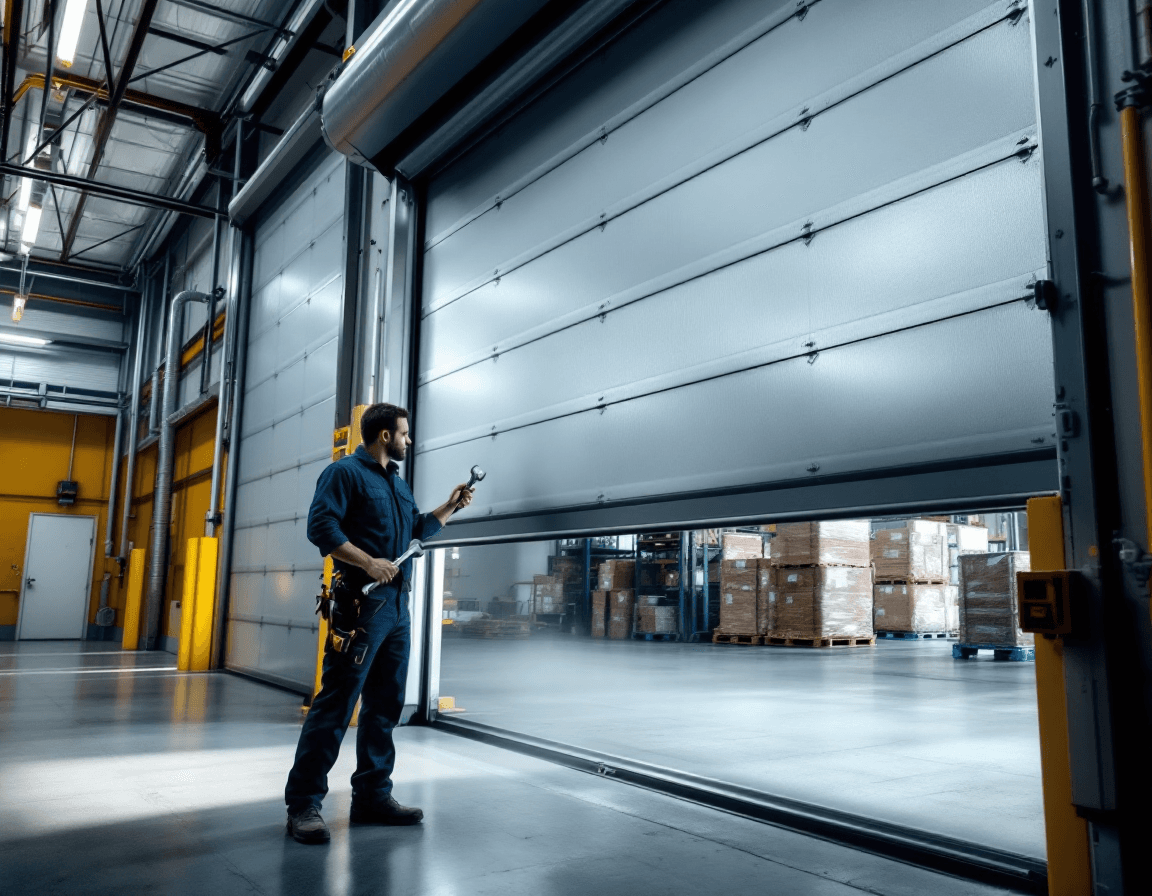
Commercial Overhead Door Repair in Normandy Park, WA is a different job from fixing a garage door at a family home, and the difference shows up the moment a loading dock goes quiet. A stalled warehouse door can stop inbound freight, hold up outbound trucks, and leave a crew standing outside with nowhere to work. Our technicians serve Normandy Park and the surrounding South King County communities with the understanding that a commercial door is a production tool, not just a building feature. Speed matters, but so does getting the repair right the first time.
Normandy Park sits along the Puget Sound shoreline, with the Marine View area and the Normandy Park Cove shaping the local character of the city. Businesses here range from small trade contractors and service shops to light-industrial tenants and property managers who look after multi-unit buildings. Each of those operations depends on its doors in a slightly different way, so a useful repair begins with knowing how the door is used, how often it cycles, and what happens to your schedule when it fails. This page explains the common problems we see, how we approach them, and how a preventive maintenance plan can keep surprises off your calendar.
Every commercial job we take begins with a conversation about your operation, followed by an on-site inspection and a written custom quote. We do not promise prices we have not measured, because a rolling steel curtain, a twelve-foot sectional panel set, and a dock leveler-adjacent operator each carry very different parts and labor requirements. What we do promise is a direct assessment, a clear explanation of options, and a turnaround plan built around your busiest hours. If your door is currently down, call (888) 799-3819 and describe what you are seeing.
Why Normandy Park Loading Docks Wear Differently
Doors in a coastal city take a steady beating from moisture, and the Normandy Park area is no exception. Puget Sound air carries fine salt and humidity, and the frequent winter rain means metal components spend long stretches damp before drying out in intermittent sun. Over time that moisture reaches hinges, roller stems, bottom brackets, and the steel tracks themselves, where it encourages surface rust and eventually pitting. A door that moved smoothly during a dry August can feel noticeably heavier and noisier by the time the first hard November storms roll through.
Traffic patterns add a second layer of wear. A dock door in a warehouse may cycle dozens of times in a single shift, and each cycle flexes the springs, rollers, and operator mechanism. Doors on smaller commercial properties sometimes sit closed for long periods and then get cycled rapidly during a delivery window, which is hard on the operator motor and the limit settings. Understanding how your particular door actually gets used is the first step in predicting which part will give out next.
Finally, many commercial buildings in the area were built to serve a specific tenant, and the doors were sized and selected for that use at the time. When the tenant changes, the new operation may run heavier equipment or a higher volume of trucks than the original hardware was chosen to handle. We look for those mismatches during inspections because they often explain repeat failures that seem mysterious from the outside.
Warning Signs That a Dock Door Is Heading Toward Failure
Most commercial door breakdowns do not arrive without notice. They usually announce themselves through small changes that operators learn to ignore, and by the time the door refuses to close, the underlying problem has been developing for weeks. Catching those early signs turns an emergency call into a scheduled repair, which is almost always cheaper and far less disruptive. Train your shift leads to report changes rather than working around them.
The most common early indicators we hear about include:
- A grinding, popping, or chattering noise during travel that was not present before
- The door pausing, hesitating, or reversing partway through its cycle
- Visible gaps at the bottom seal or along the side jambs that let in cold air and water
- Rollers that wobble, squeal, or leave black streaks on the track
- The operator running hotter than usual or tripping its thermal protection
- A door that stays level on one side but binds or lifts unevenly on the other
Any one of these symptoms can have several causes, which is why a diagnosis matters more than a guess. A pause in the middle of travel might point to a sensor alignment issue, a worn cable, or an operator setting that no longer matches the door's current weight. Ignoring a noisy roller may let a bent track section progress until it damages an entire panel run. A professional can read these signals together rather than in isolation.
Sectional Overhead Doors: Panels, Tracks, and Balance
Sectional overhead doors are the most common type on commercial loading docks, and they are built from insulated or non-insulated steel panels joined by hinges and guided through vertical and horizontal tracks. The panels fold into a curve as the door rises, which allows a tall opening to clear overhead without a large swing. Because the whole assembly is a system, a single failing component can throw off the rest, which is why sectional repair often looks more involved than the original symptom suggests.
Balance is the hidden variable in every sectional door. The counterbalance system, usually a set of torsion springs mounted on a shaft above the opening, carries most of the door's weight so the operator is not fighting gravity on every cycle. When those springs lose tension, weaken, or break, the operator is forced to do work it was never sized for, and the motor can overheat or fail. Torsion spring work is high-tension and potentially dangerous, so it belongs only in the hands of licensed, trained technicians who follow proper winding procedures and use correct safety equipment. Do not attempt spring adjustments or replacement yourself.
Track alignment and panel condition round out the picture. Even a slight out-of-level track or a loose bracket can cause the rollers to bind, pushing extra load into the hinges and the operator. We typically check track plumb, level, and clearance, then examine each panel for dents, cracked hinge knuckles, or delaminated insulation. Where a single panel has been damaged, we can often replace that section and retain the rest of the door, which saves considerable cost compared with a full replacement.
Rolling Steel Doors That Jam, Derail, or Bind
Rolling steel doors are common on storefronts, service bays, and security-sensitive commercial spaces because they coil into a compact header and offer strong protection when closed. Their interlocking slats form a curtain that runs inside a guide track on each side, and a drum or gearbox at the top handles the coiling. That design is tough, but it has its own failure patterns, especially in damp coastal conditions where grit and moisture collect inside the guides.
The most frequent complaint we hear about rolling steel doors is a jam or derailment. A slat can slip out of its guide when the door is pulled off-center, when a vehicle clips the curtain, or when debris builds up in the track channel. Once a curtain is out of its guides, forcing the operator to keep pushing usually bends slats and creates a bigger repair. Shut the power off at the disconnect and stop trying to force the door until a technician has looked at the situation.
Binding often develops more gradually. Grit, road salt residue, and corrosion can increase friction along the guides, and the curtain begins to drag or stop short of full closure. We clean and inspect the guide channels, check the slat alignment, examine the bottom bar and lock hardware, and look at the drum and brake assembly before recommending any parts. Many rolling door problems that look severe turn out to be fixable with careful alignment and lubrication, though worn guides or heavily bent slats may need replacement.
Commercial Operators, Controllers, and the Electronics That Stop Business
The operator is the heart of an automated commercial door, and when it fails, the entire loading process can grind to a halt. Commercial operators are typically heavier-duty than residential units, with higher torque ratings, more robust gearing, and controls designed for frequent cycling. They also connect to safety devices such as photo-eyes, edge sensors, and entrapment protection that must work correctly before the door will move. A failure in any of these components can look like a dead door even when the motor itself is fine.
Electrical diagnosis requires patience. We begin by confirming power at the disconnect and the control panel, then check the fuse or breaker condition, the control board status indicators, and the limit settings that tell the operator where the door should stop. Photo-eyes often fail because of misalignment, dirt on the lens, or wiring damage from routine traffic, and a dirty lens can cause intermittent reversals that frustrate operators. Radio transmitters, keypads, and building management connections also deserve a look when a door responds unpredictably.
Operator replacement is a significant decision, so we weigh repair against replacement based on the age of the unit, parts availability, the condition of the surrounding hardware, and how the door is used. Sometimes a failing operator is a symptom of a problem elsewhere, such as an unbalanced door or an undersized motor pulling against a worn track. Replacing the operator without addressing the root cause often leads to a second failure within a short period. Our written quote will explain which path we recommend and why.
Forklift Strikes and Damaged Sections: Repair Versus Replacement
Forklift impact is one of the most common causes of commercial door damage, and it is almost never a small event. A pallet jack or forklift tine that catches the bottom panel can bend hinges, crack the panel edges, and knock an entire section out of its track. Because commercial doors are often wider and taller than residential ones, a single impact can distribute stress across several sections, and what looks like minor cosmetic damage may hide a damaged track or spring line.
Our approach to impact damage starts with a structural check before any cosmetic work. We look at the affected panels, the adjacent hinges, the track alignment in the damaged area, and the condition of the cables and springs, since sudden shocks can shift tension unevenly. If only one or two sections are compromised, replacing those panels is often the most efficient route, provided the hardware and insulation match the existing door closely enough to blend and function properly. When damage spreads across the door or the track is bent, a more extensive repair or partial replacement may be the better investment.
Impact damage also raises a question that many operators overlook: prevention. Bollards, guard rails, and clearly marked approach lanes can reduce strikes at the dock opening, and training forklift operators to slow down near the door threshold helps too. We are glad to point out high-risk areas during an inspection and suggest practical protection options. A little attention to the approach can prevent a repair that would otherwise cost your business several days of limited dock access.
Keeping Throughput High: Speed, Cycle Time, and Downtime Planning
For a warehouse or distribution tenant, a dock door is measured in cycles per hour, not just in whether it opens. A door that takes too long to rise, or that stops and restarts during the cycle, quietly reduces throughput across the whole shift. Drivers wait, dock crews lose minutes that add up to hours, and the cumulative effect can be significant. When an operator is slow or inconsistent, that is a business problem as much as a mechanical one.
Speed issues usually trace back to a few causes: a weak or unbalanced door making the operator work harder, worn rollers adding friction, an operator set to a conservative speed profile, or a control board that has drifted out of calibration. We measure cycle times during the inspection and compare them with what the operator and door are designed to deliver. Adjusting speed and limit settings is often quick, but it should be done alongside balance and track checks, not in place of them.
Downtime planning is where a good commercial partner earns its keep. We ask about your peak delivery windows, your typical shift schedule, and any days when a door absolutely cannot be out of service. Where possible, we schedule non-urgent adjustments during slower periods and prepare parts in advance for known wear items. When an emergency does occur, we aim to give you a realistic timeline up front so you can rearrange crews and carriers rather than guessing.
Building a Preventive Maintenance Contract Around Your Operating Hours
A preventive maintenance agreement is the most practical way to keep commercial doors from becoming emergencies. Instead of waiting for a breakdown, a scheduled service visit checks the components that wear fastest, lubricates moving parts, tests safety devices, and tightens hardware before small issues grow. For many businesses, the value is less about the repair itself and more about the predictability of a door that works when the trucks arrive.
A typical maintenance visit covers spring and cable condition, roller and hinge inspection, track alignment, bottom seal and weatherstripping, operator function, limit settings, and the operation of photo-eyes and edge sensors. Technicians document what they find, flag wear items that should be replaced soon, and give you a clear picture of the door's condition over time. Those records are useful for budgeting, for insurance conversations, and for spotting patterns across multiple doors at the same facility.
The right frequency depends on your use. A door that cycles heavily through a warehouse day may benefit from more frequent inspections than a rarely used service door, and coastal exposure may justify extra attention to corrosion control in winter. We tailor each contract to the doors on your site, the hours they run, and the level of responsiveness your operation needs. Ask about scheduling options when you call (888) 799-3819.
Wind, Salt Air, and Puget Sound Weather on Commercial Hardware
Weather in the Puget Sound region rarely attacks a commercial door all at once. Instead, it works through cumulative exposure: repeated wet-dry cycles, occasional windstorms that push against large panel faces, and the slow creep of salt-laden air into unsealed joints. A door mounted near open water or on a property with limited shelter may take that exposure more directly than a sheltered building inland, and the difference shows in corrosion patterns and seal wear.
Wind load is especially important for large sectional and rolling doors. A strong gust can flex panels, stress tracks, and throw the door slightly out of square, and repeated loading gradually loosens brackets and fasteners. We check track anchors, bracing, and fastener tightness on a regular basis, particularly after winter storm seasons. Where a door shows signs of wind-related movement, we can recommend reinforcement rather than waiting for a failure.
Corrosion control is a practical, ongoing task. Keeping drainage paths clear, rinsing accumulated grime from tracks and guides where appropriate, and addressing paint damage before rust spreads all extend the life of the hardware. Lubricants should be chosen for the environment and the component, because the wrong product can attract grit and make binding worse. A few small habits, consistently applied, do more for a coastal door than an occasional emergency fix.
Safety Boundaries: What Should Never Be Attempted Without Training
Commercial doors store significant energy, and certain tasks carry real risk of serious injury. Torsion springs under high tension, cables under load, and heavy panels that can drop unexpectedly all demand specialized tools and training. The safest rule is simple: if a repair involves spring tension, cable replacement, or lifting heavy sections while the door is partly disassembled, leave it to a licensed professional. Many injuries in this trade happen to people who assumed a job looked straightforward.
There are also safe, practical steps a facility manager can take while waiting for service. Keep the area around the door clear of pallets and equipment, avoid overriding safety sensors, and do not use a damaged door until it has been inspected. If a door is partly open and jammed, do not stand beneath it or attempt to pull it free by hand. Disconnecting power at the proper disconnect and posting a clear notice warns others that the door is out of service.
Our technicians follow established inspection practices and apply the relevant industry guidance for commercial doors and operators, including references such as ANSI/DASMA 102 for sectional door inspection and UL 325 for door operator safety requirements. We explain what we are doing and why, and we will tell you plainly when a component is unsafe to keep in service. A safe door is a productive door, and we would rather delay a repair by a few hours to do it correctly than rush a job that puts your crew at risk.
What to Expect From a Commercial Quote Visit
When you contact us about a commercial door in Normandy Park or nearby South King County areas, the first step is a conversation that gathers the essentials. We will ask about the door type, the approximate size, whether it is sectional or rolling, what the operator is, what symptoms you are seeing, and how the door fits into your daily schedule. If the door is currently down, we will prioritize getting a technician on site as quickly as the schedule allows.
The on-site visit includes a full inspection of the door and operator, a review of safety devices, and measurement of the components that affect the repair. Afterward, you receive a custom written quote that separates the work into clear line items, explains which items are urgent and which are recommended, and identifies any parts that may need to be ordered. We avoid vague estimates because they make it difficult to plan a budget or a shutdown window. If a quote includes options, we will explain the trade-offs honestly.
Turnaround depends on parts availability, the scope of the repair, and your operating needs, and we work to keep it as short as possible. For some jobs, a same-visit fix is realistic. For others, we will recommend a temporary measure to keep the dock functional while a part arrives. Whatever the timeline, you will know what to expect before the work begins. To start a commercial quote or request service, call (888) 799-3819 and let our team help you get your dock moving again.