
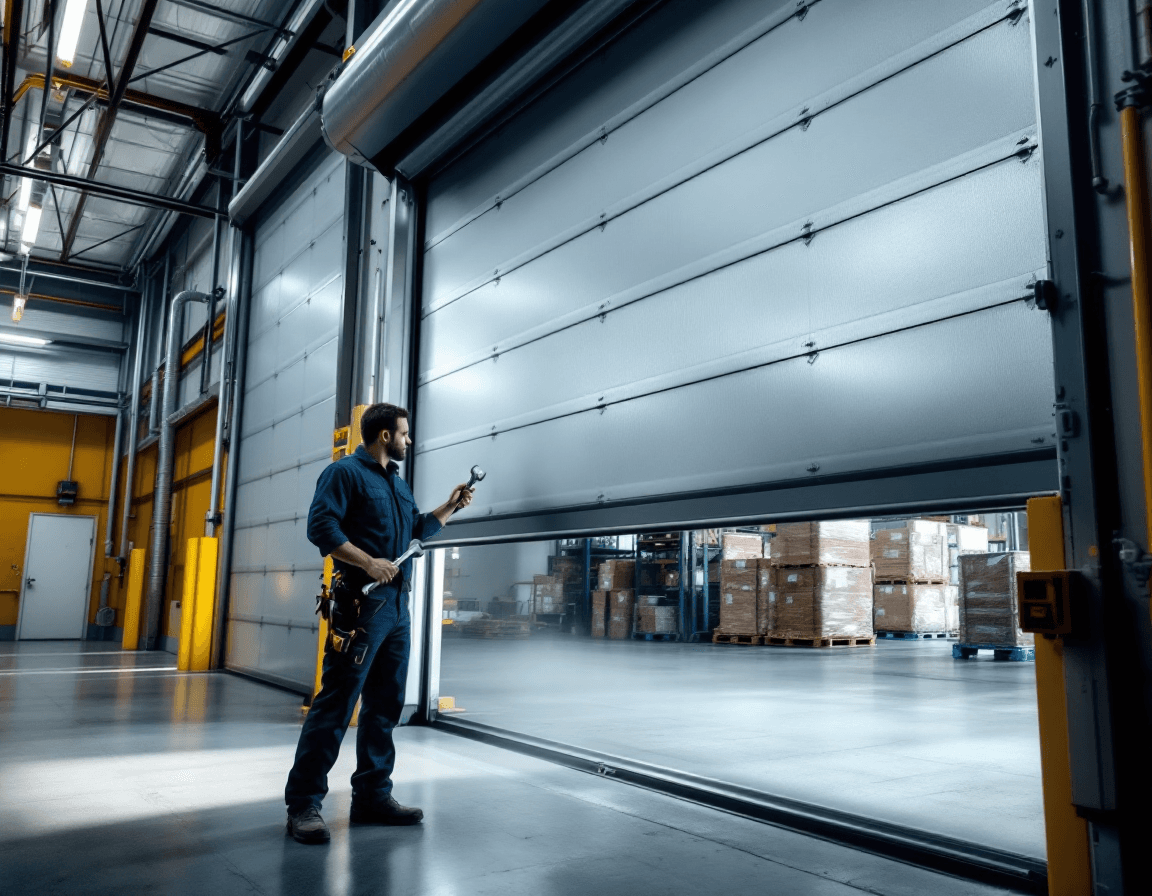
Commercial overhead door repair in Kent, WA is a different job from fixing a residential garage door, and the difference shows up in how quickly the work has to happen. A stalled dock door can hold up trucks, pause a production line, or leave a warehouse crew standing around with nowhere to put freight. Seattle Garage Door Fix works with warehouses, light manufacturers, contractors' yards, and distribution spaces across the Kent Valley and the surrounding King County corridor. We know that a quote needs to be accurate, a schedule needs to fit your shifts, and a repair needs to hold up under daily use. This page explains the common problems we see at Kent businesses, how we approach them, and how you can reduce the chance of an unplanned shutdown.
Kent sits in a valley where logistics, warehousing, and industrial operations have grown up around the highway network, and that density means many commercial buildings depend on a handful of doors to keep operations moving. Whether your facility is near Kent Station with its mix of retail and office traffic, out toward East Hill where many businesses are tucked into older light-industrial buildings, or closer to the Panther Lake area with its own cluster of commercial lots, the core question is the same: how do we get your door running safely and dependably again? We answer that with a licensed, bonded, and insured crew, clear communication about parts and timing, and a repair plan you can review before work begins. The sections below walk through the symptoms we hear about most often and what we typically check first.
Why Kent Loading Docks Put Heavier Demands on Commercial Doors
Many Kent facilities run doors far more often than a typical home garage ever will. A single dock door might cycle dozens of times across a shift, with forklifts, pallet jacks, box trucks, and occasionally semi trailers backing into position. That volume wears hinges, rollers, bottom seals, and drive components faster than most owners expect. When we inspect a commercial door for the first time, we usually find that small wear items have been ignored for months, and the failure that finally stops the door was really the end of a longer decline.
The Pacific Northwest adds its own layer of stress. Our wet, mild winters bring steady moisture into the air, and the Green River valley tends to hold that moisture close to the ground. Steel components can develop surface rust at track joints, fasteners, and roller shafts if they are not inspected and treated. Electrical controls and operator housings can pick up condensation, which shows up as intermittent faults that come and go with the weather. A good service visit in Kent accounts for these conditions rather than treating every failure as a simple mechanical problem.
Sectional Overhead Doors on Kent Valley Dock Pads
Sectional overhead doors are the most common doors we service at Kent warehouses and manufacturing spaces. They rise in horizontal panels, travel up vertical tracks, and fold along a curved track at the top of the opening. Because the panels are connected by hinges and rollers, a problem in one area can ripple across the entire door. A roller that has worn flat can cause a panel to bind, which then stresses the neighboring panels and pulls the whole assembly out of alignment.
When a sectional door stops or starts behaving unevenly, we look at the basics before we order any major parts. We check track alignment at the vertical and horizontal runs, confirm that the bottom weather seal is still making contact, and inspect hinges for cracks or missing fasteners. We also look at the counterbalance system, which is one of the most sensitive areas of the door. Torsion springs and cable drums store a great deal of energy, and adjusting or replacing them is work that must be done by a licensed professional with proper tools and training, never by an untrained crew member with a wrench.
Many dock doors in the Kent area also have insulated panels and recessed dock seals. Those components are easy to overlook until a door starts letting in drafts or pulling heat out of a conditioned space. Worn seals and damaged insulation panels are often the first sign that a door needs attention, and they are usually less expensive to fix when caught early than when they are allowed to compound into a larger repair.
Rolling Steel Doors That Jam, Bind, or Jump the Track
Rolling steel doors are common at Kent storefronts, contractor bays, and secured storage areas. Instead of panels, they use interlocking steel slats that coil around a barrel above the opening. Because the slats must follow guide tracks on both sides, even a small obstruction can cause the curtain to jam or slip out of the channel. Dirt, gravel, and debris swept into the track are frequent culprits, especially at sites where trucks and forklifts operate close to the door.
A rolling steel door that is off track should not be forced. Attempting to yank the curtain back into place can bend slats, damage the guides, or cause the barrel to shift under tension. Our technicians begin by making the area safe, disconnecting power to the operator, and assessing whether the curtain is still intact. From there we clear the track, check guide alignment, inspect the barrel and brackets, and determine whether the slats need straightening or replacement. In many cases a jammed door can be returned to service the same day, but we will always tell you if the damage points to a larger repair before we proceed.
Rolling doors also depend heavily on their springs and locking hardware. Some Kent businesses use a manual rolling door as a backup to an electric operator, and those manual units can be surprisingly dangerous when the spring tension is off. If your rolling door suddenly feels heavier than usual or makes a loud snap when it moves, stop using it and call a professional. Spring work of this kind is never a do-it-yourself task.
When the Commercial Operator Stops Responding
The commercial operator is the motor, controller, and safety system that moves your door. In a busy Kent facility, operators are often wired into building access systems, timers, photo eyes, and remote push-button stations. When an operator fails, the symptoms can be confusing: the door may hum without moving, run in only one direction, stop partway through its travel, or ignore commands from one station while responding to another. Sorting out which part of the system is responsible requires patience and a methodical approach.
We typically start by checking the power supply and disconnect, confirming that the control voltage is stable, and reviewing any fault codes the controller displays. Next we test the safety devices, because photo eyes and edge sensors are designed to stop the door when something is in the way. A dirty or misaligned photo eye can cause a door to reverse or refuse to close, even when nothing is blocking the opening. Water intrusion at junction boxes is another issue we see frequently during Western Washington wet seasons, and sealing or replacing a compromised enclosure can solve problems that look electrical but actually start with moisture.
If the operator motor itself has failed, we will explain the options clearly. Some motors can be repaired or rebuilt, while others are better replaced with a current model that integrates more easily with your access control. We will not recommend a replacement unless the diagnostic results support it, and we will document what we found so your facility manager has a clear record.
Slow Doors That Are Quietly Costing You Throughput
Not every commercial door problem involves a breakdown. Sometimes the door still works, but it takes so long to open or close that it slows the flow of trucks and carts through the building. A door that needs thirty seconds to fully rise may seem tolerable until you multiply that delay across every load, every shift, and every driver who waits at the threshold. Over a busy week, slow doors can add up to a meaningful loss in daily throughput.
Speed issues usually come from a combination of factors rather than a single broken part. Worn rollers and dry hinges increase friction, the operator may be running at a reduced speed setting, and the counterbalance may no longer match the weight of the door, forcing the motor to work harder than it should. Lubrication, adjustment, and component replacement can often restore much of the original performance. We can also evaluate whether a faster operator or a different door configuration would better match your traffic pattern. Common signs that a slow door deserves a service visit include:
- The door takes noticeably longer to open or close than it did a year ago
- The motor sounds strained or the door stutters during travel
- Drivers or forklift operators routinely wait for the door to finish moving before proceeding
- The door reverses or pauses more often than it used to, even without an obstruction
- Lubrication has been overlooked for several months, or the track looks dry and gritty
Addressing these signs early keeps a small adjustment from turning into a larger outage. It also gives you data to plan around, so your operations team can schedule service during slower periods rather than during peak deliveries.
Forklift Strikes and Damaged Sections: Triage Before Replacement
Forklift impact is one of the most common causes of emergency commercial door calls in the Kent area. Even a careful operator can clip a door panel when maneuvering a heavy load through a tight dock, and a single strike can bend a section, crack a glass lite, separate a hinge, or knock a roller out of its track. Because damaged sections affect the balance of the entire door, what looks like a simple dent can create serious stress on the springs, cables, and operator.
Our first priority after an impact is safety. We ask that the door be taken out of service, that no one attempts to force it open or closed, and that the area be cleared so we can inspect the damage safely. Once on site, we determine whether the damaged section can be replaced individually or whether the surrounding panels, tracks, and counterbalance system were also affected. Replacing a single panel is often possible on sectional doors, but it requires matching the section's profile, insulation, and hardware closely enough that the door still tracks and seals correctly. Rolling steel slats can often be replaced in sections as well, though the replacement must fit the existing curtain and guides.
We understand that a damaged door is rarely a convenient problem, and we work to give you a practical plan rather than an automatic full replacement. A written assessment will describe the damage, the parts needed, the expected timeline, and any safety recommendations, such as bollards or dock guards that could reduce future impact.
Wet Winters, Valley Humidity, and the Slow Creep of Corrosion
The Kent Valley's damp climate is hard on steel and electronics, and it does its damage gradually. Winter rain, morning fog that settles over low ground, and seasonal temperature swings all contribute to condensation inside operator housings, along track channels, and within the hollow sections of steel doors. Surface rust may look minor at first, but once it works into hinge pins, roller bearings, or spring anchors, it can reduce the strength of components that are supposed to carry heavy loads.
Preventive attention to corrosion is one of the most cost-effective things a commercial property can do. During service visits, our technicians look for rust bloom at fasteners, check galvanized surfaces for worn coating, and inspect weatherstripping for cracks that let water track inside the door. We also recommend keeping drainage paths clear at the bottom of the opening, since standing water can accelerate damage at the threshold and around the operator mounting. Many Kent facilities benefit from a periodic wash-down of the door hardware to remove road grime and any residue from nearby traffic, although the exact approach depends on the door material and finish.
It is also worth noting that cold snaps, while not frequent, can make a door stiff and slow until the components warm up. A door that struggles on a freezing morning may simply need its lubrication and seals inspected before winter arrives. Planning around these seasonal patterns is part of what separates a reactive repair from a well-managed door system.
Safety Rules for Crews Working Around Commercial Doors
Commercial doors carry real hazards, and the most important safety rule is also the simplest: nobody should work on a door's springs, cables, or drive system unless they are trained and equipped to do so. Torsion springs under high tension can cause serious injury if they release unexpectedly, and cable drums and counterbalance assemblies can fail under loads that are much higher than they appear. Spring and cable work should always be handled by a licensed professional, and any business owner who hears a crew member suggest otherwise should stop the job immediately.
Facility teams can reduce risk in everyday operations as well. Keep the area beneath the door clear of pallets and equipment, establish a clear rule that no one walks under a door that is moving or partially open, and make sure that all staff know how to use the emergency release or stop button. Post a visible reporting process so that any unusual noise, jerking, or damage is communicated quickly. Training forklift operators to approach dock openings at a controlled speed, and to report even minor contact, will often prevent a repair from becoming a larger incident.
When we arrive for service, our technicians follow lockout and tagout practices, verify that the door is de-energized before opening covers, and communicate clearly with your staff about which areas are off limits during the work. We will never ask your team to operate a door during a diagnostic procedure unless it is necessary and safe to do so, and we will explain any such requirement in advance.
Building a Preventive Maintenance Plan That Fits Your Shifts
A preventive maintenance agreement is one of the most effective ways to protect a commercial door from unplanned downtime. Instead of waiting for a failure, a scheduled program checks the components most likely to wear, adjusts settings that drift over time, and documents the condition of the door so that you can plan budgets with more confidence. For a Kent warehouse or light manufacturing facility, the value of this approach is especially clear during peak seasons when a dead door is far more disruptive than a planned service window.
A typical preventive program might include the items below, which we tailor to your door type, usage level, and operating hours:
- Scheduled inspection of tracks, rollers, hinges, and bottom seals
- Lubrication of moving components according to manufacturer guidance
- Testing and adjustment of safety devices such as photo eyes and edge sensors
- Review of operator performance, fault history, and speed settings
- Inspection of springs, cables, and counterbalance components by licensed technicians
- A written summary of findings with recommended repairs ranked by urgency
Maintenance visits are usually scheduled around your operating hours so that they do not interrupt deliveries. Some facilities prefer quarterly visits, while others with heavier traffic benefit from more frequent checks. We will help you decide what makes sense rather than selling a one-size-fits-all package.
What a Custom Commercial Quote Includes and How Fast We Respond
Commercial door pricing depends on far more than the number of hours on site. The door type, size, material, insulation, operator model, access requirements, parts availability, and the urgency of the work all influence the final figure. That is why we provide custom commercial quotes rather than flat rates. A quote from our team should explain what we found, which repairs are recommended, which are optional, and what the timeline looks like, so you can make an informed decision without pressure.
Speed matters to our Kent clients, and we structure our response around minimizing downtime. When you call, we will ask about the door type, the nature of the failure, whether the door is currently secured or out of service, and whether any safety concerns are present. For urgent situations, we prioritize getting a technician on site quickly and communicating realistic expectations about parts and completion. When a part must be ordered, we will tell you the expected lead time up front and discuss temporary measures, such as securing a door or redirecting traffic, that can keep your operation moving while the repair is completed.
Whether your facility needs a one-time repair, a preventive maintenance agreement, or help planning a replacement, the goal is the same: a door that operates safely, reliably, and in a way that supports your business. If your loading dock, warehouse entry, or rolling steel door is causing trouble in Kent or the surrounding ZIP codes of 98030, 98031, 98032, and 98042, call Seattle Garage Door Fix at (888) 799-3819 to request a custom commercial quote and get your door back to work.