
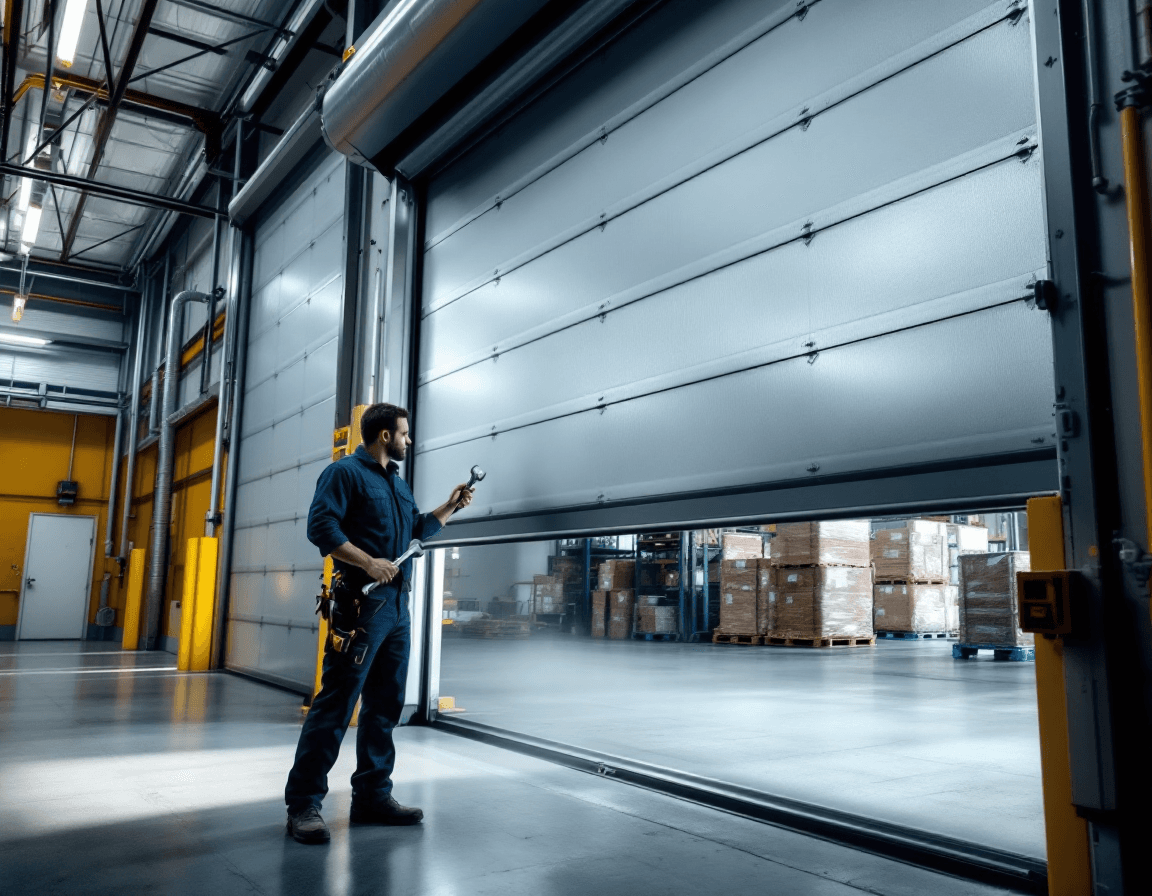
Commercial overhead door repair in Covington, WA is a different job from fixing a residential garage door. A warehouse, distribution space, or light-industrial bay depends on its dock doors to keep trucks moving, and every hour a door sits closed can mean delayed shipments, idle crews, and frustrated customers. Covington sits in the southeast corner of King County, where businesses along the Kent-Kangley corridor, near the Covington Town Center, and in the industrial pockets off Wax Road rely on large doors that open and close dozens of times a day. Seattle Garage Door Fix handles sectional overhead doors, rolling steel doors, commercial operators, and preventive maintenance for these facilities, with an emphasis on getting your operation running again quickly.
Most business owners in this area do not think about their doors until something goes wrong. A dock door that stops mid-travel, a rolling steel shutter that binds in its track, or an operator that clicks without moving the door can stop receiving and shipping within minutes. Because the damage is often a combination of wear, weather, and daily impacts rather than a single broken part, a good repair starts with a careful inspection of the entire door system. That approach saves money, because replacing one component while ignoring a worn bearing or a misaligned track usually leads to a second call within weeks.
This page explains the most common problems we see at commercial doors in Covington, how we approach each one, and how a preventive maintenance agreement can reduce emergency downtime. We write for facility managers, property owners, and operations leads who need straight answers and realistic timelines. Every commercial job is different, so the details below describe typical situations rather than promises about any specific facility. When you are ready to talk through your building, our team can provide a custom quote and a realistic schedule.
Why Covington Facilities Depend So Heavily on Dependable Doors
Covington's commercial landscape includes warehouses, contractor yards, service shops, and distribution spaces that operate on tight schedules. Many of these buildings were constructed to handle heavy daily traffic, but the doors that serve them are subject to constant cycling, forklift contact, and the wet, mild winters typical of the Puget Sound lowlands. A door that opens forty times a day accumulates wear on its rollers, hinges, cables, and drive system much faster than a residential door used a few times a week. Understanding that baseline helps explain why commercial doors fail the way they do.
Covington's proximity to major freight routes and regional highways also means that loading docks are often busy at unpredictable hours. Carriers arrive early, pickups run late, and seasonal peaks push throughput well beyond normal levels. When a dock door is out of service during one of these peaks, the cost is rarely limited to the repair bill. Missed dock appointments and rescheduled deliveries can ripple through a supply chain in ways that take weeks to correct.
For that reason, we treat commercial door calls as time-sensitive by default. Our technicians arrive prepared to diagnose both the mechanical and electrical side of a door, and we aim to stabilize the opening first, whether that means restoring full operation or providing a safe temporary fix while parts are sourced. Permanent repairs follow once the facility is operating again and the owner has reviewed the options.
Recognizing When a Loading Dock Door Is Heading for Failure
Commercial doors rarely fail without warning. Operators who pay attention to small changes in sound, speed, and alignment often catch problems before a door stops completely. A grinding noise during travel, a slight hesitation at the top of the opening, or a section that seems to sit crooked in its track are all signals that something needs attention. Waiting until the door will not close is almost always more expensive than acting on these early clues.
Several symptoms deserve prompt attention at any Covington facility. Facility teams should note these items and report them before they escalate:
- Grinding, popping, or squealing from the header, rollers, or track during normal cycles
- The door stopping, reversing, or stalling partway through its travel
- Visible gaps at the bottom seal, daylight around the perimeter, or drafts during winter
- Sections that look out of level or sit unevenly against the track when closed
- An operator that clicks, hums, or runs but does not move the door consistently
Any of these signs can point to different root causes, so we recommend documenting when the problem occurs. Note whether it happens when the door is cold, after rain, or during heavy use, and whether it affects the door in both directions. That information speeds up diagnosis considerably when a technician arrives on site.
Sectional Door Repairs Built Around Forklift Traffic and Heavy Use
Sectional overhead doors are the most common style for warehouse and dock applications in this part of King County. Each panel is hinged to the next and rides on rollers through vertical and horizontal tracks, with torsion springs providing the counterbalance that makes the door manageable. Repairs on sectional doors often involve replacing damaged panels, worn rollers, bent track sections, or hinges that have loosened from repeated stress. Because these doors carry substantial weight, every repair must respect the balance of the entire system.
Torsion springs deserve special mention. These springs store significant energy and must be wound and replaced only by trained professionals with the proper tools and equipment. Attempting a spring adjustment without that training can cause serious injury, and we always recommend a licensed technician for any spring or cable work. When we service a commercial sectional door, we inspect springs, cables, and drums as part of a complete assessment, and we explain the condition clearly before any recommended replacement goes forward.
Forklift traffic creates a particular set of problems. Repeated low-level impacts can bend the bottom panel, crack a section, or shift the track out of alignment, and a single strike may not cause immediate failure but can accelerate wear over months. We look closely at the bottom bar, the weatherseal, and the first few track brackets after any impact event. Where a section has been compromised, we discuss whether a panel replacement, a track correction, or a larger upgrade makes the most sense for the facility's budget and use.
When a Rolling Steel Door Jumps Its Track or Jams
Rolling steel doors are common in Covington's warehouses, service bays, and secured storage areas because they take up minimal interior space and offer strong security. Instead of hinged panels, these doors roll up into a barrel above the opening, with interlocking steel slats moving through guides on each side. When something interrupts that path, the door can jam, bind, or come off the track entirely, and the resulting damage can be significant if the door is forced.
The most frequent causes of a rolling steel door jumping its track include debris lodged in the guides, a bent or shifted guide, a worn bottom bar that catches on the floor, uneven tension between the two sides of the barrel, and slat damage from a vehicle or equipment strike. Covington's wet winters add another factor, since moisture and grit can build up in the guides and lead to corrosion along the edges of the slats. We clean and inspect the full guide path, check for any deformation, and assess whether the door can be safely returned to its track without forcing it.
A jammed rolling door should never be pushed or pulled past resistance. Forcing the curtain can distort slats, damage the barrel, or cause the door to fall unexpectedly. If the door is off track, keep people clear of the opening and call a technician. We typically arrive with the equipment needed to lift the door back into the guides safely, correct the underlying cause, and test the operation under load before releasing the opening back to your team.
Commercial Operator Failures and Why They Happen
The operator is the motor and control system that opens and closes a commercial door. Depending on the installation, it may be a chain drive, a belt drive, or a direct-drive unit, and it is usually paired with safety devices such as photo eyes, edge sensors, and limit settings. When an operator fails, the door may not move at all, may travel only partway, or may reverse unexpectedly. Each of these symptoms has different causes, and a careful diagnosis prevents unnecessary parts replacement.
Electrical problems are common in commercial installations. Power supply issues, blown fuses, damaged control wiring, failed control boards, and tripped safety circuits can all mimic a mechanical failure. Moisture is a frequent culprit in western Washington, where condensation can form inside control boxes and where exposed wiring near docks may corrode over time. We check voltage at the operator, inspect connections, verify that safety devices are aligned and clean, and review limit settings before recommending any replacement.
Mechanical operator problems include worn chains, stretched belts, failed gearboxes, and brake issues. A door that runs slowly or sounds strained may have a drive component that needs adjustment or replacement. We identify these conditions during a full service visit and present options that match your throughput needs, including whether a faster or heavier-duty operator would better support your daily cycle count.
Throughput Problems: When the Door Works but Holds Up Operations
Not every commercial door call involves a complete failure. Many facilities struggle with doors that technically work but operate too slowly for the business. A dock door that takes forty seconds to fully open can cost real time across a busy shift, especially when trucks are queued and drivers are waiting. In a high-cycle environment, a few seconds per cycle adds up to hours each week.
Speed problems can come from several sources. An aging operator may have lost power, a drive system may be out of adjustment, track friction may be excessive, or counterbalance may no longer match the door's weight. Sometimes the door was originally configured for a lighter duty cycle than the facility now requires. We measure travel time, evaluate the balance and drive system, and discuss whether a tune-up, component upgrade, or different operator class would deliver meaningful improvement.
Throughput conversations are also about workflow. We ask how many cycles the door sees per day, what time of day it peaks, and whether the door is used for personnel access, vehicle access, or both. Those answers help us recommend solutions that fit your operation rather than generic upgrades, and they help us prioritize what to fix first if the budget is limited.
Damaged Panels, Impact Recovery, and Keeping Your Opening Secure
Forklift impact is one of the most common reasons commercial doors require repair. A single strike may crack a panel, bend a section, pull a hinge loose, or misalign a roller, and some damage is not visible until the door is operated. Because the door is part of your building's security and weather envelope, impact damage should be assessed promptly, even if the door still appears to function.
Our approach to impact recovery begins with safety. Before operating a damaged door, we check for loose hardware, stressed springs or cables, and any sections that could drop. If the door is unsafe to operate, we secure it and recommend a temporary barrier while parts are ordered. Once the door is safe, we inspect every section for cracks, deformation, and fastener damage, then document the findings so you understand exactly what needs replacing.
Replacement panels and components must match the existing door's dimensions, profile, and insulation rating where applicable. Using mismatched parts can compromise the seal, cause uneven loading on the springs, and lead to premature wear elsewhere. We source components to fit your specific door, and we explain lead times honestly so you can plan around them. When a door has been repeatedly damaged in the same location, we also discuss protective measures such as bollards, guards, or traffic changes that reduce future impacts.
Weather Along the Jenkins Creek Corridor: Moisture, Rust, and Seals
Covington's climate shapes how commercial doors age. Wet winters, persistent humidity, and temperature swings push water into tracks, encourage corrosion on steel components, and stress weatherseals. Buildings near Jenkins Creek and other low-lying areas may also see more moisture at ground level, which can accelerate rust on bottom brackets, guide angles, and door bottoms. Regular attention to these conditions extends the life of the door considerably.
Weatherseals and bottom seals are often the first components to show weather-related wear. Cracked or compressed seals allow drafts, water intrusion, and pest entry, and they can raise heating and cooling costs during the colder months. We inspect seals on every service call and recommend replacement when they no longer make consistent contact with the floor or threshold. Replacing a seal is typically a straightforward repair, but the fit matters, and an ill-fitting seal can cause its own operating problems.
Corrosion control is another practical focus. Galvanized and painted steel components benefit from periodic cleaning, lubrication of appropriate parts, and inspection for surface rust that could spread. We advise facility teams to keep drainage paths near docks clear, to avoid pressure washing directly into operator housings, and to report any water pooling at the threshold. Small habits like these help protect the door's moving parts from the conditions that define the Pacific Northwest winter.
Preventive Maintenance Agreements for Covington Businesses
A preventive maintenance agreement gives a facility a scheduled plan for keeping its commercial doors in working order. Instead of reacting to breakdowns, the maintenance team and our technicians work from a documented inspection routine that catches wear before it causes downtime. For businesses where a dock door is critical to operations, this approach often reduces emergency calls and supports more predictable budgeting.
A typical maintenance visit may include inspecting springs, cables, rollers, hinges, tracks, and bottom seals; checking operator function and safety devices; lubricating moving parts where appropriate; testing reversing and sensor functions; and reviewing the door's cycle performance. Each visit ends with a clear summary of findings and recommendations. We recommend that facility managers keep these records, since they help with insurance questions, lease obligations, and planning for future capital improvements.
Maintenance frequency depends on how heavily a door is used, its age, and the environment it operates in. A lightly used storage door may need less frequent attention than a high-cycle dock door near a busy receiving area. We discuss the appropriate interval with you and tailor the agreement so it reflects your real operating conditions rather than a one-size-fits-all package. Even if you do not sign a long-term agreement, scheduling periodic inspections is one of the most practical steps a Covington facility can take.
How Our Commercial Quote and Rapid Response Process Works
Every commercial job begins with a conversation about your building and your operation. When you call (888) 799-3819, we gather the details that matter most: the door type, its size and location, the symptoms you are seeing, whether the door is currently out of service, and how the opening fits into your daily schedule. Those details let us prioritize the response and bring the right tools and parts to the first visit.
Our standard process moves through a few clear stages. We begin with diagnosis on site, followed by a written explanation of the findings and options. We then provide a custom quote tailored to the scope of work, including parts, labor, and any recommended follow-up items. Once you approve the work, we schedule the repair with an emphasis on minimizing downtime, and we keep you updated if conditions on site change the plan.
Pricing for commercial doors varies widely based on size, configuration, operator type, and the extent of damage, which is why we provide custom quotes rather than flat rates. We will not give you a number that does not reflect your actual door. What we can promise is a straightforward explanation of what we found, what we recommend, and why, so you can make informed decisions about repair versus replacement.
Commercial overhead door problems in Covington rarely wait for a convenient time. Whether your loading dock door has stopped, your rolling steel door has jumped its track, your operator has failed, or your facility needs a maintenance plan that prevents the next emergency, our team is ready to help. Call Seattle Garage Door Fix at (888) 799-3819 to describe your situation and request a custom commercial quote. We will work with you to get your opening safe, secure, and moving again as quickly as the job allows.