
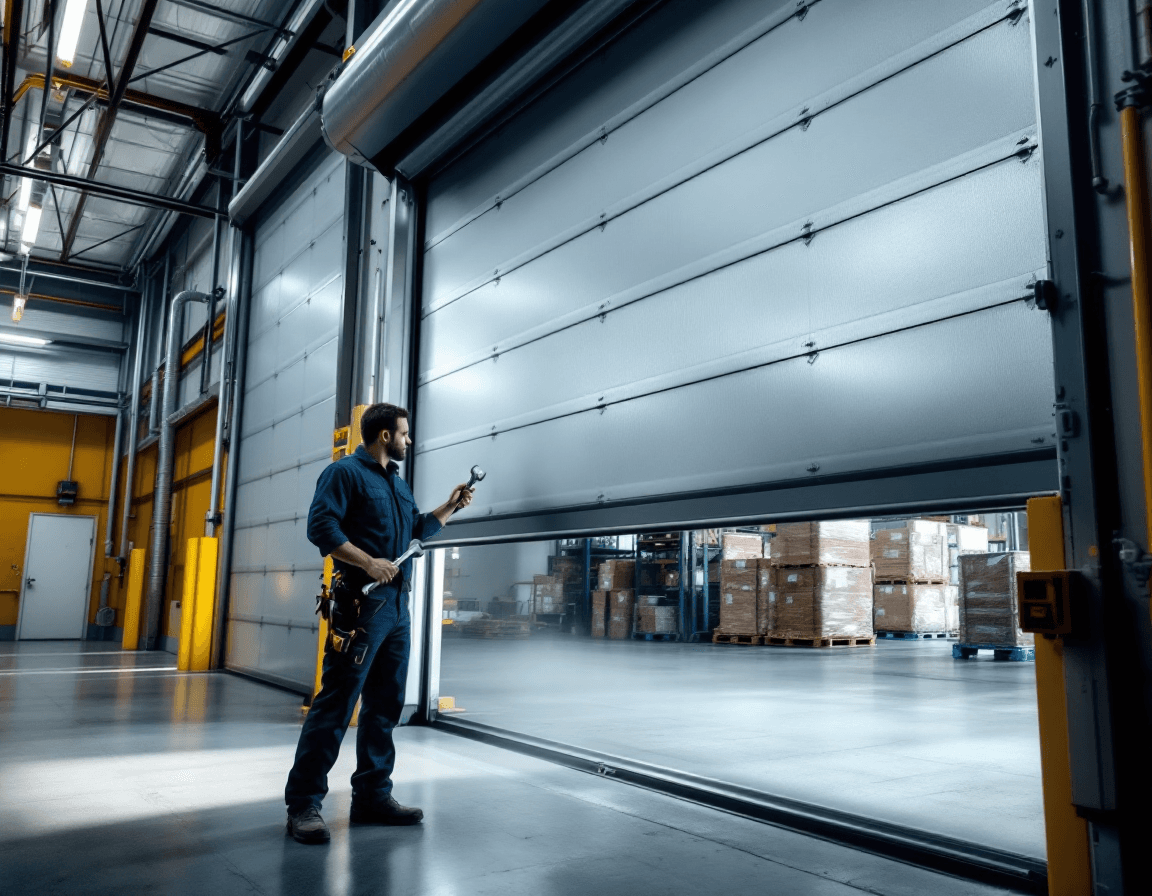
Commercial overhead door repair in Federal Way, WA is a different job from fixing a residential garage door. A warehouse, distribution bay, or loading dock runs on cycles, and when a door stops, trucks back up, drivers wait, and product sits on the wrong side of the threshold. Seattle Garage Door Fix works on sectional overhead doors, rolling steel doors, commercial operators, and preventive maintenance programs for businesses across Federal Way and the surrounding South King County area. This page explains what we see most often, how we diagnose problems, and how we keep your downtime as short as the situation allows.
Federal Way sits in a stretch of King County where industrial, light manufacturing, and service businesses share space with residential neighborhoods and busy arterials. Many of the buildings that house commercial doors were built for steady use, but their owners now run longer hours, heavier forklift traffic, and more frequent cycles than the original specifications assumed. Pacific Northwest weather adds another layer, since wet winters, humid shoulder seasons, and occasional windstorms all act on steel, seals, and electronics. Whether your facility sits near the Pacific Highway corridor, along the Highway 18 approach, or closer to the lakes and parks that give the area its character, the door is the part of the building that gets used most and inspected least.
Our approach is simple. We arrive with the parts most often needed for the door type we find, we document the failure before we touch anything, and we give you a written quote that separates emergency stabilization from permanent repair. If a door can be made safe and operational for the next shift, we will say so. If it needs a longer fix, we will lay out the options and the timeline so your operations team can plan around it. The sections below walk through the common scenarios so you can recognize what your facility is dealing with before the technician arrives.
Why Federal Way Loading Docks Wear Doors Faster Than the Brochure Says
Commercial doors are rated for a certain number of cycles, but the number on a spec sheet assumes a relatively clean operating environment and steady use. In the Federal Way area, moisture is the first factor we consider. Rain drives into dock openings during the long winter months, road grime and wet debris get tracked across concrete slabs, and the steel that looks sturdy in October can show surface rust by February if its coating has been scraped or never fully sealed. Once corrosion begins at a hinge, a roller bracket, or the bottom weatherstrip, friction rises and the door starts working harder every time it moves.
Temperature swings matter too. A dock door that cycles through cool, damp mornings and warm afternoons expands and contracts, which can loosen fasteners and push panels slightly out of alignment over time. Many facilities also keep doors open for long stretches during receiving windows, so the door sits exposed to wind and rain for a larger share of the day than a residential door ever would. We have seen doors that were perfectly square at installation develop a noticeable lean after a few seasons simply because the track anchors were working loose in wet, softened mortar.
Traffic patterns are the third piece. A single loading bay can see dozens of cycles per shift, and each cycle puts load on springs, cables, rollers, and the operator motor. When a facility adds shifts or switches to faster pallet handling, the door is often asked to do more than it was sized for. Recognizing this early lets you schedule a service visit before a minor wear issue turns into a shutdown during your busiest week.
Reading the Early Warnings: Sounds, Stalls, and Slow Travel
Most commercial door failures announce themselves well before the door refuses to move. Operators and maintenance staff who know what normal looks like tend to catch problems while they are still inexpensive to fix. We recommend walking each door through a full cycle once a week and paying attention to how it behaves at the top, the bottom, and the midpoint of its travel. A door that moves smoothly in one direction and drags in the other is telling you something about balance or track alignment.
The following signs deserve a call to a qualified technician the same day, not at the end of the month:
- Grinding, popping, or scraping noises that appear in only one section of the travel
- The door stopping partway, reversing unexpectedly, or hesitating before it starts to move
- Visible daylight at the edges of the door when it is fully closed, especially at the bottom corners
- Panels or curtain slats that look bowed, kinked, or separated from their neighbors
- A slow, labored lift that takes noticeably longer than it did last season
- Operator control buttons or remote receivers that respond inconsistently, or photo eyes that trigger without an obstacle present
Slow travel deserves special attention because it is easy to dismiss as normal. Many commercial operators are set to specific speeds, and gradual slowing often points to a motor drawing more current than it should, a worn drive component, or a binding track. If your team has started timing the door and noticing it takes twice as long to open as it did a year ago, that change is a reliable indicator that a service visit will pay for itself.
Sectional Overhead Doors: Panels, Track Alignment, and Hinge Rollers
Sectional overhead doors are the workhorse of most Federal Way warehouses and light industrial buildings. They are made of horizontal insulated or non-insulated panels joined by hinges and guided by vertical and horizontal tracks. When one part of this system wears out or moves out of place, the whole door feels it. Track alignment is often the root cause of problems that appear to be something else entirely, such as a door that bangs at the top of its travel or one that opens crookedly and binds on one side.
Hinge rollers and roller stems take a steady beating in commercial service. Rollers are often nylon or steel, and their bearings can wear, crack, or lose their lubrication after years of cycling in damp conditions. A worn roller can cause a panel to rub against the track, which in turn scores the track and makes the next roller wear faster. We usually inspect the entire roller set when we are called for one noisy panel, because the cause is almost always in the neighboring hardware. Replacing a complete roller set at the right time is far cheaper than chasing failures one by one.
Panel damage is the other frequent issue. Sections that have taken a forklift hit, or that have been dented by repeated contact with a trailer bumper, may still operate but will begin to bind as the metal deforms. We check whether the damaged section can be repaired, whether it needs replacement, and whether the impact has affected the tracks, the hinges, or the bottom seal. Replacing one panel is often a manageable repair, but matching panel profile, color, and insulation thickness requires accurate measurements and sometimes a special order.
Rolling Steel Doors Off Track: Curtain, Guides, and Barrel Trouble
Rolling steel doors look simple from the outside, but their mechanics are quite different from sectional doors. A curtain of interlocking steel slats coils around a barrel at the top of the opening, and the slats travel up and down inside vertical guide channels. Because the curtain relies on those guides to keep it square, a door that jumps off track or jams partway usually has a guide problem, a slat problem, or a barrel problem that has been building for some time.
When a rolling door comes off track, the first thing we check is whether the curtain has been damaged. Slats can bend, lock together at the edges, or pull free of their hinges after an impact. Forcing the door while it is jammed can make the damage worse, so we recommend that staff stop operating the door as soon as it binds and call for service. We also look at the guide channels for debris, bent flanges, or sections of track that have shifted out of plumb. In many Federal Way facilities, wind-driven rain and blown debris collect in the bottom channels, and a cleaning and realignment often restores smooth operation.
Barrel and bracket issues are less visible but just as important. The barrel holds the curtain and rotates as the door opens and closes, and the end brackets carry the weight through bearings that need proper lubrication and alignment. If one side of the barrel is working harder than the other, the curtain will rack and eventually jam. Spring-loaded rolling doors also carry significant tension in the counterbalance system, and any work on that tension must be done by trained technicians using proper procedures.
Commercial Operators and Throughput: When the Door Is Too Slow for the Shift
A commercial operator is more than a motor on a rail. It is a controlled system of drive components, limit settings, safety sensors, and control logic that determines how fast the door moves, how it stops, and how it responds to obstructions. When an operator fails, the door may not move at all, or it may move unpredictably, which creates both productivity and safety problems. Our technicians test each element in sequence so that a single fault is not mistaken for a general failure.
Throughput is an often-overlooked symptom. If your dock team has started working around a door because it takes too long to open, the problem may not be a dead operator but a slow or overloaded one. Worn drive belts or chains, a failing capacitor, incorrect travel limits, or a motor that has been undersized for increased cycle frequency can all slow a door to a crawl. We measure travel time, check current draw, and compare the operator's settings against the door's counterbalance so that we can recommend an upgrade or adjustment that actually matches how your facility works.
Photo eyes, edge sensors, and wireless controls also affect throughput. A misaligned photo eye can cause repeated stops and reversals even when the path is clear, and dirty lenses after a wet week can produce false triggers. Controls that lose range or respond intermittently frustrate operators and lead to repeated button pressing, which wears the switch and adds delay. Keeping these components clean, aligned, and tested is one of the simplest ways to protect throughput during peak season.
Forklift Strikes and Damaged Sections: Assessment Before Repair
Forklift contact is one of the most common causes of commercial door damage in busy distribution spaces, and it is rarely a single event. A tap at the bottom corner may bend a bottom section just enough to stop the door from closing fully. A stronger hit may tweak a track, crack a hinge, or separate a panel from its neighbor. Because the damage often looks minor from the floor, we encourage facility managers to have every impact inspected, even when the door still appears to work.
Our assessment starts with a visual and functional check of the damaged area and the surrounding hardware. We look for bent tracks, displaced brackets, cracked welds, stressed springs, and any movement in the counterbalance that suggests the door's balance has shifted. Many people are surprised to learn that an impact can alter spring tension or cause a cable to slip out of its drum, and those conditions create serious safety hazards that should be corrected before anyone operates the door. We document what we find with notes and photos so that your insurance carrier and maintenance records have a clear picture.
Once the assessment is complete, we present options. Some damage can be corrected on the same visit with a straightened track or a replaced hinge. Other situations call for a panel or curtain section to be ordered, which can take time depending on profile and finish. In the meantime, we can often secure the door, install a temporary guard, or set operating limits so that the opening remains usable while the permanent repair is scheduled. Clear communication about these steps helps you plan around the outage rather than being surprised by it.
Safety Standards and Why Spring and Cable Work Belongs to Licensed Crews
Safety is the foundation of any commercial door service call. Overhead doors store large amounts of energy in torsion springs, extension springs, and cables, and a sudden release of that energy can cause serious injury. Our policy, which we follow on every job, is that spring and cable work is performed only by licensed, trained, and insured technicians using proper tools and procedures. We will never recommend that facility staff attempt to adjust tension, replace a spring, or repair a cable on their own, no matter how straightforward the task may appear.
Commercial doors also involve safety devices that protect people and equipment. Edge sensors, photo eyes, and reversing mechanisms must function correctly so that the door stops or reverses when it contacts an obstruction. Industry guidance for commercial operators and door systems, including standards that address entrapment protection and emergency release, shapes how we test and adjust these components. When we complete a service visit, we verify that safety features respond as designed before we return the door to service.
Maintenance staff can help by keeping the area around the door clear, reporting any unusual movement immediately, and never bypassing sensors or forcing a jammed door. If a door must be left in a partly open position for safety or operational reasons, we will document that condition and help you put temporary controls in place. Protecting people on the dock is always the first priority, and it guides every recommendation we make.
How Custom Commercial Quotes Are Built Around Downtime
Every commercial door job is different, which is why we do not rely on a single flat price for repairs. A custom quote reflects the door type, the size of the opening, the condition of the hardware, the availability of parts, the access constraints at your site, and how quickly you need the door back in service. We aim for fast turnaround because every hour a loading bay is closed can carry a real operational cost, and we want the quote to help you make decisions quickly rather than slow you down.
Our quotes usually separate the work into phases. The first phase covers stabilization, which might include securing a damaged section, correcting a binding track, or restoring basic operation so that the door is safe for the next shift. The second phase covers permanent repair, such as replacing panels, rebuilding an operator, or swapping a complete roller set. A third phase, when relevant, covers preventive maintenance or upgrades that reduce the chance of the same failure returning. Breaking the job this way lets your team choose the pace that fits your schedule and budget.
To help us prepare an accurate quote, have the following information ready when you call:
- The door type, manufacturer if known, and approximate opening width and height
- Photos or a short video showing the problem during operation, if safe to capture
- The number of doors affected and whether any are currently out of service
- Your operating hours and any receiving windows that are difficult to interrupt
- Access details, including gate codes, after-hours contacts, and any site safety rules
- A brief history of past repairs, impacts, or maintenance visits
With this information, our technicians can often estimate the scope accurately before arriving on site, which shortens the diagnostic time and gets the repair moving sooner.
A Preventive Maintenance Contract Built for Your Operating Calendar
Preventive maintenance is the most reliable way to keep commercial doors out of emergency mode. A well-designed maintenance program looks at each door's cycle count, exposure to weather, traffic patterns, and past repairs, then schedules inspections and adjustments at intervals that match how hard the door works. In Federal Way, many facilities benefit from additional attention before the wet season sets in and again after the winter, when moisture and temperature swings have had time to work on hardware.
A typical preventive program might include inspection of tracks, rollers, hinges, weatherstripping, and fasteners; lubrication of moving components with products suited to the environment; testing of operators, safety sensors, and controls; checks of spring and cable condition by licensed technicians; and a written summary of findings with recommended actions ranked by urgency. Facilities with heavy traffic may need more frequent visits, while lighter-use buildings may find that a seasonal schedule is enough. We tailor the frequency to the doors rather than offering a one-size-fits-all visit.
Maintenance contracts also make budgeting easier. Instead of absorbing unexpected emergency charges, many property managers and business owners prefer predictable service intervals with defined response expectations for urgent calls. A contract also creates a service history that is valuable when deciding whether to repair or replace an aging door. If you are unsure whether your doors need a formal agreement, we are happy to walk through the options during a site visit and recommend a plan that fits your situation.
Serving Federal Way, Twin Lakes, the Dash Point Corridor, and the Wild Waves Area
Seattle Garage Door Fix serves commercial and industrial customers throughout Federal Way and the surrounding communities in South King County. Our service area covers ZIP codes 98003 and 98023, along with neighborhoods and business districts that many local operators know by name. Businesses near Twin Lakes often combine retail, service, and light commercial space, and their doors may see a mix of delivery vehicles, customer traffic, and occasional forklift use. Along the Dash Point corridor and nearby stretches toward the Pierce County line, facilities deal with the same coastal-influenced humidity and wind that shape much of the western Puget Sound region.
The Wild Waves area and the commercial zones around it see heavy seasonal traffic, and doors serving hospitality, supply, and maintenance operations often need reliable performance during summer peaks. Our technicians know that a door failure during a busy weekend or a holiday rush can ripple through an entire operation, so we plan visits with those pressures in mind. Whether your loading dock is tucked into an industrial park or sits along a main arterial, we bring the equipment and parts to address the most common failures on the first visit whenever possible.
Because Federal Way spans a mix of older and newer commercial buildings, we see everything from decades-old sectional doors to recently installed rolling steel systems with modern operators. Each building brings its own quirks, from structural movement and foundation settling to unusual opening sizes and custom finishes. Our goal is to understand your specific facility and respond with work that fits it, rather than applying a generic fix that solves the symptom but not the cause.
Commercial doors keep Federal Way businesses moving, and when they stop, every hour counts. If your sectional door, rolling steel door, or commercial operator is down, slow, or showing signs of trouble, call Seattle Garage Door Fix at (888) 799-3819 for a prompt assessment and a custom quote built around your schedule. We can also set up a preventive maintenance plan so your doors are inspected before the next wet season or peak shipping window arrives.