
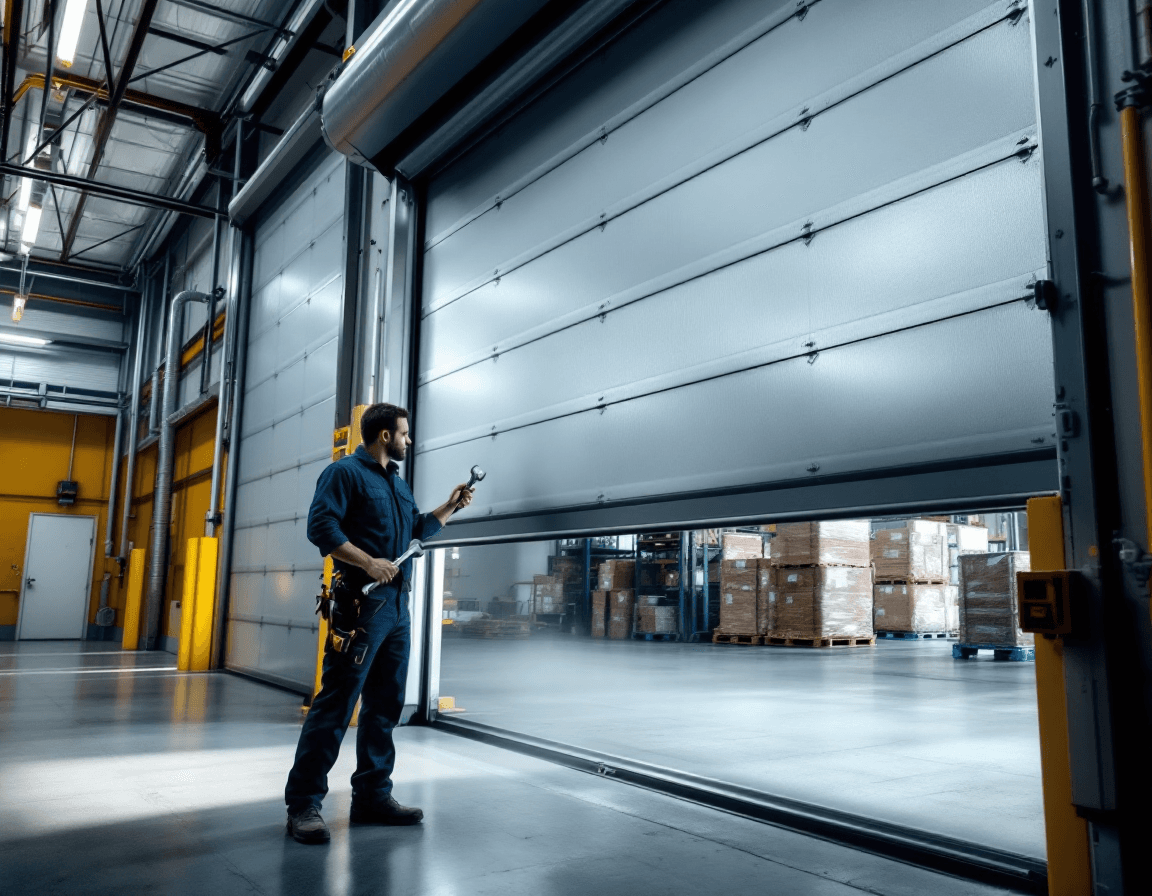
Commercial Overhead Door Repair in Milton, WA starts with one question: how quickly can your loading dock or warehouse get back to moving freight? In a town where many businesses depend on tight delivery schedules along the Interstate 5 and State Route 167 corridors, a dead dock door is more than an inconvenience. It can stall a truck, back up a receiving crew, and push a shipment past its cutoff. Seattle Garage Door Fix handles commercial overhead door problems for Milton-area facilities, from sectional dock doors and high-cycle rolling steel doors to the operators that drive them.
Milton sits in the Pierce County industrial fringe, close to Fife and the freight routes that serve the Port of Tacoma, and that shapes the kind of wear our technicians see. Doors here often cycle many times per shift, and they take hits from pallet jacks, forklifts, and the occasional misjudged trailer. The Milton City Hall district and the blocks around it mix small commercial buildings, light manufacturing, and service businesses, so a single property might have one large roll-up door or a whole row of dock positions. Each setup calls for a different plan, which is why we quote commercial work individually instead of applying a flat price list.
This page explains the most common commercial door problems we are called to fix, how we evaluate them, and how a preventive maintenance agreement can keep small issues from becoming emergencies. You will also find practical notes on what to check yourself before calling and where safety boundaries sit. If your door is down right now, call (888) 799-3819 and describe what you are seeing.
When the Dock Door Goes Down Mid-Shift
A loading-dock door that stops in the middle of a receiving window is one of the most urgent calls we take in Milton. Sectional doors are built from insulated panels hinged together, and they ride on steel track with rollers, springs, and cables that all have to work in sync. When one part fails, the door may refuse to open, open only partway, or drop back down after lifting a few feet. Each of those symptoms points to a different cause, so a careful diagnosis matters before anyone starts replacing parts.
Start by observing the door without forcing it. Note whether the operator hums and tries to move, whether the door binds at a specific height, and whether the failure happens only when the building is cold or after a long run of cycles. Look for panels that sit crooked in the track, rollers that have popped out of their channels, or a bottom seal hanging loose. Do not attempt to lift a stuck commercial door by hand, and do not stand under a door that is partially raised, because spring tension and unbalanced weight can release without warning.
Once you call us, a technician will ask about the door's age, its manufacturer if you know it, and whether anyone has recently backed a trailer into it. Those details help us arrive with the right parts on the first visit, which is often the fastest route back to operation. We prioritize doors that control active dock throughput, and we will tell you plainly whether a temporary fix can keep the building working while a permanent repair is scheduled.
Rolling Steel Doors That Jam, Bind, or Jump the Track
Rolling steel doors are common on Milton warehouses, shop bays, and storefronts where a sectional door would take up too much headroom or interior space. They wind into a tight coil above the opening, which makes them efficient but also sensitive to small misalignments. A jammed rolling door often starts as a slight drag on one side, then escalates until the curtain binds in a guide or slips out of its track entirely. Ignoring that early drag is how a simple adjustment becomes a costly rebuild.
Most jams we see come from one of a handful of causes. Guides may be bent by a forklift or a dropped load, the curtain slats may have lost their interlock at one end, or debris may have collected in the track along a gravel-lot entrance. Moisture plays a role too, since steel that stays damp through a Pacific Northwest winter can develop corrosion that adds friction to the bearings and shaft. We inspect the curtain, guides, brackets, and the barrel or drum for alignment before deciding whether the fix is a clean-up, a component swap, or a full section replacement.
Rolling steel doors also carry significant tension in their counterbalance systems, and that tension is not something to adjust casually. If the curtain has come off track, the safe move is to keep people clear and call a licensed technician. We handle the realignment, track correction, and spring-side work with proper equipment, and we will walk you through what caused the derailment so the same problem does not repeat during the next shift.
Commercial Operators and Controls That Quit on Schedule
The operator is the motor and control system that moves a commercial door, and a failed operator can shut down an entire facility even when the door itself is in good shape. Symptoms vary. The door may not respond to the wall station, the remote may work intermittently, or the motor may hum without lifting. Sometimes the problem is as simple as a tripped safety circuit or a blown fuse, and sometimes it is a worn gearbox, a failed limit setting, or a control board that no longer communicates with the sensors.
Before calling, check what you can safely check from the ground. Confirm that the disconnect or breaker serving the operator is on, verify that nothing is physically blocking the photo eyes, and see whether the door responds to manual activation from the interior control rather than the exterior keypad. Write down any error codes shown on the control panel and note whether the failure is sudden or gradual. Those notes help our technicians narrow the cause quickly and reduce return trips.
We service a range of commercial operator makes and configurations, including jackshaft and chain-drive systems typical in Milton facilities. Where a unit is obsolete or repairs would cost more than the operator is worth, we will explain the tradeoffs and quote a replacement that matches your door's weight, cycle demand, and control needs. We do not recommend replacing an operator on guesswork, so expect a real diagnosis before any quote for new equipment.
When Your Door Is Too Slow for the Way You Work
Some commercial doors work perfectly well and still hold a business back. A door that takes too long to open or close can create a bottleneck at the dock, slow forklift traffic, and waste driver time while trucks idle outside. Slow travel usually points to worn rollers, a tired operator motor, a binding track, or a speed setting that was never tuned to the facility's actual use. In older buildings, the door may have been installed for lighter traffic than the business now runs.
We approach throughput complaints as a performance question, not just a repair question. A technician will time the cycle, observe how the door behaves under load, and check whether the track, hinges, and bearings are creating unnecessary resistance. In some cases, a combination of lubrication, roller replacement, and operator adjustment restores the original speed. In others, the honest answer is that the door or operator is undersized for the current workload, and an upgrade makes more sense than repeated tuning.
Speed changes can also affect safety, so any adjustment has to be balanced against the door's protective features. A faster door is not better if its sensors cannot respond in time or its reversal behavior has been compromised. We keep the throughput goal in view while making sure every change still meets the safety standards that protect your staff and visitors.
Forklift Strikes and Damaged Sections: Repair or Replace?
Forklift impact is one of the most frequent causes of commercial door damage in Milton, and it is rarely a dramatic single event. More often, a door takes a series of small knocks: a pallet caught on the bottom panel, a tine scraping the track, a load swinging into a guide. Over time, those hits bend sections, crack glazing, loosen hinges, and throw the door out of square. A door that looks only lightly scuffed may still have a compromised panel or a shifted track that will fail under normal cycling.
When we assess impact damage, we separate cosmetic marks from structural problems. A dented panel that still sits flush and operates smoothly may be fine for now, while a bent section that creates a gap at the seal or pulls the door out of its track needs attention. We look at the hinges between panels, the end caps, the roller stems, and the track alignment to determine how far the damage reaches. Sometimes a single replacement section restores the door, and other times the cumulative damage makes a full door replacement the more cost-effective path.
To protect your investment, consider bollards, guard rails, or clearly marked travel lanes near the dock opening, and train drivers and operators to approach doors at a controlled speed. These changes cost little compared with an unplanned replacement. We are happy to discuss protective measures during an inspection, though the final layout decisions belong to you and your site safety plan.
Entrapment Protection and Sensors That Keep People Safe
Commercial doors must stop and reverse when something blocks them, and the safety features that do this deserve as much attention as the moving parts. Depending on the door type and installation, those features can include a bottom safety edge that reverses on contact, photoelectric sensors across the opening, and monitored controls that stop travel when a fault appears. Industry standards, including UL 325 for door operators and systems and the ANSI/DASMA 102 maintenance guidance, shape how these systems should be installed and checked.
Sensor problems are common and often easy to miss. Photo eyes can drift out of alignment after a bump, collect dirt or spider webs, or lose power through a damaged wire run. Safety edges can split or lose their connection, and a reversal test may pass on one side while failing on the other. We recommend testing these features regularly, and our technicians will check them every time we service a door. If a safety feature is not working, the door should not be used until it is repaired.
Never bypass, tape over, or disable a safety sensor to keep a door running. That shortcut is one of the most dangerous habits we encounter in commercial settings, and it can expose workers to serious injury. If a sensor is failing during a rush period, call us and we will prioritize the repair so the door can return to safe operation as quickly as possible.
How We Scope and Quote Commercial Door Work
Commercial jobs in Milton vary widely, so we do not publish one fixed price for every repair. Pricing depends on the door type, the size and weight of the panels, the operator involved, access conditions at the site, and whether parts must be sourced for a specific model. A quick adjustment on a small rolling door differs greatly from replacing a multi-section dock door with a new operator and safety system, and a fair quote reflects those differences.
Our process begins with a site visit or a detailed photo and description review, depending on urgency. We identify the immediate hazard, separate what must be fixed now from what can be scheduled, and provide a written scope that outlines labor, parts, and any items that need further evaluation. When a repair involves significant cost, we explain the options clearly, including a temporary measure that keeps the door usable while you decide. We aim to move quickly on time-sensitive jobs, and we will be honest about lead times when a part has to be ordered.
Please share your business hours, loading schedule, and any site access rules when you call. Those details let us plan around your operations, which is often more valuable than speed alone. If you need a formal bid for budgeting or property management review, mention that when you contact us so we can provide documentation that fits your internal process.
Preventive Maintenance Agreements for Busy Facilities
A preventive maintenance agreement shifts commercial door care from reactive repairs to scheduled inspections and adjustments. For a Milton facility that depends on daily dock activity, the value is straightforward: problems get caught while they are still small, and the crew has a known service history for every door on the property. Agreements can be tailored to the number of doors, their cycle demand, and how much downtime your operation can tolerate.
A typical maintenance visit covers the core components that wear over time. Technicians inspect springs, cables, rollers, hinges, and track alignment, check fasteners and mounting points, lubricate moving parts as the manufacturer recommends, and test the operator and safety features. We record findings so you can see trends, such as a roller that is wearing faster than expected or a bottom seal that is tearing near a frequently used lane. That history also helps with budgeting and with insurance or property documentation when those are relevant.
Maintenance is also the best time to plan upgrades. If a door is aging, a technician can show you which components are approaching the end of their useful life and estimate when replacement may make sense. Rather than waiting for a failure during peak receiving, you can schedule work during a slower period. We will tailor the frequency of visits to your facility, and we are glad to discuss what a plan would look like for your site when you call.
Pacific Northwest Weather and Its Effect on Milton Doors
Western Washington's wet winters and damp springs are hard on commercial doors, even inland from the coast. Persistent moisture encourages corrosion on steel tracks, brackets, and fasteners, and it can gum up lubricants that were applied during a dry season. Condensation forms on the inside of panels when warm interior air meets cold surfaces, which can soften seals and drip onto floors. Cold mornings can also stiffen rubber weatherstripping and slow down operator response, making a door that worked fine in August feel sluggish in January.
Wind is another factor, particularly for large doors with broad panels. Gusts can push a partially open door, stress the tracks, or load the operator in ways that accelerate wear. Facilities with wide openings or tall doors benefit from checking that bracing, end stops, and anchor points are secure before the wet season sets in. Clearing gutters and drainage near the door opening also reduces standing water that can wick under the bottom seal.
A seasonal checklist helps. Inspect seals and weatherstripping before the rains start, look for rust on exposed steel, confirm that drainage is flowing away from the threshold, and test the door at both cold and warm points of the day if your building experiences large temperature swings. We can incorporate these checks into a maintenance schedule so your doors are prepared for the conditions Milton actually sees.
Where Licensed Crews Must Take Over
Some commercial door work is too hazardous for anyone without training and proper equipment, and we want to be direct about those limits. Torsion springs and extension springs store enormous energy, and a single improperly handled spring can cause serious injury or property damage. Cables under tension, counterbalance systems, and heavy sections that must be lifted and rigged all demand experienced hands. Every spring or cable repair on a commercial door should be performed by a licensed, bonded, and insured professional.
If you are a facility manager or maintenance lead, you can still play an important role. Keep the area around the door clear, report any unusual noises or movement, shut off power to the operator when a fault is evident, and avoid standing beneath a door that is out of balance. Do not attempt to adjust springs, remove tension, or pry a jammed door free with a bar. Those actions can turn a manageable repair into an emergency.
When in doubt, stop and call. A short delay to get the right people on site is far better than an injury on the dock. We will explain what we found, what needs to happen next, and how we will keep your operation moving while the work is completed safely.
Ready to get your Milton dock or warehouse door moving again? Call Seattle Garage Door Fix at (888) 799-3819 to describe your symptoms, share your schedule, and request a custom commercial quote. Whether you need urgent repair, a rolling steel door realignment, an operator diagnosis, or a preventive maintenance agreement, our team is ready to help your facility stay productive and safe.