
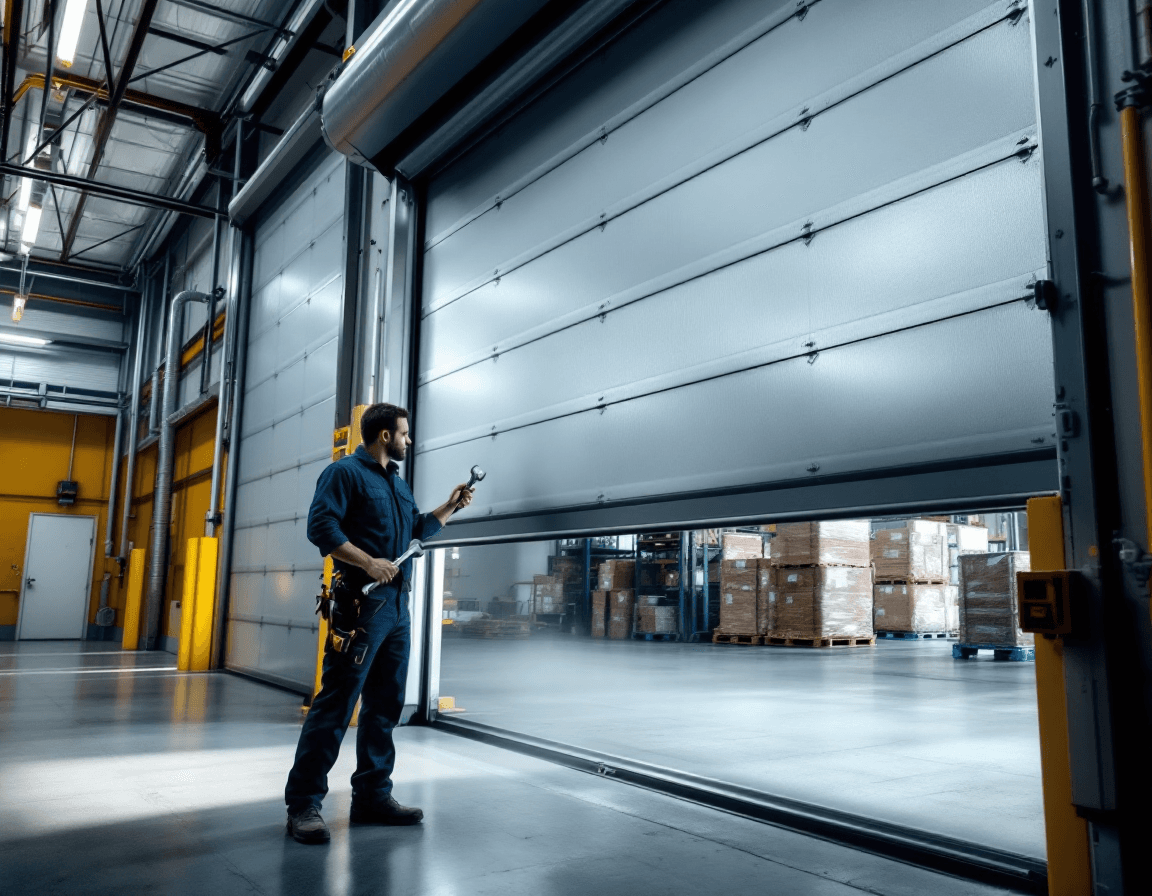
Commercial overhead door repair in Edgewood, WA is different from residential service, and the difference shows up fastest on a working loading dock. When a warehouse door stops, trucks back up, staff stand around, and product sits in the wrong place. Seattle Garage Door Fix handles sectional overhead doors, rolling steel doors, commercial operators, and preventive maintenance for businesses across Edgewood and the wider Pierce County corridor. Our crews are licensed, bonded, and insured, and we plan every commercial visit around the way your building actually runs.
Edgewood sits in the Puget Sound lowlands, where winters bring long stretches of drizzle, frequent low clouds, and damp air that rarely dries out between storms. Those conditions work steadily on steel, springs, and bottom seals, especially on doors that open and close dozens of times a shift. Many of the commercial openings we see have been running through several wet seasons without a full inspection, so small problems have had time to grow. This page explains the common failures we encounter, how we approach repairs and quotes, and how a preventive maintenance agreement can keep your doors out of the emergency column.
If your door is down right now, call (888) 799-3819 and describe what you see, including whether the door is stuck open, stuck closed, or moving but making a grinding or popping sound. Clear details help us decide what parts and tools to bring on the first trip. The sections below walk through the typical situations facing Edgewood businesses and what a sensible response looks like for each.
Why Pierce County Dock Doors Wear Faster Than You Expect
Edgewood's damp climate is hard on commercial doors for reasons that are easy to overlook. Steel panels and hardware are exposed to moisture that condenses overnight and lingers well into the morning, and that moisture finds every hinge pin, roller stem, and track joint. Bottom weatherstripping stiffens and cracks as temperatures swing between cold mornings and mild afternoons. Over time, these changes cause rollers to bind, tracks to loosen in their brackets, and springs to lose balance as lubricants wash away.
Dock traffic adds its own load. A door that cycles fifty times a day accumulates far more wear than a residential garage door used a few times a week, and high-cycle commercial hardware is built with that in mind. Still, even well-built equipment needs regular attention when it is exposed to rain, road grit tracked in on tires, and the constant vibration of heavy trucks pulling up to the bumper. Edgewood businesses near busy corridors often notice that their doors sound worse after a long wet stretch, which is usually a sign that the lubrication and fastener checks were due a few months ago.
Our technicians start every commercial visit by looking at the whole opening, not just the part that failed. We check the header, the header bracket anchors, the track alignment from top to bottom, the seal condition on all sides, and the balance of the door in the mid-travel position. A repair that ignores the damp-weather pattern is likely to come back, so we try to fix the cause as well as the symptom.
Sectional Overhead Doors on Loading Docks
Sectional doors are the most common type we service on Edgewood loading docks, and they have several parts that work together under heavy stress. Panels ride on rollers in vertical and horizontal tracks, and the door is counterbalanced by torsion springs mounted on a steel shaft above the opening. Each component is designed to keep the door level and stable as it travels, but a single worn roller or a bent track section can throw the whole system out of alignment. When that happens, you may hear scraping, see one side lag behind the other, or find the door catching at a specific height.
Torsion springs on commercial doors carry substantial tension, and they are the single most dangerous part of the system for anyone who works on them without training and the right equipment. Our policy is that spring replacement, cable work, and any adjustment to tension must be performed by trained, licensed professionals using proper winding bars, safety cables, and locking procedures. If you are a facility manager or maintenance lead, please do not attempt spring work yourself, even if you have handled residential doors. The forces involved are large enough to cause serious injury, and commercial hardware is often sized differently than residential hardware.
Practical sectional door repairs in Edgewood often include replacing worn rollers with sealed, higher-quality options, re-securing track brackets to the building structure, swapping damaged panels, installing new bottom seals, and correcting alignment so the door rides true. We will tell you whether a panel can be replaced individually or whether the matching section has become difficult to source, because that affects both cost and downtime. In many cases a single well-planned visit restores smooth operation, especially when the root problem is loose hardware or a seal that has let water and grit into the track.
Rolling Steel Doors That Jam, Bind, or Jump the Track
Rolling steel doors are common on Edgewood warehouses, back-of-house service bays, and storage buildings where space above the opening is limited and security matters. Instead of hinged panels, these doors consist of interlocking slats that coil into a barrel above the opening. The slats run in guides on each side, and the door is driven by a barrel, shaft, and spring assembly that handles most of the weight. When something goes wrong, the symptoms tend to show up at the guides, the curtain, or the barrel.
A jammed rolling steel door often has a simple mechanical cause that is still urgent to fix. A slat that has been bent by a pallet jack or a dropped load can catch in the guide and stop the entire curtain. Debris, including grit, leaves, and small pieces of packaging, can collect in the bottom channel and prevent the curtain from seating evenly. Guides that have shifted out of plumb will cause the curtain to ride off track, which is both a safety issue and a sign that the door could fail completely if it is forced. We recommend stopping operation as soon as a rolling steel door begins to bind, since continued force can distort the curtain further and turn a modest repair into a larger one.
Our technicians inspect the curtain for bent or cracked slats, check the guides for proper alignment and fastening, and test the barrel and spring setup for wear. Where a slat is damaged beyond straightening, we will recommend a matching replacement and explain how it affects the overall curtain. Edgewood facilities that store goods near the door often benefit from having the bottom channel cleared and the guides checked on a schedule, because a little attention prevents the kind of jam that stops a shift cold.
Commercial Operators, Safety Sensors, and Slow Cycles
Commercial door operators are the motors and controls that move your door on command, and they are where many throughput problems begin. A commercial operator is typically built for frequent cycling and a higher duty rating than a residential unit, but it still relies on correct limit settings, clean sensors, and sound wiring. When an operator fails, the door may not move at all, may stop partway through its travel, or may run noticeably slower than it did a year ago. Each of those symptoms has different causes, and guessing wrong wastes time that your operations can't afford to lose.
Safety devices deserve special attention. Photo eyes, safety edges, and entrapment protection exist to keep people and equipment clear of a closing door, and they must function correctly for the door to be considered safe to operate. Photo eyes exposed to rain, dust, or direct sun can misread their beam and either stop the door unnecessarily or fail to detect an obstruction. A damaged safety edge or a pinched wire can cause the same problem. We test every safety device during a commercial operator visit and will not leave a door in service with a safety function we have not verified.
When a door seems slow, the cause is often a combination of factors rather than a single failed part. Worn rollers, a binding track, an out-of-balance door, and a tired motor can all add drag, and each one makes the operator work harder. Our approach is to measure how the door moves under load, compare that to what the operator is rated to handle, and then correct the mechanical issues before replacing any electrical component. In many Edgewood facilities, restoring a door to its proper speed also reduces noise and heat in the operator, which extends its service life.
When a Forklift Leaves Its Mark on Door Sections
Forklift impact is one of the most common reasons commercial sectional doors need urgent repair, and it is rarely the fault of the person at the controls alone. A pallet caught on a raised lift, a moment of hurried reversing, or a bump at a tight dock can crack a panel, bend a section, or knock a track out of its bracket. In an active warehouse, a damaged section can leave a gap in the building envelope, create a pinch point, or prevent the door from closing fully. Even a dent that looks cosmetic can stress the hinges and rollers on either side of it.
Assessing impact damage takes some care. A technician has to determine whether the panel itself is cracked, whether the hinges and end caps have shifted, and whether the track or the header has been affected. Sometimes a bent section can be straightened and reinforced, but many steel panels and insulated sections are better replaced, especially when the damage runs along the seam where panels join. We will look carefully at the springs and cable system afterward, because an impact can change the balance of the door even when the visible damage seems minor. Any suspicion of spring or cable damage should be treated as a safety matter and handled only by a licensed technician.
Replacing a damaged section quickly matters for both security and weather protection. Edgewood's wet season can drive rain and damp air into an open gap, and that moisture can reach stored goods, electrical equipment, and the door's own hardware. We try to plan section replacements so the door can be returned to service the same day when parts are on hand, and we will be honest with you if a special-order panel will take longer. Setting up a temporary barrier or limiting use of the opening until the repair is complete is often a sensible interim step, and we can advise on what is safe for your site.
Reading the Warning Signs Before a Shutdown
Most commercial door failures give some warning, and the businesses that handle them best are the ones that notice those signs early. Listen for grinding or popping during operation, since those sounds often indicate worn rollers, loose brackets, or a spring that is losing its balance. Watch for a door that stops at different heights each time, moves unevenly from one side to the other, or takes noticeably longer than usual to complete its cycle. Small changes in how a door sounds and moves are usually the first thing a trained technician would want to hear about.
Facility staff can do a few safe checks between service visits. Look along the bottom seal for cracks, gaps, or debris that might be letting water in. Check that the photo eyes are clean and aligned, and make sure nothing blocks their beam. Watch the door run through a full cycle and note any wobble, hesitation, or rubbing at the tracks. Keep a simple log of anything unusual, including the date, the time of day, and the weather, because patterns linked to rain or cold snaps can point directly to the cause.
Some signs mean the door should be taken out of service until a technician has looked at it. These include a door that drops suddenly, a visible spring or cable that has come loose, a section that has separated from the track, or an operator that makes a burning smell or runs hot. In those situations, do not attempt to force the door or repair it yourself. Call us at (888) 799-3819 and we will help you decide how to secure the opening safely while we schedule the appropriate repair.
Getting a Commercial Quote Without the Guesswork
Commercial repairs are priced differently from residential work because the variables are more complex. The door type, size, weight, number of cycles per day, access conditions, and the availability of parts all affect the scope and the cost. Because every commercial site is different, we provide custom quotes rather than flat rates, and we aim to return them promptly so your team can make decisions without waiting around. A quote should clearly describe the work, the parts involved, any safety considerations, and any follow-up items that may come up once the work begins.
Here is what we typically include in a commercial quote:
- A written description of the problem we found and how we confirmed it
- The specific components recommended for repair or replacement
- Notes on any items that need to be watched but are not urgent
- Scheduling options, including whether work can be done after hours to limit disruption
- Any safety measures needed to protect staff and equipment during the repair
Quotes can change if the inspection reveals hidden damage, which is why we explain our assumptions up front. If a repair turns out to be larger than expected, we will stop, tell you what we found, and give you options before proceeding. That approach keeps your budget predictable and makes it easier for you to schedule the work around your operations.
Keeping Edgewood Doors Running with a Preventive Maintenance Agreement
A preventive maintenance agreement is one of the most practical tools available to Edgewood businesses that depend on their overhead doors. Instead of waiting for a failure to stop the dock, we schedule regular inspections and service visits that catch wear while it is still manageable. Each visit typically covers lubrication of moving parts, checks of fasteners and brackets, inspection of rollers and hinges, verification of safety devices, and a review of the door's balance and travel. The goal is to keep the door running smoothly and to give you a clear record of its condition over time.
Maintenance schedules depend on how the door is used. A dock door that cycles constantly in a busy distribution space generally needs more frequent attention than a storage door that opens a few times a week. Our technicians will recommend a schedule based on your traffic, the door type, and the environment, including the moisture and temperature swings typical of Pierce County. We can also align visits with slower periods so the work does not interrupt your peak hours.
Preventive agreements also make budgeting easier. When service is planned, you can see upcoming needs, plan parts purchases, and avoid the premium that often comes with emergency calls. A maintenance program does not eliminate repairs, but it tends to turn surprise shutdowns into scheduled tasks. For many facilities, that shift alone justifies the agreement, since a single prolonged outage can cost more in lost time than a year of routine service.
Safety Standards We Hold Ourselves To on Industrial Openings
Industrial doors present hazards that residential doors rarely do, including high spring tension, heavy moving panels, pinch points at tracks and hinges, and powered operators that can start without warning. Our technicians are trained to recognize these hazards and to control them before work begins. That includes isolating power to the operator, securing the door in a stable position, using appropriate lockout procedures, and keeping bystanders clear of the travel path. We do not treat safety as a formality, and we will not rush a job in a way that compromises it.
Spring and cable work is the area where we are most firm. Torsion springs and their cables store large amounts of energy, and mishandling them can cause severe injury. Any work involving spring replacement, tension adjustment, or cable repair must be performed by licensed professionals using the correct tools and procedures. If you see a damaged spring or a frayed cable on your dock door, keep people away from the opening and call a licensed technician rather than attempting a fix yourself.
We also encourage Edgewood facility managers to make safety part of their routine. Train staff to report unusual door behavior, keep the area around the door clear, and make sure everyone knows how to stop the operator in an emergency. Verify that safety sensors are clean and aligned, and do not bypass them to keep a door moving. A short conversation with your team at the start of each season can prevent many accidents and keep your doors in better condition.
Serving Edgewood Meadows and Surrounding Pierce County Businesses
Edgewood has a mix of commercial and light industrial properties, and the needs of a small shop near the Edgewood Meadows area can look quite different from those of a larger distribution building farther along the corridor. Some businesses run a single bay door that opens to customers every morning, while others depend on several dock doors and rolling steel openings that have to work together during peak periods. Our crews adapt to those differences, arriving prepared for the specific door types on your site and planning access around your operating hours.
Our service area also takes in neighboring Pierce County communities where commercial and industrial properties depend on fast, dependable door service. Whether your facility is in Edgewood proper or nearby, the same principles apply: inspect the whole system, explain what we find in plain terms, and recommend repairs that will hold up through a Puget Sound winter. We work to keep communication clear from the first call through the final check, so you always know what has been done and what still needs attention.
If your business in Edgewood needs commercial overhead door repair, a loading-dock fix, a rolling steel door adjustment, an operator diagnosis, or a maintenance agreement that keeps your openings running, our team is ready to help. Call (888) 799-3819 to describe your situation and request a custom quote. Tell us the door type, what it is doing, and how urgent the situation is, and we will work with you to get your operation moving again.