
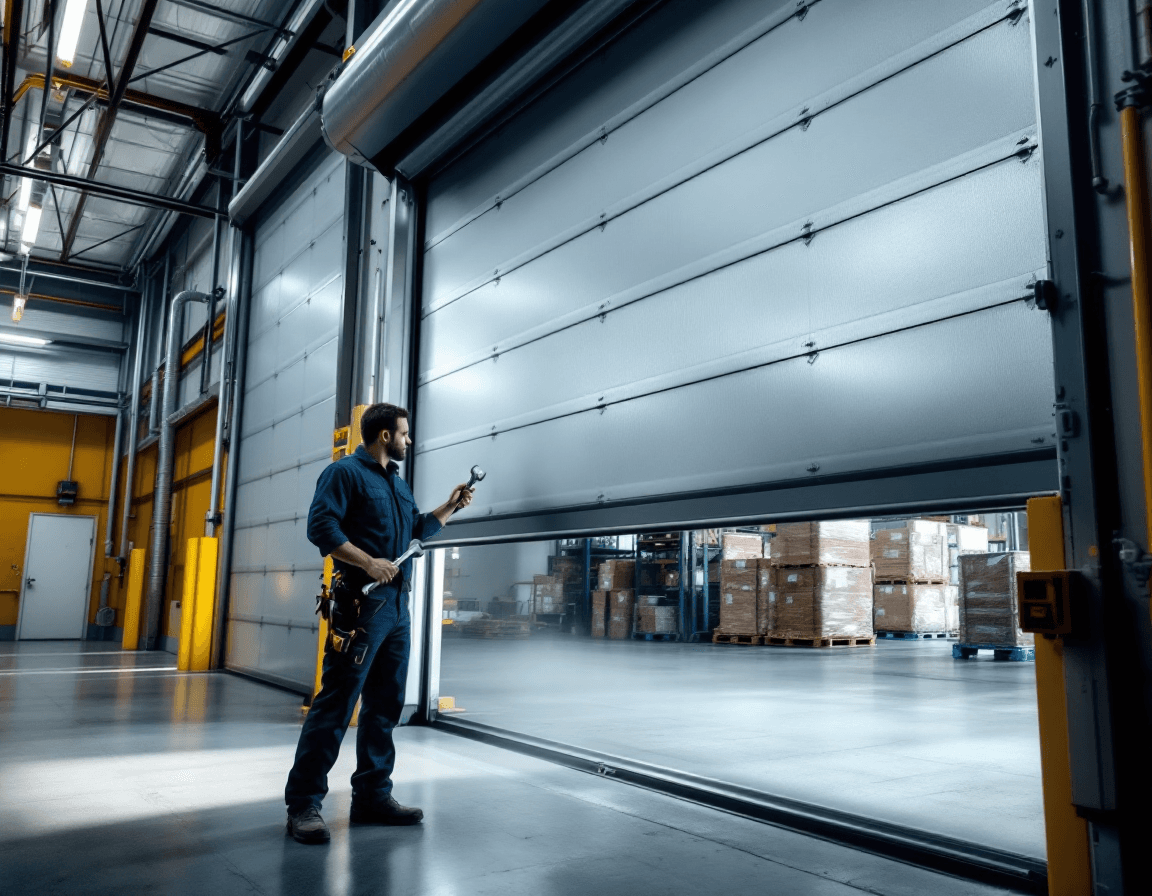
Commercial overhead door repair in Fife, WA keeps freight moving for warehouses, distribution centers, and manufacturing plants along the industrial corridor between the Interstate 5 and State Route 167 interchanges. When a loading-dock door stops in the middle of a shift, the cost goes well beyond the repair bill. Trucks queue, drivers wait, and crews either stand around or reroute product through a door that was never meant to carry the load. Seattle Garage Door Fix works with facility managers, property owners, and maintenance supervisors across Fife and nearby Pierce County to get commercial openings running again with as little disruption as possible.
Our technicians understand that a commercial door is a piece of production equipment, not a background feature of the building. The doors at a Fife warehouse may cycle hundreds of times a day, sometimes at all hours, and they take a constant beating from pallet jacks, reach trucks, and the occasional misjudged forklift turn. This page explains the door types we service, the symptoms that usually show up before a full failure, how we approach custom quotes, and why a preventive maintenance agreement is often cheaper than waiting for the next emergency call. If you manage a site in the 98424 area, the sections below cover the issues we see most often.
Why Loading Docks in Fife Wear Out Faster Than Expected
The Fife industrial area sits on relatively flat ground near the tideflats, and that location brings a mix of conditions that affect metal doors more than many owners expect. Western Washington winters bring long stretches of cold rain, and the moisture that gets pulled into a dock opening by daily truck traffic does not always dry out before the next storm. Salt-laden air drifting in from the water and road treatment residue tracked in on tires can work into hinges, roller stems, and track brackets. Over several years, that combination encourages corrosion, seized rollers, and weak points in the bottom seal.
Temperature swings matter as well. A door that sits in an unheated bay during a cold snap, then cycles repeatedly during a warm afternoon, puts stress on the springs, the lubricant, and the operator's control components. Dock levelers, dock seals, and roll-up doors all share the same opening, so a problem in one part of the assembly often shows up as a problem with the door itself. When we arrive at a Fife facility, we look at the whole opening rather than assuming the door is the only culprit.
Heavy use is the final factor. A dock door that opens and closes forty times a day will show wear on rollers, cables, and hinge pins long before a door that cycles a few times a week. Facilities running two or three shifts should plan for shorter inspection intervals than a single-shift office building would require.
Reading the Early Warning Signs Before a Dock Door Quits
Most commercial door failures announce themselves days or weeks before the door stops. The trick is recognizing those signs and reporting them before they turn into a shutdown during peak receiving. Maintenance staff often hear the problem first, and that sound is worth taking seriously. A grinding or popping noise near the top corners, a rattle that changes pitch as the door rises, or a sudden thump at the end of travel usually points to a worn component that needs attention.
Watch how the door behaves as well as how it sounds. A door that stops briefly partway through its travel, reverses without an obvious obstruction, or needs a second push on the wall control is telling you something about the operator, the safety edges, or the photo-eye alignment. Gaps that appear at the bottom seal, daylight showing at the side jambs, or sections that no longer sit flush with their neighbors all indicate that the door is losing its geometry.
- Grinding, popping, or squeaking at the rollers or track during normal cycles
- Door reversing or stopping mid-travel without a visible obstruction
- Visible gaps at the bottom seal, side jambs, or between panels
- Operator running hotter than usual, humming without moving the door, or tripping its breaker
- Sections bowed, dented, or out of line with the rest of the door
- Slower-than-normal travel that seems to get worse each week
If you notice any of these, schedule an inspection before the next high-volume receiving window. A small adjustment made on a planned basis costs far less than an emergency call on a Friday afternoon when trailers are already backed in.
Sectional Overhead Doors: Panels, Tracks, and Hinge Points
Sectional overhead doors are the most common style on loading docks throughout the Fife corridor, and they are the type most often affected by everyday wear. Each section is a hinged panel that rides vertically up a track on rollers, then turns onto a horizontal track overhead. The panels, hinges, and rollers work as a system, so one damaged component can throw off the entire alignment. A bent track, a loose mounting bracket, or a worn roller can cause the door to rack, bind, or drift to one side.
Commercial sectional doors often use heavier-gauge steel and insulated panels than residential doors, and their track systems are typically built for higher cycle counts. When a section is damaged, replacement is rarely as simple as swapping in a single panel from a shelf. We need to confirm the panel profile, the hinge style, the track radius, and the spring configuration before ordering parts, because mismatched sections can cause fit problems that lead to more damage. Our technicians measure and document the existing system so that replacement parts match the door already installed on your building.
Track alignment deserves particular attention. Track that is out of plumb or out of level creates friction, puts uneven load on the rollers, and accelerates wear on the hinge points. Even a small misalignment that seems harmless can cause a door to bind when the temperature drops, which is exactly when the Fife industrial area tends to see its busiest mornings. Checking track alignment during a planned service visit is one of the simplest ways to prevent a surprise failure later.
Rolling Steel Doors That Jam, Bind, or Leave the Track
Rolling steel doors are common in Fife's warehouses, cold-storage facilities, and wide-opening shipping bays. Instead of hinged panels, these doors use interlocking steel slats that coil into a barrel above the opening. Because the slats wrap around a drum, they depend on tight, consistent guides at each side. When a guide is bent, a slat is kinked, or debris has built up in the channel, the door can jam or slip out of the track entirely.
Jammed rolling doors are often caused by impact damage, such as a pallet truck catching the bottom bar or a trailer backing into the opening at an angle. Even minor deformation in one slat can prevent the curtain from coiling evenly. Attempting to force a jammed door with the operator can make the damage worse and can strain the drive assembly, so we recommend stopping the door, securing the area, and calling for service rather than repeatedly pressing the button.
Off-track events require careful handling. The curtain is under tension from the barrel and counterbalance system, and releasing it improperly can cause sudden movement. Our technicians approach these repairs with proper lockout procedures, controlled tension release, and inspection of the guide rails, brackets, and slats before returning the door to service. Rolling doors that have been off track several times usually need a full guide and bottom bar inspection, not just a one-time reset.
Commercial Operators: When the Motor and Controls Fail
The operator is the heart of a commercial door, and when it fails the whole opening goes dark. Commercial operators differ from residential openers in power rating, duty cycle, and control options. Many Fife facilities use chain or belt drives with industrial motors, along with wall stations, radio controls, sensor systems, and integration with building access systems. When any of those components malfunctions, troubleshooting requires a technician who understands the complete control circuit, not just the motor.
Common operator complaints include a door that will not respond to the wall control, a motor that hums without moving the curtain, or intermittent operation that seems to depend on the weather. Failed limit switches, worn drive chains, damaged safety edges, and misaligned photo-eyes all produce symptoms that look similar from the outside. We test each component in sequence so that replacement parts are only ordered when they are actually needed.
Operators should also be sized correctly for the door they drive. If a door has been upgraded to heavier insulated panels, or if an operator has been replaced with a model that does not match the door's weight and cycle requirements, the system may run hot, fail early, or stop unexpectedly. During a service visit, we check the operator rating against the door specifications and recommend changes when the existing setup is working against the equipment.
Throughput Problems: When the Door Works but Holds You Back
Not every commercial door complaint involves a breakdown. Sometimes the door opens and closes, but it runs so slowly that trucks wait, forklift operators stack up in the aisle, and the dock falls behind schedule. A door that takes thirty or forty seconds to fully open may have been acceptable when the building first opened, but it can become a bottleneck once volume grows or the operation adds a second shift.
Speed issues often trace back to the operator's speed settings, a worn drive, binding track, or a counterbalance that no longer matches the door weight. In some cases, a higher-speed operator or a different door style makes more sense than repeated adjustments to a system that was never designed for the current workload. We discuss these options openly with facility managers because the right answer depends on how the dock is used, how many openings per hour are needed, and what the building layout allows.
Throughput upgrades can also include changes to the controls. Automated open and close timing, sensor placement that reduces unnecessary cycling, and interlock coordination with dock levelers can reduce wasted time without replacing the door itself. We evaluate those possibilities alongside the mechanical condition of the door so that you are paying for improvements that actually affect daily operations.
Forklift Impact Damage and Documenting It for Your Records
Forklift strikes are one of the most common sources of emergency calls at Fife's commercial facilities. A reach truck catching the bottom section, a pallet jack dragging across a rolling door curtain, or a tugger clipping a guide rail can bend steel, crack panels, and knock a door out of alignment in seconds. The damage is often obvious, but the less visible effects on hinges, springs, and tracks can take longer to show up.
After an impact, the first priority is safety. Keep the door out of service until a technician has inspected it, because a damaged section can drop, a bent track can release tension unexpectedly, and a jammed curtain can shift without warning. Take photos of the damage, note the time and location, and record any witness details. Those notes help with insurance claims, internal incident reports, and conversations with your equipment operators about traffic patterns near the door.
Our technicians will inspect the panels, hinges, tracks, springs, and operator components after an impact. Some damage can be corrected with section replacement or track repair, while other damage may indicate that the door's spring system or guides have been compromised and need more extensive work. We provide a written scope of what we found so that you can make decisions based on documented conditions rather than verbal summaries.
Preventive Maintenance Agreements That Protect Your Schedule
A preventive maintenance agreement is one of the most practical ways to protect a commercial operation from unplanned door downtime. Instead of waiting for a failure, the building receives scheduled inspections, lubrication, adjustments, and parts checks at intervals that match how heavily the doors are used. For facilities with multiple openings, an agreement also creates a single point of contact and a documented service history that helps with budgeting.
A typical agreement for a Fife facility might include a review of panel and track alignment, roller and hinge inspection, spring and cable condition checks where applicable, operator testing, safety edge and photo-eye verification, and seal inspection. Technicians also note any items that should be monitored or scheduled for future repair, so that expensive surprises become planned work. The exact scope depends on door type, age, cycle count, and site conditions, so we tailor each agreement rather than offering a generic package.
- Scheduled inspection intervals based on cycle counts and shift patterns
- Lubrication and adjustment of rollers, hinges, and drive components
- Safety edge, photo-eye, and reversing system testing
- Written service reports with photos and recommended repairs
- Priority scheduling for breakdowns during the contract period
- Parts review so commonly worn items can be stocked or ordered in advance
Preventive work is most valuable during the weeks before peak season or when a facility expects a heavy inbound period. A planned visit in the slow months can prevent the kind of failure that shuts a dock during the busiest week of the year.
What a Custom Commercial Quote Includes
Commercial door pricing is rarely a single flat number. Every opening differs in size, door style, panel material, operator type, track configuration, access requirements, and the amount of work needed to restore safe operation. For that reason, we provide custom quotes after evaluating the specific door or doors involved. We aim to return quotes quickly so that decisions can be made without holding up operations longer than necessary.
A complete quote typically separates the immediate repair from any recommended follow-up work. For example, a dock door that is down because of a failed spring or operator may also show worn rollers or a damaged bottom seal that should be addressed while the crew is on site. Presenting those items separately gives your team the option to fix the urgent problem now and schedule the remaining work during a planned window.
We also note parts availability and lead times when they affect the timeline. Some commercial components can be sourced quickly, while custom sections, specialty operators, or specific spring assemblies may take longer. When we know the expected delivery window, we say so, and we suggest temporary measures if the door needs to stay out of service while parts are on order.
Why Spring and Cable Work Belongs With Licensed Technicians
Torsion springs and lift cables on commercial doors store large amounts of energy and must be handled with care. A broken spring or cable can release that energy suddenly, causing serious injury, and the risk is higher on large commercial doors than on most residential installations. For that reason, spring replacement, cable repair, and tension adjustments should only be performed by licensed, trained technicians who understand the specific door's counterbalance system and follow established safety procedures.
Facility staff should never attempt spring or cable work themselves, even if they have experience with smaller doors. Commercial springs are heavier, cables run under greater load, and the door may be counterbalanced in ways that are not obvious from the outside. Lockout and tagout procedures should be followed whenever a door is being serviced, and the area beneath the door should be cleared before any work begins. Our crews use those procedures on every spring and cable job, and we document the steps so that your safety records reflect the work performed.
If you notice a broken spring, a frayed cable, or a door that drops unevenly, keep people away from the opening and call for service. Do not try to hold, lift, or release the door manually. A short delay while a technician arrives is far safer than a rushed repair attempt.
Scheduling Fast Turnaround Around Your Operating Hours
Speed matters in commercial door work, but speed is only useful when it fits the way your facility operates. Some Fife businesses run overnight receiving, others close at a predictable hour, and some need dock access on weekends. We ask about operating hours, delivery windows, and any site rules at the start of each service call so that technicians arrive ready to work during the times that cause the least disruption.
When a door is down and trailers are waiting, our first step is a clear assessment of what is needed to restore safe operation. In many cases, a temporary fix can get one opening back into service while a more complete repair is scheduled. We will tell you what we can do immediately, what needs parts, and what can wait for a planned visit, so that your team can make informed decisions about routing freight and staffing the docks.
For ongoing customers, a maintenance agreement can include priority response windows and inspection visits timed around your slowest periods. Planning ahead turns a potential emergency into a manageable task on the calendar, and that is ultimately the goal of good commercial door service.
Commercial doors keep Fife's industrial sites moving, and they deserve attention before a small problem becomes a shutdown. If your loading dock, rolling steel door, or commercial operator is down, slow, or showing warning signs, call Seattle Garage Door Fix at (888) 799-3819 to request a custom commercial quote. We can review your openings, explain the options, and help you choose between an immediate repair and a planned preventive maintenance agreement.