
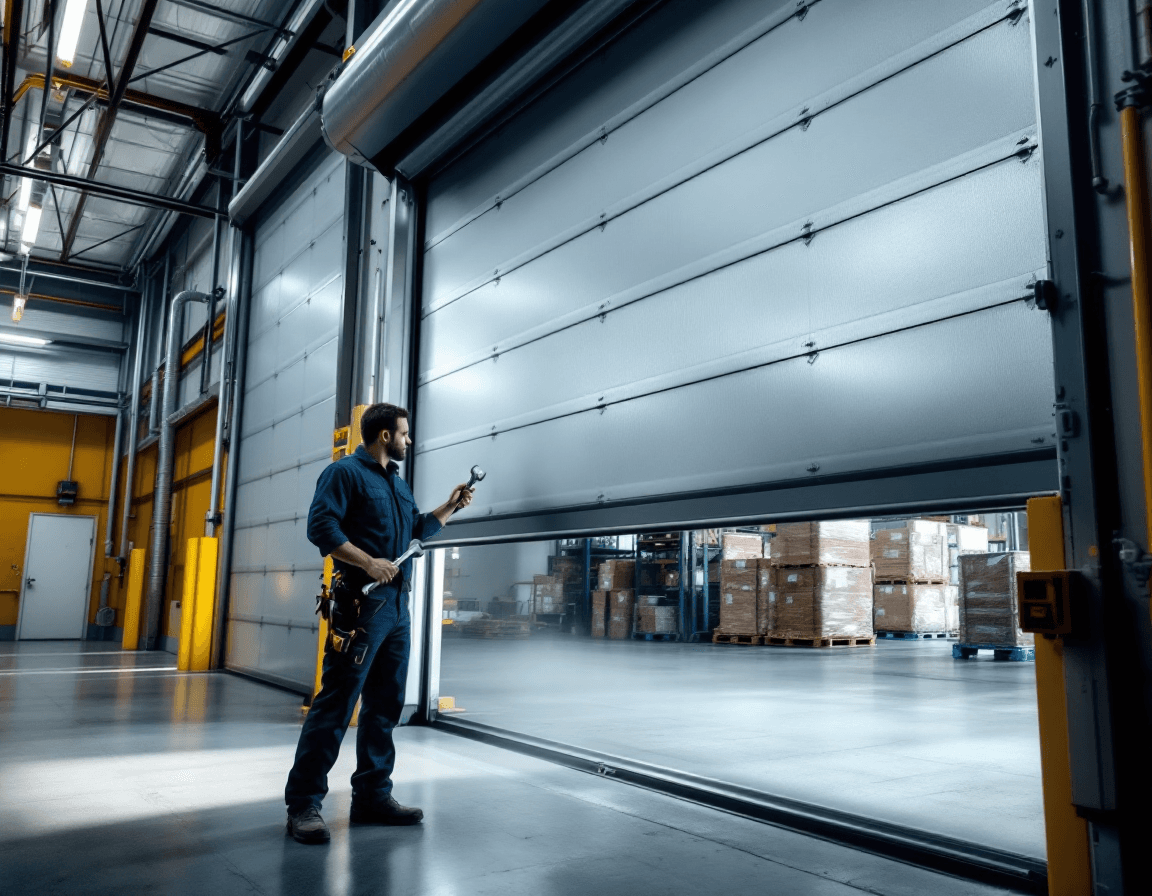
Commercial Overhead Door Repair in Puyallup, WA keeps a warehouse, distribution yard, or loading dock running, and when a door fails, the cost shows up in missed trucks, idle crews, and product that sits on the wrong side of a closed opening. Puyallup businesses run on tight schedules: agricultural and nursery shipments moving through the valley, contractors staging materials for job sites in Pierce and King counties, and retailers receiving freight before the morning rush. A dock door that won't open at 6:00 a.m. is a serious problem, not an inconvenience.
Seattle Garage Door Fix provides commercial overhead door repair across Puyallup and the surrounding Pierce County communities, including sectional overhead doors, rolling steel doors, commercial operators, and scheduled preventive maintenance. Our technicians are licensed, bonded, and insured, and we approach every commercial call with one priority in mind: getting your door safely moving again as quickly as the job allows. This page explains the problems we see most often in Puyallup, how we diagnose them, and how a maintenance plan can keep small wear from turning into an emergency.
Why a Stalled Dock Door Costs More Than the Repair Itself
When a dock door stops working, the repair invoice is usually the smallest number on the list. A loading bay that can't open ties up drivers, forces receiving to work around the problem, and often pushes deliveries into overtime or onto a different shift. For a business in the Puyallup area that depends on steady truck traffic off Meridian, Highway 512, or the Valley industrial corridors, a single offline door can slow an entire operation for a full day.
This is why we treat commercial calls differently from residential service. Before we quote anything, we want to understand what the door does for your operation: how many bays you have, what time your heaviest traffic arrives, whether the door is the only exit for a pedestrian path or fire route, and how long you can realistically wait for parts. Some repairs can be completed in a single visit with stock components, while others require ordering a replacement section or a specific operator, and knowing that early lets you plan around the downtime.
Our custom commercial quotes are written around these realities. Instead of a generic price sheet, we outline the diagnosis, the recommended repair, the parts we expect to need, and the realistic timeline. Fast turnaround matters to us, but so does an honest estimate that doesn't leave you with a second surprise visit three days later.
Reading the Warning Signs Before a Door Quits
Commercial doors rarely fail without warning. In most cases, the door has been telling you something for weeks, through a change in sound, a slight hesitation at the top of its travel, or a panel that no longer sits flush. Facility managers who catch these early avoid the situation where a door closes on a Friday afternoon and doesn't reopen until Monday.
The most common early signals we hear about from Puyallup operators include the following:
- Grinding or popping noises during the first few feet of travel, which often point to worn rollers or a loose track bracket
- The door pausing or reversing briefly when it reaches the top or bottom limit, a sign that the limit settings or safety sensors need attention
- Visible daylight at the bottom seal or between sections after a windy night, which can mean seals have hardened or sections have shifted
- A door that drifts out of level, opening unevenly on one side
- An operator that hums or strains before the door begins to move
- Sections that have developed a bow, dent, or crack after a minor bump
Any one of these can have a simple cause, but a combination usually means it's time for an inspection. We recommend writing down what you observe, including the time of day and the outside weather, because that detail helps our technicians narrow the diagnosis faster when they arrive.
Rolling Steel Doors That Jump the Track
Rolling steel doors are common on Puyallup storefronts, mechanic bays, and older brick buildings downtown, where a coiling curtain saves floor space and provides solid security after hours. They are also prone to a specific failure: the curtain slats slip out of the side guides, or the door binds partway through its travel and refuses to continue. Once a curtain is out of track, forcing it can bend slats, twist the shaft, or damage the hood, which turns a quick realignment into a larger job.
Our technicians start by checking the guides for debris, bent steel, and worn sections where the curtain rides. Grit from the street, sand tracked in from parking lots, and leaf and moss buildup are common in Puyallup's damp months, and they can wedge the slats enough to cause the door to walk sideways. We also inspect the curtain for slats that have lost their interlocking tabs, because a single damaged slat can cause the entire curtain to misalign as it coils.
If a rolling door has been jammed by a vehicle or equipment, we look carefully at the shaft, brackets, and barrel before attempting to restart it. Springs on rolling steel doors are under substantial tension, and if the curtain has been forced beyond its normal path, the spring assembly can be compromised. Spring and cable work on any commercial door must be done by a licensed professional with the proper tools and training, and we will never recommend that property staff attempt to adjust tension or release a wound spring themselves.
Operators That Lose Their Nerve
A commercial operator takes a lot of abuse. It may cycle dozens or hundreds of times a day, and in a busy receiving area it works through the heat of summer and the cold, damp mornings of a Pierce County winter. When an operator fails, the door may not move at all, may move slowly, or may open partway and stop. Each of those symptoms points to a different part of the system, which is why a proper diagnosis matters more than simply swapping the motor.
We check power supply first, including breakers, disconnects, and wiring at the control panel, because a loose connection or a tripped circuit can mimic a dead operator. Next we look at the limit settings, since an operator that has lost its position memory may run into the stop prematurely or refuse to start. We also test the safety edges, photo eyes, and interlocks, since commercial doors are required to stop and reverse when something blocks them, and a faulty sensor will keep the operator from running at all.
Mechanical wear is the other major factor. A sluggish operator may be working harder than it should because the door is out of balance, the track is dirty, or the rollers have seized. Replacing a motor without addressing the underlying load often produces a second failure within months. We aim to fix the cause, not just the symptom, and we'll explain the difference in plain language on your quote so you can decide how to proceed.
When a Slow Door Becomes a Throughput Problem
Some commercial doors still work but are simply too slow for the business that depends on them. A door that takes forty or fifty seconds to fully open, when a driver needs to back in and out of a bay several times an hour, quietly eats into productivity. Staff learn to wait on it, trucks queue in the yard, and the bottleneck becomes normalized until someone finally asks why the dock feels so sluggish.
Speed problems usually trace back to a few causes: an operator that is undersized for the door's weight, a door that has grown heavier from added insulation or heavier sections, friction in the tracks, or a control setting that deliberately limits travel speed. Some of these can be corrected with adjustment and maintenance. Others suggest that the operator or door should be upgraded to better match your current throughput needs.
We approach this as a planning conversation rather than a sales pitch. If a faster operator or a different door style would meaningfully improve your daily flow, we'll say so and explain the trade-offs, including installation time, electrical requirements, and how the change affects safety. If a simple adjustment is enough, we'll tell you that too. The goal is a door that serves your schedule without unnecessary spending.
Forklift Strikes and What Happens to the Panels
Forklift impact is one of the most frequent reasons Puyallup facilities call us for commercial door damage. A pallet jack or forklift catching the lower section of a sectional door, or clipping the corner of a rolling curtain during a tight turn, can bend a section, crack a panel, pull a hinge out of alignment, or knock a track out of square. Even when the door still looks mostly intact, the hidden damage can cause uneven travel, premature wear, and safety concerns.
After an impact, we recommend keeping the door closed if it's safe to do so and calling for an inspection before it's cycled repeatedly. Continued use can drive a bent section further out of line or put stress on the springs and cables. Our technicians check each section for straightness, examine hinges and rollers, verify that the track is still plumb and level, and confirm the springs and cables have not been overloaded. Where a section is cracked or deformed beyond repair, we can source a replacement section that matches the existing door's dimensions, insulation, and profile.
Preventing impact damage is often simpler than repairing it. Bollards, dock guards, clearly marked travel lanes, and a brief walk-through of lane discipline with drivers and forklift operators can reduce the number of strikes considerably. We are happy to point out likely impact zones during a site visit and suggest practical protection that fits your yard layout.
Puyallup Weather and the Hidden Toll on Commercial Doors
Western Washington's climate is kind to lawns and hard on steel. Puyallup gets its share of wet winter weather, persistent drizzle, and humid stretches that keep moisture sitting on door surfaces longer than dry-climate facilities would experience. Over time, that moisture can work its way into hinges, rollers, bottom seals, and the bottom bracket of the door, where rust and corrosion can slowly seize moving parts. Galvanized components usually hold up well, but scratched finishes and cut edges are still vulnerable.
Temperature swings matter as well. Cool, damp mornings and warm afternoons cause metal to expand and contract, which can loosen fasteners and shift tracks slightly over time. Rain-soaked grit tracked in from parking lots and gravel yards can build up in the bottom seal channel and track corners, creating drag that the operator must overcome every cycle. Seasonal mud and leaf debris, especially near the Puyallup River valley and the tree-lined residential edges of South Hill, can also clog drainage at the threshold.
Preventive attention during the damp months pays off. Keeping tracks clear, checking that weatherstripping still seals, and making sure the threshold drains properly are low-cost tasks that reduce the strain on operators and springs. We include these items in our maintenance visits because they are the small details that keep a door reliable through a long Pacific Northwest winter.
Preventive Maintenance Agreements Built Around Your Operating Hours
A preventive maintenance agreement gives a commercial facility a predictable schedule of inspections and adjustments instead of waiting for a breakdown. For many Puyallup businesses, that means fewer emergency calls, longer equipment life, and the ability to plan service around quiet periods rather than during peak receiving. The agreement can be tailored to the number and type of doors you operate, from a single rolling steel door on a small shop to a fleet of sectional dock doors across a larger distribution building.
A typical visit covers the items that most often lead to failure. The checklist below reflects the work we commonly include in a maintenance plan, though the exact scope is always confirmed during your site assessment:
- Lubrication of hinges, rollers, and track surfaces using products suited to the door type and local conditions
- Inspection of springs, cables, and drums for wear, with any tension or cable work performed only by our licensed technicians
- Testing of operator limits, safety reversal, photo eyes, and edge sensors
- Checking bottom seals, weatherstripping, and threshold drainage for winter and spring performance
- Verifying track alignment, bracket tightness, and section level
- Documentation of findings so you can track wear trends over time
Scheduling matters as much as the service itself. We work with your operations manager to set visit times that avoid peak receiving windows, and we can coordinate around seasonal peaks, such as the increased event and vendor traffic that comes through the area during the Washington State Fair in late summer. Advance planning keeps your doors running when they matter most.
Serving Puyallup and the Surrounding Pierce County Communities
Our commercial service covers Puyallup and nearby communities across ZIP codes 98371, 98372, 98373, 98374, and 98375. Businesses in the downtown core often deal with older buildings, rear loading alleys, and tight turning space, where door geometry and access constraints shape every repair decision. Operations along the South Hill corridor frequently juggle a mix of retail, service, and light industrial traffic, which means doors that are used heavily during certain hours and idle at others. Businesses near the Washington State Fair grounds see seasonal spikes when vendors, event contractors, and temporary suppliers need reliable roll-up and sectional access on tight schedules.
Because our technicians regularly work across the Puyallup Valley and nearby Pierce County communities, we understand how traffic patterns, delivery windows, and weather affect commercial doors in this part of the state. We bring replacement parts and tools for the most common commercial door types, and when a job requires a special order, we'll tell you the expected lead time up front. Our licensed, bonded, and insured team can work during standard business hours and coordinate after-hours or off-peak service when your operation requires it.
If your business sits just outside these ZIP codes or spans multiple locations in the region, call us and we'll confirm coverage for your specific site. We would rather tell you clearly what we can do than promise something we can't deliver.
Our Commercial Quoting Process, Step by Step
Every commercial job starts with a conversation about what your door needs to accomplish. We ask about the door type, approximate size, operator make if known, recent symptoms, and how the door fits into your daily flow. If you have photos or a short video of the problem, send them along, since they often help us prepare the right parts and tools before we arrive.
Next, a technician inspects the door and operator on site. We check the mechanical components, electrical supply, safety devices, and structural condition, then talk through what we found in plain terms. Our custom quote lists the recommended repair, any optional upgrades, the parts we expect to need, and the timeline for completion. If a temporary safety measure is needed, such as locking out a damaged door until parts arrive, we'll explain that as well so your team knows exactly what to expect.
For ongoing customers, quoting can be simplified through a maintenance agreement, where routine items are scheduled and emergency repairs follow pre-agreed pricing structures. Whether you need a single repair or a long-term plan, the goal is the same: clear pricing, honest recommendations, and a door that works when your business needs it to.
Safety Standards We Hold Firm On
Commercial doors involve significant spring tension, heavy sections, and powered operators, and the safety rules around them are not optional. Our technicians are trained to recognize hazards, lock out power before working on the door, and avoid working under unsupported sections. We will never ask your staff to adjust springs, release tension, or manipulate cables, and we recommend that property managers keep unauthorized personnel clear of the door path during any service.
Between visits, a few simple habits help keep everyone safe. Train staff to report unusual noises, sagging sections, or doors that reverse unexpectedly rather than trying to force them. Keep sensors clean and unobstructed, and make sure pallets, carts, and equipment are kept clear of the door's travel path. If a door is damaged or behaving erratically, take it out of service and call a licensed professional rather than attempting a fix yourself.
Our licensed, bonded, and insured team follows these standards on every commercial call in Puyallup and across the broader region. Safety is not a step we skip to finish faster; it is the reason we take the time to diagnose properly and explain our recommendations clearly.
Your loading dock or warehouse door shouldn't dictate your schedule. If your commercial overhead door is down, jammed, slow, or damaged, or if you'd like to set up a preventive maintenance agreement for your Puyallup facility, call Seattle Garage Door Fix at (888) 799-3819. Tell us what your door is doing and when your business needs it running, and we'll get a licensed technician out to assess the problem and provide a clear, custom quote with a realistic timeline.