
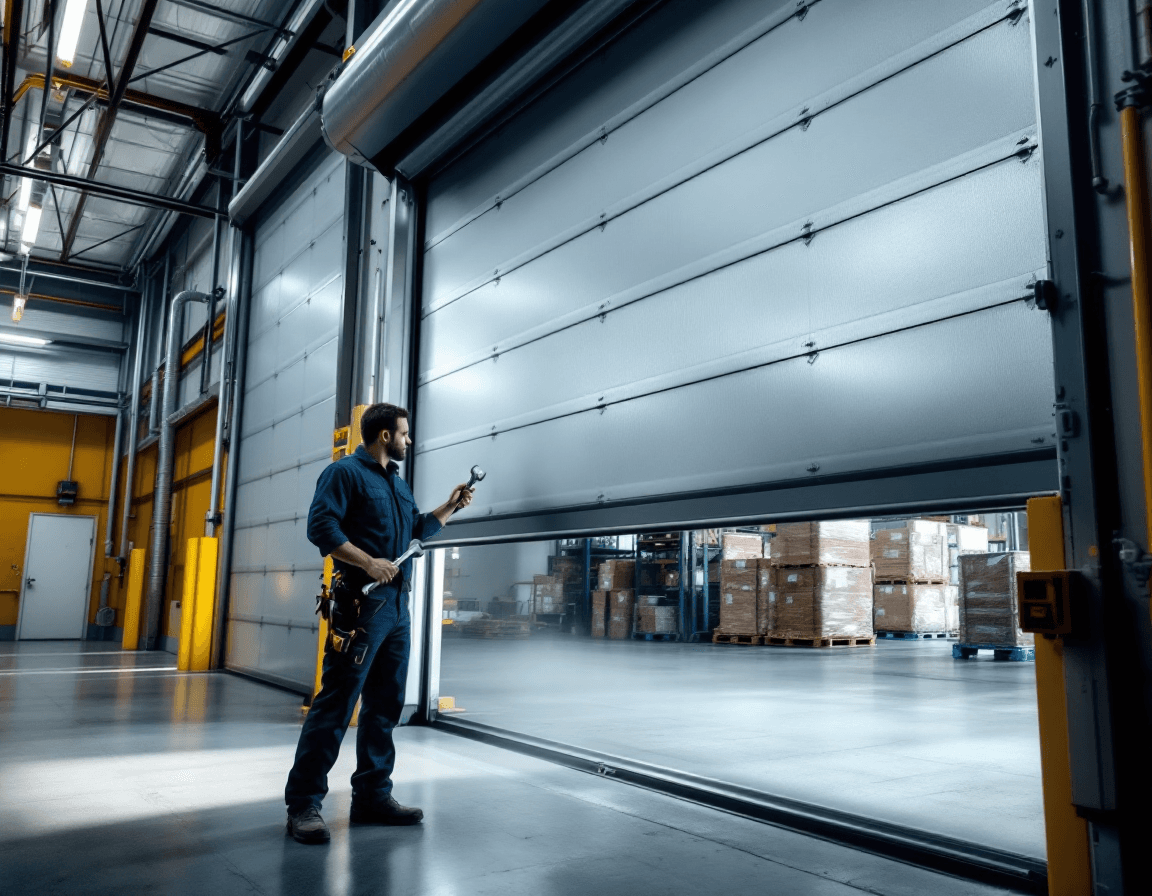
Commercial overhead door repair in Sumner, WA is a different kind of call from a residential spring replacement. When a warehouse or loading-dock door stops moving, trucks back up, shifts stall, and product sits on the wrong side of a steel panel. Our team works with commercial facilities across Sumner and the wider Pierce County corridor, including properties near Downtown Sumner and the business and service areas that serve the Lakeland Hills community. We know the first question is almost always how quickly the opening can be safely returned to service, and that answer depends on the door type, the failure, and what your operation needs during the repair window.
The Puyallup River valley shapes how doors wear in this part of the Pacific Northwest. Winters are long and wet, spring brings heavy condensation and humidity swings, and summers can still be dry and dusty near busy truck routes. Those conditions push moisture into bottom seals, speed up rust on exposed steel, and gradually loosen hardware that is vibrated by daily heavy traffic. This page walks through the most common commercial door problems we see in and around Sumner, how to recognize early warning signs, and how custom quotes and preventive maintenance agreements help keep a dock running.
Why Sumner Loading Docks Age Differently
Sumner's commercial buildings tend to combine older brick or masonry frontage with newer tilt-up or metal-clad warehouse construction, and the dock doors on those buildings take a steady pounding. Pallet jacks, forklifts, and tractor-trailers come and go throughout the day, and every cycle of a door adds a little stress to springs, rollers, tracks, and operators. A door that cycles fifty times a day in a distribution setting ages much faster than a garage door that opens twice daily for a family. The wear is not only mechanical; it is also environmental.
Several local factors tend to show up again and again on commercial openings in this area. The wet season saturates bottom weatherstripping and can cause water to pool in tracks that were never sloped for heavy runoff. Winter road spray and grit from truck traffic settle into roller channels and hinge knuckles. Cold mornings stiffen seals and lubricant, which can make a door sound loud or labored until temperatures rise. Keeping these factors in mind helps explain why a door that worked fine last summer may start complaining in November.
- Wet-season moisture can migrate into bottom seals, sensor housings, and operator enclosures.
- Road grit and tire debris accumulate in tracks, rollers, and the lower corners of the door.
- Daily high-cycle use multiplies the effect of any worn hinge, roller, or cable.
- Forklift and truck contact can knock panels, guides, and sensors out of alignment without immediate visible damage.
Reading the Early Signals Before a Dock Door Goes Down
Most commercial door failures announce themselves well before the door stops completely. A facility manager or dock lead who notices small changes can often schedule a repair during slow hours rather than scrambling during a peak shipping window. The trick is recognizing that a noise, a slower cycle, or a crooked gap is more than a cosmetic annoyance. Each of those symptoms usually points to a specific component that is beginning to fail.
Listen for grinding or popping during travel, because it often signals roller wear, a track that has shifted, or a bearing that has run dry. Watch whether the door rises and lowers at a steady speed, or whether it hesitates and then lurches. Look for gaps at the bottom or sides when the door is closed, which can mean the lock bar is out of alignment, the bottom seal has torn, or the track is no longer seated evenly. Pay attention to the door's auto-reverse behavior, since a door that reverses for no apparent reason may have a misaligned photo eye or safety edge.
If any of these signs appear, record the date, time, and conditions. Note whether the problem happens in the morning, after rain, or only under a heavy load, because technicians can use that information to narrow the diagnosis faster. Do not try to force a stuck door open or run it repeatedly while it binds, since that can turn a manageable repair into a damaged panel or a failed operator.
Sectional Overhead Doors on High-Cycle Openings
Sectional doors are the most common style on loading docks and warehouse bays across Sumner. Their insulated or uninsulated panels ride up vertical and horizontal tracks, with rollers, hinges, and counterbalance springs working together to lift a heavy door with manageable effort. On a busy dock, the failure points tend to be the rollers, the hinge hardware between panels, and the tracks themselves, which can loosen or bend after repeated impacts. Each of those components can fail gradually, so the door may keep operating while the stress builds.
Replacing rollers is one of the most frequent repairs on high-cycle sectional doors, and it is often worthwhile to upgrade to higher-quality sealed or steel-tired rollers when the original parts are worn. Hinge replacement is more involved because a damaged hinge can distort the panels it connects. Track adjustment and reinforcement are equally important, since a track that has drifted even a fraction of an inch can cause the door to bind at a specific height. A careful technician checks the entire assembly, not just the obvious broken piece, to make sure the repair will hold under daily use.
Counterbalance springs on commercial sectional doors store a great deal of energy and must be handled only by licensed professionals with proper tools and training. This is one area where a shortcut can injure someone badly. Any time a commercial spring is changed, the technician should also verify cable condition, drum alignment, and safety features before the door returns to service.
Rolling Steel Doors That Jump the Track or Bind
Rolling steel doors are common at storefronts, warehouses, and secured service entrances around Sumner, and they behave differently from sectional doors. Instead of panels hinged together, a rolling steel door is made of interlocking slats that coil around a barrel above the opening. Guide channels on each side keep the curtain tracking straight as it moves. When a rolling steel door jumps out of its guides, the cause is often a bent slat, a damaged guide, a worn bottom bar, or a curtain that has been pulled off center by an impact.
Binding is another common complaint, and it can come from debris packed into the guide channels, a bent section near the hood, or a barrel that is no longer rotating evenly. Dust and grit from loading activity collect in the channels over time, especially near docks where pallets and carts are staged close to the opening. Cleaning and inspecting the channels can prevent many binding issues, but a bent curtain or a misaligned barrel requires skilled repair. Trying to straighten a rolling door by hand can cause injury and make the damage worse.
Spring tension on rolling steel doors is also a licensed-professional job. These systems are under substantial load, and releasing that tension incorrectly can cause serious harm. If your rolling door is off track or jammed, shut down the operator, keep people clear of the curtain, and call for service rather than attempting to lift, pry, or tap the door into place.
Commercial Operators and Throughput Bottlenecks
Many dock and warehouse doors are powered by commercial operators rather than residential-style openers. These units are designed for higher duty cycles, longer runs, and more demanding safety requirements. When an operator fails, the whole opening can become unusable, so the repair priority is high. Operator issues range from simple limit-switch misadjustment to failed motors, control boards, drive chains, or belts.
Throughput problems are less dramatic but just as costly. A door that takes noticeably longer to open or close can slow a truck turn, back up a yard, and cut into the number of trailers a crew can process in a shift. Common causes include worn drive components, improperly set speed or limit parameters, sluggish sensors that trigger unnecessary stops, and tracks that create friction. A technician can often recover much of the original cycle speed by adjusting settings, replacing worn parts, and checking the balance of the door.
Safety devices deserve equal attention. Entrapment protection, including photo eyes and safety edges, must function correctly on commercial openings, and industry standards such as UL 325 set expectations for how these systems should respond. Sensors that have been bumped, dirtied, or misaligned by forklift traffic may cause nuisance stops or fail to detect an obstruction. We recommend testing these devices as part of any operator service call.
Forklift Strikes and Replacing Damaged Sections
Forklift impacts are among the most common causes of visible damage on commercial sectional doors. A tine can crack a panel, dent a corner, bend a hinge, or knock a section out of its track. Some impacts look minor from the outside but disturb the alignment of the entire door, creating binding or uneven travel that appears days later. Because of that, it is wise to inspect the whole door after any strike, even if the damage seems limited to one panel.
Replacing a damaged section is often more practical than repairing it, especially when the panel is bent or the insulation has been compromised. The replacement needs to match the existing section in thickness, profile, color, and hardware pattern so that the door tracks and seals correctly. Lead times for specific panels can vary, so it helps to start the parts conversation early, and we will tell you what we know about availability before work begins. In the meantime, a temporary measure, such as securing the opening or limiting operation, may be needed to keep the building safe.
After any impact, document what happened. Take photos of the damaged area, note the time, and record whether the door is operating normally. This record can support insurance claims, help the technician diagnose hidden damage, and give your team a clear view of how the incident affected operations. Consistent documentation also makes it easier to spot a pattern if the same bay is struck repeatedly.
- Photograph the impact area from several angles, including the track and the floor.
- Note whether the door moves smoothly, makes new noises, or shows gaps.
- Check whether any bollards, dock bumpers, or lane markings need repositioning.
- Keep any removed hardware or broken parts until the technician has reviewed them.
Wet-Season Corrosion and Winter Condensation
The Pacific Northwest's long wet season is hard on steel. Commercial doors that sit under overhangs, face the weather, or see frequent wash-down often develop surface rust, flaking paint, and corroded fasteners. Condensation forms on cold metal during temperature swings, and it can run into bottom seals, sensor housings, and operator boxes. Over several seasons, that moisture quietly degrades components that were never designed to sit wet.
Preventive attention can slow this process considerably. Keeping tracks and the lower frame clear of leaves, grit, and standing water helps reduce corrosion and keeps rollers turning freely. Bottom weatherstripping that is cracked or flattened should be replaced before it lets in water, drafts, or pests. Fasteners and hinge pins that show early rust can be cleaned, protected, or replaced before they seize or fail. Inspecting sensors and operator enclosures for moisture intrusion is equally valuable, since electrical faults often begin with a damp connection.
Weather also affects the door's balance and seals. A door that was properly set in summer may feel heavier or stiffer in deep winter, and seals that were snug in October may gap by February. Seasonal inspections help catch these changes early. For facilities with large openings, a spring check after the rainy months can reveal damage that accumulated quietly through the winter.
Custom Quotes Built Around Your Downtime
Commercial door work is priced on a custom basis because every opening is different. A single dock may need a roller and bottom seal replacement, while another requires a full operator upgrade, track reinforcement, and a new curtain. We do not publish one-size-fits-all rates for commercial repairs, because the right scope depends on the door type, its age, the parts required, access constraints, and how the facility wants the work sequenced. Our goal is to give you a clear, written quote that reflects the actual job.
Quotes usually start with information about the door and the problem. Photos, a description of the symptoms, the door's make and approximate age, and any available model numbers help us prepare a more accurate estimate. When a site visit is needed, we plan it around your operating schedule where possible. The quote should explain what is included, what is not, whether temporary measures are recommended, and how the work will be scheduled to minimize disruption.
Turnaround matters as much as price in commercial settings. We focus on moving quickly when a door is down, sourcing parts efficiently, and coordinating with your team so that a loading bay is not left idle longer than necessary. Where safety allows, we can discuss options such as after-hours work, phased repairs, or temporary operation limits that keep some throughput moving while the permanent fix is completed. Those decisions are best made together with your operations lead.
Preventive Maintenance Agreements for Sumner Facilities
A preventive maintenance agreement gives a facility a predictable schedule for inspecting and servicing its overhead doors. Instead of waiting for a failure, the technician checks components on a regular basis, catches developing problems, and documents the condition of each opening. For operations where a single down door can disrupt shipping, receiving, or production, that predictability is often more valuable than any single repair. It also helps facility managers plan budgets and parts purchases.
A typical maintenance visit can include lubrication of moving parts, inspection of rollers, hinges, tracks, and springs, testing of safety devices, review of operator settings, and a check of weatherstripping and fasteners. The technician can recommend repairs or upgrades and provide a written summary of findings. Over time, those records reveal patterns, such as a particular bay that wears faster because of nearby traffic, or a door that needs its operator adjusted each season. The scope and frequency of service are tailored to each facility, and we will outline the specifics in writing before any agreement begins.
Preventive work is especially useful in Sumner's climate because the wet season and seasonal temperature changes accelerate wear in predictable ways. Scheduling inspections before winter and again in spring helps address moisture, corrosion, and seal problems at the points where they usually begin. Facilities that run around the clock may also benefit from more frequent safety checks, since their doors experience higher cycle counts than a standard daytime schedule would produce.
Why Spring and Cable Work Stays With Licensed Professionals
Every commercial overhead door repair involves some degree of safety risk, but counterbalance springs, torsion systems, and cable assemblies carry the highest stakes. These components store large amounts of mechanical energy, and a failure during installation, adjustment, or removal can cause severe injury. A broken spring can recoil with enough force to cause lasting harm, and a cable that comes off its drum can drop a heavy door unexpectedly. That is why spring and cable work should always be performed by licensed, trained, and properly equipped professionals.
Our team is licensed, bonded, and insured, and we treat spring and cable work as a specialized task that requires correct tensioning, proper winding tools, and verification of every safety component before the door returns to service. We do not recommend that facility staff or property owners attempt these repairs themselves, even if they have general mechanical experience. The stored energy in a commercial spring is different from anything most people handle in daily life, and the consequences of a mistake are serious.
If your dock or warehouse door shows signs of spring or cable trouble, such as a visibly stretched or broken spring, a cable that has jumped its drum, a door that drops or rises unevenly, or a loud snap during operation, shut the door down, keep the area clear, and call for service. Waiting or attempting a quick fix can turn a single broken part into a damaged door, a damaged vehicle, or an injury. A careful, professional repair protects your people, your equipment, and your schedule.
Commercial overhead door repair in Sumner is most successful when problems are caught early, quotes are clear, and the work is done by people who understand both the equipment and the operation it supports. Whether your loading dock has gone down, a rolling steel door is jammed, an operator is slowing your throughput, or you simply want a preventive maintenance plan that keeps problems from stopping shipments, our team is ready to help. Call (888) 799-3819 to describe your doors, share photos if you have them, and request a custom commercial quote built around your schedule and your downtime priorities.