
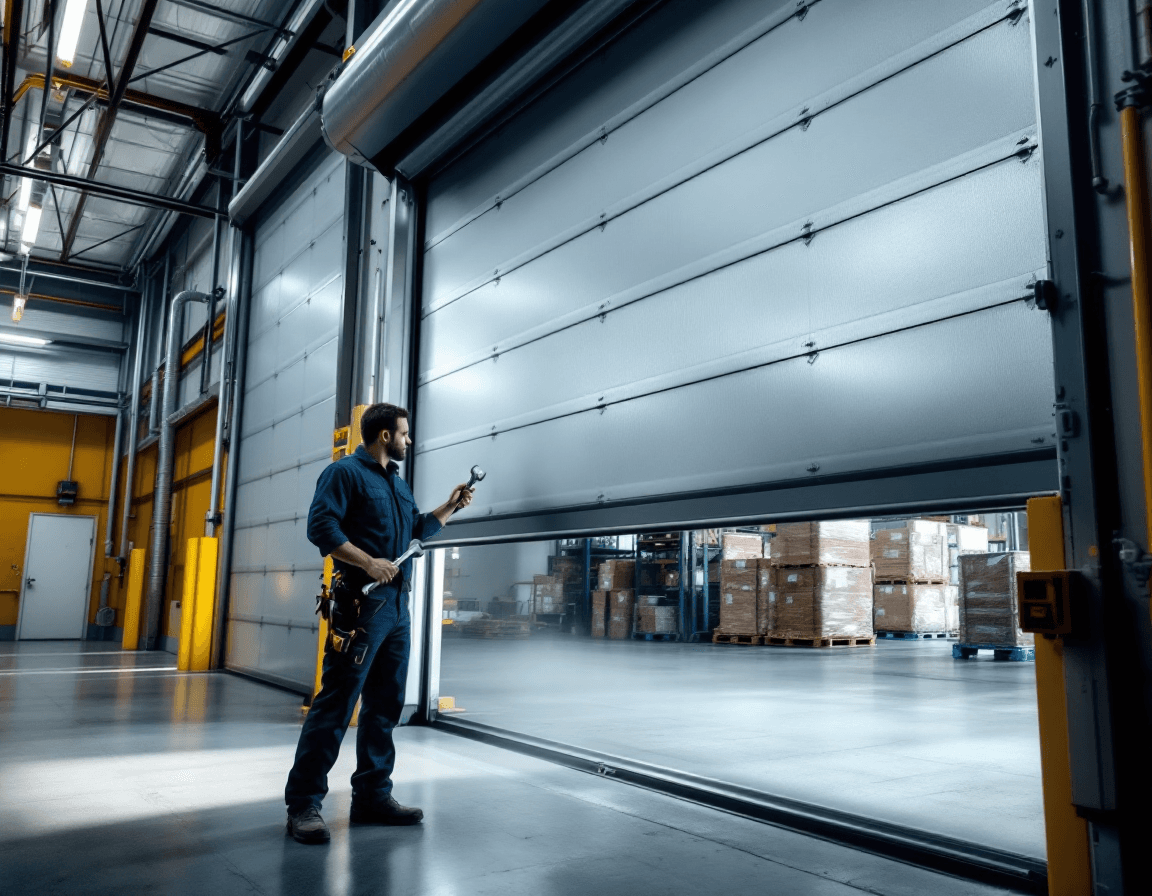
Commercial overhead door repair in Algona, WA is rarely a convenience call. When a loading dock door stops mid-cycle or a rolling steel door hangs crooked at the opening, a warehouse or light manufacturing operation loses trucks, pallets, and crew hours until someone gets it moving again. Algona sits in the Green River valley, where winter rain, damp mornings, and heavy vehicle traffic along the surrounding corridors all put steady wear on commercial doors. Our team at Seattle Garage Door Fix handles sectional overhead doors, rolling steel doors, commercial operators, and preventive maintenance for businesses in ZIP codes 98001 and 98047.
Most business owners do not think about their doors until something goes wrong, and by then the options are narrower and more expensive. A door that worked fine last month may already show a sagging bottom seal, a sluggish operator, or a track that has started to drift. Catching those early signs usually means a shorter visit, fewer parts, and less disruption to your schedule. This page explains what we see most often on commercial openings in and around Algona, how we approach custom quotes, and why a preventive maintenance plan can be worth more to your operation than any single emergency repair.
Whether you manage a single bay off Algona Boulevard or coordinate several dock doors along the Pacific Algona corridor, the goal is the same: get the door safe, get it moving, and keep it that way. Below you will find practical guidance on diagnosing problems, what affects repair scope, and how to plan maintenance around your real operating hours. If you need someone on the phone now, call (888) 799-3819 and describe what the door is doing.
Why a Stalled Loading Dock Door Costs More Than a Service Call
When a dock door fails, the invoice from the technician is often the smallest number on the page. Trailers back up, drivers wait, scheduled pickups slip, and staff who would normally be moving freight end up standing around the opening waiting for a fix. For many Algona operations, one door sitting idle during a shift can ripple through the rest of the day's throughput. That is why we treat commercial calls as time-sensitive from the first conversation.
Commercial doors also carry a higher safety load than residential ones. They are larger, heavier, and often cycled dozens or even hundreds of times a day. A panel that has been weakened by a forklift strike or a failing spring can drop with real force, so a door that is down needs to be secured and tagged out before anyone works near it. We will talk you through temporary safety steps over the phone when possible, including keeping traffic clear of the opening and disconnecting power to the operator where appropriate.
Planning for this kind of downtime is part of responsible facility management. Many businesses keep a short list of who to call, what the door model is, and where the original documentation lives. Having the door's manufacturer, approximate size, and operator brand on hand speeds up both diagnosis and quoting. It also helps us bring the right parts on the first visit rather than making a second trip that adds hours to the outage.
Reading the Warning Signs Before a Warehouse Door Quits
Commercial doors rarely fail without warning. They usually announce their trouble through small changes in sound, speed, or alignment that build over weeks. The trick is recognizing those changes before they become a full stoppage. Operators and crews who use the door every day are often the first to notice, so it helps to train them to report even minor oddities.
Here are the symptoms we hear about most often from Algona warehouse and dock managers:
- The door slows noticeably between open and close compared with a few months ago
- Grinding, popping, or scraping sounds during travel, especially on cold or damp mornings
- The door stops partway and then resumes after being pressed again
- Visible gaps at the bottom seal or along the side jambs that let in water, leaves, or pests
- Panels that look slightly out of line when the door is closed, or a horizontal seam that has shifted
- An operator that runs hot, hums without moving the door, or trips its safety reverse for no clear reason
Any one of these can have a simple cause, such as a dirty track or a loose bracket. Several together often point to a worn roller set, a misaligned track, or an operator that is working harder than it should. We will look at the whole system rather than patching one symptom, because a door that is fixed in one spot but still out of balance will likely return with a new problem within a short time.
Rolling Steel Doors That Jump Track or Jam in Wet Weather
Rolling steel doors are common on storage bays, warehouse entries, and smaller commercial fronts throughout Algona. They are efficient, compact, and tough, but their coiling curtain and guide tracks leave little room for error. When a rolling steel door jumps out of its guides or binds partway up, the cause is usually friction, debris, or a bent guide rather than a catastrophic mechanical failure. Winter moisture makes this worse, because grit and road spray gather in the tracks and harden as they dry.
A jammed rolling door should never be forced. Pushing hard on a curtain that is out of its guide can bend slats, twist the shaft, or damage the operator. Our technicians inspect the guides for dents, check the curtain for slat separation or kinks, and examine the counterbalance hardware that helps the door lift smoothly. Where a guide has been pushed out of square, we realign it and confirm the door tracks evenly from top to bottom before it returns to service.
Seasonal maintenance makes a noticeable difference for these doors. Clearing the guides of accumulated grit, lubricating moving parts with products suited to the application, and checking that the bottom bar still clears the floor evenly can prevent many jams. We also look for signs of corrosion along the curtain and shaft, since prolonged dampness in unheated storage areas can speed up rust. Catching that early keeps the door from seizing when you need it most.
Commercial Operators and Why Slow Travel Hurts Throughput
The operator is the heart of a commercial door system, and when it begins to lag, the whole operation feels it. A door that takes noticeably longer to cycle may not seem like a crisis, but across dozens of daily trips it adds real minutes to every truck turnaround and every forklift run. Algona businesses that move freight on tight schedules often discover this slowdown only after it has already cost them time.
Slow travel usually traces back to a few predictable sources. Motors lose efficiency as brushes, capacitors, or controllers age. Drive chains or belts stretch or collect contamination. Limit settings drift, forcing the operator to work through a larger range before reaching its stop points. Each of these can be corrected, but the right fix depends on the operator brand, its age, and how heavily the door is used. We evaluate the operator under load, not just at rest, so we can see how it behaves when the door is carrying its real weight.
If the operator itself has reached the end of its useful life, replacement is often more economical than repeated repairs. We will explain the tradeoffs clearly, including what a newer unit might change in cycle speed, safety features, and control options. Any replacement is matched to the door's size, weight, and duty cycle so that the new operator does not overwork the door or stress the existing hardware.
Forklift Strikes: Assessing Damaged Sections Without Guessing
Forklift contact is one of the most common causes of damage to commercial overhead doors in busy industrial areas. A single misjudged approach can crack a panel, bend a track, or knock a section out of alignment. Sometimes the damage is obvious, with a visible dent or split seam. Other times the door looks fine at first glance while hidden stress is working its way through the hinges, rollers, and spring system.
When we inspect a struck door, we look beyond the panel that took the hit. Impact can shift the track, unseat a roller, or loosen the hinge line that holds sections together. Springs may be overstressed if the door has been forced past its normal travel. Because torsion and extension springs carry substantial energy, any assessment that involves tension or winding must be handled by a licensed professional with the right tools and training.
Repair scope depends on the extent of the damage. A single panel may be replaceable without touching the rest of the door, while a bent track or twisted shaft may call for a more complete correction. We provide a clear written breakdown of what is damaged, what is recommended, and what each option costs, so you can decide how to proceed. We also suggest practical ways to reduce future strikes, such as bollards, floor markings, or traffic flow adjustments, if your site layout makes repeat impacts likely.
Sectional Door Panels, Hinges, and Rollers on Heavy-Use Openings
Sectional doors are the workhorses of many Algona dock and warehouse openings. Their insulated or non-insulated panels stack neatly overhead and open a wide clear span, which suits busy facilities. The weak points tend to be the hinges that join the panels, the rollers that guide them along the track, and the seals that keep out drafts and water. Each of these components wears in its own way, and each can affect how the door performs as a whole.
Rollers deserve particular attention in our climate. Steel rollers can flatten or pit over time, while nylon versions may crack or lose their shape under constant load and temperature swings. A worn roller forces the panel to track unevenly, which stresses hinges and can make the door bind or chatter. Replacing rollers in matched sets helps the door stay balanced, and we check the track radius and alignment at the same time so the new parts are not fighting an out-of-spec path.
Bottom seals and weatherstripping are easy to overlook but important for energy use and for keeping water out of the building. Winter rain and standing water near dock approaches can find their way under a worn seal and cause problems on the floor and in nearby equipment. Replacing a seal is a modest job compared with dealing with water damage, so we often recommend checking it at every maintenance visit.
Spring and Cable Work Belongs in Licensed Hands
Torsion springs and extension springs on commercial doors store a large amount of energy, and cable systems carry significant tension as well. When these components fail or need adjustment, the forces involved can cause serious injury if handled improperly. This is not a task for a do-it-yourself project or an untrained helper, and it is one of the main reasons we insist on licensed professionals for any spring or cable work on commercial openings.
Our technicians are licensed, bonded, and insured, and they follow proper lockout procedures before touching any spring or cable component. They use the correct winding bars, safety equipment, and sizing references for the door's weight, height, and drum configuration. If a spring has broken, the entire assembly is evaluated, because a replacement spring must match the original specifications and work in harmony with the rest of the system. Mismatched springs can overload the operator or leave the door unbalanced.
If you notice a broken spring, a cable that has come off its drum, or a door that drops unexpectedly, do not attempt to lift it or force it open. Keep people clear of the opening, secure the door in its current position if it is safe to do so, and call a professional. Our phone line can help you decide on immediate steps while a technician is on the way.
How Our Custom Commercial Quotes Are Built
Every commercial job is different, so we do not rely on a single flat price for overhead door work. Custom quotes reflect the door type, its size and weight, how many openings are involved, the operator system, access conditions, and how quickly the work needs to happen. A simple roller replacement on a single sectional door will look very different from a multi-door assessment following a forklift incident, and our pricing reflects those realities rather than guesses.
When we prepare a quote, we typically consider several factors that influence both cost and schedule:
- The number of doors involved and whether they share a common operator or control panel
- Door type, such as sectional, rolling steel, or high-speed specialty doors, and the availability of matching parts
- Whether the work can be completed during off-hours to avoid interrupting active dock operations
- Access requirements, including lift equipment, site safety rules, and insurance paperwork some facilities require
- Whether repairs are best handled as a one-time fix or bundled into an ongoing maintenance schedule
Our goal is fast turnaround with minimal downtime. In practice that means scheduling diagnostic visits quickly, giving you a clear written scope, and sequencing repairs so the most critical openings return to service first. We will tell you plainly when a repair makes sense and when a replacement will serve your operation better over the long run, so the decision is based on your budget and your schedule rather than a sales push.
Preventive Maintenance Agreements for Busy Algona Facilities
Preventive maintenance is the most effective way to keep commercial doors dependable, and it is often more economical than repeated emergency calls. A structured maintenance agreement typically includes scheduled inspections, lubrication, adjustment of tension and balance where applicable, track and roller checks, safety reversal testing, and a review of the operator's performance. Over time, this routine catches small problems before they become stoppages.
For Algona facilities, a maintenance plan can be tailored to your operating pattern. A distribution center running around the clock may need more frequent visits than a small shop that opens five days a week. Seasonal attention can also help, since winter moisture and summer heat each stress doors in different ways. We can schedule visits during quieter periods, document each inspection, and provide a summary so your facility manager has a clear record of the door's condition.
A maintenance agreement also gives you a predictable budget and a direct line to a technician who already knows your openings. That familiarity shortens troubleshooting time when something does go wrong, because the history of each door is already on file. If you have multiple locations in or around Algona, we can coordinate visits across sites so that your team deals with one point of contact instead of several vendors.
Planning Around Algona's Weather and Operating Hours
The Pacific Northwest climate shapes how commercial doors age. Long wet stretches in the cooler months bring moisture into tracks, seals, and hardware, while occasional dry, warm spells can cause metal components to expand and contract. Damp conditions encourage corrosion on exposed steel, and grit carried in on wet tires or boots can accumulate in guides and rollers. Doors in unheated or partially enclosed storage areas often feel these changes most sharply.
Operating hours matter just as much. A facility that runs early shifts, late deliveries, or weekend loads needs repairs timed around its busiest windows. We work with managers to identify quiet periods for planned maintenance and to set expectations for emergency response. Clear communication about which openings are critical, which can wait a day, and which need immediate attention helps us prioritize our work and keep your trucks moving.
Good planning also means having a few basics in place before trouble starts. Keep the door's model information, operator details, and any service history in one accessible location. Train staff to report unusual sounds or movement promptly, and to keep the area around each door clear of obstructions. These habits cost little but can shorten an outage significantly and make every repair visit more productive.
If your Algona or Pacific Algona corridor facility needs a custom quote, an assessment after recent door damage, or a preventive maintenance plan that keeps your openings running, call Seattle Garage Door Fix at (888) 799-3819. Describe the door type, what it is doing, and how urgent the situation is, and we will help you choose the fastest safe next step.