
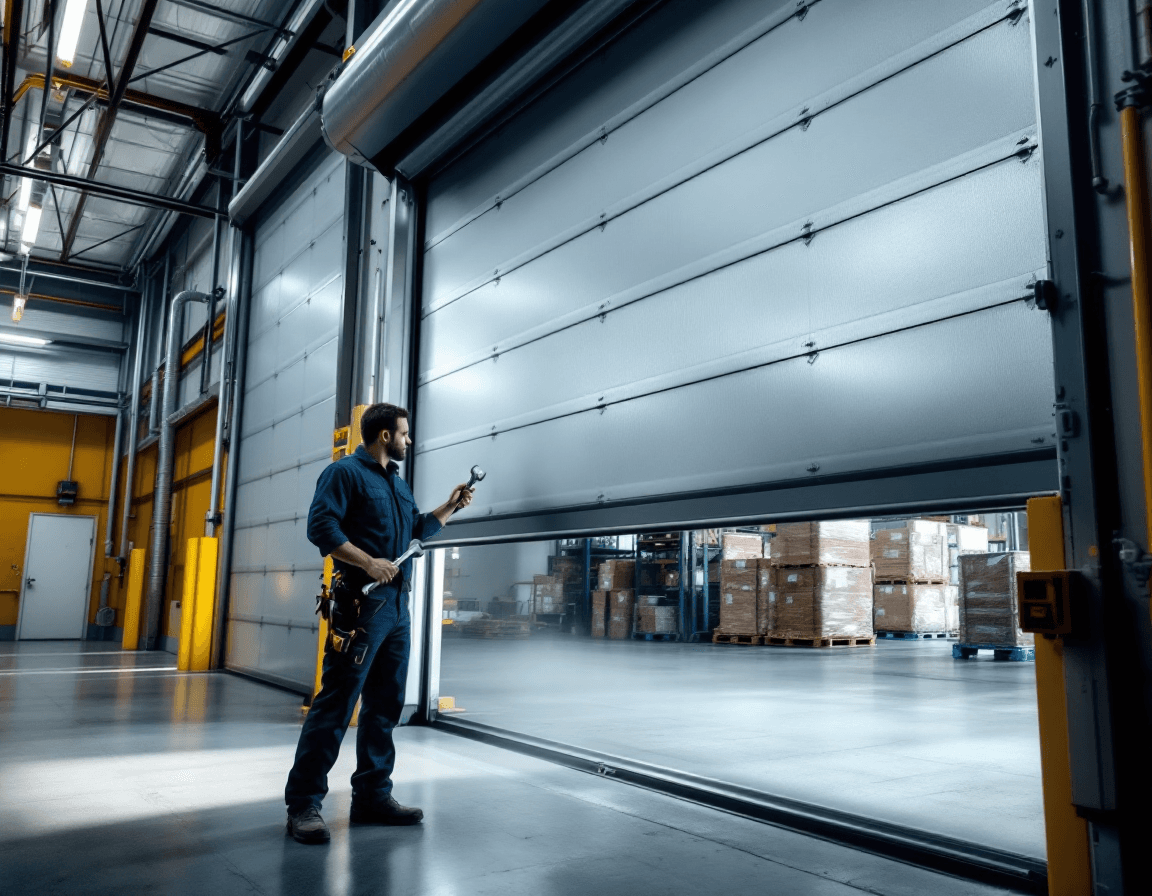
Commercial overhead door repair in Lake Forest Park, WA is a different job from a residential service call, and businesses here feel the difference quickly. When a warehouse, service bay, or loading dock door stops working, trucks back up, staff stand around, and deliveries slip to the next shift. Seattle Garage Door Fix supports commercial properties across Lake Forest Park and the surrounding 98155 area, from small retail spaces near the Towne Centre to light industrial units tucked along the arterials that run toward Bothell and Shoreline. We know that the first question on a facility manager's mind is usually "how fast can you get this moving again?"
This page explains the problems we see most often on commercial sites in and around Lake Forest Park, including sectional overhead doors, rolling steel doors, commercial operators, and the preventive maintenance programs that keep busy doors from failing at the worst possible moment. It also covers how we approach pricing, since every commercial opening has its own size, duty cycle, and hardware history. Our goal is to help you understand what is happening with your door before a technician arrives, so you can make informed decisions about repair versus replacement and about scheduling.
Every commercial job we take starts with the same principle: get the door safe, get it working, then plan the longer fix. Commercial doors carry heavier loads, cycle far more often than residential doors, and sit under tension systems that can cause serious injury if handled incorrectly. That is why our technicians are licensed, bonded, and insured, and why we always recommend qualified professionals for any spring or cable work. The sections below walk through the most common scenarios and what you can reasonably expect when you call us.
How the Lake Forest Park Climate Wears on Dock Hardware
Lake Forest Park sits in the wet, mild climate typical of King County, where long stretches of drizzle and damp air are interrupted by occasional hard freezes and dry late summers. For a commercial door, that cycle matters more than most owners realize. Moisture works its way into bottom brackets, roller stems, and hinge pins, and over time it turns lubricated metal into a surface that grinds, sticks, or corrodes. Doors that sit near loading docks, wash bays, or open-air staging areas often show this wear first.
Temperature swings also affect how a door behaves. A steel curtain that runs smoothly on a mild October afternoon can bind on a cold January morning when the metal contracts and the lubricant thickens. We see many calls in the colder months where a door that was "fine last week" suddenly hesitates or stalls partway through its travel. Those symptoms usually point to lubrication breakdown, worn rollers, or a balance problem that was masked by warmer conditions.
Seasonal patterns in the Pacific Northwest also influence maintenance schedules. Many commercial operations in the Lake Forest Park area experience a surge in traffic during the holiday retail season and again during spring construction and landscaping demand. Planning a service visit in the quieter weeks before those peaks is far easier than trying to squeeze repairs in during a rush. Keeping an eye on how your door sounds and moves during the wet months gives you early warning before the dry season arrives.
Diagnosing a Loading Dock Door That Won't Open
When a warehouse or loading-dock door goes down completely, the first step is determining whether the problem is electrical, mechanical, or a safety device doing its job. A door that refuses to move may have a tripped circuit, a failed control station, a sensor that is misaligned or dirty, or a mechanical obstruction such as a jammed section or a broken cable. Our technicians work through these possibilities methodically, because replacing a motor when the real problem is a blocked photo eye wastes time and money.
Safety sensors deserve special attention on commercial sites. Photo eyes mounted near the floor are easily knocked out of alignment by pallet jacks, sweepers, and forklift traffic, and a fresh coat of dust or road grime can make the beam unreadable. If the sensor is out of line, the operator will often refuse to close or will reverse immediately, which can look like a motor failure to an untrained eye. Cleaning the lenses and confirming alignment solves a surprising number of "dead door" calls.
Sometimes the door is physically blocked. A pallet left under the curtain, a bent bottom bar from a previous impact, or a section that has popped out of its track will stop any operator cold. In these cases, we will never attempt to force the door or manually release a loaded spring system without proper training and equipment. Instead, we isolate power, secure the door, and document the condition before proceeding with a repair plan that protects both the crew and the building.
Rolling Steel Doors That Jump the Track or Jam
Rolling steel doors are common on commercial storefronts, warehouse bays, and service entrances throughout the Lake Forest Park corridor. Unlike sectional doors, which move on a series of rollers and tracks, a rolling steel door coils around a barrel above the opening as it lifts, and it relies on guides that keep the slats or curtain running true. When one guide shifts, bends, or fills with debris, the curtain can jump the track, bind, or telescope out of square.
Jamming often starts gradually. You may notice a scraping sound, a slight lean in the curtain, or a spot where the door pauses before continuing. Ignoring these early signs usually leads to a more serious failure, such as a bent slat, a damaged barrel, or an overloaded motor. We recommend having a technician inspect guides, end locks, and curtain alignment as soon as a rolling door starts behaving unusually.
Repairs on rolling steel doors can range from straightening a guide and replacing a worn bearing to rebuilding a section of curtain. Because the curtain and barrel carry significant tension, these repairs require careful handling and the right equipment. We discuss the options clearly with you before any work begins, so you understand whether a targeted repair will restore reliable operation or whether the door is nearing the point where replacement makes better financial sense.
Commercial Operators and When the Motor Goes Quiet
Commercial operators are the drive units that lift and lower heavy doors, and they run far longer and harder than residential openers. A typical warehouse door may cycle many times per shift, and the motor, gearbox, limit settings, and control circuitry all take a beating. When the operator fails, the door may hum without moving, click repeatedly, stop partway through its travel, or simply show no response at all.
Limit settings are a frequent culprit. If the travel limits drift, the door may stop short of fully closing or continue past the point where it should stop, which can stress the curtain and the drive system. Adjusting limits is a task that requires attention to safety devices and to the specific operator model, so we verify that reversing edges and sensors respond properly after every adjustment. A door that closes without confirming its safety features are working is not ready for service.
Control stations, radio receivers, and keypad systems also need periodic checks. Dock levelers, access systems, and building management connections can all interact with the operator, and a fault in one can appear as a motor problem. We test each control point during a service visit and document what we find, so you know whether the issue is the operator itself, the wiring, or an accessory that can be replaced without changing the core drive.
Operators also have a limited lifespan, and the decision to repair or replace depends on age, parts availability, the door's condition, and how much downtime the building can tolerate. Our pricing reflects that balance. We provide custom commercial quotes after an on-site assessment, and we aim to turn those quotes around quickly so that your team is not waiting days for a decision while the dock sits idle.
Forklift Damage and Deciding Between Repair and Replacement
Forklift impact is one of the most common reasons commercial sections fail. A tine that clips the bottom panel, a load that swings during a turn, or a rushed backing maneuver can crack a section, bend a track, or knock a hinge out of alignment. In Lake Forest Park, where many facilities share tight access roads and loading courts, these incidents happen more often than owners would like, and the damage is not always visible from the outside.
After an impact, we inspect the full door, not just the obvious dent. Hidden problems such as misaligned tracks, stressed hinges, and damaged rollers can cause binding or uneven lifting weeks after the initial hit. A single damaged section can often be replaced without replacing the entire door, provided the panel style and hardware are still available. Matching sections is important, because mismatched panels can affect insulation, appearance, and the way the door tracks through its curve.
Deciding between repair and replacement comes down to the extent of the damage, the age of the door, the condition of the springs and operator, and the cost of ongoing downtime. If the impact has compromised the frame or the track system, a full replacement may be the more durable choice. If only one or two sections are affected and the rest of the door is sound, a focused repair is often the faster and more economical route. We walk through both options with you and explain the trade-offs in plain language.
Keeping Dock Throughput High When Doors Slow Down
A door that opens slowly can quietly cost a business more than a door that is completely broken. When a dock door takes twice as long as it should to cycle, trucks idle longer, drivers wait, and staff build workarounds that increase the risk of injury. Slow operation often signals wear in the drive system, binding in the tracks, unbalanced tension, or a motor that is working harder than its design intends.
We measure door speed and observe the full cycle during a service visit. Many slowdowns trace back to a handful of causes: dry or contaminated tracks, worn rollers that add friction, an operator set to a conservative speed profile, or a spring system that is no longer balancing the door correctly. Each of these has a practical fix, and many can be addressed in a single visit without a major equipment change.
Throughput is also about reliability. A door that works most of the time but occasionally stalls can be more disruptive than one that is consistently slow, because operators cannot plan around unpredictable behavior. When you describe your daily cycle counts and peak hours, we can recommend adjustments and maintenance intervals that keep the door performing predictably through your busiest periods.
What to Expect From a Commercial Repair Visit
Every commercial visit follows a structured process, because downtime is expensive and safety is non-negotiable. Our technicians arrive prepared to work around active operations, and we coordinate with your facility contact so that the dock or bay is available when we need access. Here is what a typical visit includes:
- A safety walk-through to identify hazards, confirm the door is secured, and verify that power isolation points are clear
- A functional test of the door, operator, and all safety devices, including reversing edges and photo eyes
- Inspection of tracks, rollers, hinges, bottom seals, and curtain or section condition
- Documentation of findings with photos and notes, so you can review the scope before approving work
- A custom quote for repairs or replacement components, with an estimated timeline for completing the work
- Recommendations for preventive maintenance intervals based on the door's use and the local conditions
We understand that facility managers often need to approve spending through internal channels, and the documentation helps with that process. If the door can be safely returned to service the same day, we will do so. If parts need to be ordered, we will tell you the expected lead time and keep you updated so there are no surprises.
Preventive Maintenance Agreements for Busy Lake Forest Park Sites
A preventive maintenance agreement is the most reliable way to avoid emergency calls on commercial doors. Rather than waiting for a failure, a scheduled program checks the door on a regular cycle, catches early wear, and keeps lubrication, balance, and safety systems within specification. For sites with heavy daily use, this approach often costs less over time than repeated emergency repairs and unplanned downtime.
A thorough maintenance visit typically includes lubrication of moving parts appropriate to the door type and climate, inspection of rollers and bearings, checks on track alignment and fasteners, testing of safety devices, and review of operator settings. Because our region experiences damp winters, we pay close attention to corrosion and to lubricants that can handle moisture. We also look for early signs of cable fraying, worn hinges, and seal deterioration, which are easy to miss when a door is working normally.
The right interval depends on how often the door cycles and how critical it is to your operation. A lightly used storage bay may only need periodic checks, while a busy dock may benefit from more frequent visits during peak seasons. We tailor the agreement to your site, and we document each visit so you have a clear service history. Ask us about options when you call, and we will explain what each level of coverage includes without pressure to sign up for more than you need.
Safety Around High-Tension Springs and Commercial Hardware
Commercial overhead doors are counterbalanced by torsion or extension springs under significant tension, and that energy can cause severe injury if a spring breaks or is released improperly. Spring work, cable replacement, and any task that involves stored energy should be left to licensed professionals with the right tools, training, and experience. We do not recommend that facility staff attempt these repairs, and we will always explain when a job falls into this category.
Safety also extends to the daily operation of the door. Staff should be trained to keep hands and loads clear of the opening, to report unusual noises or movement immediately, and to avoid using a door that is visibly damaged or behaving erratically. Simple steps such as marking safe zones, keeping floors clear of debris, and ensuring forklift drivers understand clearance limits can prevent many accidents. When we visit, we point out any practices that increase risk and suggest practical improvements.
Working safely also means respecting the building's other systems. Dock seals, levelers, and fire or access controls may be connected to the door, and changes to one component can affect another. We coordinate with facility staff before making adjustments that could influence those systems, and we confirm that everything returns to safe operation before we leave the site.
Getting a Custom Commercial Quote Without Guesswork
Commercial pricing is rarely one-size-fits-all, and we do not believe in quoting a number before we have seen the door. Factors such as opening size, panel style, operator type, access conditions, required lead time for parts, and whether work must happen after hours all shape the final estimate. Our custom quotes are built from the on-site assessment, so you receive a scope that reflects your actual conditions rather than a generic range.
To help us respond quickly, it is useful to have a few details ready when you call. Note the door type if you know it, describe the symptoms and when they started, and tell us whether the door is completely down or still operating with limitations. Photos of the damage or the control panel can speed up the initial assessment. Let us know your operating hours and any restrictions on access, since those affect scheduling as well.
We aim to provide clear, written quotes that separate immediate safety repairs from recommended upgrades. That separation gives you flexibility. You can address a critical failure today and plan additional improvements during a slower period, all while keeping a documented record of what has been done. Our team is available to talk through options, and you can reach us at (888) 799-3819 to schedule a commercial assessment for your Lake Forest Park property.