
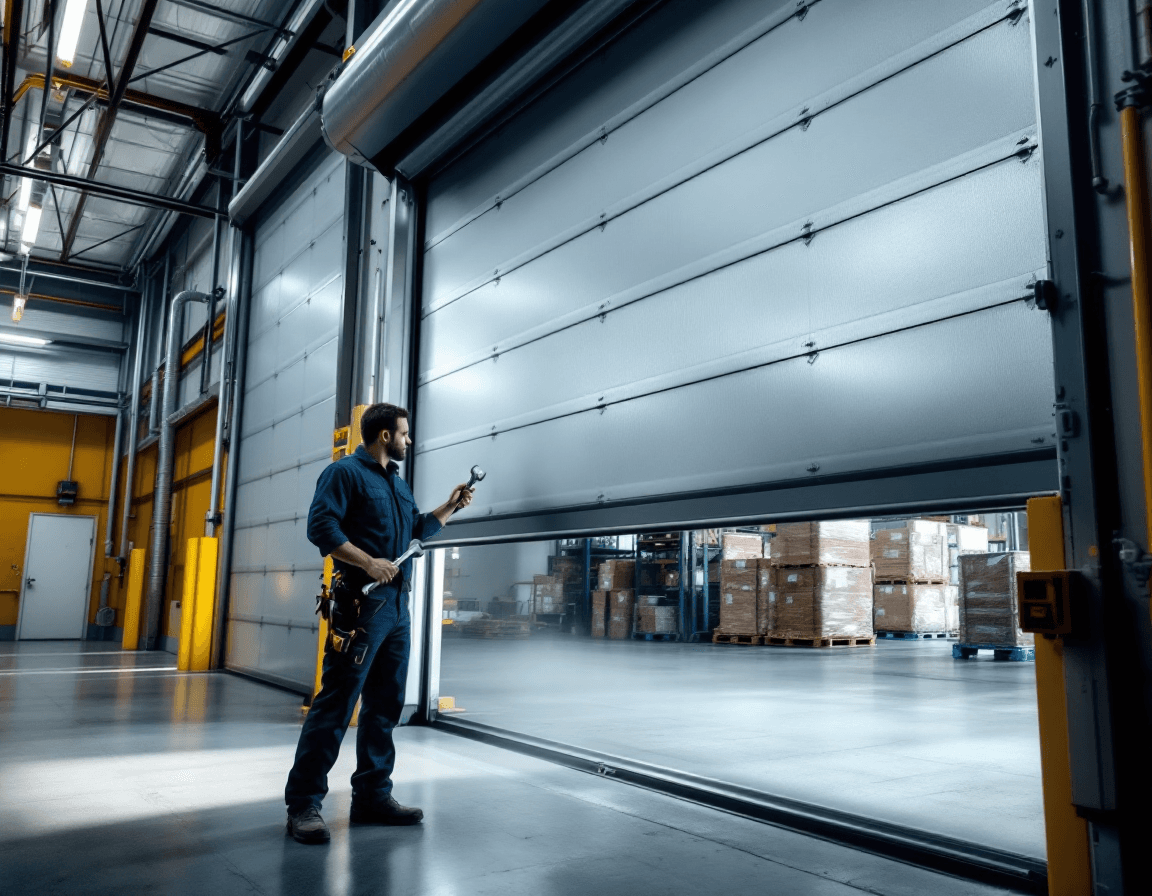
Commercial overhead door repair in Kenmore, WA is a different job from residential garage service. When a warehouse, auto shop, or loading dock loses its main door, the cost is measured in stalled trucks, idle crews, and orders that slip past the cutoff. Kenmore sits on the northeast shore of Lake Washington, with a mix of light industrial, contractor yards, and service businesses tucked between the waterfront and the main arterials. Many of these operations run on tight schedules, so an overhead door that sticks or stops is not a minor inconvenience.
Seattle Garage Door Fix handles commercial sectional doors, rolling steel doors, commercial operators, and ongoing preventive maintenance for businesses in ZIP 98028 and across Western Washington. We prioritize quick diagnosis, clear written quotes, and repairs scoped to keep your dock moving. This page explains the common problems we see, what they usually mean, how weather affects heavy doors in this region, and how to plan repairs and maintenance so your business is not caught off guard.
Whether you manage a single bay near the Kenmore waterfront or several doors across a larger site, the goal is the same: get the door safe, reliable, and back in service with minimal disruption. Read through the sections below to see what to watch for, what to tell us when you call, and how a maintenance plan can prevent the emergency that interrupts your schedule. If your door is down right now, skip ahead to the safety notes and then call us directly.
Why Downtime Hits Kenmore Businesses Harder Than You Expect
A door outage at a commercial site rarely stays a door problem for long. If a delivery truck cannot back into the bay, the driver waits, the freight gets rerouted, and your staff scrambles to find another way to load or unload. Many local operations in the Kenmore and Bothell corridor depend on predictable timing for contractors, supply runs, and customer pickups, so one stuck door can ripple through the whole week. The cost is not only the repair invoice but the lost hours that come with it.
That is why we treat commercial calls with a different sense of urgency than residential ones. When you describe a dock door that is down, we ask practical questions first: Is the door fully closed or partially open? Is the operator making noise, or is it silent? Is there visible damage to the curtain, the track, or the bottom seal? Those answers help us decide whether a technician should come out the same day with parts on the truck or whether a temporary workaround will hold until a planned repair window.
Keeping downtime short also depends on how well the door has been documented. Facilities that keep a simple record of the door's make, model, serial plate location, and the date of the last service give technicians a head start. Photos of the door's control station, the panel labels, and any previous repair invoices speed up the diagnosis considerably. A little organization before a breakdown can save a day or more when the breakdown finally arrives.
Reading the Early Warning Signs on a Loading-Dock Door
Most commercial door failures announce themselves well before the door stops. You may notice a slower rise, a grinding sound at the top of travel, or a door that seems to pause halfway and then continue. Sectional doors often show uneven movement, with one side lifting higher than the other, which can signal worn cables, a loose drum, or a bearing that needs attention. Catching these signs early usually means a smaller repair and a lower risk of getting stuck on a busy morning.
Warning signs do not always involve the door itself. A control station that takes several presses to respond, a keypad that works intermittently, or a safety edge that triggers without an obvious cause can all point to wiring or sensor issues. Commercial operators have photo eyes, edge sensors, and limit settings that drift over time, and a misaligned sensor can make the door reverse or refuse to close. We recommend logging these behaviors when they occur so the technician can recreate the problem rather than guessing.
- Door hesitates, stalls, or reverses at the same point in its travel every time
- Visible gaps at the bottom seal or the sides after the door reaches the floor
- Grinding, popping, or knocking from the top rollers or the header area
- Operator runs but the door barely moves, or moves only in one direction
- Control station responds slowly or only after repeated button presses
- Sections show new dents, cracked panels, or a bowed profile after a bump
If you see any combination of these signs, schedule a service visit before the door fails completely. A technician can usually identify whether the issue is mechanical, electrical, or a safety sensor problem with a focused inspection. Acting early keeps repair scope smaller and lets you plan around business hours instead of reacting to a full shutdown.
When a Rolling Steel Door Jams or Comes Off Track
Rolling steel doors behave differently from sectional doors because the curtain of interlocking slats coils around a barrel above the opening. When one side of the curtain drifts out of its guide, the door can jam or ride partly off the track, and forcing it will usually make the damage worse. These doors are common on storefronts, shop bays, and secured storage areas, and they are particularly sensitive to debris, bent guides, and uneven tension. Our technicians inspect the guides, the curtain alignment, and the barrel assembly before attempting any reset.
In the Pacific Northwest, rolling doors take a beating from moisture and grit. Winter rain carries sand and road grime into guide channels, and that mix can harden into a stubborn buildup that slows the curtain and strains the motor. Fasteners can loosen over time as the steel expands and contracts with temperature swings, which is why we check bolts and brackets during every visit. Keeping the guides clean and free of debris reduces the chance of a sudden jam at the worst moment.
Never attempt to pry a rolling steel curtain back into its guides while the door is under tension or the operator is connected to power. Lock out the power, keep hands clear of the curtain and barrel, and call a licensed technician. Rolling doors store significant energy in their spring or motor systems, and a sudden release can cause serious injury. If the door has come off track, tell us whether it is partially open, fully closed, or stuck mid-travel, since that changes how we approach the recovery.
Commercial Operators and Why a Slow Door Costs Money
A commercial operator is the motor and drive system that raises and lowers a heavy door, and it is built to run far more cycles than a residential opener. When an operator starts to slow down, the impact is more than an annoyance. A door that takes twice as long to cycle reduces the number of trucks, carts, or vehicles a bay can handle in a shift, and that lost throughput is often the first sign that the operator needs attention. Many business owners do not realize how much time a slow door eats until they track it.
Common causes of sluggish operation include a weakening motor, worn drive chains or belts, low voltage at the operator, and misadjusted limits that force the door to run cautiously. Heat and cold both affect motor performance, and a Pacific Northwest winter with damp, cool conditions can reveal problems that were hidden during summer. Controls that are wired through long runs or shared circuits may also lose responsiveness when other equipment draws power at the same time. Our technicians check voltage, amperage, and mechanical load to find the real cause instead of simply replacing parts.
Operator upgrades are sometimes the right answer, especially when a door has been in service for many years and its original drive is no longer efficient. A higher-duty operator with a faster cycle, a more responsive control station, or added safety sensors can restore throughput and improve reliability. We will explain the tradeoffs clearly, including whether the existing door can handle a faster drive without additional bracing or track modifications. The decision should be based on how your bay is used, not on a generic upgrade pitch.
Forklift Strikes and Replacing Damaged Door Sections
Forklifts and pallet jacks are part of daily life at many Kenmore loading docks, and they inevitably meet the door now and then. A glancing hit can bend a section, crack a panel seam, or push a track out of alignment, while a harder strike can bow multiple sections and damage hinges and rollers. Even minor-looking damage can affect how the door tracks and seals, so we inspect the entire assembly after any impact rather than only the visible dent. Ignoring a bent section often leads to uneven lift, wear on the operator, and a door that will not seal against weather.
Sectional doors are designed so that individual sections can often be replaced without replacing the whole door, which keeps costs and downtime down. A technician will identify which sections are damaged, confirm the door's dimensions and hardware, and check whether the replacement panels match the original insulation and profile. Replacement sections for commercial doors may need to be ordered, so the timeline depends on the manufacturer and the specific configuration. We give you a realistic schedule once the parts are identified and avoid promising arrival dates we cannot control.
- Stop using the door immediately if it binds, shifts, or drops unevenly after an impact
- Photograph the damage and the surrounding area before anything is moved
- Keep the door closed or secured, and block the opening if it cannot be closed safely
- Notify the technician about any spring, cable, or track involvement, since these carry stored energy
- Ask for an inspection of the operator and sensors, because impacts can knock them out of calibration
Driver training and bollards or dock guards can reduce the frequency of these incidents, and we are happy to point out where a site has high-risk spots. Simple changes, like marking the clearance height or adding reflective guides, often help crews judge distances better. Preventing the next strike is part of protecting the door, even if the damage you are dealing with today is the immediate priority.
How Pacific Northwest Weather Shapes Commercial Door Wear
Western Washington's climate has a major influence on commercial doors. Long stretches of rain, humid air off Lake Washington, and cool temperatures during the shoulder seasons create conditions where steel can corrode, seals can harden, and electrical connections can corrode if they are not protected. Doors near the waterfront or on sites with poor drainage may see extra moisture at the bottom seal and track, which accelerates rust and debris buildup. Regular attention to these conditions prevents many of the failures that show up after the first hard frost or the wettest month of the year.
Temperature swings also matter. Steel expands in warm afternoons and contracts on cold mornings, so tracks, brackets, and fasteners can shift slightly over the course of a season. A door that tracks perfectly in August may start to rub in January if the tension and alignment are not adjusted. Warehouses with uninsulated walls or limited ventilation can also see condensation on the inside of the door, which can drip onto operators and wiring. We look for these patterns during inspections because they often explain repeated problems that seem to appear without cause.
Good weather protection includes regular cleaning of tracks and guides, checking bottom seals for cracks, and making sure drains and gutters divert water away from the opening. Lubrication should match the components, since the wrong product can attract grit or fail in wet conditions. Keeping operator housings dry and checking for corroded terminals saves a lot of trouble. A planned seasonal walkthrough is one of the most cost-effective steps a facility can take.
Safety Rules for Springs, Cables, and Lift Tension
Torsion springs, extension springs, and lift cables are among the most dangerous parts of any overhead door, residential or commercial. Springs are under extreme tension even when the door looks still, and a single broken spring can release enough energy to cause serious injury or damage. Cables can fray, snap, or unspool when they are overloaded or improperly seated on the drum. For these reasons, spring and cable work belongs to a licensed, trained technician with the right tools and safety procedures, never to a facility maintenance worker experimenting with a wrench.
Do not attempt to wind springs, adjust tension, or remove a spring assembly on your own. Even when a door appears to be simply out of balance, the tension system can behave unpredictably under load. Our team uses proper winding bars, safety cables, and lockout procedures designed for commercial installations. If you suspect a spring has broken, keep people clear of the door, leave it closed, and call for service rather than trying to lift or move it.
Commercial doors often have larger springs and heavier sections than residential ones, which increases the stakes. Replacement springs must match the door's weight, height, and cycle expectations, and the correct specification depends on the actual hardware installed. When we replace springs or cables, we verify balance, check the drums and bearings, and test the operator and safety reversal before turning the door back over to your team. Protecting your crew from stored energy is always the first priority, even when a repair seems routine.
Building an Accurate Custom Quote Without Guesswork
Every commercial door is a little different, so a useful quote starts with real information about the opening, the door, and the way the business uses it. We ask for the door width and height, the type of door and operator, the number of cycles per day, whether the door is interior or exterior, and any safety or access requirements. If you have photos, a model plate reading, or a previous invoice, send those along, since they shorten the time from first call to a clear scope of work. Custom quotes can reflect parts, labor, lift access, and any temporary measures needed to keep the site working.
We break estimates into understandable components so you can see what you are paying for. A typical quote may separate diagnostic time, parts, labor for removal and installation, safety testing, and any follow-up items such as seal replacement or track adjustment. When a repair uncovers additional issues, we explain the reason, show what is urgent versus what can be planned, and let you decide the sequence. The goal is to avoid surprises and to give facility managers the detail needed for approval.
Fast turnaround is important, but it should never come at the expense of a sound repair. We aim to diagnose quickly, communicate what we find, and provide a timeline that reflects the parts and labor involved. If a door can run safely in a limited mode while parts are ordered, we will tell you what limits to observe. Clear quotes help your team plan for downtime, schedule crews, and keep the rest of your operation moving while the work gets done.
Preventive Maintenance Agreements for Busy Kenmore Sites
A preventive maintenance agreement is designed for businesses that cannot afford unexpected door failures. Instead of waiting for a breakdown, the service schedule builds in regular inspections, lubrication, safety testing, and adjustments that catch wear early. For many sites, these visits are scheduled around off-peak hours so the door is serviced without disrupting daily operations. The result is fewer emergency calls, longer component life, and a clearer record of what has been done and what needs attention next.
A typical plan may include a visit each season or at a frequency that matches how heavily the door is used. Technicians review the operator settings, test the safety reversal and photo eyes, inspect springs, cables, rollers, and hinges, check the seals, and look for signs of corrosion or impact damage. We document findings and recommend repairs in priority order so you can budget and plan. Maintenance records also help with insurance, inspections, and internal audits, since they show that the door has been checked on a regular schedule.
- Scheduled inspection of springs, cables, drums, and bearings
- Operator and control testing, including limit and reversal settings
- Safety sensor and edge testing with documented results
- Track, guide, and bottom seal inspection after seasonal weather changes
- Lubrication matched to each component and environment
- A written summary with priority recommendations and optional upgrade notes
Agreements can be tailored to a single bay, a full warehouse, or a multi-site operation. We can discuss the number of doors, their age and condition, the typical duty cycle, and any special requirements such as food-safe facilities or secured storage. A well-designed plan turns door care into a predictable expense rather than an emergency budget item. If your business depends on reliable dock access, a maintenance agreement is one of the most practical investments you can make.
Serving Kenmore and ZIP 98028 Near the Waterfront and Saint Edward Park
Kenmore's character is shaped by its shoreline and its surrounding green spaces. Kenmore Waterfront and the nearby Log Boom area bring a steady flow of visitors and traffic, while Saint Edward State Park to the north draws hikers and families who spend time on its forested trails. Many local businesses sit in a mix of older industrial buildings and newer commercial developments, and their doors face the same moisture, wind, and seasonal debris that come with living close to Lake Washington. Our technicians understand how these conditions affect the equipment we service.
Service calls in ZIP 98028 often involve older doors that have been patched several times and newer installations that need fine-tuning after a season of heavy use. We plan routes so that crews can reach the waterfront corridor, the surrounding commercial pockets, and nearby neighborhoods efficiently when a door is down. Knowing the local traffic patterns helps us estimate arrival windows more realistically, especially during busy commute hours on the nearby arterials. Clear communication about access, loading areas, and after-hours procedures helps us get in and out with minimal disruption.
Whether your site is near the water, tucked into a business park, or close to the trails and parkland to the north, we work to restore safe, dependable operation. We bring the diagnostic tools and common parts to handle many repairs in a single visit, and we coordinate with your facility team on lockout procedures and site rules. Our aim is to be a dependable local partner, not just a service vendor, for businesses that rely on their doors every day.
Call Seattle Garage Door Fix at (888) 799-3819 for commercial overhead door repair in Kenmore, WA, whether your loading-dock door is down, a rolling steel door is jammed, your operator has slowed to a crawl, or you want a preventive maintenance agreement in place before the next rainy season. Describe what the door is doing and when it started, and we will help you decide the fastest safe path back to full operation.