
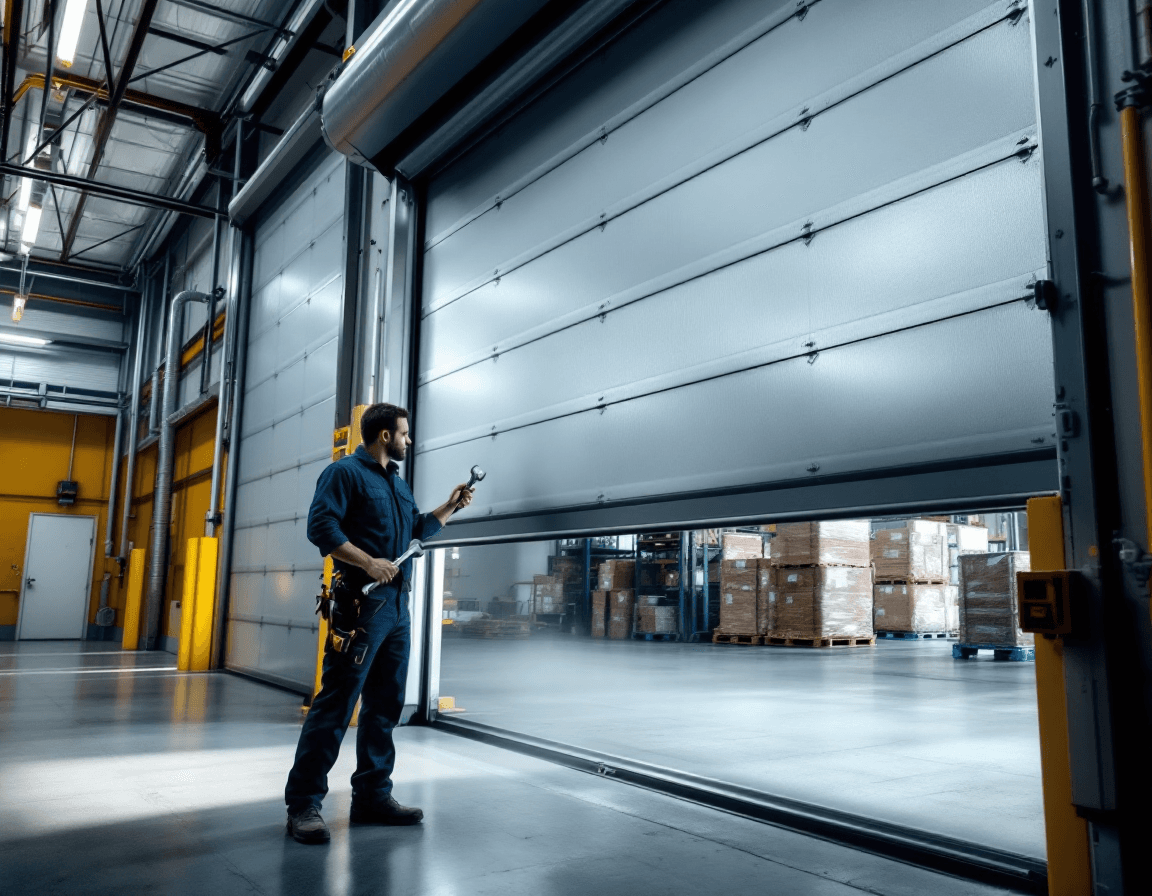
Commercial Overhead Door Repair in Kirkland, WA is a service that matters more to a business than most owners expect until the day a loading-dock door stops responding. A warehouse bay, a showroom roll-up, or a fleet-service entrance is often the main route for inventory, deliveries, and staff, so a failed door quickly becomes a failed workday. Kirkland's mix of lakeside retail, professional offices, light industrial space, and service businesses means that the doors here range from heavy sectional units on dock levelers to tall rolling steel shutters on storefronts that open onto busy parking lots.
This page explains how our team approaches commercial door problems across Kirkland and the surrounding neighborhoods, including the 98033 and 98034 ZIP codes. We work on sectional overhead doors, rolling steel doors, commercial operators, and preventive maintenance programs, and we know that every hour of downtime has a real cost. Our goal is to get your door safely moving again while helping you understand what caused the failure so it does not repeat on the next busy morning.
Because every commercial opening has its own size, duty cycle, and exposure, we do not offer a one-size estimate. Pricing depends on the door type, the components involved, access conditions, and how quickly the repair needs to happen. Custom commercial quotes are built around the actual equipment in front of us, and we prioritize fast turnaround so your operation can get back to normal with as little interruption as possible.
Why Kirkland's Wet Climate Works Against Commercial Steel
Western Washington weather is hard on steel doors, and Kirkland's position on the eastern shore of Lake Washington adds its own pressure. Winter fronts bring long stretches of drizzle and fog off the water, and that moisture settles into door tracks, hinges, and bottom seals far more often than sunshine dries them out. Over several seasons, the damp conditions can lead to surface rust on exposed track brackets, swollen weatherstripping, and sluggish rollers that were fine during the dry summer months.
Wind is another factor that rarely gets enough attention. Storm systems moving across the Puget Sound region can produce gusts that push against large door faces and rattle the curtain of a rolling steel door, especially on tall openings. Over time, that repeated flexing loosens fasteners, shifts bottom brackets, and can nudge a door slightly out of plumb. A door that seems fine on a calm afternoon may start binding during the next windy week.
Our technicians look for these patterns during every service visit. We check track alignment, inspect galvanizing and paint for early corrosion, and confirm that drainage at the bottom of the opening is clear. Catching moisture damage early is one of the most effective ways to protect a commercial door from a sudden, expensive failure.
Diagnosing a Dock Door That Will Not Open
When a warehouse or loading-dock door goes down completely, the cause is often simpler than the panic suggests. The first thing we check is the power supply, including breakers, disconnects, and the status of the operator's control circuit. Many commercial operators have safety devices such as photo eyes, edge sensors, or limit switches, and a single misaligned sensor can prevent the entire door from moving even though the motor is healthy.
If the power and controls check out, we move to the mechanical side. Sectional doors rely on torsion or extension springs, cables, drums, and rollers working together, and a fault in any one of those parts can stop the door. Broken springs are a common example, but they are also the most dangerous to handle. Spring tension on a commercial door is very high, and we always recommend that spring and cable work be performed only by a trained, licensed professional with proper equipment. Never attempt to wind, adjust, or remove a spring yourself.
Dock doors also suffer from wear that builds gradually. Worn rollers, stretched chains, and loose bottom brackets can all cause the door to bind or stall under load. We document each finding so you can see exactly what failed, what we repaired, and what we recommend monitoring before the next service cycle.
- Confirm power to the operator, including breakers, disconnects, and any lockout switches.
- Check safety sensors and photo eyes for obstructions, misalignment, or dirty lenses.
- Inspect springs, cables, and drums for visible damage, but leave tension work to licensed technicians.
- Look at rollers, hinges, and track sections for wear, looseness, or moisture-related corrosion.
- Note whether the door stopped suddenly or slowed down over time, since that pattern points to different causes.
Rolling Steel Doors That Jam or Jump Their Tracks
Rolling steel doors are common on storefronts, service bays, and light industrial buildings throughout Kirkland, particularly in the commercial corridors near Totem Lake and along the blocks that serve Downtown Kirkland. These doors are made of interlocking steel slats that coil into a head-box above the opening, and they depend on guides and tracks on each side to stay square. When one side gets out of alignment, the slats can telescope, rub against the guide, or pop completely out of the track.
A jam often begins with a small obstruction. Debris, gravel kicked up from a parking lot, or a loose slat can wedge into the guide channel and stop the curtain mid-travel. In other cases, a bent guide from a minor vehicle contact or a clumsy pallet move will create a tight spot that gets worse each time the door cycles. We usually start by lowering the door carefully and inspecting both guides from top to bottom, looking for dents, gaps, or grit buildup.
Track problems on rolling steel doors require precision. If a door has jumped its guides, forcing it back into place can bend slats or damage the coil. We realign the guides, replace damaged sections, and check the bottom bar and locking hardware so the curtain returns to a level, consistent travel. Any repair we make is designed to restore smooth movement and prevent the same jam from recurring during the next wind gust or heavy delivery day.
Commercial Operators and Why Speed Matters on the Floor
The operator is the motor and control system that does the heavy lifting on most commercial doors, and when it fails, the door becomes a fixed wall. Operator problems in Kirkland usually show up as one of several patterns: the door does not respond to the wall station, it starts and stops unexpectedly, it hums without moving, or it reverses direction for no clear reason. Each pattern points to a different part of the system, from the drive unit and limit settings to the control board and wiring.
Limit settings deserve special attention. Commercial operators use travel limits to know when the door is fully open and fully closed. If those settings drift because of spring stretch, cable adjustment, or a previous repair, the door may stop short, overrun, or fail to reach its closed position. We reset limits as part of diagnostic work and confirm that the operator's safety reversal functions correctly before returning the door to service.
Because commercial doors support daily operations, we treat operator failures with urgency. Our approach is to get the door safely working first, then recommend permanent fixes if the failure reflects an aging motor, a corroded connection, or a control component nearing the end of its service life. Our quotes are customized to the operator model and the level of downtime your business can tolerate, which is why we ask about your schedule before we arrive.
When Throughput Slows and the Door Feels Like a Bottleneck
Not every complaint is a breakdown. Many facility managers in Kirkland notice that a door still works but takes noticeably longer to open or close than it used to. A dock door that once cycled in a few seconds may now take much longer, and that delay adds up across dozens of trucks, forklifts, or delivery vans each day. A slow door can become a bottleneck even when nothing has technically failed.
Slowdowns usually have mechanical causes. Worn bearings, dry or dirty rollers, stiff hinges, and weakened springs can all increase the load on the operator, which slows travel and can overheat the motor over time. Sometimes the problem is simply that the door was adjusted for a different duty cycle than it now faces. A facility that doubled its daily traffic may need a different operator speed or a maintenance interval that matches its real workload.
We evaluate throughput by measuring travel time, listening for abnormal sounds, and checking how the door behaves under load. If the slowdown is caused by wear, we recommend specific lubrication points, roller or bearing replacement, and operator adjustments that keep the door moving at a consistent pace. Where the existing equipment cannot meet your needs, we talk through options openly so you can plan the upgrade on your own timeline.
Repairing Sections Damaged by Forklift and Truck Impact
Forklift and truck impacts are among the most frequent causes of damage we see on commercial overhead doors. A pallet jack that clips a bottom section, a forklift tine that catches a panel, or a delivery truck that backs into an opening can bend a section, crack a panel, or pull a hinge loose. In tight industrial yards and busy loading areas, these incidents are common, and the damage can spread if the door keeps cycling afterward.
The first step after impact is safety. A damaged section can shift unpredictably, and springs or cables may have been stressed or displaced. We advise staff to keep the area clear and avoid operating the door until a technician has inspected it. Once we are on site, we check the affected section, neighboring sections, track alignment, and spring condition, since impact often transfers force through the entire door.
Replacing a single section is often more cost-effective than replacing the whole door, provided the frame and hardware are sound. Our technicians can source matching panels when possible and confirm that the replacement section fits the existing track radius and hinge spacing. We also recommend installing protective bollards, dock bumpers, or visible guide markers in high-traffic areas, since these inexpensive measures reduce the chance of a repeat incident.
Building a Preventive Maintenance Contract That Fits Your Schedule
Preventive maintenance is the most reliable way to avoid emergency calls on commercial doors. A maintenance agreement sets up regular inspections, lubrication, adjustments, and safety checks so small issues get addressed before they cause downtime. For businesses in Kirkland's retail, medical, and light industrial sectors, predictable service is often easier to budget than an unexpected repair during a peak sales week.
A typical preventive program in our Kirkland service area covers several core tasks. Technicians inspect springs, cables, rollers, hinges, and tracks, check fasteners for loosening, test safety reversal systems, and confirm that the operator's limits and controls are working properly. Where moisture from Western Washington weather is a concern, we also inspect for corrosion and drainage problems that could become serious over the wet season.
- Scheduled inspections at intervals matched to your door's usage and exposure.
- Lubrication of rollers, hinges, bearings, and track surfaces using appropriate products.
- Safety testing of photo eyes, edge sensors, and reversal functions.
- Priority response scheduling so your business is not waiting in a general queue.
- Written service records that document what was checked, adjusted, or recommended.
The right interval depends on the door. A lightly used storage door may need less frequent attention than a dock door cycling dozens of times per shift. We set your plan based on actual conditions and revisit it as your operation changes.
Matching Repairs to Industrial, Retail, and Service Sites
Kirkland businesses are not all alike, and the best repair strategy depends on how each site operates. A restaurant supply warehouse near Totem Lake may run heavy pallet traffic early in the morning, while a service business in Rose Hill may need a door that closes quickly and quietly for security during the evening. A retail storefront downtown may care more about appearance and reliable daily operation than about raw cycle speed. We ask about your hours, traffic patterns, and security needs before recommending a fix.
Sites near residential neighborhoods have additional considerations. Noise from an operator or rolling steel curtain can carry into nearby homes, particularly during early or late hours, so we discuss quieting options such as improved lubrication, vibration-dampening mounts, and adjusted operating speeds where they make sense. Access can also vary, since some Kirkland properties have shared driveways, tight turning radii, or limited staging space for lifts and parts.
Across all these settings, our goal is to keep your door safe, dependable, and matched to the work it does. We document conditions at each site, explain tradeoffs clearly, and provide quotes that reflect the true scope of the repair so there are no surprises when the work is done.
Safety Standards, Licensing, and What to Expect From a Technician
Commercial doors are heavy, powered, and often mounted high above work areas, so safety must come first in every repair. Springs under high tension, unsecured curtains, and energized operators can cause serious injury if handled carelessly. That is why we recommend that business owners and staff never attempt spring replacement, cable repair, or track modification on their own. Those tasks belong to trained professionals who use proper tools and lockout procedures.
We are a licensed, bonded, and insured company, and our technicians follow established safety practices on every job. Before work begins, we isolate power, secure the door, and confirm that it cannot move unexpectedly during inspection or repair. We explain each step to your team, answer questions, and make sure the area is clear before any component is loosened or removed.
Transparency also matters. You should know what we found, what we fixed, what remains, and why a particular recommendation makes sense. Written estimates, clear scope descriptions, and honest timelines help you plan around your operation. If a door is unsafe to operate, we will tell you plainly and help you keep people out of the danger zone until it is corrected.
Getting Your Kirkland Commercial Door Back in Service
When a commercial door fails, the most useful step is a quick, accurate assessment. Start by noting what happened: whether the door stopped suddenly, made unusual noises, jumped a track, or was struck by a vehicle or forklift. Write down any error lights on the operator, the time the problem began, and whether it affects one door or several. This information helps our technicians arrive prepared and shortens the time to diagnosis.
Please keep people clear of the opening and do not attempt to force the door open or closed manually. If the door is damaged or the springs appear displaced, treat the area as hazardous and wait for a licensed technician. For ongoing reliability, consider a preventive maintenance agreement so your door receives regular attention before the next rainy season or peak shipping period arrives.
Our Kirkland commercial door team provides custom quotes built around your equipment, your schedule, and your downtime tolerance, with fast turnaround as a priority. Whether you need emergency dock door repair, rolling steel track correction, operator service, or a full preventive maintenance plan, call (888) 799-3819 to speak with our team and get your business moving again.