
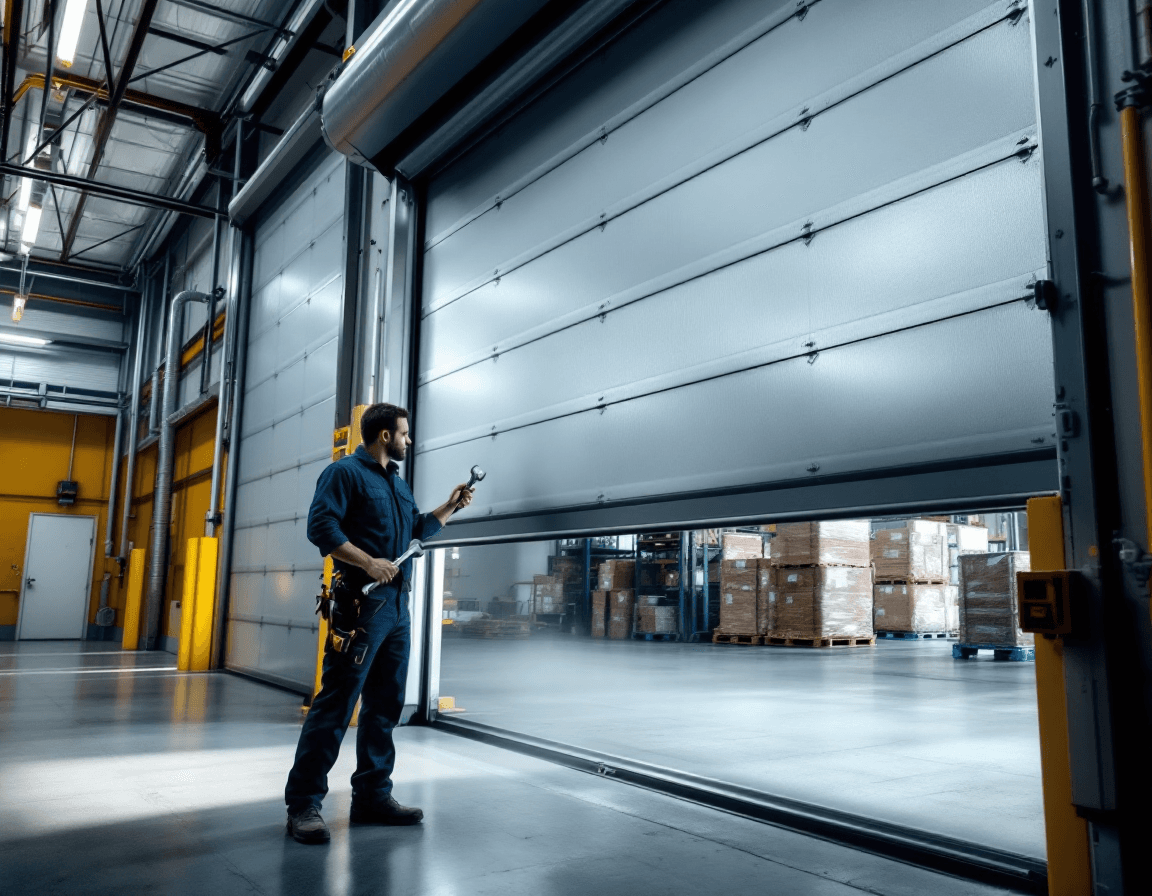
Commercial overhead door repair in Bothell, WA keeps a lot of businesses moving, from light manufacturing and distribution to contractor yards and food service suppliers. When a loading-dock door or warehouse entry stops working, the cost is measured in delayed trucks, idle crews, and orders that miss their pickup window. Seattle Garage Door Fix provides commercial service across Bothell and the surrounding Eastside and north King County communities, including sectional overhead doors, rolling steel doors, commercial operators, and scheduled maintenance. Our technicians are licensed, bonded, and insured, and we approach every commercial call with the understanding that your door is part of your operation.
Bothell's commercial corridors have a particular mix of conditions. Many buildings sit in business parks and flex-space developments that were built for steady daily traffic, and their doors often cycle far more often than a typical residential garage. Add a Pacific Northwest climate with long wet seasons, morning condensation, and sudden cold snaps, and you have a set of wear patterns that differ from what you would see in a drier inland region. This page explains the most common problems we see on commercial doors in the Bothell area, how we evaluate them, and how a preventive maintenance agreement can keep small issues from becoming emergencies.
If your door is down right now, call (888) 799-3819 and describe what you are seeing. We will walk through the basic safety questions first, then arrange the fastest practical response for your site.
When a Loading Dock Door Goes Down Before the First Truck Arrives
A dock door that fails at 6:00 in the morning is a very different problem from one that stops in the middle of a slow afternoon, and we treat the timing as part of the diagnosis. Early-shift failures often trace back to overnight changes in temperature and moisture. Steel components contract in cold air, lubricant thickens, and cable drums or chain links that were marginal the previous day can slip out of tolerance. In the Bothell area, a morning fog or a night of heavy rain can also push water into electrical boxes, limit switch housings, and door operator enclosures that were already showing early corrosion.
When we arrive at a stopped dock door, we start by confirming what the door is doing. Some doors will not move at all, some lift a few inches and stop, and some open but refuse to close. Each behavior points toward a different system, such as power supply, control logic, safety devices, or mechanical binding. We check the disconnect, the control station, and any safety edges or photo eyes before touching the mechanical assembly. That sequence protects both the equipment and the people working around it.
Once the immediate fault is identified, we give you a clear picture of what it will take to restore operation and whether a temporary fix is safe enough to keep the dock running until a permanent repair can be scheduled. We will never recommend running a door that presents a pinch or crush hazard simply to hit a shipping deadline. Our goal is to get your dock working again in a way that protects your drivers, your staff, and your inventory.
Sectional Doors on Canyon Park Dock Lines
Many of the sectional overhead doors we service in the Canyon Park business district are insulated steel or aluminum panel doors installed on dock openings and warehouse bays. These doors run on vertical and horizontal tracks, with rollers traveling through each section and torsion springs providing most of the lifting force. Because they are used constantly, the most frequent issues are worn rollers, loose track brackets, hinges that have started to fatigue, and seals that no longer keep out wind and rain.
Track alignment deserves close attention on busy sectional doors. A track that has shifted even a fraction of an inch can cause a section to bind, which then loads the rollers, bends hinge hardware, and eventually pulls a panel out of square. We check track plumbness, level, and clearance at the top and bottom radius, and we inspect the anchor points where the track meets the building structure. In older Bothell buildings with masonry or concrete block walls, anchors can loosen gradually, so we look at the wall as carefully as we look at the door.
Panel damage is also common on sectional doors, and it often shows up as a bowed or cracked section after a bump from a truck or pallet jack. Depending on the extent of the damage, a single panel may be replaceable without replacing the whole door. We will document the panel dimensions, insulation type, and hardware configuration so the replacement matches the existing assembly. Spring work on sectional doors, including any adjustment or replacement of torsion springs, is handled only by licensed professionals with the proper equipment, because stored spring energy can cause serious injury if released improperly.
Rolling Steel Curtains That Jump Track or Jam Mid-Cycle
Rolling steel doors are common on warehouses, storefronts with back-of-house access, and industrial units where space above the opening is limited. Instead of tilting or sliding overhead, the curtain of interlocking slats coils around a barrel at the top of the opening. That design saves headroom, but it places heavy demands on the guides, the barrel, and the counterbalance system. When a rolling steel door jams or comes off track, the root cause is often a combination of slat misalignment, guide wear, and debris collecting in the guide channels.
Dirt, gravel, and wet leaves are especially problematic in the rainy months. Water and grit settle into the guide tracks, and as the curtain cycles, the grit grinds into the slat edges and the guide surfaces. Over time this creates a rough path that causes the curtain to drift sideways, catch on one side, or pop out of the guide entirely. We clean and inspect the guide channels, check the bottom bar and end locks, and measure the curtain's alignment as it travels from closed to fully open.
Rolling steel doors also store significant tension in their counterbalance springs, which are housed inside or near the barrel. Those springs are never something a site crew should loosen, wind, or remove. If the curtain has come off track, the safe procedure is to stop, secure the area, and call a licensed technician who can relieve the spring tension through established methods. We will walk you through what not to do over the phone and dispatch the appropriate crew for the repair.
Commercial Operators, Controls, and the Failure That Looks Like a Dead Motor
When a commercial door will not respond to its control station, many facility managers assume the motor has failed. Sometimes that is true, but more often the fault lies in the control circuit, a safety device that has tripped, a limit setting that has drifted, or a power issue at the disconnect. Commercial operators on sectional and rolling doors include jackshaft units, trolley-style operators, and in some cases heavier-duty industrial drives, and each has its own control logic and diagnostic sequence. Our technicians work through that sequence methodically rather than replacing parts on a guess.
Safety devices are a frequent source of confusion. Photo eyes that have been knocked out of alignment, dirty lenses, or wiring damaged by a forklift can all cause a door to refuse to close or to reverse unexpectedly. Edge sensors that have been pinched or cut can prevent the door from operating at all. We test every safety device as part of the commercial service call, because a door that moves but does not respond correctly to its sensors is a liability, not a repair.
Operator controls also deserve attention in the Bothell area's humid conditions. Control panels mounted near loading docks are exposed to condensation, and corroded terminals or moisture-damaged relays can produce intermittent faults that are hard to reproduce. We inspect enclosures, tighten connections, look for signs of water intrusion, and recommend weatherproofing or relocation when the existing installation is not holding up. If a motor or drive needs replacement, we will explain the options and provide a commercial quote that reflects the actual equipment your building requires.
Forklift Impacts and the Damage That Needs Triage
Forklift strikes are one of the most common reasons commercial doors need urgent attention. A pallet that clips a bottom section, a mast that catches a rolling curtain, or a reach truck that misjudges a dock bumper can bend tracks, crack panels, and knock operators out of alignment in seconds. The damage is not always visible from the outside, and a door that looks only lightly scuffed may have a bent track or a damaged spring system behind the surface. For that reason, we recommend a full inspection after any impact, even if the door still appears to operate.
Triage is the first step. We check whether the door is safe to operate, whether any component is under unusual tension, and whether the damage has created a risk of sudden movement. Some situations call for immediate lockout until repairs are completed, and we will tell you plainly when that is necessary. Other situations allow a temporary operating plan, such as limiting the door to manual operation under supervision while parts are ordered.
After triage, the repair plan typically follows a clear order of priority. Keeping the crew safe comes first, then restoring the door's ability to close and seal, and finally addressing cosmetic damage. Many facilities find it helpful to document impacts with dates and photos, since that record supports both internal incident review and any insurance or lease conversations. We are happy to provide written findings for your records.
- Stop operation if the door binds, drops unevenly, or shows signs of spring or cable stress.
- Keep foot and vehicle traffic clear of the opening until a technician has inspected it.
- Photograph the damage from several angles, including the track, the bottom bar, and the nearest sensor.
- Note the time of the incident and the equipment involved so the repair record is complete.
- Call for an inspection rather than attempting to straighten tracks or panels with improvised tools.
When the Door Works but the Operation Does Not Keep Pace
Some of the most frustrating service requests we receive involve doors that technically function but slow the business down. A sectional door that takes forty seconds to fully open, a rolling steel curtain that stutters on every cycle, or a door whose safety reversal triggers too often can all reduce throughput at a busy dock. Over the course of a shift, those delays add up to missed departures and overtime. We treat throughput complaints as legitimate service issues, because the door is not doing the job it was installed to do.
Speed and smoothness are controlled by a combination of motor capacity, drive settings, spring balance, track condition, and the weight of the door itself. A door that has become heavier through added insulation, accessories, or panel replacement may be asking the operator to work harder than it was designed for. A worn chain or belt can slow travel, and a spring that has lost tension can cause the operator to labor during the opening cycle. We measure cycle times, observe the door under load, and compare its behavior with the manufacturer's specifications where those are available.
Adjustment can sometimes recover much of the lost performance without major parts replacement. That may include balancing the door, lubricating and tensioning drive components, correcting track alignment, or updating limit and speed settings within safe ranges. When an upgrade is the better long-term choice, such as a higher-capacity operator or a faster-acting high-speed door for a high-traffic opening, we will outline the tradeoffs clearly so you can decide based on your operation rather than a sales pitch.
Rain, Condensation, and the Seasonal Wear Pattern Around Bothell
The Pacific Northwest climate shapes how commercial doors age in the Bothell area. Long stretches of rain keep exterior surfaces wet for weeks at a time, and the cool, damp air that follows can leave a film of moisture on steel components overnight. Galvanized hardware, springs, and fasteners are more exposed to corrosion than they would be in a drier climate, especially where a door sits near a loading area that gets splashed by traffic or where runoff collects at the threshold. We see rust forming on hinges, bottom brackets, and track sections that look fine from a distance but are weakening underneath.
Winter also brings specific stresses. Cold mornings make lubricants stiffen and rubber seals lose flexibility, which can cause weatherstripping to tear when a door is cycled. Ice and wet snow, which are occasional but real concerns in the Eastside region, can freeze door bottoms to the pavement and strain the operator when the door is first opened. Road salt and de-icing products tracked in from parking areas can accelerate corrosion on exposed steel, so washing down lower panels and hardware during the wet season is a worthwhile habit.
Seasonal inspection is one of the simplest ways to get ahead of these issues. Before the heaviest rain arrives, we recommend checking that weatherseals are intact, that threshold seals are not torn, that drainage paths around the opening are clear, and that operator enclosures have not started to sweat or collect water. Catching these problems early keeps the door sealed, reduces energy loss from conditioned spaces, and avoids the sudden failures that tend to come with the first cold snap.
Building a Preventive Maintenance Agreement Around Your Schedule
A preventive maintenance agreement is a planned relationship that keeps your commercial doors inspected, adjusted, and serviced on a regular cycle. Rather than waiting for a door to fail during a busy week, you set a schedule that fits your operation, whether that means monthly visits for high-cycle docks or quarterly visits for lighter-use entries. The agreement gives your facility team a predictable point of contact and gives our technicians the history they need to spot trends before they become breakdowns.
A typical maintenance visit covers a consistent set of checks. We examine springs, cables, drums, rollers, hinges, and track fasteners for wear and tension issues, and we test the operator, controls, and safety devices under normal operating conditions. Lubrication is applied where the manufacturer's guidance calls for it, and weatherseals and bottom seals are inspected for damage. Each visit ends with a written summary of what we found, what we corrected on site, and what we recommend for future attention.
Agreements can be tailored to the number of doors, the cycle counts they see, and the hours your facility operates. Some businesses prefer to schedule visits during slow periods, such as early mornings or weekends, while others need work coordinated around inspection windows or shipping peaks. We will discuss your access constraints, your reporting needs, and any site rules during the planning conversation, so the schedule works for your team rather than against it.
- Define which doors and operators are covered, including their locations and approximate cycle volume.
- Agree on a visit frequency that matches how hard each door works and how much downtime you can absorb.
- Set response expectations for urgent calls so your crew knows what to expect when a door fails.
- Decide how service records will be shared, including whether you need summaries for lease, insurance, or internal audit purposes.
- Review the agreement at least once a year to reflect changes in the building, the equipment, or your operating hours.
Custom Commercial Quotes and How We Keep Downtime Short
Every commercial door is different, and pricing for repair or replacement depends on the door type, its size, the components involved, the access conditions, and the urgency of the work. For that reason, we provide custom commercial quotes rather than flat rates. Our goal is to give you a clear, written estimate that explains what is included, what is not, and what options are available, so you can make decisions quickly when a door is down and time matters.
Turnaround is a major part of our commercial service. When a loading door is out of commission, we focus on restoring safe operation as fast as the situation allows, which may mean a same-day stabilization followed by a scheduled permanent repair. We keep a practical view of parts availability and will tell you when a component needs to be ordered, along with the expected timeline. If a temporary solution will keep your dock working while a replacement part arrives, we will explain its limits and make sure your team understands them.
Quotes usually cover labor, parts, equipment needed for the repair, and any required safety work such as securing a door or relieving spring tension. They may also note items that should be addressed in the near future but are not urgent, which helps you plan capital budgets without surprises. We believe a good quote should leave you with fewer questions, not more, and we are glad to walk through the details with your operations or facilities manager on site.
Safety Rules for Crews Working Near Commercial Doors
Commercial doors store substantial energy in springs, counterbalances, and drive systems, and that energy can cause severe injury when it is released unexpectedly. Facility crews play an important role in preventing those incidents, especially in environments where doors cycle constantly and staff move quickly around loading areas. Clear rules, consistent training, and a habit of reporting problems early are among the most effective safeguards a business can put in place.
Our first recommendation is that no one attempt to adjust, wind, or remove torsion springs, counterbalance springs, or cable drums unless they are a trained and licensed professional using proper equipment. Those components can fail violently, and even experienced staff have been seriously hurt by stored tension. Similarly, do not bypass safety edges, photo eyes, or reversing devices to keep a door running. A door that cannot detect an obstruction is a serious hazard, and disabling its safety features may create legal and insurance exposure as well as risk to people.
Good housekeeping also matters. Keep the area around the door clear of pallets, equipment, and debris that could be struck or caught in the opening. Post clear signage where needed, make sure operators understand how to stop a door in an emergency, and report any unusual noise, binding, or movement immediately. When in doubt, shut the door down and call for service. A brief pause in operation is almost always less costly than an injury, a damaged vehicle, or a door that fails completely in the middle of a cycle.
Commercial overhead door problems rarely improve on their own, and the sooner a qualified technician examines the equipment, the more options you usually have. If your loading door, rolling steel curtain, or commercial operator is giving you trouble in Bothell or nearby Canyon Park, North Creek, or the Bothell Landing area, call Seattle Garage Door Fix at (888) 799-3819 to describe the problem and arrange a safe, prompt response.