
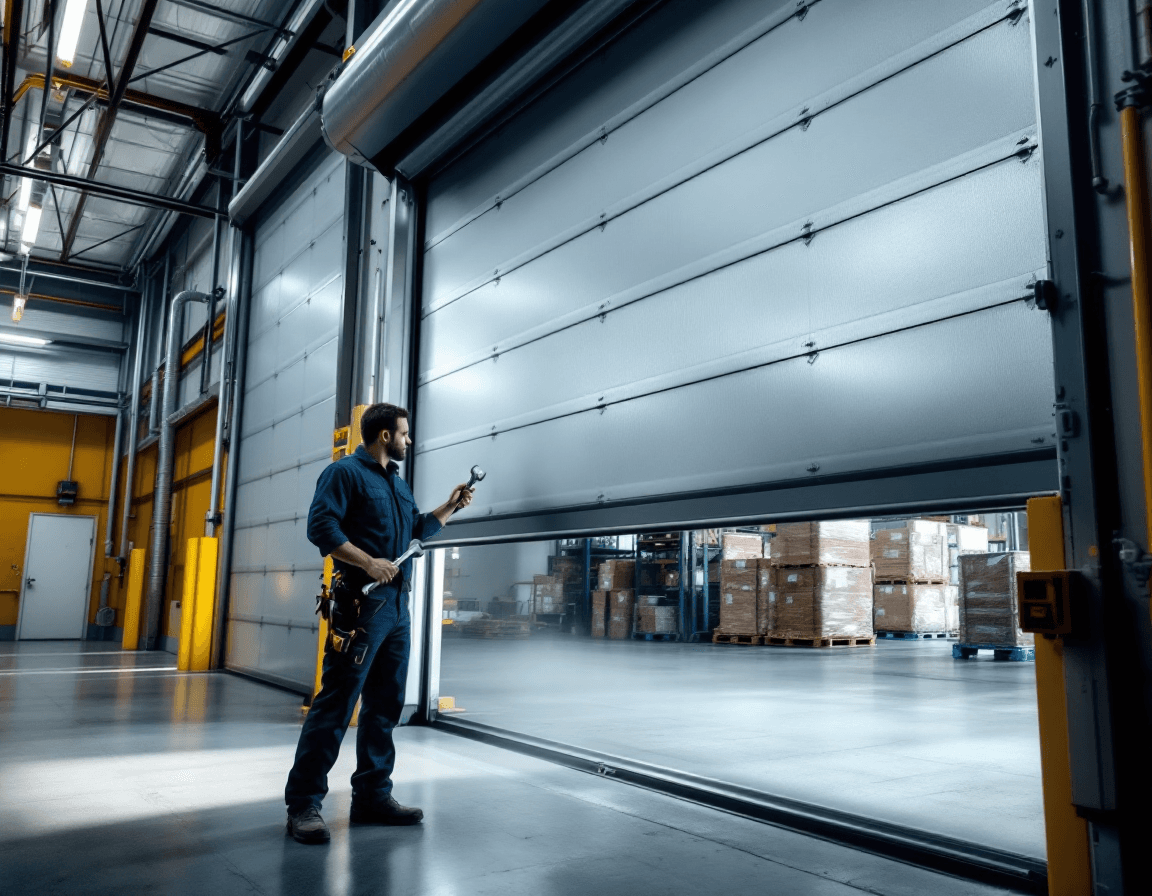
Commercial Overhead Door Repair in Lynnwood, WA is a different job from residential garage work, because a warehouse or loading-dock door carries the weight of your daily operations. Lynnwood sits in the heart of Snohomish County, with a mix of distribution spaces, light manufacturing, medical offices, and retail properties clustered around the Alderwood corridor and the City Center area. When a dock door stops, trucks back up, drivers wait, and your crew loses productive hours. Our technicians understand that a fast, correct repair often matters as much as the repair itself.
This page explains how we approach commercial overhead doors in Lynnwood and the surrounding ZIP codes of 98036, 98037, and 98087. We work on sectional doors, rolling steel doors, commercial operators, and the preventive maintenance programs that keep these systems from failing at the worst possible moment. Every commercial job starts with a site assessment and a custom quote, because no two loading docks are built alike. The sections below walk through the common problems we see, how we diagnose them, and what you can expect from us.
Our goal is practical: to help facility managers, property owners, and operations leads make informed decisions about repair versus replacement, and to get your opening back in service with as little disruption as possible. We are a licensed, bonded, and insured company, and we treat commercial door work with the same care we bring to every job. If you are reading this with a door down right now, skip ahead to the call-to-action at the end and reach out directly.
Why Lynnwood Dock Doors Demand a Tailored Repair Plan
Lynnwood businesses run on tight schedules. A distribution tenant near the freeway may depend on trucks arriving in staggered windows, while a light manufacturer off a side street may need its roll-up doors open for pallet traffic from early morning until late afternoon. When a door fails, the cost is not just the repair bill. It includes idle staff, delayed shipments, and sometimes penalties tied to service agreements. That is why we begin every commercial call by asking what the door does for your operation, not only what it looks like.
Door systems in this part of the county also vary widely in age and design. Some properties have sectional doors installed a decade or more ago, while newer buildings may use insulated panels with more advanced operators and sensors. Rolling steel doors are common at older warehouses and service bays, and they often have a different failure pattern than sectional doors. We inspect the entire assembly, including tracks, rollers, hinges, bottom seals, counterbalance hardware, and the controls, so the repair plan addresses the real cause rather than a single visible symptom.
Because each property has its own traffic flow and equipment, we prepare custom commercial quotes after we see the door in person. A quote may include parts we can source quickly, labor for a same-day or next-day visit where possible, and options for temporary measures if a full repair needs to be scheduled around your operating hours. We will explain what is urgent, what can wait for a planned window, and what the long-term picture looks like. That transparency helps you plan budgets and protect your throughput.
Recognizing Early Warning Signs Before a Door Goes Dark
Most commercial door failures give some warning, even if it is easy to ignore on a busy day. A door that closes a little slower than it used to, or that makes a new grinding sound on the way down, is often telling you that a component is wearing out. Catching these signs early can turn an emergency call into a scheduled repair. Facility teams that train their staff to report unusual door behavior usually spend less on unplanned downtime.
Common warning signs at Lynnwood-area loading docks include:
- Grinding, popping, or squealing from the track or roller area during normal cycles
- Visible gaps at the bottom seal or sides that let in drafts, water, or pests
- The door stopping or reversing without an obvious obstruction
- Uneven movement, where one side lifts or lowers ahead of the other
- Slow operation compared with the door's normal speed, which can point to operator strain or drag in the track
- Dents, bent tracks, or panels that no longer sit flush in the frame
- Warning lights or error codes on the operator or control panel
If you notice any of these, record the time, the door number, and what you observed. That information helps our technicians arrive prepared, and it often speeds up diagnosis. Please do not attempt to force a stuck door open or manually override springs, because the forces involved are significant. Keep staff clear of the door path and call for qualified service.
Sectional Overhead Doors on High-Traffic Lynnwood Docks
Sectional doors are the workhorse of many commercial facilities in Lynnwood. They are made of hinged panels that travel up a track and fold along the ceiling, which makes them efficient for buildings with limited headroom. On a busy dock, a sectional door may cycle dozens of times a day, and its tracks, rollers, and hinges absorb constant stress. Over time, the rollers wear flat, hinge brackets loosen, and the panels can begin to flex out of alignment.
When we service a sectional door, we check the full track system for level, plumb, and proper clearance. We look at the roller condition, the hinge points, and the end locks, and we confirm that the center and side brackets are tight. Worn components are replaced with parts matched to the door's size and weight rating. Panel replacement is also common after forklift incidents, and we can often swap a single section rather than replacing the entire door, provided the panel profile and hardware are still available.
Spring work on commercial sectional doors requires specialized tools and training. Torsion springs on large doors store substantial energy, and mistakes during adjustment or replacement can cause serious injury. For that reason, all spring and cable work is performed only by licensed professionals using proper winding bars, safety cables, and lockout procedures. If your facility team notices a broken spring or a cable that has come off the drum, shut the door down, keep people clear, and call us for a secure repair.
Rolling Steel Doors That Jam, Bind, or Drift Off Track
Rolling steel doors are a common choice for warehouses, service bays, and industrial units across Snohomish County. They roll up into a compact barrel above the opening, using interlocking steel slats guided by side tracks. Because they are made of many small components, a single problem like a bent guide or a worn bottom bar can cause the whole door to bind. Jammed or off-track rolling doors are one of the most frequent emergency calls we receive from commercial customers.
A rolling steel door that has come off track usually shows a visible wobble, a slat that sits crooked, or a gap at one side. Often the cause is an impact from a pallet jack, a delivery vehicle, or a loading cart that bent the guide rail or knocked the curtain out of its channel. Corrosion in the track can also create friction, especially after wet winters when moisture collects in the bottom of the guide. Our technicians inspect the curtain, the guides, the barrel, and the bottom bar, then realign or replace damaged parts so the door tracks smoothly again.
Rolling doors that bind during operation should not be pushed by hand or by a forklift, since that can twist the curtain and create a far larger repair. If the door is partially open and stuck, the safest step is to isolate the operator and wait for a technician. We take a careful approach to freeing a jammed door, because a fast fix that leaves a bent shaft or stressed spring can produce a second failure within days. Our commercial quotes for rolling steel work reflect the time needed to do the job correctly.
Commercial Operators, Controls, and Sensors That Keep Throughput Moving
The operator is the motor, drive, and control system that opens and closes your door, and on commercial installations it often connects to building management systems, dock levelers, or access controls. When an operator fails, the door may stop mid-travel, refuse to respond to the wall station, or cycle erratically. Operator problems can look like door problems, so we test both the mechanical and electrical sides before recommending parts.
Typical operator issues we address include failed limit switch settings, damaged safety edges or photo eyes, worn drive chains or belts, failed contactors, and error codes triggered by sensor misalignment. Photo eyes are especially sensitive to dust, condensation, and sun glare at open dock faces, which is a real consideration for Lynnwood facilities with large windows or open-sided docks. We clean and realign sensors, test the reversing function, and confirm that safety devices stop and reverse the door as designed. Safety edges and reversing controls are not optional features, and we will not leave a door in service with a compromised safety circuit.
Throughput is an operational issue as well as a mechanical one. If a door has become noticeably slow, you may be dealing with a worn drive, a sticky track, a motor drawing too much current, or settings that have drifted over time. We measure cycle times and adjust the operator to match the speed your operation needs, while staying within safe design limits for the door and motor. If a current operator is no longer supported or no longer matches your daily cycle count, we will walk through upgrade options with you.
Forklift Impact Damage, Panel Replacement, and Structural Checks
Forklift strikes are a fact of life in busy facilities. A tine catching a bottom panel, a lift truck clipping a sectional door during a tight turn, or a pallet that hits a rolling steel curtain can each cause damage that ranges from cosmetic to structural. Our first step after any impact is to check whether the door can still operate safely. Even if the door appears to work, a bent track, a cracked hinge, or a shifted spring can make the next cycle hazardous.
When we assess impact damage, we look at the panels for dents, cracks, and separation at the seams, then inspect the tracks, brackets, and hardware connected to the damaged area. We also check the surrounding wall framing and header for any movement that could affect door alignment. Where possible, we replace individual sections or slats rather than the whole door, which keeps costs and downtime lower. In some cases, the damage reveals older wear that would have caused problems anyway, and we will point that out so you can plan a fuller repair.
Facilities that experience repeated impacts often benefit from protective measures such as bollards, guardrails, floor markings, or updated traffic routing near the door. We are happy to discuss those options during an assessment, though facility layout decisions belong to you and your operations team. Documenting each incident with photos and dates can also help when you coordinate with property managers or insurers, and we can provide written findings for your records.
Moisture, Wind, and the Pacific Northwest Wear Pattern
Western Washington's climate shapes how commercial doors age. Lynnwood receives a substantial amount of rain through the cooler months, and the damp air that lingers between storms can encourage corrosion on exposed steel, especially at bottom brackets, track joints, and spring anchor points. Moisture also works its way into electrical connections and sensor housings, which can create intermittent faults that are hard to reproduce on a dry afternoon. Routine inspections are one of the best defenses against these slow-moving problems.
Wind is another factor. Storm events can push against large door faces, stress tracks and bracing, and occasionally loosen fasteners that were already marginal. Doors that sit near open yards or exposed loading areas may see more of this effect than doors sheltered by overhangs or building wings. We check wind-related wear during inspections, looking at track bracing, wall anchors, and bottom seals that may have been compressed or torn by repeated gusts.
Temperature swings between seasons also matter. Metal expands and contracts, and that movement can gradually change the fit of panels, the tension on springs, and the position of limit switches. During the spring and fall service visits we often recommend, we can recalibrate the door to account for seasonal changes and confirm that the seals are still doing their job. A door that is adjusted for the local climate tends to run more quietly, last longer, and avoid the sudden failures that catch facility teams off guard.
How Our Commercial Quotes and Fast Response Work
Commercial jobs require clear communication, so we keep our quoting process straightforward. When you call, we gather the basics: property address, door type and approximate size, the symptoms you are seeing, whether the door is fully down or partially operational, and your operating hours. If the situation is urgent, we will prioritize a visit to get your door assessed and stabilized. We aim to reduce downtime, and that means arriving with the right information and, where possible, the right parts.
After the on-site assessment, we provide a custom commercial quote that explains the recommended scope, the parts involved, the labor, and any follow-up items. We separate urgent safety and operational repairs from recommended improvements, so you can decide what to approve immediately and what to schedule later. If a full replacement is the better financial choice, we will explain why, including the expected service life of the new components and how the work would fit into your schedule. We do not expect you to approve a large job without understanding it.
Turnaround depends on the door type, part availability, and access requirements. Some repairs can be completed in a single visit, while others may need a temporary fix to keep the dock open while a replacement section or operator is ordered. When we use a temporary measure, we tell you what it covers and what it does not, and we schedule the permanent repair in a window that minimizes disruption. Our aim is always to return your door to safe, dependable service as quickly as the job allows.
Preventive Maintenance Contracts Built Around Your Operating Calendar
Preventive maintenance is the most effective way to avoid emergency calls. A well-designed maintenance agreement schedules regular inspections and adjustments so that small issues are found and corrected before they interrupt your operation. For Lynnwood facilities that run multiple docks, a maintenance contract also creates a single point of contact, consistent records, and predictable budgeting. We tailor these agreements to the number of doors, their type, their cycle counts, and the conditions they face.
A typical commercial maintenance program may include the following elements:
- Scheduled inspections of tracks, rollers, hinges, and bottom seals
- Spring, cable, and drum checks performed by licensed technicians
- Operator testing, including limit settings, reversing function, and safety devices
- Lubrication of moving parts using products suited to the local climate
- Sensor cleaning and alignment for photo eyes and safety edges
- Written service reports with photos and recommendations for upcoming work
Maintenance schedules are flexible. Some facilities prefer quarterly visits during slower months, while others schedule service on weekends or overnight to avoid operating-hour conflicts. We can also coordinate visits around inspection requirements, lease obligations, or internal safety audits. The goal is to make maintenance feel like a planned part of your operation, not a surprise that lands on your busiest week.
Safety Standards for Large Doors on Active Properties
Commercial doors are heavy, powerful, and often located in areas with constant foot and vehicle traffic. Safety must be part of every decision, from the first call to the final test. Our technicians follow lockout and tagout practices when working on operators and electrical systems, and they use fall protection and proper access equipment when working at height. We also brief site personnel on work zones so that employees and drivers know where to stay clear.
Facility teams play an important role too. Staff should never stand under a door that is opening or closing, and they should not attempt to free a jammed door, adjust a spring, or bypass a safety device. If a door is damaged, lock it out at the wall station if your system allows it, place a visible notice, and keep traffic away from the opening until a technician confirms it is safe. Training forklift operators to approach doors with care and to report any contact, even minor contact, helps prevent the kind of incident that leads to major repairs.
We also encourage property owners to keep basic records: installation dates, service history, part replacements, and warranty information. Those documents make it easier to plan repairs, evaluate replacement options, and communicate with insurers or property managers. Whether your door is decades old or recently installed, a clear safety culture and consistent maintenance are the best protection for people and equipment.
Commercial overhead door problems in Lynnwood rarely wait for a convenient time, and a quick, careful response protects your schedule and your people. Our licensed, bonded, and insured team handles sectional doors, rolling steel doors, commercial operators, impact repairs, and preventive maintenance contracts across Lynnwood and the surrounding 98036, 98037, and 98087 areas. Call (888) 799-3819 to describe your door and symptoms, and we will talk through the fastest way to get your dock or warehouse opening back in service with a custom commercial quote built for your operation.