
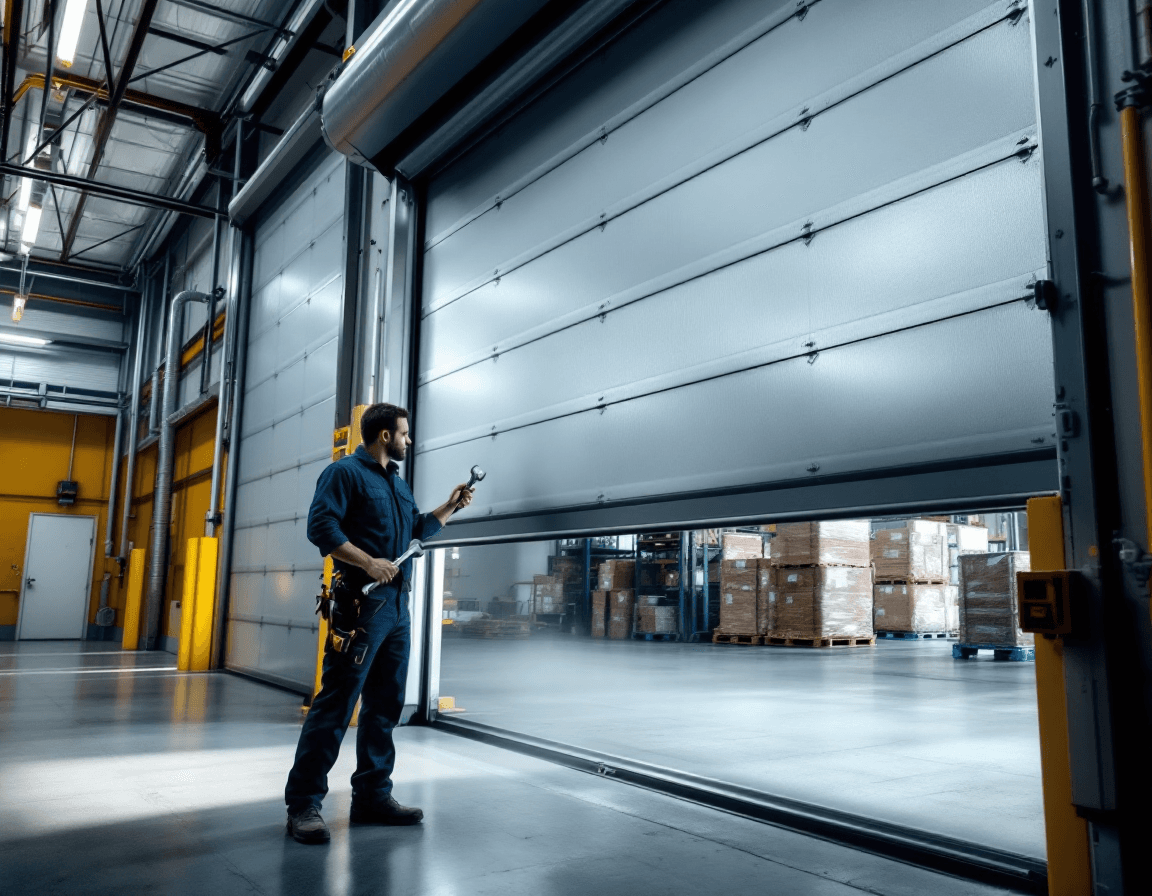
Commercial Overhead Door Repair in Brier, WA is a job that rewards speed, and most property managers and business owners learn that the hard way when a loading door stops in the middle of a shift. Brier sits in the north Snohomish County corridor, where warehouses, service shops, medical offices, and light manufacturers depend on large doors to move product and people every day. When one of those doors fails, the cost is rarely just the repair bill. Trucks queue, staff stand around, and deliveries slip into the next day.
Our approach to commercial work starts with a simple question: how quickly does this building need to be back in operation? We ask about your hours, your dock schedule, whether the door is the only access point, and whether a temporary solution is possible while parts are sourced. Those answers shape the order of work, the parts we bring, and whether we recommend a same-visit fix or a short staged repair. Every commercial job we take is quoted individually because a three-section sectional door on a tight dock is a different problem from a full-width rolling steel door on a storage building.
We are a licensed, bonded, and insured garage door company serving 60+ cities across the greater Seattle and Western Washington area, and Brier is one of the communities we visit regularly. This page explains the common failure patterns we see on commercial doors in and around Brier, what drives them, how we handle repairs and preventive maintenance, and when it makes sense to schedule work before a breakdown turns into an emergency. If your door is down right now, call (888) 799-3819 and describe what you are seeing; that conversation often tells us a lot before anyone rolls a truck.
Why a Stalled Dock Door Costs More Than the Repair
Most commercial doors are not simply large residential doors. They are built to cycle hundreds of times a day, and their components are sized for that duty. When a sectional dock door or a rolling steel shutter stops, the immediate impact is obvious, but the downstream effects are where businesses lose money. Carriers may refuse to wait, dock appointments get rescheduled, and crews get reassigned to manual tasks that slow everything else down.
In Brier, many commercial buildings run compact footprints with limited staging space, which means one functioning door can carry a disproportionate share of the throughput. A business with a single overhead door on the rear elevation has no easy workaround if that door jams. Even a door that still opens but moves slowly can create bottlenecks, because the crew learns to work around it and the loss becomes invisible until a month of data reveals the drag.
That is why we encourage operators to treat slow movement as a warning rather than an inconvenience. A door that used to cycle in a predictable time and now takes noticeably longer usually has a developing problem with balance, track alignment, lubrication, or motor load. Catching that early often means a few hours of adjustment instead of an unplanned weekend call.
Reading the Early Warning Signs on Sectional Doors
Sectional overhead doors give plenty of notice before they fail if someone is paying attention. Dock workers and facility staff are usually the first to notice, though they may not know what the sound or motion means. Training a few people on the basics can prevent a stalled door from becoming a crisis. We recommend walking the door at the start of each week and noting anything that has changed.
- Grinding, popping, or chattering from the track rollers, especially near the top of travel
- Sections that appear uneven, with one side lifting before the other or a visible gap at the bottom seal
- The door pausing, stuttering, or reversing briefly during its cycle without an obvious obstacle
- Fresh rust, white powder, or flaking paint at hinge points, roller brackets, or the bottom corner of the lowest panel
- A visible shift in the top or side seals after storm season, or daylight showing where it did not before
- Unusual heat or a burning smell from the operator housing after a normal cycle
Any of these signs deserves attention, and some demand immediate action. A door that is visibly out of level or pulling from one side should not be cycled repeatedly by hand or left to run under load. If a spring or cable component looks damaged, shut the door down and contact a licensed technician. Torsion springs and lift cables store enormous energy, and attempting to adjust them without the correct tools and training is one of the most dangerous things anyone can do at a commercial facility.
Rolling Steel Doors That Jump the Track or Bind Mid-Cycle
Rolling steel doors are common on Brier warehouses, service bays, and storage buildings because they save interior space and stand up well to daily use. They are also less forgiving of small misalignments than many sectional doors. A rolling steel curtain runs in side guides, and when a slat deforms, a guide shifts, or debris gets caught in the channel, the curtain can bind or jump the track entirely.
Impact damage is the most frequent cause we see on this door type. A pallet jack, a delivery truck mirror, or a forklift tine that clips the lower slats can bend the curtain just enough to bind it against the guide. Once a door is off track, it should not be forced, because the stress tends to crush the guide or twist the shaft. Our technicians will typically inspect the curtain, guide channels, bottom bar, and counterbalance (where present) before attempting realignment.
Debris is a more subtle culprit. Leaves, gravel, and wet grit collect in guide channels during the Pacific Northwest rainy season, and when the door is closed in the rain, that material can pack into the channel and create resistance. A periodic clearing and inspection of the guides can prevent a jam that would otherwise show up on a Monday morning. Where a rolling steel door is exposed to traffic, we also recommend reviewing the guide height and the bottom bar profile to make sure they still match the opening.
Commercial Operators, Motors, and Control Panels
Commercial operators are built for heavier duty cycles than residential openers, but they are not indestructible. A busy dock door may cycle many times per shift, and each cycle places load on the motor, gearbox, limit switches, and control board. When an operator fails, the symptoms can range from a door that will not respond at all to one that runs but stops short of its limits.
Many failures we see on Brier commercial sites trace back to the control side rather than the mechanical side. Photo eyes that are knocked out of alignment by a passing cart will make the door reverse or refuse to close. Safety edges that have been pinched or damaged can cause the same behavior. Moisture can also find its way into junction boxes and control enclosures, especially on exterior mounted equipment that sees wind-driven rain. We inspect wiring, sensors, and enclosure seals as part of any operator diagnosis, because replacing a motor without addressing the root electrical fault simply sets up a repeat call.
Limit settings are another area that deserves attention. Over time, a door that has been adjusted or repaired may drift out of its original travel calibration, causing it to stop too high, too low, or to overrun into the stops. We verify travel limits, force settings, and reversal behavior during commercial service visits so the operator protects both people and equipment as intended.
Forklift Strikes and When Sections Need Replacing
Forklift impact is one of the most common reasons a commercial door needs more than a tune-up. A glancing hit at low speed may only dent a panel, but a direct strike can crack a section, bend a hinge, or bend the track out of plumb. Damage like this is especially common on dock doors where trucks back into position and forklifts operate in tight aisles.
Not every dent means the section must be replaced. A minor surface dent that does not affect the panel's interlock, seal, or hardware may be left alone. A section that has been cracked, bent along a stiffening rib, or deformed at the roller connection usually needs replacement, because patching it creates weak points that will fail under load. When a single section is damaged, we can often source a matching panel, although color, insulation type, and panel profile must be checked carefully to avoid an uneven appearance or a mismatch in thermal performance.
We also look for the damage that is not visible from the outside. A strike can knock a roller out of its track, stress a cable drum, or misalign a bottom seal, and those secondary problems may only appear after the door has run for a few days. For that reason, we inspect the full door assembly after any impact repair, not just the panel that was hit. Documenting the damage with photos and a clear written scope is also useful for insurance and for internal safety reviews.
Keeping Throughput Up With Speed and Balance Adjustments
Throughput is the reason many businesses call us before a door fails completely. If a sectional door that once cycled in roughly fifteen seconds now takes noticeably longer, the delay adds up across every trailer and every shift. Slowness is usually a symptom of imbalance, worn rollers, inadequate lubrication, or an operator that is working harder than it should.
Balance is central to performance. A correctly balanced door should hold position when partially raised, and it should lift with minimal effort from the operator. When balance drifts, the motor compensates, the door slows, and the components wear faster. Adjusting balance on a commercial spring system requires proper tools, a careful sequence, and a clear understanding of the spring's rating, so this is work for a licensed technician rather than a do-it-yourself project.
Speed settings on commercial operators can also be adjusted within safe limits, but changing them without considering reversal sensitivity and safety devices is a mistake. We tune opening and closing speeds with the full safety system in mind, so the door moves briskly without compromising the protections meant to keep people and equipment clear of its path.
Pacific Northwest Weather and the Hidden Corrosion Problem
Brier's climate shapes how commercial doors age. Winters bring long stretches of cloud, drizzle, and saturated air, and summers are usually mild and comparatively dry. That combination is hard on exposed steel, especially at connection points where moisture collects and does not evaporate quickly. Coastal-influenced humidity, road salt in colder snaps, and airborne grit from nearby traffic all contribute to surface corrosion.
Corrosion tends to start in places most people never see. The bottom bracket of a sectional door, the inside of a hinge, the axle bearing of a roller, and the lower channel of a rolling steel guide all trap water. A door that looks fine from the street can have advanced corrosion inside those joints, which then reduces the smoothness of movement and increases wear on the rollers and tracks. Galvanized components help, but they are not immune once the protective layer is breached.
Dampness also affects the electrical side. Condensation inside an operator housing or a sensor enclosure can cause intermittent faults that are difficult to reproduce during a daytime visit. We check seals, drip loops, and enclosure conditions during service, and we recommend periodic cleaning and corrosion protection on exposed hardware. The goal is not to make a commercial door impervious to the weather, which is impossible, but to slow the processes that turn ordinary moisture into a failed component.
What a Commercial Repair Visit Typically Covers
Commercial repair visits are scoped to the building and the equipment, so no two are identical. In general, our technicians begin by confirming the symptom with the people who use the door, then move to a systematic inspection. The goal is to find the cause, not just the most visible symptom, and to give the business a clear picture of what is needed now versus what can wait.
A typical visit begins with a safe shutdown and power check, followed by inspection of the door panels, hinges, rollers, tracks or guides, springs or counterbalance, cables, bottom seal, and operator. We test safety devices, verify travel limits, and cycle the door under observation to watch for binding, uneven lift, or abnormal noise. Where parts are needed, we explain the options and expected timeline so the decision can be made quickly and documented.
Written estimates are part of our commercial process. The estimate separates immediate safety or operational repairs from recommended improvements, so a facilities manager can prioritize work against budget and schedule. We also flag any component that is nearing the end of its service life, which helps with planning and avoids surprise failures during peak periods.
Preventive Maintenance Agreements Built Around Your Schedule
Preventive maintenance is the most reliable way to protect throughput. A scheduled service plan lets us inspect and adjust doors on a regular cadence, so small wear items are addressed before they become failures. For many Brier businesses, the value of a maintenance agreement is not only the reduced risk of breakdowns but also the predictability of planning around a known service window.
A useful maintenance plan is built around how your building actually operates. A distribution center with overnight receiving has different needs from a retail storage yard that closes on weekends. We set visit frequency, timing, and scope based on cycle volume, exposure to weather and traffic, the age of the equipment, and any history of impacts or previous repairs. Some sites benefit from quarterly visits, while others do well with a semiannual schedule supplemented by targeted checks after storm events.
- Lubrication of rollers, hinges, bearings, and track surfaces using products suited to exterior steel
- Inspection and adjustment of balance, spring tension where applicable, and cable condition
- Testing of safety edges, photo eyes, reversal behavior, and emergency release function
- Verification of operator travel limits, force settings, and control enclosure integrity
- Review of bottom seals, weatherstripping, and drainage points to reduce water intrusion
- Written service notes and recommendations so the facilities team can track condition over time
Maintenance does not replace prompt repair when something goes wrong, but it does reduce how often emergencies happen. We encourage business owners to think of a maintenance agreement as part of operating costs, the same way they would plan for HVAC service or fire system inspections.
Safety Rules for Crews Working Near Heavy Doors
Safety around commercial doors is a shared responsibility. Our technicians follow strict procedures, but the people who operate and walk past these doors every day play a major role in preventing injuries. A few clear habits can prevent most of the incidents we hear about, and they cost nothing to implement.
- Never stand under or in the path of a door that is opening or closing, even if it appears to be moving slowly
- Do not attempt to free a jammed door by hand, and do not pry at springs, cables, or drums
- Keep forklifts and pallet jacks clear of the door opening during cycles and report any impact immediately
- Tag out a malfunctioning door at the control station before anyone attempts a repair or clearing
- Report any unusual noise, binding, or sag right away instead of waiting for the next scheduled visit
- Make sure only trained personnel operate manual release functions, and confirm the door is secured before work begins
These rules matter because commercial doors store significant energy and move heavy loads. A spring can release suddenly, a panel can drop, and an operator can restart unexpectedly if power is restored during service. Lockout and tagout practices exist for good reason, and we follow them on every job. Repairs involving springs, cables, or structural components should always be performed by a licensed professional with the correct equipment.
Requesting a Custom Commercial Quote Quickly
Every commercial door project in Brier receives a custom quote, because the scope, access, equipment age, and business schedule vary widely. Pricing is not a flat number we read off a list. Instead, we gather a clear picture of the problem and the operating constraints, then provide a written proposal with options and timing. That approach keeps the process fast, because we are not guessing at the work required.
To speed up the quote, it helps to have a few details ready when you call. Note the door type if you know it, whether it is sectional or rolling steel, the approximate width and height, the operator brand or a photo of the label, and what the door is doing now. Let us know whether the door is completely down, partially working, or running but slow, and whether any damage was recently caused by a vehicle or forklift. Photos of the panels, track, and operator housing are often enough to narrow down the likely cause before we arrive.
If you manage multiple sites, a single conversation can often cover several doors, and we can schedule visits to minimize disruption. Ask about emergency response windows if your operation cannot tolerate a door being down for long. Our goal is to get your facility safely back to work with the least possible delay.
If your loading door is down, a rolling steel curtain is off track, an operator has stopped responding, or your team has noticed the door slowing down in ways that are cutting into throughput, call (888) 799-3819 to speak with our commercial team. Describe what you are seeing, share your operating hours, and we will help you decide on the fastest safe path back to full use of your Brier facility.