
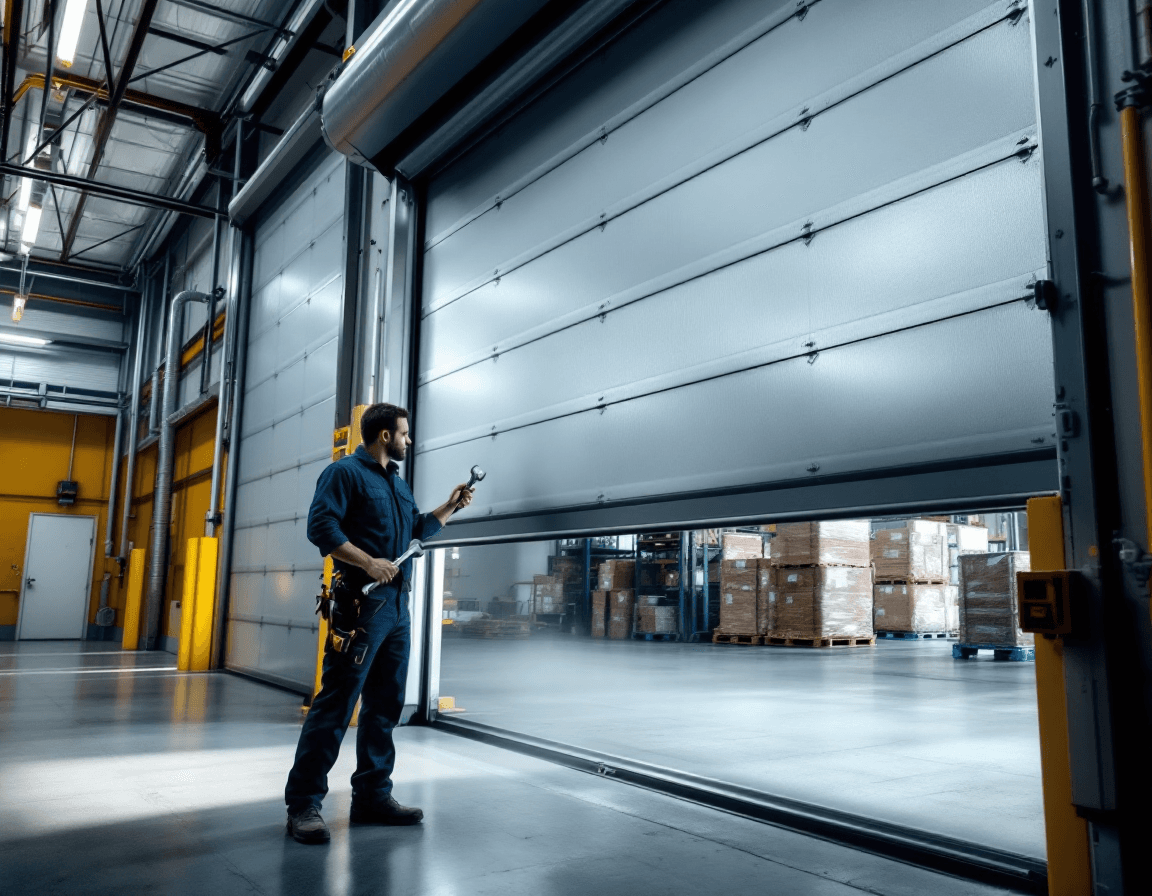
Commercial overhead door repair in Mill Creek, WA is different from fixing a residential garage door, and the difference shows up in the stakes. A warehouse, distribution space, or loading dock depends on its large doors to keep trucks moving, and a door stuck closed can stall an entire shift. Mill Creek sits in the heart of Snohomish County, with a steady mix of light industrial suites, medical and professional offices, retail frontage around Mill Creek Town Center, and service yards tucked along the arterials. Many of these buildings were built with heavier-duty doors that cycle far more often than any home door ever will. Seattle Garage Door Fix works on sectional doors, rolling steel doors, commercial operators, and preventive maintenance for these properties across the 98012 area and the surrounding communities.
Downtime is the first thing most business owners and facility managers want to talk about, and it should be. A door that will not close can mean exposed inventory, a security problem overnight, heat or cold escaping through an open dock, and drivers waiting in the yard with paperwork in hand. Our approach starts with getting an accurate picture of the problem quickly, then giving you a clear, custom quote before any major work begins. Every job is different because every building uses different door sizes, track configurations, wind loads, and operator brands. The goal is to get your opening working again safely and to plan any larger repairs so they do not catch you off guard.
If you are reading this because a door is down right now, call (888) 799-3819 and describe what you are seeing. Tell us whether the door is stuck open, stuck closed, making a loud noise, or moving only partway. That information helps us decide what parts and tools to bring on the first visit. The sections below explain the most common commercial door problems we see in and around Mill Creek, what they usually mean, and how we approach each one.
Why Mill Creek Facilities Need a Fast, Diagnosis-First Response
Many Mill Creek businesses operate on tight schedules, with deliveries arriving early and pickups staged around narrow windows. When a dock door fails in the middle of that schedule, the cost is not only the repair bill but the chain reaction that follows. Drivers get rerouted, staff stand around waiting, and inventory may sit on the wrong side of a barrier. A good repair plan begins with knowing exactly what has failed, because replacing the wrong component wastes time and money. We prioritize a diagnostic visit that confirms the failure point before recommending a fix.
The first decision is usually whether the door can be made safe and functional for the short term. Sometimes a temporary measure, such as securing the opening with a barrier or limiting the door to a partial cycle, keeps operations moving while parts are ordered. We will tell you plainly if a door should stay locked out until a repair is completed, especially when the problem involves a broken spring, a damaged curtain, or a bent track. Safety comes before speed, and we will not push a door back into service if it is unsafe to cycle. That honesty is part of what keeps your crew and your equipment protected.
Once the immediate problem is handled, the conversation shifts to durability. A fast fix that buys you two weeks is not always the right answer for a building that runs seven days a week. We talk through repair versus replacement for specific components, the expected service life of the parts involved, and how your operating hours affect wear. That way you can plan repairs during slower periods instead of reacting to the next breakdown.
Reading the Early Warning Signs Before a Dock Door Goes Dark
Commercial doors rarely fail without warning. Most of the time, they give off small signals for weeks or months before a complete shutdown. Catching those signals early often turns an emergency call into a scheduled service visit, which is cheaper and far less disruptive. Facility staff who work near the doors every day are usually the first to notice a change, so it helps to know what to watch for.
- A grinding, popping, or chattering sound during the first few feet of travel
- The door pausing, hesitating, or reversing without an obvious obstruction
- Visible daylight at the bottom seal or along the sides after the door closes
- Panels that look uneven, gapped, or out of alignment at the hinges
- The operator running longer than normal or heating up during each cycle
- Dents, scrapes, or fresh paint transfer on the track or curtain
Any of these signs deserves attention, but they are not all equally urgent. A quiet hesitation may point to dirty tracks or worn rollers, while a sharp snap or a door that drops suddenly after a noise is a safety concern. When in doubt, shut the door down from the control station and schedule service rather than forcing it through the cycle repeatedly. Repeated forced cycling tends to spread damage from one component to several others.
Sectional Doors on Industrial Frames: What Tends to Wear First
Sectional overhead doors are the workhorse of many Mill Creek loading docks and warehouse bays. Each panel is hinged to the next and rides on rollers through vertical and horizontal tracks, which allows the door to lift out of the way overhead. Because the panels are large and often insulated, the weight and leverage on the hinges, rollers, and track brackets add up quickly. Commercial sections also tend to be taller and wider than residential doors, so small misalignments become noticeable very fast.
In our experience, the parts that cause the most trouble on sectional commercial doors are the rollers, hinges, end caps, and track fasteners. Rollers with worn bearings can cause the door to bind or jump, and loose track bolts allow the whole assembly to drift out of square over time. Hinges that have been bent by repeated stress can pull the adjacent panels out of line, which then shows up as gaps or scraping. Replacing a single worn roller is a manageable repair, but if the track has shifted, correcting the alignment has to come first or the new parts will wear out prematurely.
Counterbalance systems on commercial sectional doors also demand careful attention. Torsion springs and extension springs store significant energy, and a failing spring is not a do-it-yourself project under any circumstances. Our technicians handle spring replacement and cable work with proper equipment and training, and we recommend that property managers never allow untrained staff to attempt those repairs. Keeping spring work in the hands of licensed professionals protects both your employees and your building.
Rolling Steel Doors That Jam, Bind, or Leave Their Track
Rolling steel doors are common on storefronts, interior bay separators, and secure storage areas across Mill Creek. Instead of stacking into sections, they coil into a barrel above the opening, which makes them compact and strong but also changes where problems tend to appear. The curtain slats run inside guides on both sides, and the barrel, brackets, and bottom bar all work together under load. Because the curtain is continuous, a bent slat or a misaligned guide can cause binding that is hard to see from the floor.
The most frequent complaint we hear about rolling steel doors is that they jam partway through their travel or slip out of the side guides. Debris in the guides, bent lock bars, or a slat that has been pushed inward by a bump can all cause this. Sometimes the cause is simpler, like a door that was operated without its bottom lock fully disengaged. We inspect the guides, check the curtain for kinks, verify that the barrel is seated evenly, and confirm that the spring tension matches the door weight before recommending any part replacement.
Rolling steel doors exposed to rain and road grit can also develop corrosion at the guide channels and bottom bar. Surface rust that is caught early can often be cleaned and treated, but deep pitting may mean a section of curtain needs replacement. We will show you the affected areas, explain the options, and give you a written quote so you can decide what makes sense for the building's budget and schedule.
Commercial Operators and Control Systems Under Heavy Use
Commercial operators are built to cycle far more often than residential openers, but they still have limits. Most operators rely on a motor, a drive system, limit settings, safety sensors, and a control station or wireless keypad. When one of these components falters, the door may stop mid-travel, fail to reverse, or refuse to respond at all. A failed operator can look like a major problem even when the underlying cause is a loose wire, a dirty sensor, or a misaligned limit switch.
Safety sensors deserve special mention. Photo eyes at the base of the door are designed to stop and reverse the door if something passes through the path, and they can be knocked out of alignment by forklifts, pallets, or routine cleaning. A sensor that is slightly off will cause the door to refuse to close, which often gets blamed on the operator even though the operator is working correctly. We check sensor alignment, wiring, and connections as part of every operator diagnostic.
When an operator is failing from age or heavy cycling, replacement is often the more economical path than piecemeal repair. Our team can discuss operator sizing, speed options, and control upgrades so the new system matches the way your building actually operates. We always explain which parts are wear items and which failures indicate a deeper issue, so you are not left guessing about what caused the breakdown.
Forklift Strikes and Damaged Door Sections
Forklift impact is one of the most common causes of sudden commercial door damage in industrial areas, and it can happen in seconds during a busy shift. A single strike can crack a panel, bend a track, dislodge a hinge, or knock a curtain slat out of its guide. Sometimes the damage is cosmetic, but often it affects the door's balance and alignment, which can cause secondary failures in springs, rollers, and operators. Because of this, a door that has been hit should be inspected even if it still appears to work.
The repair decision depends on the extent of the damage and the door design. On sectional doors, individual panels can often be replaced without changing the entire door, provided the replacement matches the original profile, insulation, and hardware. Rolling steel doors may need a damaged slat or section of curtain replaced, along with straightening of the guides. Severely bent tracks or a compromised frame may require a larger repair to restore a safe, square opening.
We recommend documenting any impact event with photos and a brief note about when it happened, as this can help with insurance or internal reporting. It also helps our technicians understand whether the damage is recent or the result of earlier, unreported contact. If the door was struck and is now sagging, binding, or leaving a gap, keep it locked out until we have examined it.
When a Door Is Too Slow for Your Operation
Not every commercial door problem is a breakdown. Sometimes the door works, but it is too slow for the throughput your business needs. A dock door that takes twenty seconds to open can add up to a significant amount of lost time across a full day of trucks, forklifts, and crews moving in and out. Speed is often a function of the operator, the door's counterbalance setting, the track configuration, and the control system, and each of these can be adjusted or upgraded.
Before recommending a speed upgrade, we measure the current cycle time and look at how the door is actually used. A door that cycles frequently may benefit from a faster operator and a more responsive control system, while a door that sees occasional use may not justify the same investment. We also check for mechanical drag, since a door that is working against friction will never reach its rated speed no matter what the operator can do. Cleaning, lubrication, and roller replacement can make a noticeable difference before any new hardware is needed.
Throughput improvements are most effective when they are planned with your operations team. Ask yourself how many cycles each door completes during peak hours, whether certain doors are bottlenecks, and whether any doors can be grouped for simpler maintenance. Those answers help us design a practical plan rather than a generic upgrade.
Pacific Northwest Weather and the Steel Problem
The Pacific Northwest climate has a real effect on commercial doors in Mill Creek. Long stretches of wet weather, frequent drizzle, and damp winter air keep metal surfaces moist for extended periods, which accelerates corrosion on hinges, brackets, springs, and steel curtains. Moisture also works its way into door bottoms and seals, and in colder months the combination of rain and freezing overnight temperatures can cause ice to form in tracks and around bottom seals. Facilities with exposed dock doors often notice these effects first on the lower sections of the door and along the track near the floor.
Humidity and temperature swings also affect how doors move. Steel expands and contracts with temperature changes, which can subtly shift track alignment over a season, especially on long openings. Lubricants that work well in dry climates may wash out quickly here, so we typically recommend products and intervals suited to wet conditions. Keeping tracks free of grit and debris reduces the chance that moisture will combine with dirt to form abrasive buildup on rollers.
Preventive attention to these weather patterns pays off. A seasonal inspection before the rainy months arrive, focused on seals, drainage, lubrication, and corrosion, can catch problems while they are still small. We also suggest keeping an eye on drainage around the door opening, since standing water near the threshold can speed up rust and weaken the bottom bar over time.
Custom Commercial Quotes and Keeping Downtime Short
Every commercial door repair we quote is built around the specific opening, the door type, the operator, and the business's schedule. We do not offer a flat price for "commercial door repair," because a bent track on a rolling steel door, a worn torsion spring on a large sectional, and an operator upgrade on a busy dock involve very different materials and labor. Our quotes are written so you can see what is included, what is recommended, and what can wait. That clarity helps property managers justify decisions to ownership and budget committees.
Turnaround matters as much as price. When a door is down, we aim to respond quickly, confirm the failure point, and give you a clear path back to operation. In some cases, the first visit resolves the problem outright, and in others it sets up a scheduled repair for a time that causes the least disruption. Whatever the timeline, you will know what to expect before the work starts. Please call (888) 799-3819 to start that conversation, and have your door size, door type, and a brief description of the problem ready if you can.
Some facilities also ask about parts sourcing and lead times. Common components like rollers, hinges, and sensors are often straightforward, while custom panels, specialty operators, and certain spring sizes can take longer to obtain. We will tell you what we expect and suggest interim measures when a part will take time, so the building can keep operating as safely as possible.
Preventive Maintenance Agreements for Busy Mill Creek Facilities
A preventive maintenance agreement gives facility managers a predictable schedule instead of a series of emergencies. For many commercial properties, the value is less about avoiding any single repair and more about spreading inspection, lubrication, adjustment, and minor parts replacement across the year. Regular visits also create a documented maintenance history, which can help with budgeting, warranty questions, and internal audits. Buildings with multiple dock doors or several rolling steel openings benefit especially from a consistent plan.
A typical maintenance visit covers the work that prevents most surprise failures. Our technicians inspect springs and cables for wear (and recommend replacement by licensed professionals when needed), check rollers and hinges, verify track alignment, test safety reversal and sensors, review operator settings, and look for corrosion and seal damage. Lubrication intervals are set according to the door's use and the local climate, so Mill Creek facilities near wet, shaded areas may need attention more often than drier sites.
- Scheduled inspection of sectional and rolling steel doors, with written findings
- Safety sensor testing and alignment checks on every operator
- Track, roller, and hinge adjustments based on observed wear
- Seasonal corrosion and seal review ahead of the wet months
- Priority response scheduling for enrolled facilities
- Maintenance records to support budgeting and internal reporting
Agreements are customized to the building. A single-tenant warehouse with two dock doors has different needs than a multi-bay distribution space or a mixed-use property with storefront rolling doors. We can discuss visit frequency, included services, and response expectations so the agreement matches your operation. To learn what a preventive plan would look like for your property, call (888) 799-3819 and we will walk through the options with you.
Commercial overhead door problems rarely wait for a convenient time, and the right repair plan keeps your building moving. Whether your dock door is down right now, a rolling steel door is binding, your operator is struggling, or you want a maintenance schedule that prevents the next breakdown, Seattle Garage Door Fix is ready to help businesses across Mill Creek and the 98012 area. Call (888) 799-3819 today for fast, custom commercial quotes and a technician who will take the time to understand your operation.