
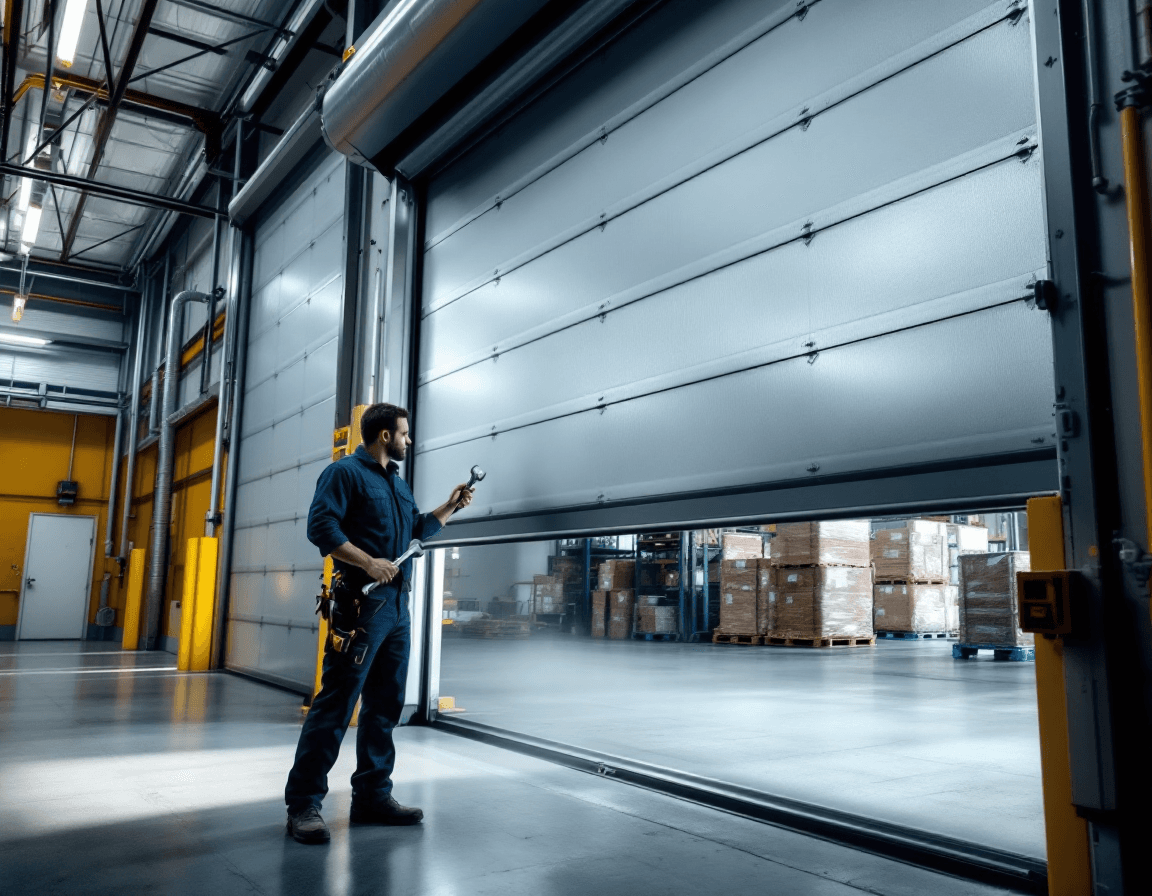
Commercial Overhead Door Repair in Snohomish, WA is a different job from residential garage service, and the difference matters most when a door stops working. A stalled warehouse door or a loading bay that won't close can hold up deliveries, pull crews off schedule, and leave product exposed to weather. Seattle Garage Door Fix sends licensed, bonded, and insured technicians to commercial properties across Snohomish and the surrounding county, and we start every job by understanding how your building actually uses its doors. A door that opens slowly on a quiet Sunday may be a nuisance, but the same door on a busy Tuesday can cost you a full shift.
Snohomish businesses face a particular mix of conditions. The city sits in the Snohomish River valley, where moisture from the Pacific Northwest weather system lingers for long stretches, and where the Pilchuck River and surrounding low ground keep humidity high through much of the year. Trucks move constantly along the highways and feeder roads that connect the historic core to Clearview and the growing commercial corridors on the east side of town. Those factors shape how doors wear, how quickly metal corrodes, and how often a commercial operator gets pushed beyond what it was designed to handle.
Our approach is practical. We inspect the door, the track, the operator, the safety sensors, and the controls together, because a commercial door is a system and a failure in one part usually shows up as a symptom in another. We then give you a clear, written quote that separates urgent repairs from upgrades you can schedule later. If you need a door back in service today, we will tell you what it takes; if you would rather plan a maintenance program to prevent the next outage, we can build that too.
Why a Loading Dock Door Fails on a Weekday Morning
Most commercial door failures do not happen at random. They tend to surface at the start of a shift, when the door has been cycled dozens of times overnight and the operator, springs, and rollers are under the most stress they will see all day. A door that has been slightly out of balance for months may finally refuse to lift when the morning temperature drops and the metal contracts. In the Snohomish area, that cold-morning pattern is common during the damp months, when condensation settles on tracks and bearings and turns a minor drag into a hard stop.
When a loading dock door goes down during operating hours, the first goal is to make the opening safe and secure, then restore function. We check whether the door is stuck partway, whether the bottom seal has jammed against debris or a dock plate, and whether the operator is reporting a fault code. Many commercial operators display a diagnostic light or code on the control panel, and reading that code correctly often saves hours of guesswork. We also look for obvious causes such as a bent bottom bracket, a damaged sensor eye, or a cable that has jumped off its drum.
Some failures need a temporary fix before the permanent repair can be ordered. If a spring or cable has broken, a licensed technician must handle the replacement with the correct tools and tension procedures, because stored spring energy can cause serious injury. We will tell you exactly what must happen before the door can be trusted again and what you can safely do in the meantime, such as keeping the area clear, locking out the operator, or routing traffic to another bay.
Sectional Overhead Doors Built for Snohomish Dock Traffic
Sectional overhead doors are the workhorse of most warehouses, distribution yards, and light manufacturing buildings. Each panel hinges to the next and rides on rollers through vertical and horizontal tracks, which lets the door stack compactly overhead and open quickly. Those same hinges and rollers take a beating in a busy facility, especially where forklifts and trucks create constant vibration and occasional contact with the lower panels. Over time, worn hinges can allow panels to bind, and loose rollers can cause the door to ride out of its track.
When we evaluate a sectional door, we look closely at the panel alignment, the condition of the track radius, and whether the door is sitting square in the opening. Snohomish buildings range from newer steel structures to older converted spaces where the header or floor may have shifted over the years. A door that was installed level can become misaligned as a building settles, and forcing it will only accelerate damage. Our technicians measure and adjust rather than muscling the door into place.
Replacement is sometimes the right answer, especially when a panel has cracked, the insulation core has failed, or the track system is corroded beyond reliable repair. Insulated panels are worth considering for facilities that heat or cool their interiors, since a tighter door reduces drafts and helps keep the dock comfortable through wet winters. We will explain the tradeoffs between repair, partial panel replacement, and a full door upgrade so you can compare options on paper before you decide.
Rolling Steel Doors on Historic Downtown Storefronts
Historic Downtown Snohomish has a character that many visitors love, with older brick and wood-frame buildings that have housed shops, offices, and workshops for generations. Some of these properties still use rolling steel doors for security and for storage access, and those doors often have decades of paint, grime, and modifications behind them. When a rolling steel door sticks or refuses to close, the cause may be as simple as a bent guide or as involved as a worn barrel bearing that has been neglected for years.
Rolling steel doors work differently from sectional doors. The curtain of interlocking slats winds around a barrel above the opening, and it runs in side guides that must stay parallel and free of debris. If one guide is pushed out of line, the curtain can jam, and forcing it can deform the slats and make the problem worse. We inspect the guides, the bottom bar, the slat condition, and the barrel bearings, then correct alignment before we consider any panel replacement.
Working in older buildings requires extra care. Historic facades, shared walls, and limited access to the head room can complicate installation, so we plan the work around the building rather than forcing the building to fit a standard kit. Where a rolling door is protecting valuable stock or equipment, we also review whether the locking hardware, slat profile, and operator choice still meet the security needs of the business. A door that was adequate twenty years ago may not match how you use the space today.
Diagnosing a Commercial Operator That Quits Under Load
The operator is the motor that lifts and lowers a commercial door, and it is often the component that gets blamed first and understood last. A commercial operator has to handle much more weight and duty cycle than a residential opener, and when it fails, the symptoms can look similar even when the causes are different. A door that stops halfway, reverses for no clear reason, or makes a grinding sound may have an operator problem, a balance problem, or a track problem that is loading the motor.
Our diagnostic process starts by separating the door from the operator. We check whether the door moves freely by hand when the operator is disengaged, because a door that resists manual movement is not ready for motor work. Then we inspect the operator's limit settings, the reversing edge or photo eyes, the power supply, and the control wiring. Wet conditions in the Snohomish area can corrode terminals and lead to intermittent faults that appear, disappear, and reappear, so we check connections carefully rather than replacing parts on a guess.
Replacement decisions depend on the operator's age, parts availability, and how the door is used. If the motor is failing, the gearbox is worn, or the control board is unreliable, a new operator may be the most cost-effective path. We will also look at whether the existing operator is correctly sized for the door's weight and cycle count, since an undersized operator running a heavy door all day will fail early no matter how well it is maintained.
Repairing Forklift Impact Damage Without Rebuilding Everything
Forklift impact is one of the most common causes of damage on commercial doors, and it is often the hardest to see at first. A sectional panel may look intact from the outside while its internal stiffeners are cracked or its hinges are bent. A rolling steel curtain may have a single slat pushed out of line that quietly binds in the guides each time the door cycles. Because the damage can spread through a door's movement, a prompt inspection helps prevent a small dent from becoming a larger failure.
Our technicians assess impact damage by checking the affected section against adjacent panels, looking for gaps, misaligned hinges, and any sign that the track has been pushed out of position. In many cases, a single damaged section can be replaced without replacing the full door, which keeps costs down and shortens the outage. We will confirm that the replacement panel matches the existing door's profile, thickness, and hardware so the repaired door operates as a unit rather than a patchwork.
Prevention is worth discussing as well. Bollards, guard rails, clear lane markings, and conversations with drivers about staging and turning radius can reduce repeat impacts. If a door is hit repeatedly at the same point, the layout of the dock may be the real issue, and we can point out where a simple protective measure would pay for itself. We do not guess at liability or insurance questions, but we can document the damage clearly so your team has accurate records.
How Western Washington Weather Wears Down Commercial Doors
The climate of Western Washington shapes commercial door maintenance in ways that visitors from drier regions may not expect. Persistent rain, damp air, and temperature swings encourage corrosion on tracks, hinges, springs, and fasteners, particularly where protective coatings have been scratched or worn away. Algae and moss can gather on exterior surfaces and in the gap between panels, and debris carried in by wind and rain can settle into track channels where it grinds against rollers.
Seasonal cycles also matter. During the wetter months, moisture can make weatherstripping swell or harden, change how bottom seals seat on a concrete slab, and create cold-start resistance in an operator that has been sitting idle overnight. In the drier summer months, heat can soften some seals and expose rubber components to faster aging. A maintenance schedule that accounts for these shifts catches problems while they are still small, which is far cheaper than an emergency call during a rainstorm.
We recommend that facility managers keep track of simple warning signs, including noisy travel, uneven movement, visible rust on hardware, light gaps around the perimeter, and slow closing. Note when the symptoms appear, such as after heavy rain or on cold mornings, because that pattern often points directly to the cause. Passing that information to your technician speeds up diagnosis and helps us recommend the right corrective steps.
Recognizing Throughput Problems Before a Door Fails Outright
Some commercial doors never fully stop working but quietly cost the business time. A door that takes twenty extra seconds to cycle may not seem like a crisis, yet across dozens of truck movements a day, that delay adds up to lost capacity, idle drivers, and crews waiting at the threshold. Throughput issues are easy to overlook because the door still technically functions, which is why we encourage operators to measure how long a complete open and close cycle takes during peak hours.
When a door is slow, the cause might be a weak operator, a worn spring system that is not fully balanced, a track that has developed friction, or control settings that were configured for a different duty cycle. We check each factor and compare the door's performance to what it should deliver when properly adjusted. Sometimes the fix is a set of tuning and lubrication steps; other times, the operator or drive system needs to be upgraded to match the throughput your site now requires.
Upgrades can also improve safety and efficiency together. High-speed doors, updated photo eyes, and modern control panels can reduce wait times while giving staff clearer feedback about door status. We discuss these options during the quote process so you can weigh the benefit against your budget. The goal is a door that matches your real operating pace, not a generic specification that looks good on paper but slows your day.
Getting Jammed or Off-Track Rolling Steel Back in Service
A rolling steel door that is jammed or has jumped its guides is a frustrating problem, and the fix requires patience. The curtain is heavy, the guides are precise, and the barrel is under tension, so a rushed approach can injure someone or damage the door further. Our technicians do not attempt to force a jammed curtain, and we stress that customers should never try to pry or hammer a door back into its track.
Here is what our technicians typically check before attempting any repair:
- Whether the door is under spring tension and whether the spring system has failed or slipped
- Whether one or both side guides are bent, separated, or filled with paint, debris, or corrosion
- Whether individual slats are bent or interlocked incorrectly near the bottom bar
- Whether the barrel bearings, brackets, and mounting hardware are secure and free of rust
- Whether the operator or manual chain is engaging properly and not overloading the curtain
Once the cause is identified, we correct the guides, restore proper alignment, and test the door through its full range before releasing it back to service. If springs are involved, we use licensed procedures to handle the tension safely. Where repeated jamming points to an aging system, we will explain whether a guide replacement, slat repair, or full curtain replacement makes the most sense for your site.
Preventive Maintenance Agreements Built Around Your Schedule
A preventive maintenance agreement is one of the most practical tools a commercial property can use to avoid emergencies. Instead of waiting for a door to fail during a delivery window, the building's door system is inspected on a regular schedule, and small issues are corrected before they become outages. For operations with tight shipping calendars, that predictability can be as valuable as the repairs themselves.
A typical program can include inspection of panels, hinges, rollers, tracks, springs, cables, operators, safety sensors, and weatherstripping, along with lubrication, adjustment, and documentation of findings. We tailor the frequency and scope to the door type, usage level, and environment. A high-cycle dock in a busy Snohomish distribution yard needs a different plan than a lightly used storage bay, and we will recommend what fits your traffic rather than selling a one-size package.
Scheduling is flexible. We can plan visits around your shift changes, slow periods, or seasonal peaks, and we will coordinate with your facilities team so that inspections do not interfere with live operations. Written reports help you track trends across the year, support budgeting, and show your insurance carrier or auditors that your doors are maintained with care. Ask us to outline what is covered, what is excluded, and how emergency calls are handled under the agreement.
How Our Custom Commercial Quotes Are Put Together
Every commercial job is different, so we do not publish a flat price list for overhead door work. A custom quote begins with a conversation about the door type, the number of doors, the current symptoms, how the doors are used, and the timing that matters most to your operation. From there, we schedule an on-site assessment and document what we find, including photographs and notes on measurements and components.
The quote itself is organized to help you make decisions. We separate immediate safety and operational repairs from recommended upgrades, and we identify parts that we need to order so you understand lead times. When a repair can be completed in a single visit, we say so; when a job requires coordination with a crane, lift equipment, or building modifications, we explain that before any work begins. You should be able to see what each line item accomplishes and why it matters.
Our commitment to speed is about reducing downtime. We aim to move quickly from assessment to approval and from approval to scheduling, and we prioritize doors that are holding up live operations. Fast turnaround does not mean cutting corners on safety, licensing, or testing. Each repair is checked under load and through full cycles before we hand the door back to your team.
Safety Standards for Springs, Cables, and Heavy Panels
Commercial overhead doors store a great deal of energy in their springs, and heavy panels can cause severe injury if they fall or shift unexpectedly. For that reason, spring work, cable replacement, and major panel removal should only be performed by licensed professionals with the right equipment and training. Attempting these repairs with improvised tools is one of the fastest ways to turn a maintenance task into an emergency.
Our technicians follow established safety practices, including locking out power, securing the door before work begins, verifying spring tension procedures, and testing safety reversing systems before release. We also explain to facility managers what staff should and should not do while waiting for service. Staff should keep the area clear, avoid standing under a suspended door, and never attempt to disconnect springs or cables themselves.
We also treat safety as an ongoing responsibility rather than a single repair. Photo eyes should be clean and aligned, reversing edges should respond correctly, and warning labels should be legible. If we find a safety concern during any visit, we will flag it clearly and recommend corrective action. Your team deserves doors that are not only functional but dependable under the demands of a working facility.
Ready to get your commercial door moving again or set up a maintenance plan that keeps your Snohomish operation running? Call Seattle Garage Door Fix at (888) 799-3819 to request a custom commercial quote, and our team will respond quickly to discuss your site, your timeline, and the repairs that matter most.