
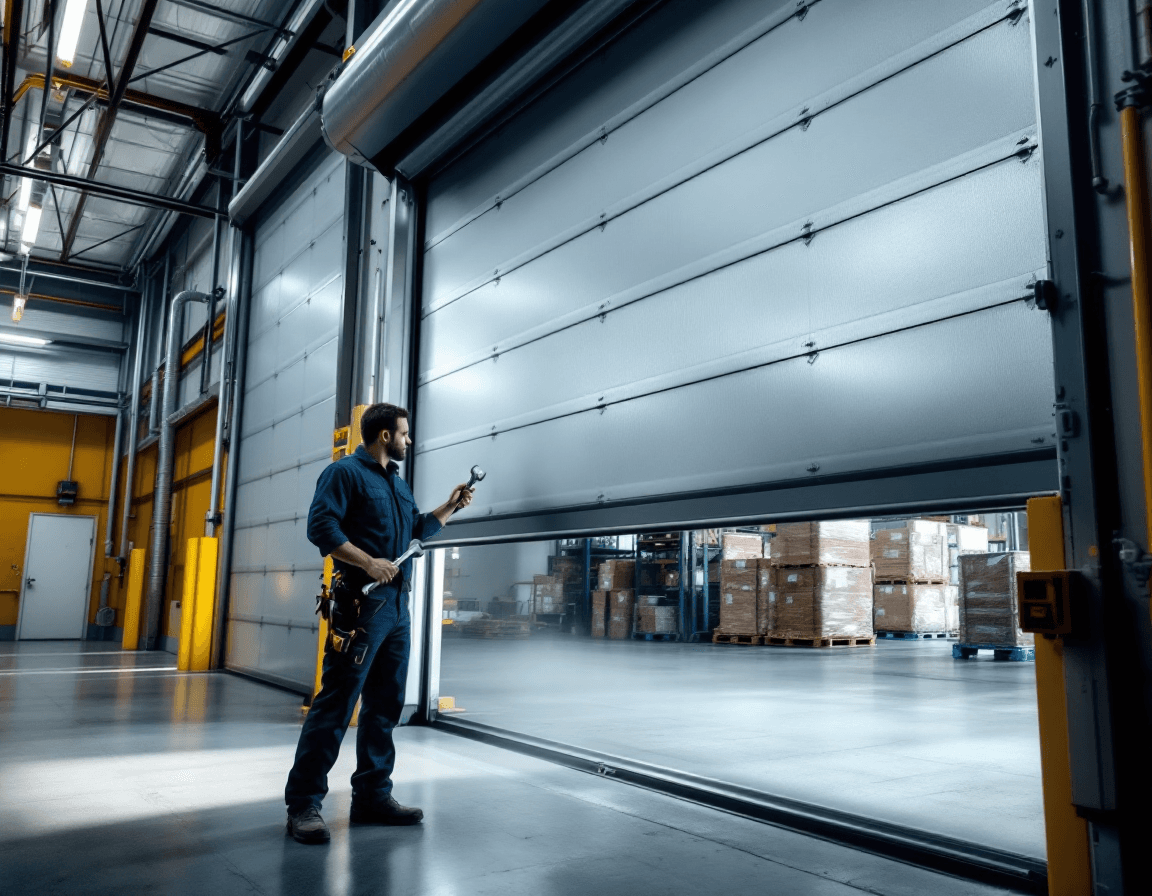
Commercial Overhead Door Repair in Duvall, WA keeps a warehouse, shop, or loading dock running, and when a large door fails, the cost shows up in missed shipments, idle crews, and trucks waiting in the lot. Seattle Garage Door Fix handles sectional overhead doors, rolling steel doors, commercial operators, and preventive maintenance for businesses along the Main Street corridor and in the surrounding Snoqualmie Valley. Our technicians understand that a commercial door is production equipment, not a residential accessory, and we plan repairs around your operating hours. This page explains the problems we see most often, how we evaluate them, and how to keep a commercial opening working through the wet winters and humid summers that define Western Washington.
Duvall sits in a valley shaped by the Snoqualmie and Tolt river systems, and that geography affects the buildings and equipment here. Moisture moves through the valley air for much of the year, and it finds its way into steel tracks, bearings, and hinge pins. Businesses near Cherry Valley and the agricultural and light-industrial parcels around town often run doors that open and close dozens of times a day, sometimes with forklifts, delivery vans, and tractors passing through. Whether your building is a small fabrication shop, a equipment storage yard, or a retail back-of-house dock, a clear plan for repair and maintenance protects your schedule. We aim to give you a realistic picture of what is happening with your door and what it will take to get it moving again.
Why Duvall Commercial Openings Face Their Own Conditions
Commercial doors in the Duvall area deal with a combination of weather and workload that residential doors rarely see. Winter brings long stretches of rain, cold mornings that produce condensation on steel, and occasional freezing temperatures that stiffen lubricants and make rollers less forgiving. Summer is typically milder, but the humidity that lingers in the valley can still promote surface rust on exposed tracks and corner brackets. Doors that sit near loading areas, drainage low points, or open-air staging spaces tend to collect grit and road debris that works its way into the moving parts.
Workload matters just as much as weather. A door that opens twenty times a day puts far more cycles on its springs, cables, rollers, and operator than a garage door that opens twice. Over time, small misalignments that a homeowner might never notice become hinge stress, uneven panel wear, or a motor that runs hotter than it should. We look at the whole picture, including how often the door cycles, what passes through it, and how the building is oriented to wind and rain.
Because commercial doors are often larger and heavier than residential ones, their hardware is engineered differently. Torsion systems, track geometry, and wind-load ratings vary across manufacturers and building types. A repair that works on a standard two-car garage door may not be appropriate for a 16-foot sectional panel on a warehouse. We identify the specific make, model, and configuration before recommending any work so that the fix matches the equipment.
When a Loading Dock Door Stops Mid-Shift
A loading-dock door that stops in the middle of a shift is one of the most disruptive problems a Duvall business can face. Drivers wait, staff stack pallets in the wrong spots, and outgoing freight misses its window. Often the cause is simpler than the panic suggests: a tripped safety sensor, a photo-eye knocked out of alignment, a control station that lost power, or a breaker that tripped during a surge. We start by checking those items because they are quick to test and can sometimes get the door moving within minutes of arrival.
If the simple checks do not resolve the issue, we look more closely at the components that fail most often on commercial dock doors. The most common culprits include worn rollers that bind in the track, a bottom seal that has torn and snagged, a broken or stretched cable on a section that is no longer tracking evenly, or a damaged section that has pulled out of its channel. Many of these symptoms look alike from the outside, so we take time to isolate each one. Our goal is to restore safe operation first, then recommend the permanent fix.
Some dock doors stop because of an operator fault, a worn limit setting, or a problem in the wiring that feeds the drive unit. These problems require diagnostic time, and we want you to understand what we find before any parts are ordered. Keep these details in mind when you call:
- The door model or manufacturer plate, if it is readable
- Whether the door made a grinding, popping, or clicking noise before it stopped
- Whether any section looks bent, separated, or out of its track
- Whether the control station lights up when you press the button
- Any recent impacts, weather events, or equipment changes near the opening
Rolling Steel Doors That Jam or Drift Off Track
Rolling steel doors are common on Duvall-area warehouses, storage bays, and service garages because they close tightly, take up little interior space, and hold up well to security demands. Their curtain of interlocking steel slats travels up into a barrel mounted above the opening, and that design depends on guides and bottom bars that stay true. When a rolling steel door jams, the usual causes are debris in the guide channels, a bent slat, a slat that has come out of its interlock, or a barrel that is no longer turning freely.
Drift is an even more common issue. A door that starts to lean toward one side may be pulling against its guides because one bracket has loosened, because the barrel is not level, or because an impact has pushed the curtain out of square. Left alone, drift causes the slats to grind against the guides, which accelerates wear and can eventually cause a full seize-up. We inspect the guide channels, the bottom bar, the counterbalance, and the barrel alignment, then correct the problem at its source rather than forcing the door through the track.
Because rolling steel doors carry heavy counterbalance springs, any work on the spring assembly must be handled by a licensed, trained professional. A rolling steel curtain can weigh a substantial amount, and stored spring tension is dangerous when mishandled. If your door is jammed or off track, please do not attempt to free it by pulling on the curtain, prying the guides, or working the spring yourself. Shut off power at the operator, keep people clear of the opening, and call us for a safe, controlled repair.
Commercial Operators: Diagnosing Slow, Stalling, or Dead Drive Units
The operator is the drive system that raises and lowers a commercial door, and when it fails, the door becomes either a fixed wall or a hazard. A dead operator may have a blown control fuse, a failed contactor, a loose connection at the disconnect, or a drive motor that has worn out. A stalling operator often points to a limit-setting problem, a worn gearbox, a failing capacitor, or a door that is binding somewhere along its travel. Many owners assume the motor is the problem when the real cause is a balance issue or a track obstruction.
Our diagnosis begins with the power supply, the control circuit, and the safety devices, then moves to the mechanical side of the system. We check whether the operator is receiving full voltage, whether the reversing edge or photo-eye is registering a fault, and whether the limit switches are set correctly for the door's travel. If the operator is sound, we test the balance and friction of the door itself, because an operator cannot fix a door that is fighting its own weight. Where a motor or gearbox needs replacement, we explain the options and the expected downtime before proceeding.
Some commercial operators are integrated with building access systems, keypad stations, or fleet-access controls. These integrations are useful, but they add points of failure that must be tested in sequence. If your door responds to a remote but not to a wall button, the issue may be in the station, the wiring run, or the receiver, not the motor. We document what we test so that you can see the logic behind the repair.
Door Speed That Holds Back Your Throughput
Not every commercial door problem is a breakdown. Sometimes the door works, but it is too slow for the way your business runs. A door that takes thirty seconds to open may be acceptable for a rarely used side entrance, yet it creates a bottleneck at a dock where forklifts cycle every few minutes. Slow doors can result from an aging operator, an undersized drive, worn bearings that add friction, or a door whose balance has drifted so that the motor is doing extra work.
Speed upgrades are not always the right answer. Before recommending a faster operator or a high-speed door, we evaluate the existing weight, the track geometry, the wind-load requirements, and the electrical capacity of the building. A faster door that is not properly balanced can strain components and shorten their life, which is the opposite of what you want. In many cases, restoring proper balance, replacing worn rollers, and adjusting the operator settings delivers a noticeable improvement at a fraction of the cost of new equipment.
We also look at how the door is used. If the opening is cycling constantly, the operator's duty rating and the control logic may need attention. If the door is used sporadically but must open quickly on demand, the sensors and response settings matter more. Understanding your traffic pattern lets us recommend changes that match your actual throughput rather than a generic upgrade.
Forklift Strikes and Damaged Sections: Repair or Replace
Forklift impact is a common reason commercial sections are damaged, and it is one of the most expensive problems to ignore. A single hit can crack a section's skin, bend its end stiles, separate its hinges, or throw the panel out of its track. Even a light tap can shift the alignment enough to cause uneven travel, which then puts stress on cables and springs. The sooner the damage is assessed, the less likely it is that a minor issue will become a major one.
Our assessment looks at each affected section individually. Surface dents that do not compromise structure may be straightened or left in place if the door operates safely. Cracked panels, bent hinges, and distorted stiles often require sectional replacement, and in some cases the track or header must be realigned as well. We match replacement sections to the existing door profile, color, and insulation where possible, because mismatched panels can affect sealing and appearance. When a door is older and the damage is extensive, we will talk with you about whether repair or full replacement makes more financial sense.
Impact damage also changes the safety picture. A section that has been pushed partly out of its track can drop or bind under load, so we recommend restricting use until a technician has inspected it. We will tell you clearly whether the door is safe to operate for the short term or should be locked out until the repair is complete.
Spring and Cable Work Belongs to Licensed Professionals
Torsion springs and lift cables store large amounts of energy, and they are the most dangerous components in any overhead door system. A torsion spring under tension can cause serious injury if it releases unexpectedly, and a cable that snaps can cause a section to fall. These parts should never be adjusted, wound, or replaced by untrained people, regardless of how simple a tutorial makes the process look. Commercial doors often use larger springs than residential doors, which raises the stakes further.
Seattle Garage Door Fix is licensed, bonded, and insured, and our technicians are trained to handle spring and cable work safely. When we replace a spring, we verify the winding, the cable routing, the drum alignment, and the balance of the door before leaving the site. We also check related hardware such as bearings, end brackets, and safety cables that protect against spring failure. Our advice is consistent: if your door shows signs of spring or cable trouble, keep it locked out and call a professional for the repair.
Signs that call for immediate professional attention include a door that slams down, a visible gap in a spring coil, a cable that is frayed or hanging loose, a door that stays partly open, or a snapping sound during operation. If any of these conditions are present, do not attempt to lift or force the door. Disconnect power, secure the opening, and contact us.
How We Build a Custom Commercial Quote
Commercial repairs are rarely priced from a flat menu because every building, door, and operator presents different conditions. A custom quote starts with the information you provide and the findings from an on-site evaluation. We look at the door's size, type, manufacturer, operator, control system, and access requirements, then identify the failed or worn components. We also consider the operational context, such as whether the door must be back in service before a delivery window or whether repairs can be staged over a weekend.
Our goal is to give you a clear, itemized picture of what the repair involves, what parts are recommended, and what options exist. Sometimes we will recommend a temporary measure to restore function while a permanent part is sourced. Other times, the fastest route is to replace a component that has reached the end of its useful life, which can prevent repeat failures. We do not invent a price before we understand the job, and we will explain the reasoning behind each line item so that you can make an informed decision.
Turnaround matters as much as the price. We prioritize calls that stop production, and we plan parts procurement to minimize the time your opening stays closed. When you call, tell us whether the door is fully down, partly operational, or safe to use with restrictions. That single detail helps us decide how quickly to dispatch and what to bring.
Preventive Maintenance Agreements Built Around Your Schedule
A preventive maintenance agreement is one of the most effective ways to avoid emergency calls. Commercial doors wear gradually, and the early signs of trouble, such as a slightly noisy roller, a sensor that needs cleaning, or a cable that is beginning to fray, are easy to miss during a busy week. A scheduled inspection catches these issues before they interrupt your operation. For Duvall businesses dealing with wet winters and high-traffic dock doors, consistent maintenance is especially valuable.
A typical maintenance visit covers the things that most affect safety and reliability. Our technicians check spring and cable condition, track alignment, hinge and roller wear, bottom seals, safety sensors, reversing functions, and operator settings. We lubricate moving parts with products suited to the local climate, tighten hardware, and document what we find so that you can see the trend over time. If a component is nearing the end of its life, we will flag it and recommend a window to replace it on your schedule rather than during a breakdown.
Agreements can be structured around the way your business runs. Some clients prefer quarterly visits during high-volume seasons, while others schedule maintenance during slower months. We can coordinate with your facility manager, dock supervisor, or operations lead to set times that do not interrupt shipping or production. Here are a few things to consider when deciding on an agreement:
- How many doors and operators are in service at each location
- How many cycles per day each door typically performs
- Whether the doors are exposed to forklift traffic, weather, or washdown
- Whether any doors serve safety-critical or security-critical functions
- How quickly you need a response if a door fails during operation
Keeping Downtime Short From the First Call Onward
Downtime is the real cost of a commercial door failure, so we organize our service around getting your opening working again as quickly as safely possible. When you call, we ask targeted questions to determine whether the issue is a simple safety-device fault, a mechanical problem, or a hazard that requires lockout. That triage helps us send the right technician with the right parts and tools. Clear communication from the start often saves hours on the job.
Once on site, we work methodically. We secure the opening, confirm the power is isolated when needed, and inspect the door before attempting any adjustment. If parts are needed, we explain the expected lead time and whether a temporary fix can keep the door usable in the meantime. We also try to leave the door in a documented, tested condition so that your team understands what was repaired and what to watch for in the coming weeks.
Commercial doors are a critical part of how Duvall businesses receive goods, move product, and secure their facilities. Whether your situation involves a dock door that has stopped, a rolling steel curtain that has drifted, an operator that is failing, or a preventive program you want to put in place, we are ready to help. For a custom commercial quote and fast response, call Seattle Garage Door Fix at (888) 799-3819 and let us get your opening moving again.