
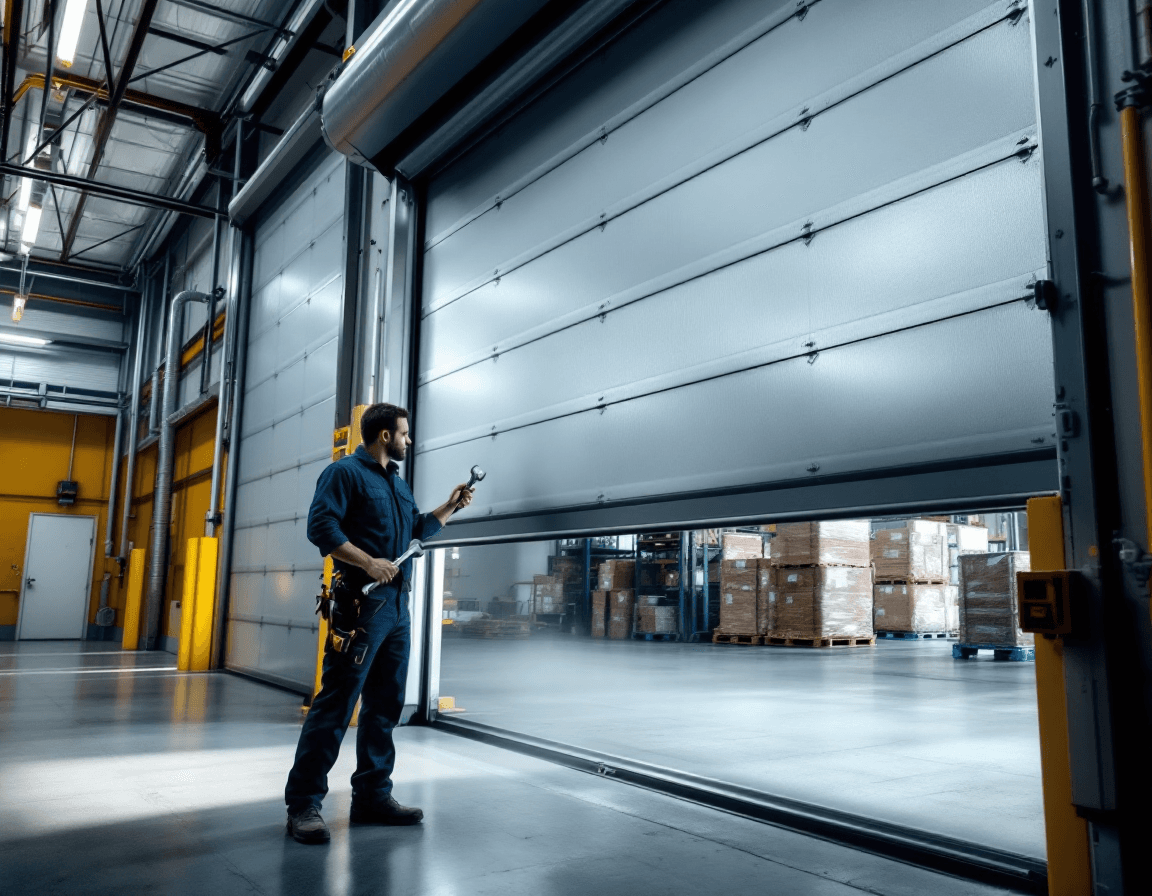
Commercial overhead door repair in Woodinville, WA is a different job from fixing a residential garage door, and the stakes are higher. A warehouse, distribution bay, or loading dock depends on its large door to keep trucks turning and crews working, so a door that stops or sticks can idle an entire shift. Seattle Garage Door Fix works on sectional overhead doors, rolling steel doors, commercial operators, and preventive maintenance for businesses across Woodinville and the surrounding King County corridor, from light industrial parks near the Sammamish River to smaller shops tucked off the main arterials.
Our approach starts with understanding how your building actually uses its doors. A dock door that opens fifty times a day has different wear patterns than a shop door that goes up twice a morning, and a door that serves a tasting room, a brewery loading area, or a custom fabrication shop may have very different needs for speed, insulation, and security. We look at the door's size, the type of hardware and operator, how the door fails, and how quickly you need it back in service before we recommend a fix. Every commercial job gets a written, custom quote, and our goal is to get that quote to you quickly so you can make decisions while the problem is still manageable.
Commercial doors take a lot of punishment, and the Pacific Northwest adds its own challenges. This page explains the most common problems we see at Woodinville businesses, the warning signs that a door needs attention, and how we handle everything from a single damaged panel to a full preventive maintenance program. If your door is down right now, call (888) 799-3819 and we will talk through what you are seeing.
Keeping Loading Bays Moving Through the Woodinville Work Week
Many Woodinville businesses run on tight schedules. Deliveries arrive in windows, crews need to load and unload between appointments, and a single dock door may be the only way product gets in or out of the building. When that door fails, the cost goes well beyond the repair bill, because drivers wait, staff get reassigned, and orders slip past their cutoff times. We keep that reality in mind on every commercial call.
Our first priority on a down door is restoring safe, reliable operation, even if the permanent repair needs to follow. Sometimes that means replacing a single failed component so the door can run again the same day. Other times the door needs a more involved fix that we schedule around your operating hours, including early mornings, evenings, or weekends when the bay is quieter. We will tell you plainly which option gets you back to work fastest and which one gives you the most durable result.
Before we leave the site, we walk through what caused the failure and what else we noticed during the inspection. A door rarely fails for only one reason, and fixing the broken part without addressing worn rollers, out-of-square tracks, or a tired operator can lead to a second outage within weeks. Our written summary lists what we fixed, what we recommend next, and what can wait, so your facilities or operations manager can plan the budget without surprises.
Why Wet Winters and Valley Fog Wear Down Commercial Steel
Western Washington winters are long, wet, and rarely dramatic, which makes them easy to underestimate. Rain falls for weeks at a time, and the humidity that settles into the Sammamish Valley can keep metal surfaces damp well into the morning. Steel doors, tracks, and hardware are very good at handling an occasional soaking, but constant moisture gets into bearings, seals, and fasteners and speeds up corrosion in places you cannot see from the outside.
Woodinville's mix of wineries, agricultural land, and light industry also means that dust, mud, and organic debris find their way onto door tracks and the bottom edge of the door. Wet leaves and moss can build up in track channels, especially on bays that sit under trees or near drainage areas. Over time that grit grinds into rollers and hinges, and a door that once ran quietly starts to groan, stall, or pull unevenly as it rises.
The hills around Hollywood Hill and the rolling terrain closer to Cottage Lake can also affect how a building drains and how a loading apron holds water. Standing water near the threshold can rust the bottom bracket and soak the weatherseal, while a poorly sealed bottom edge lets cold, damp air into the building all winter. We check drainage conditions at the door opening during service, because a door that is repaired but still sitting in a puddle will not last.
Reading the Warning Signs Before a Dock Door Quits
Most commercial door failures announce themselves well before the door stops completely. Catching those early signs keeps repairs smaller, cheaper, and far less disruptive to your operation. Facility managers and shift leads are often the first to notice, so it helps to train staff to report changes even when the door still technically works.
Common early warning signs include:
- The door hesitates, jerks, or stops briefly before reaching the top or bottom of its travel.
- Grinding, popping, or squealing sounds that change with temperature or humidity.
- Visible gaps between the door and the floor, or light showing around the edges when the door is closed.
- Panels that look slightly out of line, or a section that sits higher or lower than its neighbors.
- The operator runs longer than usual, or the motor sounds strained when lifting a normal load.
- Rust bloom, flaking paint, or white powdery residue on steel surfaces near the tracks and bottom bracket.
When you notice any of these, log the date, time, and what you observed, then call us before the problem spreads. A quick inspection can often identify a worn roller, a loose track bracket, or a misaligned sensor before it turns into a door that will not close at the end of the day.
Sectional Overhead Doors: Panels, Tracks, and Weatherseals
Sectional overhead doors are the workhorses of many Woodinville warehouses, distribution spaces, and service garages. They are built from hinged horizontal panels that travel up vertical tracks and then curve into horizontal tracks overhead. Because the door is made of many moving parts, a problem in one area can show up as a symptom somewhere else, so careful diagnosis matters.
Damaged or worn panels are a frequent issue, especially on doors that see daily truck traffic. A single bent section can throw off the whole door, causing binding, uneven travel, or excessive wear on the hinges and rollers. In many cases we can replace individual panels rather than the entire door, which keeps costs manageable and preserves the existing building opening. We match panel profile, thickness, insulation, and color as closely as possible so the door still looks consistent.
Weatherseals and bottom astragals are often overlooked until the building feels drafty in January. Worn seals let rain, wind, and cold air into the bay, and they also allow pests and debris to get in. We inspect the bottom seal, side seals, and top seal, then recommend replacement where the material has hardened, split, or pulled away from the door. Good sealing protects product, reduces heating costs, and helps the door run more quietly.
Rolling Steel Doors That Jam, Bind, or Leave the Guide
Rolling steel doors are common at storefronts, service entries, and secure storage areas across the Woodinville business district. They roll up into a compact coil above the opening rather than traveling along horizontal tracks, which makes them efficient for spaces where ceiling room is limited. They also rely on guides on each side, and a door that slips out of those guides is one of the most urgent calls we receive.
When a rolling steel door jams, the cause is usually one of a few things: debris in the guide channels, a bent slat or curtain section, a worn or misaligned bottom bar, or a damaged guide that has allowed the curtain to wander. Forcing a jammed door is risky, because the curtain can bend further, the coil can shift, and the tension system can be stressed beyond its design. If your rolling door is off track, please stop operating it and call us so we can secure the opening and inspect it safely.
Repairs typically involve straightening or replacing slats, cleaning and realigning guides, and adjusting or replacing the bottom bar and locking hardware. Because rolling doors store significant tension in their coil and barrel assembly, any work on that system must be done by trained technicians with the proper equipment. Where a door has seen repeated impacts or been running with a damaged guide for some time, we will explain whether a partial repair is sound or whether replacement makes more sense.
Commercial Operators, Controllers, and Safety Sensors
Commercial operators do the lifting on most larger doors, and they are built to run far more cycles than residential units. Heavy-duty motors, reversing controls, and integrated safety systems work together, and when one component fails, the door may refuse to move or respond unpredictably. Diagnosing those failures requires checking power supply, control wiring, limit settings, and the sensors that tell the door it is safe to operate.
Photo eyes and safety edges deserve particular attention. A misaligned or dirty photo eye can cause a door to reverse mid-travel, while a damaged safety edge may fail to stop the door when it contacts something. Many Woodinville sites have tight bays where forklifts, pallet jacks, and trucks operate close to the door, so sensor alignment and cleaning are part of routine maintenance rather than an afterthought. We test every safety function we touch and document the results for your records.
Operators also wear out over time, and the signs can be subtle. Slower travel, unusual heat, inconsistent limit positions, and occasional nuisance trips may point to a motor, gearbox, or controller that is approaching the end of its useful life. We will tell you whether a repair will restore reliable performance or whether an upgrade would reduce downtime and make the door easier to manage.
Forklift Strikes and Rebuilding Damaged Sections
Forklift impact is one of the most common causes of commercial door damage we see. A pallet that catches the bottom panel, a load that swings during a turn, or a rushed lift into the opening can bend sections, crack hinges, and knock tracks out of line in a single moment. The damage may look minor at first, but a bent section can put uneven pressure on the rest of the door and lead to bigger problems within weeks.
After an impact, we start with a full inspection of the affected section and the surrounding hardware. We check whether the panel can be straightened safely, whether hinges and rollers are still serviceable, and whether the track is still true to the opening. Sometimes the best solution is replacing one or two panels; other times the damage has spread enough that a more comprehensive repair makes sense. We will show you what we found and explain the tradeoffs before work begins.
Prevention matters as much as repair. Bollards, guard rails, and clear floor markings can reduce impact risk around dock openings, and training drivers and equipment operators to approach the door at a controlled speed makes a measurable difference. We are happy to walk through a site and suggest practical changes that protect the door without slowing your team down.
Speed, Throughput, and When a Slow Door Is Costing You
Not every commercial door problem is an outright failure. Many businesses live with a door that still works but takes far longer to open and close than it should. A door that crawls up at half speed can add minutes to every cycle, and across a full shift those minutes add up to lost productivity, longer truck dwell times, and frustrated crews. Throughput is a legitimate reason to call for service, even if the door has not stopped.
Speed issues often trace back to a few common sources: a tired operator, worn drive components, misadjusted limits, binding in the tracks, or a counterbalance system that is no longer set correctly. Each of those causes has a different fix, and some can be addressed with adjustments while others require parts replacement. We measure travel and listen for signs of strain so we can recommend a repair that restores the speed you expect.
If your door is slow because the business has outgrown the original equipment, we can discuss faster operators, higher-cycle components, or door replacement options. We do not push upgrades that you do not need, but we will be honest when an older door is holding back your operation. A custom quote lays out the performance difference and the expected cost so you can compare options side by side.
Spring Tension and Cable Work Belong to Licensed Crews
Every sectional commercial door uses high-tension springs to counterbalance the weight of the door, and the cables and drums that work alongside them store a great deal of energy. These components are among the most dangerous parts of any garage or commercial door. A spring under tension can release with force sufficient to cause serious injury, and a cable that frays or slips can drop a door unexpectedly. For that reason, spring and cable work must be performed by licensed, trained professionals with the right tools and procedures.
We want business owners and facility staff to understand this clearly: do not attempt to adjust, wind, remove, or replace springs, cables, or drums yourself, and do not allow untrained staff to do so. Even if a door appears to be simply out of balance, the fix may involve tension that could cause harm if handled incorrectly. If you notice a broken spring, a frayed cable, a door that drops suddenly, or a door that will not stay open, keep people clear of the opening and contact us for service.
Our technicians follow established safety procedures for every spring and cable job, including securing the door, verifying the condition of the components, and confirming balance after the repair. Those steps protect your people, your equipment, and your building. We would rather explain the risks and schedule the right repair than see someone get hurt trying to save a few minutes.
Preventive Maintenance Agreements for Busy Sites
Preventive maintenance is one of the most effective ways to reduce unplanned downtime for commercial doors. Rather than waiting for a failure, a scheduled service visit checks the door, operator, safety sensors, tracks, hinges, rollers, and seals before small problems become emergencies. For businesses with heavy daily use, the difference is often the gap between a planned adjustment and an overnight call during a peak shipping period.
A typical preventive maintenance program at a commercial site may include lubrication of moving components, tightening of fasteners, inspection of tracks and guides, testing of safety reversal and photo eyes, checking the operator and controls, and reviewing the weatherseal condition. Because every building is different, we tailor the scope to your door types, traffic levels, and the environment around your site. A door near a wash bay or drainage area may need different attention than one in a dry storage building.
Maintenance agreements also give your team a single point of contact and a documented service history. That history helps with budgeting, warranty questions, and decisions about repair versus replacement. We can set up a visit schedule that fits your operating calendar, whether that is quarterly, semiannual, or aligned with your seasonal peaks. Ask us about a preventive maintenance contract when you call, and we will explain what is included.
How We Scope Custom Commercial Quotes Quickly
Commercial jobs are never one-size-fits-all, so we do not offer a flat price for every door in Woodinville. Instead, we provide custom quotes based on the door type, size, damage or failure, parts required, access conditions, and how soon you need the work completed. A rolling steel door in a secured storefront and a multi-section sectional door at a distribution dock can require very different materials and labor, and the quote should reflect that.
To help us respond quickly, it is useful to have a few details ready when you call. Note the door type if you know it, the approximate width and height of the opening, the brand or operator model if it is visible on the motor, the symptoms you have seen, and whether the door is currently out of service. Photos of the damaged area or the operator label can also speed up the process. These details let us prepare a more accurate estimate on the first call and reduce the back-and-forth that delays repairs.
Our goal is fast turnaround to minimize downtime. For urgent situations, we will prioritize getting a door secured and back in operation, then provide a complete written quote for any permanent work. You will know what is required, what it costs, and what timeline to expect before you commit. To start a commercial overhead door repair in Woodinville, WA, or to schedule a preventive maintenance review, call (888) 799-3819 and our team will help you get your door moving again.