
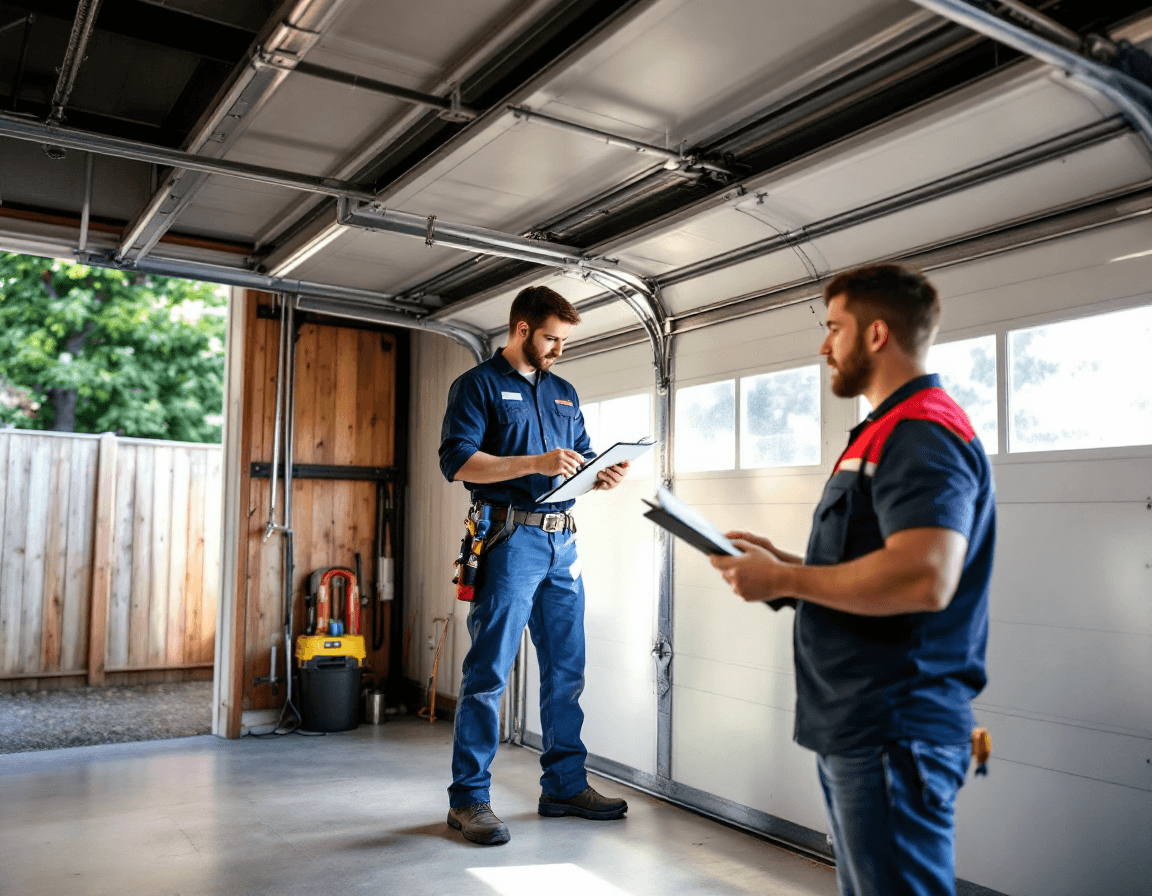
Garage Door Maintenance & Tune-Ups in Black Diamond, WA is one of the most practical investments a homeowner in this part of King County can make, and it costs far less than the emergency call that usually follows years of neglect. Black Diamond sits at the edge of the foothills southeast of Maple Valley, where the air stays damp for much of the year and the temperature can swing noticeably between a cold January morning and a mild afternoon. Those conditions are hard on the steel springs, rollers, hinges, and cables that make a garage door work, and they are even harder on the electronics inside a belt or chain drive opener. A scheduled tune-up catches small problems while they are still small.
If you live anywhere in the 98010 ZIP code, you already know that a garage door rarely fails without warning. It usually announces itself first with a new squeak, a jolt at the start of travel, or an opener that seems to be working harder than it used to. Many homeowners treat those signs as background noise until the door stops in the middle of its path with a car parked behind it. This page explains what a professional multi-point tune-up actually involves, why Black Diamond homes have their own maintenance needs, and how to tell when your door is ready for attention.
Our technicians serve Black Diamond and the surrounding communities, including neighborhoods near Ten Trails and the shoreline areas around Lake Sawyer, and we approach every visit the same way. We look at the door as a system rather than a single panel, because a spring that is slightly out of tune can strain the opener, and a sagging track can make a healthy spring feel defective. The sections below walk through the parts of that system, the local conditions that wear on them, and what you can reasonably check yourself between professional visits.
What a Multi-Point Tune-Up Actually Covers
A full multi-point tune-up is a structured inspection rather than a quick lube job. Our technicians move through the door from top to bottom, checking the fasteners, the track alignment, the roller condition, the hinges, the bottom seal, and the wall brackets that hold everything in place. Each point is checked against how it should sit and move, and anything loose, bent, or worn is noted before any work begins. Because the inspection touches so many components, it often reveals issues that a homeowner would never notice from the driveway.
The lubrication step is where many homeowners expect the visit to end, but it is only one part of the process. Rollers, hinge pivots, and the lift mechanism receive the appropriate lubricant for the component, applied sparingly so it does not collect dust and grit. Torsion springs and their bearing plates are inspected and lubricated where the manufacturer allows it, and any sign of corrosion or stress is documented. Our technicians do not adjust spring tension during a maintenance visit as a homeowner would be tempted to do, since spring work carries a serious risk of injury and must be left to licensed professionals with the right tools.
The final stages involve balance testing and opener safety testing, which together show whether the door and the opener are cooperating. A balance test checks whether the door stays put when it is partly open with the opener disengaged, which tells us how much work the opener is being asked to do. An opener safety test confirms that the door reverses when it meets an obstruction and that the photo-eye sensors are aligned and responding correctly. Once everything has been measured and tested, you receive a clear summary of what was found, what was adjusted, and what, if anything, needs repair.
How Pacific Northwest Moisture Works Against Your Hardware
Western Washington's wet season is one of the defining features of living near Black Diamond, and it affects a garage door in ways that are easy to overlook. Moisture settles onto steel hardware and works its way into the joints, where it combines with road grime and fine debris to form a grit that acts like sandpaper on every moving part. Springs and hardware that sit outdoors in a driveway-facing position, or in a garage with a door that is opened often, see this cycle repeat through the fall, winter, and early spring. Over time, surface rust can appear on hinges and brackets, and it can slowly weaken the metal at the points where stress concentrates.
Black Diamond's rural character adds its own pressures. Many homes have wooded lots, and it is common for fir needles, leaves, and pine sap to accumulate on the top of the door, along the weatherstripping, and in the track channels. Tree debris holds moisture against the door panels and bottom seal, which can soften weatherstripping and encourage mildew on the lower sections. Dust and pollen during drier months mix with any residue left on the track, creating a thin film that increases friction on the rollers.
Temperature swings matter as well. A cold morning can stiffen old lubricant and make the door feel heavier or noisier at startup, while a warmer afternoon can make the same door seem perfectly normal. Those seasonal changes are one reason we recommend scheduling a tune-up at a consistent time each year, so that comparisons between visits are meaningful. A technician who sees your door in the same season every year can tell the difference between a normal seasonal change and a true decline in performance.
Listening for Trouble: Noise That Gets Worse Over Time
Almost every garage door becomes louder as it ages, but the change is usually gradual enough that homeowners adjust to it without noticing. The first step toward catching a real problem is recognizing that a noise is new, or that it has grown from an occasional chirp into a steady grind. A squeak at the start of travel that disappears after a few seconds often points to dry hinge pivots or rollers, while a rattle that appears at the top of the door can signal loose brackets or a worn bearing. A deep, repetitive knock during travel is more concerning, since it can indicate that a roller has worn flat or that a track section has shifted.
Noise that increases over a season or two is a signal worth taking seriously. Rollers with worn nylon or steel bearings produce a grinding sound that tends to intensify as the bearing degrades, and the grit collected in the track accelerates that wear. When a roller seizes, the door may still open, but the load shifts onto the remaining rollers and the opener, which can cause the track to bend or the panels to flex. A tune-up at the early stage of this process is far less expensive than replacing a damaged track section after the fact.
It helps to keep a simple mental log of what you hear and when you hear it. Note whether the noise happens on opening, closing, or both, whether it is worse on cold mornings, and whether it appears only when the door is partway open. Those details help a technician narrow the problem quickly. If the noise is accompanied by vibration through the wall or a jerky start, do not wait until the next scheduled visit; call us so the door can be checked before it fails in a more inconvenient way.
Testing Balance and Diagnosing a Door That Feels Heavy
A garage door that feels heavy, lurches at the start of travel, or seems to drop when it is partly open is out of balance, and that imbalance usually has a clear cause. The springs are designed to counterbalance most of the door's weight, so that the opener only needs to guide the door rather than lift it. When the spring tension drifts out of spec, through age, fatigue, or an unnoticed previous adjustment, the opener must make up the difference, and that extra load shows up as strain, slow travel, and premature wear on the drive system.
Balance testing is one of the most useful diagnostics we perform because it separates a door problem from an opener problem. With the door closed, the opener is disengaged and the door is lifted by hand to a point around the middle of its travel. A balanced door should stay in place without drifting up or sinking down. If it moves, the technician notes the direction and the amount, which points toward a spring that needs professional attention or a track or hinge issue that is changing the load.
Homeowners should understand the limits of what they can safely check. Some people are tempted to disconnect the opener and test balance themselves, and that is a reasonable thing to observe from a distance, but it becomes dangerous quickly when a door is heavy, when a spring is fatigued, or when a cable is frayed. Torsion springs store a large amount of energy, and a broken spring can release that energy with enough force to cause serious injury. Any work involving springs, cables, or drums should be handled by a licensed professional, and that is a rule we apply to every job we perform.
Opener Strain, Slow Travel, and the Hidden Cost of Extra Effort
A garage door opener is designed to move a balanced door smoothly, and it should not sound like it is laboring. When the opener runs noticeably slower than it did when the system was new, or when it hesitates before starting, the motor and gearset are usually compensating for something else. Common causes include a door that has become unbalanced, rollers that are binding in the track, a bent section of track, or a trolley and drive system that has lost lubrication. In many cases the opener itself is healthy and simply needs the rest of the system to pull its weight.
The opener's force settings deserve attention during any tune-up. A setting that is too high can mask a mechanical problem and allow the door to keep moving when it should stop, while a setting that is too low can cause nuisance reversals on a door that is working correctly. Our technicians check the limit settings, the force settings, and the travel path to make sure the opener is operating within its intended range. Adjustments are made with the door's actual condition in mind, not as a generic fix.
Belt and chain drives behave differently, and the maintenance expectations differ accordingly. A belt drive is quieter and generally requires less lubrication, but it is sensitive to tension and to the condition of the rail. A chain drive is more robust for heavier doors but needs periodic lubrication and inspection of the chain for stretch. Knowing which type of drive you have helps you understand what a technician is checking, and it also helps you choose the right lubricant if you decide to do light maintenance between visits.
Safety Reversal and Photo-Eye Checks Every Household Should Know
Modern openers are required to reverse when they encounter resistance, and a properly functioning reversal system is one of the most important safety features in the home. Our opener safety testing confirms that the door reverses reliably when it meets an obstruction and that it stops or reverses when the photo-eye beam is interrupted. Those tests protect children, pets, and anyone who might be standing in the path of a closing door, so they should never be skipped or assumed to be working.
Photo-eye sensors are small, but they are sensitive. They sit near the bottom of each side of the door track, and they must face each other directly with a clear line of sight. Cobwebs, dust, sun glare, and even a bumped sensor can throw off the alignment, and a misaligned sensor can cause the door to fail to close or to reverse unexpectedly. A quick visual check is useful: look for a steady indicator light on each sensor, and make sure nothing is blocking the beam. If the light blinks or goes dark, call for service rather than trying to adjust the bracket under tension.
Homeowners can also perform a basic reversal check in a controlled way. Place a flat piece of wood, such as a two-by-four, on the floor in the closing path, close the door using the wall button, and confirm that the door reverses when it contacts the wood. Do this only with the door fully visible and no one in the path. If the door does not reverse, stop using the opener and schedule service right away, since a door that cannot detect an obstruction is a hazard.
Buying a Home Near Lake Sawyer? Start With a Baseline
Many of our Black Diamond calls come from people who have just closed on a home and want to know what they are working with. A garage door that was installed by a previous owner may have been serviced regularly, or it may have been ignored for years, and it is difficult to tell which from appearance alone. A baseline tune-up gives you a clear, documented picture of the door's condition on the day you take possession, and it sets a schedule for future care that you can build on.
The baseline visit covers the same multi-point inspection described earlier, along with a closer look at details that new owners often miss. We check whether the opener is mounted securely, whether the wall brackets are tight, whether the springs appear to be the correct type and size for the door, and whether any previous repairs were done in a way that could cause future problems. If anything looks like it was installed improperly or with mismatched parts, we explain what we found and what the options are.
For homeowners in lakeside neighborhoods, the baseline also gives a chance to think about the garage as part of the home's overall moisture management. Doors that face prevailing weather, or that sit close to landscaping that holds water, can benefit from a bottom seal and weatherstripping that match the local climate. We can point out where moisture is getting in and suggest practical steps, which may include replacing a worn seal or adjusting drainage around the garage slab, without pressing you into any particular upgrade.
Why Waiting More Than a Year Usually Costs More
Our general recommendation is to have a garage door tuned up at least once a year, and the reason is simple: the door's hardware degrades on a predictable schedule, and the wear that accumulates in twelve months is much easier to correct than the wear that accumulates in twenty-four. A door that has gone more than a year without service may still work perfectly well, but it is also more likely to have a worn roller, a dry hinge, or a drifting balance point that has not yet caused a visible problem.
The most common outcome of a delayed tune-up is a repair that could have been avoided. A slightly worn roller that would have cost a modest amount to replace during a routine visit can become a bent track section or a damaged bottom bracket once it fails under load. A dry hinge that would have taken a few minutes to lubricate can seize and pull on the panel, which may crack or distort the section it is attached to. An opener that has been straining for months may develop a worn gear or a failing logic board, and those repairs are far more expensive than the routine maintenance that would have prevented them.
There is also the matter of predictability. Homeowners who schedule regular tune-ups know roughly what each visit will cost and what it will accomplish, which makes budgeting easier. Homeowners who wait for a failure often face a repair on a schedule that is not of their choosing, sometimes in bad weather, when the door is needed most. A yearly appointment is a small, planned expense that keeps the door in predictable condition.
What Our Technicians Lubricate and What They Leave Alone
Lubrication is one of the most misunderstood parts of garage door care, and using the wrong product can cause more harm than good. Silicone-based or lithium-based lubricants are commonly recommended for rollers, hinges, and pivot points, since they resist moisture and do not attract as much dust as heavy grease. Petroleum-based products can gum up over time and collect grit, which is especially problematic in a wet climate. Our technicians choose the lubricant based on the component and the manufacturer's guidance.
Here is a general breakdown of what we typically address during a tune-up and what remains the responsibility of a licensed professional:
- Lubricated during routine service: hinge pivots, roller bearings, lift cable contact points where appropriate, and the moving joints of the opener's drive system
- Inspected and documented: fasteners, track alignment, wall brackets, bottom seal condition, photo-eye alignment, and any visible rust or cracking
- Tested for performance: door balance, opener force and limit settings, auto-reversal response, and photo-eye function
- Left to licensed professionals only: spring tension adjustments, cable replacement, drum work, and any repair involving tensioned components
Homeowners who want to help between visits can wipe down the track channels with a dry cloth to remove grit, keep vegetation and debris away from the bottom of the door, and avoid spraying lubricant directly onto the track or into the opener motor. A light, targeted application on hinge pivots is generally safe, but when in doubt, leave lubrication to the technician who can see the whole system.
What the Tune-Up Costs and What the Range Reflects
Our full multi-point tune-up is priced in the range of $89 to $149, and the range reflects the time and scope of a complete inspection, lubrication, balance testing, and opener safety testing. The exact figure you receive depends on the configuration of your door and opener and on what the technician finds during the visit. We believe homeowners should understand the work before it begins, so any repair needs that come up during the inspection are identified and quoted separately before anything is changed.
Scheduling a tune-up is straightforward, and many homeowners find it easiest to book the visit in the same season each year. That consistency makes it easier for the technician to notice changes between visits and to plan any follow-up work. If your door has been making new noises, feels heavy, or has become slow, mention those details when you call, since they help us prepare for the appointment and bring the right parts if a repair is likely.
When the visit is complete, you receive a plain summary of what was inspected, what was lubricated or adjusted, and what the test results showed. We encourage homeowners to ask questions during the visit, and we are glad to explain any finding in terms that make sense for your household. Honest, specific information is the foundation of good maintenance, and it is what we aim to provide at every appointment.
A Simple Homeowner Checklist Between Professional Visits
Professional maintenance is the foundation of a healthy garage door, but a few simple habits between visits can extend the life of the system and catch small issues early. Set aside a few minutes each month to observe the door as you use it, and make a note of anything that seems different. Small changes in sound, speed, or smoothness are often the first signs that a visit is due.
- Watch the door operate once a month, both opening and closing, and listen for new squeaks, grinding, or knocking
- Keep the track channels free of leaves, needles, and grit using a dry cloth rather than wet cleaners
- Check that the photo-eye sensors have a steady light and that nothing blocks their line of sight
- Test the auto-reversal with a flat piece of wood on the floor, with no one in the path
- Look for visible rust, cracked weatherstripping, or gaps along the bottom seal
- Confirm that the opener's wall button and remote respond promptly and that the door stops at the right positions
If anything on that list fails, or if you notice a spring that looks stretched, a cable that appears frayed, or a door that will not stay in place when lifted, stop using the door and call a licensed professional. Those conditions involve stored energy and load paths that can cause serious injury when they fail, and they should never be handled as a do-it-yourself project. Our team serves Black Diamond and the surrounding area, and we are ready to help keep your door balanced, quiet, and safe through every season.
To schedule a multi-point garage door tune-up in Black Diamond or anywhere in the 98010 area, call Seattle Garage Door Fix at (888) 799-3819. Our licensed, bonded, and insured technicians will inspect, lubricate, balance-test, and safety-check your door and opener, and they will explain every finding before any work begins. A little attention before the next wet season can save you a surprise breakdown when you least expect it.