
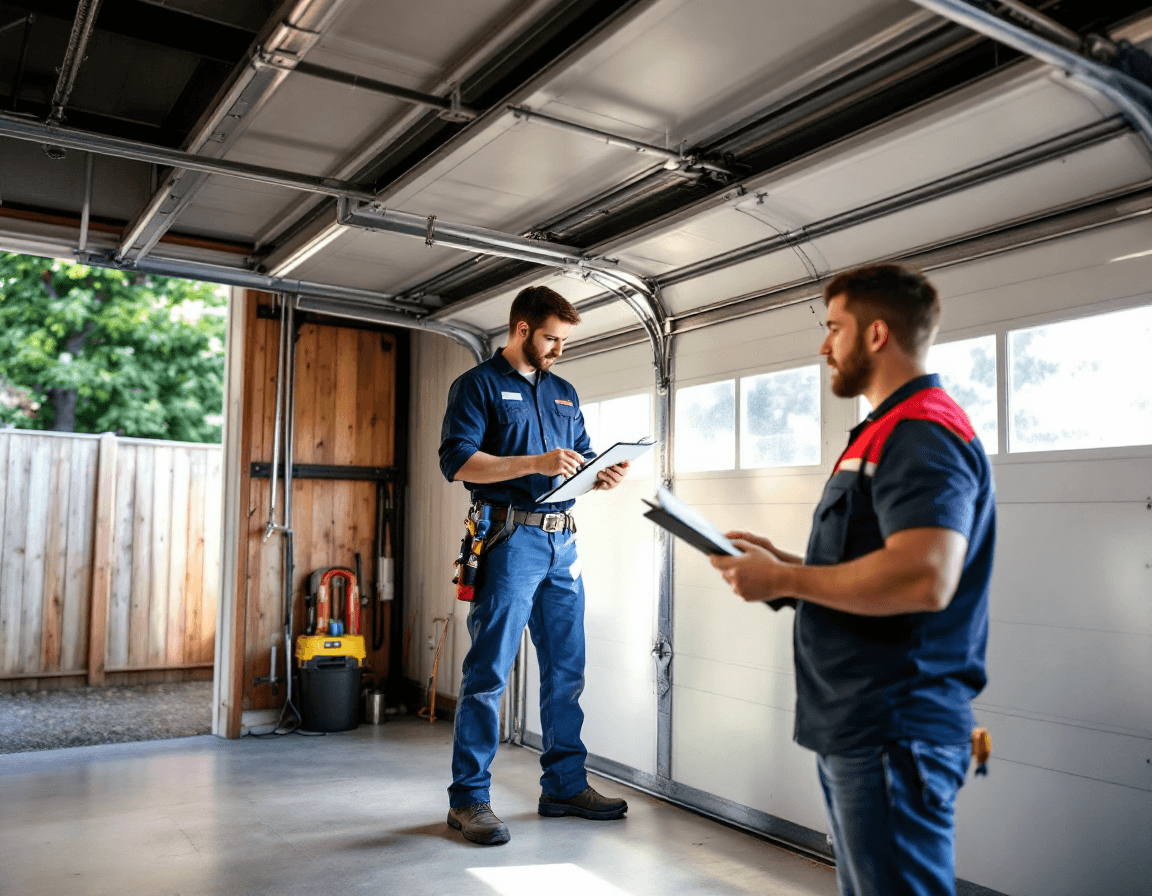
Garage Door Maintenance & Tune-Ups in Covington, WA can save you from the kind of breakdown that leaves your car stranded in the driveway on a rainy weekday morning. Homes around Covington Town Center and the neighborhoods near Jenkins Creek (ZIP 98042) see long, damp winters, humid spring stretches, and occasional cold snaps, and all of that works on the moving parts of a garage door. A tune-up is a scheduled check that catches wear, loose hardware, and moisture damage while the fixes are still small and inexpensive. It is not a repair visit, and it is not a cure for a door that is already broken, but it is one of the most cost-effective things a homeowner can do for the door they use every day.
This page explains what a full multi-point tune-up covers, why the local climate matters, and how to recognize the signs that your door is due for attention. We will walk through the inspection itself, the balance test, lubrication, and opener safety checks, and we will be direct about which tasks belong to a licensed technician. Pricing for a full multi-point tune-up falls between $89 and $149, and the sections below explain what that money buys. If you are a homeowner who has never had the door serviced, or who has noticed a change in how it sounds or moves, the information here should help you decide what to do next.
Most of what follows is written for people who want to understand their equipment, not just hire someone to handle it. Knowing the vocabulary, such as torsion springs, lift cables, photo eyes, and force settings, makes it easier to ask good questions and to notice when something has changed. Use this as a reference, and call (888) 799-3819 whenever you want a licensed technician to look at the door in person.
How Western Washington Weather Quietly Wears Down Your Door
The Pacific Northwest climate is gentle in some ways and hard on garage doors in others. Covington sits in a part of King County where winter rain is frequent, and the air stays damp for much of the year even when the rain pauses. That moisture does not stay outside. It settles into the garage through gaps at the bottom seal, around the side jambs, and under the header, and it condenses on cold steel panels and springs during the night. Over several seasons, that cycle invites surface rust on hinges, roller brackets, and the track, and it slowly breaks down the lubricant that keeps everything sliding smoothly.
Temperature swings add another layer of stress. A garage that stays cool through a wet February and then warms up quickly in a dry spell causes metal to expand and contract, which can loosen bolts and shift track alignment by small amounts. Those small shifts are easy to miss from the inside of the house, but they change how the door rides in its tracks and how the opener loads the system. Vinyl and rubber weatherstripping also stiffens or cracks over time, which is why many local doors start to show light leaks or drafts after a few years.
Because of this, a tune-up schedule that works in a dry climate may not fit a Covington home. Many homeowners find that a yearly visit before the wettest months gives them the best return, since the technician can address moisture-related wear before it compounds. If your door sits under a covered carport or faces a heavily shaded side of the house, the moisture pattern may differ slightly, and it is worth mentioning that to the technician during scheduling.
Reading the Noises Your Door Is Trying to Tell You
Garage doors rarely fail without warning. Most of the time, they get gradually louder, rougher, or more hesitant, and homeowners tend to get used to those changes one day at a time. A gentle squeak that was barely noticeable last year may now be a grinding or popping sound that carries through the house. Learning to recognize these sounds is one of the easiest ways to decide whether your door is due for a tune-up.
Squealing or chirping usually points to dry or contaminated lubrication on the rollers, hinges, or bearings. Rattling and clunking often mean loose brackets, worn roller stems, or hardware that has backed out of its mounting holes. A deep grinding noise coming from the center of the header is worth attention, because it can indicate that the opener's drive components are under strain. Popping or snapping sounds from the top of the door can signal a spring or cable problem, and those are the situations where you should stop, keep people and vehicles clear, and call a licensed professional rather than inspecting further yourself.
Keep a short mental log of when the door started sounding different. If the noise began after a cold snap, after a stretch of heavy rain, or after a change in how the door is used, that detail helps the technician narrow down the cause. Homeowners who write down the sound, the time of day, and the door's position when it happens often save time during the visit.
The Multi-Point Inspection, Piece by Piece
A full multi-point tune-up is a structured walkthrough of every system that affects how the door opens, closes, and stops. It begins with the visible hardware and works inward toward the components that carry the most load. The goal is not just to find problems but to document the door's current condition so that future visits can show how it is changing over time. Here is a summary of what a thorough inspection typically covers:
- Torsion springs and their winding cones, checked for visible gaps, rust, and wear, without any adjustment that requires tension work
- Lift cables and cable drums, inspected for fraying, slack, or uneven wear, with any tension or replacement work referred to a licensed professional
- Rollers, both nylon and steel, along with their stems, bearings, and mounting brackets
- Hinges, end caps, center brackets, and bottom brackets, checked for cracks, bends, and loose fasteners
- Tracks, both vertical and horizontal, checked for alignment, dents, and clearance from the rollers
- Bottom seal, side weatherstripping, and top seal, checked for compression, cracks, and gaps that let in water and drafts
- Opener mounting, rail alignment, drive belt or chain tension, and the condition of the carriage and trolley
- Photo eyes, safety sensors, and wall-mounted controls, tested for proper operation
Each item on that list plays a role in the door's overall health. A worn roller can overload a track section, a loose bracket can shift the door's path, and a cracked seal can allow moisture to reach the springs. The inspection is designed to catch those connections early. Because many of these components carry significant tension, a responsible technician will limit hands-on adjustment to what is safe and appropriate for the job, and will recommend licensed service for anything beyond that.
Why the Balance Test Tells You More Than You Think
A balance test is one of the simplest and most revealing checks in the entire tune-up. With the door closed, the opener is disconnected using the emergency release, and the door is lifted by hand to about waist height. A properly balanced door should stay in place when released, rather than drifting up or sliding down. If it moves on its own, the springs are either overpowering or underpowering the weight of the panels, and the opener is being forced to compensate.
An unbalanced door is more than an annoyance. The opener motor works harder when the door is heavier than it should be, which shortens the life of the motor, the drive gear, and the controller. Imbalance also places uneven stress on the cables and drums, and it can cause the door to bind in the tracks. Homeowners often describe the door as feeling heavy or slightly off-balance long before any part fails, and that feeling is worth taking seriously. Calling for a tune-up when you first notice it can prevent a larger problem down the road.
The balance test should always be performed carefully. Keep hands and fingers clear of the springs and the track, never stand under the door while testing it, and do not attempt to adjust spring tension yourself. If the door fails the test, the technician will document the reading, explain what the likely cause is, and outline the options for correcting it. Spring adjustment and replacement are licensed work, and that is not a point to compromise on.
Lubrication That Holds Up in Damp Covington Garages
Lubrication is the part of a tune-up that homeowners most often try to handle themselves, and it is also the part most often done incorrectly. The right lubricant for a garage door is a silicone-based or lithium-based product designed for garage door hardware, applied in small amounts to the parts that actually move against each other. Heavy grease can attract dust and grit, and general-purpose spray products can strip away existing lubricant without leaving a lasting film. Because Covington garages stay damp for long stretches, the choice of lubricant matters more here than it might in a drier region.
A good lubrication pass focuses on the rollers and their bearings, the hinge pivot points, the spring and cable surfaces where they are permitted to be serviced, and the opener's chain or screw drive if the manufacturer's instructions call for it. Tracks should be cleaned of debris before any lubricant is applied, and lubricant should not be sprayed onto the track surface where it can collect dirt and create a sticky film. Weatherstripping can be treated with a silicone-based conditioner to slow stiffening, but it should not be coated with products that break down rubber or vinyl.
Lubrication frequency depends on how often the door is used and how much moisture the garage sees. Many homeowners in this area do well with a light application at least once a year, timed ahead of the wetter months, with a second check if the door is opened and closed many times a day or if the garage sits in a particularly damp location. The technician can recommend a schedule that matches the way your household uses the door.
Opener Safety Testing You Should Expect to See
Modern garage door openers include safety systems that are meant to protect people, pets, and vehicles, and those systems need regular testing. The most important are the photo eyes, the two small sensors mounted near the floor on either side of the door opening. When the beam is interrupted during closing, the door should stop and reverse. A tune-up should verify that the photo eyes are aligned, clean, and wired correctly, and that the door reverses reliably when the beam is blocked.
A second safety feature is the auto-reverse force setting. If the door meets resistance while closing, such as a bicycle, a bag, or a child's toy, it should reverse without pressing into the object. A common field check uses a standard piece of lumber laid flat on the floor in the closing path; the door should reverse on contact. The technician will verify that the force settings are within the manufacturer's range and that the door does not continue pushing after making contact. Opener manufacturers provide specific test procedures, and a technician will follow those rather than relying on general guidance.
Opener safety testing also covers the emergency release cord, the wall control, and any smartphone or keypad access systems the home uses. The release cord should pull freely, and the door should disconnect cleanly when it is engaged. If a safety feature fails any part of the test, the door should not be used until it has been repaired. A tune-up is an excellent time to ask questions about these features, because the technician can show you exactly how they work on your specific opener.
When a Straining or Slow Opener Points to the Door
A common assumption is that a slow or straining opener means the motor is failing. In many cases, the opener is working correctly and responding to a problem elsewhere in the system. A door that is out of balance, a track that is slightly bent, rollers that are sticking, or a bottom bracket that is rubbing can all force the opener to work harder than it was designed to. Replacing the opener in that situation would not solve the underlying issue, and the new opener would soon face the same strain.
Homeowners often notice that the door reverses more often than it used to, takes longer to complete its travel, or makes the motor sound labored at the start or end of its cycle. Those are signs that the system is working outside its normal load range. During a tune-up, the technician will compare the door's movement against the opener's expected performance, check the drive components, and verify that the door is moving freely through its full range. If the opener itself is worn or outdated, the technician can explain the options clearly, but the first step is always to confirm what is actually causing the strain.
It is also worth noting the power side of the equation. A garage circuit that is shared with other high-draw appliances can cause brief hesitation during startup, and a loose connection at the outlet can produce similar symptoms. These issues are less common than mechanical strain, but they should be checked during a full visit so the diagnosis is complete.
Buying a Covington Home? Start With a Door Baseline
Many homeowners in Covington and nearby communities discover their garage door's condition only after they move in. A tune-up shortly after closing gives you a clear baseline: you learn how the door was maintained before you arrived, what wear is already present, and which items deserve attention in the first year. That information is useful for budgeting, for negotiating repair responsibilities if issues come up during the transaction, and for setting a maintenance schedule that fits the home.
A baseline inspection is especially valuable for homes where the previous owners made changes, such as adding a new opener, replacing a panel, or installing a keypad, because those changes may have altered the balance or the safety settings without anyone noticing. The technician can test the door as it currently stands, document the reading, and identify any safety features that need verification. You will leave with a clear picture of what you are working with, rather than discovering problems in the middle of a rainy week.
If you recently purchased a home near Covington Town Center or in the Jenkins Creek area, scheduling a tune-up within the first few months is a practical step. It gives you a clean starting point, and it lets you ask questions while the technician is on site. Keep the inspection report with your home records so future visits can compare against it.
Gaps, Seals, and the Moisture Path Into Your Garage
Weatherstripping is one of the least glamorous parts of a garage door, and one of the most important in a damp climate. The bottom seal keeps water from running under the door and keeps drafts out of the garage. Side seals and the top seal close the gaps around the opening, and together they keep the interior of the garage drier and more stable. When any of these seals cracks, flattens, or pulls away, moisture finds its way into the space, and the consequences can extend beyond the garage floor.
Water that reaches the bottom of the door can rust the lower panels and the bottom bracket, and it can pool near the threshold, which in turn encourages mildew and staining. Moisture that migrates into the track and rollers accelerates rust and wears down the lubricant. Over time, it can even reach the spring area, where corrosion is a serious concern because springs carry high tension. Keeping the seals intact is one of the simplest ways to protect the rest of the system.
During a tune-up, the technician will check each seal for compression, tears, and gaps, and will look for signs of water staining on the floor, panels, and hardware. Replacing a worn seal is often a straightforward task, and it can noticeably reduce drafts and moisture problems. Ask the technician to point out any areas where the seal no longer makes solid contact with the floor or frame, since those spots are often where the first leaks begin.
Why Springs and Cables Belong in Licensed Hands
Torsion springs and lift cables store large amounts of energy, and mishandling them can cause serious injury. A torsion spring under tension can release suddenly if a winding cone slips, a bracket fails, or a cable snaps. Those forces can cause injuries that are far worse than any cost savings from attempting the work without training and proper tools. For that reason, spring replacement, cable replacement, and spring tension adjustment should always be performed by a licensed, trained technician.
A tune-up includes a visual inspection of the spring and cable system, but the inspection is not an invitation to adjust anything under tension. Homeowners should keep a clear boundary: you can observe the spring for visible gaps or rust, and you can notice whether a cable looks frayed from a safe distance, but you should not wind, unwind, loosen, or tighten springs yourself. If the technician finds a problem in this area, the correct response is to schedule licensed service rather than to attempt a fix.
This boundary protects both the homeowner and the technician. A licensed professional has the tools, training, and experience to release tension safely, replace components correctly, and verify that the system is balanced when the work is finished. When you ask for a tune-up, you can expect the technician to tell you clearly what they checked, what they found, and what work requires licensed service. Treat any recommendation in this area as a priority.
What to Expect During a $89–$149 Tune-Up Visit
A full multi-point tune-up in the $89 to $149 range covers the inspection, lubrication, balance testing, and opener safety testing described above. The visit usually begins with a short conversation about the door's behavior, including any noises, slowdowns, or changes you have noticed. The technician then works through the inspection, tests the balance, lubricates the appropriate components, and verifies the safety systems before reviewing the findings with you.
By the end of the visit, you should understand the door's current condition, what was done during the tune-up, and what, if anything, is recommended next. A good technician will explain any items that need attention without pressure, separate urgent safety concerns from routine wear, and give you a clear recommendation for the timing of follow-up work. If additional repairs are needed, the technician should provide a clear description of the work before starting it.
To prepare for the visit, clear the area around the door, make sure vehicles and bicycles are out of the path, and note any sounds or behaviors you want the technician to check. Keeping a record of the visit, along with the inspection notes, will help you track the door's condition over time and plan future maintenance around the seasons when Covington's weather is most demanding.
If your garage door is making new sounds, moving more slowly, feeling heavy, or simply has not been serviced in more than a year, a tune-up is a practical next step. Call (888) 799-3819 to schedule a multi-point tune-up with a licensed technician who can inspect your door, test its balance and safety systems, and tell you plainly what it needs before the next wet season arrives.