
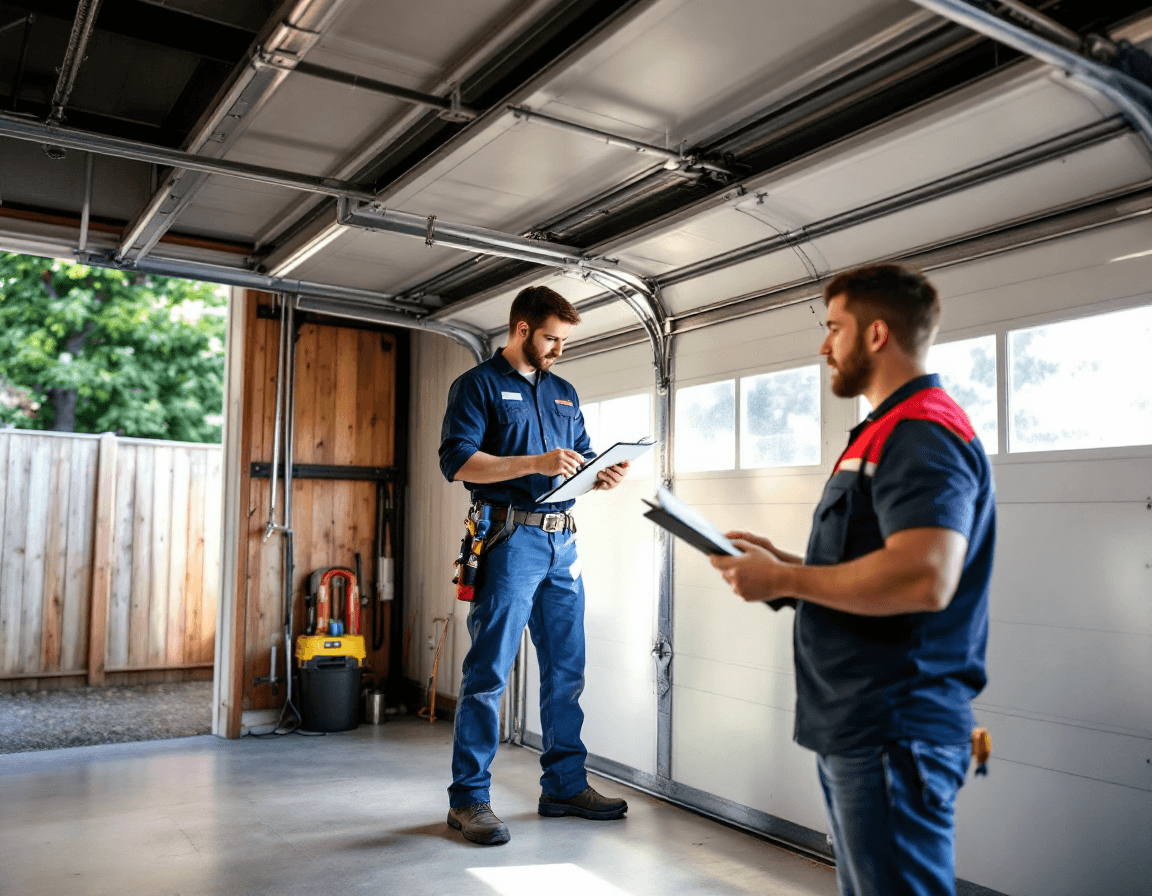
Garage Door Maintenance & Tune-Ups in Auburn, WA can save you from the kind of morning when the door sticks halfway open, the opener groans, and you're late for work. Auburn sits in the Green River Valley at the southern edge of King County, where mild, wet winters and warm, humid stretches keep moisture in the air for much of the year. That combination quietly works on every moving part in your garage. A door that operated smoothly when it was installed can develop noise, drag, and imbalance long before anything actually breaks.
A scheduled tune-up is the most affordable way to catch those problems early. Our multi-point service, priced between $89 and $149 depending on the size and type of your door and opener, checks the door's safety systems, lubrication, spring and cable condition, balance, and the opener's safety reversal. Technicians walk through each step and explain what they find, so you know what is wearing, what is fine, and what should be scheduled soon. Whether your home is in Auburn Downtown, Lakeland Hills, or up on Lea Hill, the goal is the same: a door that moves quietly, closes reliably, and stops safely when something is in the way.
If you are searching for Garage Door Maintenance & Tune-Ups in Auburn, WA because something feels off, you are in good company. This page explains what a tune-up includes, why local conditions matter, how to recognize early warning signs, and what you can safely check on your own. It also covers how to plan maintenance around Auburn's seasons and what to do if you have just purchased a home and have no service history to go on. Read on for the details, and call (888) 799-3819 whenever you want a licensed technician to take a look.
What a Full Multi-Point Tune-Up Actually Covers
A multi-point tune-up is more thorough than a quick visual check or a lubricant spray. The technician starts by inspecting the door panels for cracks, loose sections, and gaps between panels that can let cold air, water, and pests into the garage. Next, the hinges, rollers, and bearings are checked for wear, looseness, and cracked nylon rollers, which are common in homes where the door has been operating for many years. Tracks are inspected for bends, debris, and proper alignment, since even a slight misalignment can force rollers to bind and strain the opener.
The mechanical portion of the service also includes the springs, cables, drums, and end brackets. These components store enormous tension, and while we inspect them for fraying, rust, and visible wear, any repair or adjustment involving spring tension must be performed by a licensed, trained professional. Homeowners should never attempt to wind, unwind, or loosen torsion or extension springs. Lubrication comes last, using a silicone or lithium-based product on the rollers, hinges, bearings, and tracks, while avoiding heavy grease that attracts dust and grit.
Finally, the opener itself is checked. The technician confirms the travel limits, inspects the drive mechanism and belt or chain tension, and tests the safety reversal system. A tune-up is not a substitute for a repair, but it gives you a clear, prioritized picture of what needs attention and what can wait.
Why Pacific Northwest Damp Wears Down Garage Doors
Western Washington weather is gentle compared with the snow belts of the Midwest, but it is persistent. Auburn receives a steady pattern of rain from autumn through spring, and the damp air that lingers between storms is often enough to keep metal surfaces slightly moist for days at a time. Steel door sections and hardware can develop surface rust at stress points, especially along the bottom panel, where water collects and sits against the threshold. Over time, that corrosion can seize hinge pins and weaken the brackets that hold the track in place.
Humidity also affects wood. Many homes in the area have wood or composite garage doors, and those panels can swell during wet months and shrink when the weather dries out. A door that fit cleanly in September may rub along the weatherstripping in January, and the friction gradually transfers to the rollers and opener. Moss and mildew can build up on exterior surfaces and in the seams, creating a constant source of moisture against the panels.
Lubrication suffers in damp conditions as well. Water washes off thin, light oils, and dust mixes with residual moisture to form a grit that acts like sandpaper inside bearings. This is why a door that was lubricated last spring may already be grinding by the next autumn. A tune-up schedule that accounts for local moisture, rather than a generic once-every-decade assumption, keeps the door running smoothly through the rainy seasons.
Early Warning Signs Your Door Needs Attention
Most garage doors give fair warning before they fail. The trick is recognizing the signs before they turn into a stuck door on a cold morning. Homeowners in Auburn often notice these symptoms first:
- A grinding, squealing, or popping noise that is louder than it was a year ago
- The door hesitating, jerking, or stopping partway through its travel
- Visible gaps at the bottom or sides when the door is closed
- The opener running longer than usual or sounding strained at startup
- Rollers that look flat, cracked, or stained with rust
- A door that feels heavy to lift manually or drops suddenly when released
Any of these symptoms justify a tune-up, especially if the door has not been serviced in more than a year. Noise in particular tends to escalate: a small squeak in the spring can become a loud, rhythmic grind by fall. The earlier you address it, the less likely you are to need a replacement roller set or a more expensive part.
If you notice a broken or frayed cable, a spring that appears to have separated, or a door that drops quickly, stop using the door and call a licensed technician right away. Those conditions create serious safety risks and should not be tested or forced.
Balance Testing: The Check Most Homeowners Never Think About
A balanced garage door is one that stays put when you stop it partway open. Balance testing is a simple but revealing procedure: the technician disconnects the opener, lifts the door by hand to about waist height, and releases it. A well-balanced door holds its position. If it slides up or down, the springs are providing too much or too little tension relative to the weight of the door.
Imbalance matters because the opener is designed to lift a door that is already close to balanced. When springs weaken or one side carries more load than the other, the opener has to work harder, and that extra strain shows up as slow operation, jerky starts, and premature wear on the motor and gears. Imbalance also puts uneven stress on cables and drums, which can lead to sudden failure. Many homeowners describe the door as feeling "heavy" or "off" long before anything visible has changed.
Correcting balance involves adjusting or replacing the springs, and that work belongs to a licensed professional. The tune-up identifies whether balance is within a reasonable range and gives you a clear recommendation. In many cases, the door only needs minor hardware adjustment, but in others the springs have reached the end of their rated cycles and replacement is the safer long-term option.
Opener Safety Checks: Reversing Sensors and Force Limits
Every modern garage door opener must reverse when it encounters an obstruction, and the photo-eye sensors near the floor are the first line of defense. During a tune-up, the technician checks that the sensors are aligned, clean, and wired correctly, and tests that the door reverses when the beam is interrupted. A sensor that is slightly out of alignment after a bump from a bicycle, a trash can, or a pet can fail silently, which is why it deserves a regular check.
The opener's force settings are also tested. Auto-reverse should engage when the door contacts an object at the bottom, and the door should stop and reverse when it meets resistance on the way down. Technicians verify this behavior using the manufacturer's procedures and make adjustments where the settings have drifted. These checks are important for households with children, pets, or anyone who frequently uses the garage as a walkway.
Travel limits matter too. If the door is set to stop too high or too low, it can strain the opener or leave a gap that compromises security. The tune-up confirms that the open and closed positions are correct and that the opener is not pushing the door against its stops with excessive force. This is one area where a short, professional check can prevent both property damage and injury.
Lakeland Hills Homes and Newer Garage Door Setups
Lakeland Hills is one of the more recognizable residential areas in Auburn, and much of its housing stock has been built within the last few decades. Newer homes often came with factory-installed insulated steel doors and modern belt-drive or chain-drive openers, which are generally quiet and reliable when they are maintained. The problem is that owners sometimes assume a newer door needs no attention at all, and that assumption can lead to a year or more without lubrication or inspection.
Insulated steel doors in Lakeland Hills homes tend to have tight, factory-sealed panels, which is helpful for energy efficiency but can trap moisture in the seams if water finds its way in through the bottom seal or around the trim. A tune-up checks the bottom weatherstripping, the threshold, and the panel joints for early signs of water intrusion. Catching those issues early can prevent interior damage on the garage wall and keep the door's insulation performing as intended.
Many Lakeland Hills garages also house a mix of vehicles, bikes, and storage shelving, which can put added weight on the door's hardware over time. If your garage has a heavy workbench or a rack loaded near the door's path, let the technician know during the visit so the balance and track alignment can be checked against your actual setup.
Lea Hill Slopes, Driveways, and Door Alignment
Lea Hill is known for its hillside topography, and several homes there sit on sloped lots where driveways and garage floors are not perfectly level. A garage floor that pitches forward or to one side can cause the door to track unevenly, especially if the installation was adjusted to suit the grade rather than to a true vertical plane. Over time, that uneven loading can make one side of the door work harder than the other.
Hillside homes also experience more wind exposure and, in some seasons, more runoff during heavy rain. Water flowing down a driveway can pool against the bottom of the door, and debris can accumulate in the track at the low point. During a tune-up, the technician looks closely at the track level, the alignment of the vertical and horizontal runs, and the condition of the bottom seal. Small corrections at this stage often prevent larger alignment problems later.
If you live on Lea Hill and notice the door drifting toward one side as it travels, or if the rollers are wearing unevenly, mention it when you schedule service. That pattern is a strong clue that alignment or balance needs adjustment, and it is far less expensive to correct early than to replace damaged track sections or a bent shaft.
Downtown Auburn Garages and Older Track Systems
Auburn Downtown includes a range of older homes and detached garages, some of which were built long before modern residential door standards. Older garages may have original or aftermarket doors with older track systems, and it is not unusual to find hardware that has been patched, repositioned, or replaced several times over the years. These setups can work well for decades, but they often need closer attention than a newer installation.
In older garages, the building itself can shift slightly over time. A header that has settled or a wall that has moved can change the geometry of the door opening, leaving the track slightly out of square. A technician will check the track's plumb and level, the spacing of the brackets, and whether the mounting points are still secure in the framing. Loose or undersized fasteners are common in older installations and can cause vibration and noise.
Downtown homeowners also sometimes use the garage for storage, workshop activities, or as a second living space. If the door is being used more frequently than it was originally designed for, the wear rate increases. Letting the technician know how often the door cycles each day helps determine the right maintenance interval and whether a component upgrade would be a better long-term investment.
Timing Your Tune-Up Around Auburn's Seasons
For most homes in Auburn, a tune-up once a year is a sensible baseline, and many homeowners find that late summer or early fall works well. Scheduling in that window means lubrication and inspection happen before the heavy rain arrives, giving the hardware a protective layer going into the wettest months. It also avoids the rush that often follows the first hard storms, when technicians are busy with urgent calls.
Spring is another good time, particularly for homes that spent the winter with frequent use or with the door exposed to wind-driven rain. A spring visit can catch corrosion and noise that developed over the damp months and can prepare the door for the drier, more active season ahead. Homeowners who use the garage heavily, park vehicles inside, or have a door that faces prevailing weather may benefit from twice-yearly service.
Whatever season you choose, keep a simple record of the date, what was done, and any recommendations the technician made. That record helps you spot trends, such as noise that returns quickly after lubrication, and gives you a clear history to share with a future buyer or a service provider.
What Homeowners Can Safely Check Before Calling a Pro
There are a few simple checks you can do yourself between professional visits, as long as you stay away from anything under spring or cable tension. Start with a visual inspection: look for loose hardware, visible rust on the hinges, cracked or flattened rollers, and daylight around the edges of the closed door. Wipe the tracks clean with a dry cloth, removing grit and debris, and avoid spraying oil directly into the track where it can collect dust.
You can also test the auto-reverse feature safely. Place a piece of wood or a sturdy object on the floor in the door's path and run the door in the close direction. The door should stop and reverse when it contacts the object. Next, check the photo-eye sensors by making sure the lenses are clean, unobstructed, and aligned so that their indicator lights are steady. If the door reverses unexpectedly or the sensors blink, call a technician rather than adjusting the wiring yourself.
Do not attempt to adjust springs, loosen cable drums, or remove tension from any component. Those tasks require specialized tools and training, and mistakes can cause serious injury. When in doubt, step back and call a licensed, bonded, and insured professional.
Buying a Home in Auburn? Start With a Garage Door Check
Buying a home is one of the best reasons to schedule a full tune-up, because you usually have no service history to rely on. The previous owner may have kept the door in excellent shape, or they may have ignored it for years. Without a check, you have no reliable way to know which situation applies. A multi-point service gives you a clear picture of the door's condition on the day you move in.
This is especially useful in Auburn, where homes across Lakeland Hills, Lea Hill, and Downtown vary widely in age, construction, and garage setup. A new-to-you door might be a newer insulated model with a modern opener, or it might be an older system that needs more hands-on attention. The tune-up will identify which components are in good shape and which may need replacement in the near future, so you can budget accordingly and avoid surprises during your first season in the home.
Consider scheduling the visit soon after closing, and ask the technician to walk you through the opener's safety features and the door's balance. Knowing how the system is supposed to work makes it much easier to notice problems early. Even if the door checks out perfectly, you will leave with a baseline record for the years ahead.
Garage door maintenance is one of the most practical ways to protect your home and your daily routine in Auburn's wet, changeable climate. A tune-up for $89 to $149 is a modest investment compared with an emergency service call or a damaged vehicle. To schedule a multi-point tune-up or ask a licensed technician about your door, call (888) 799-3819 today.