
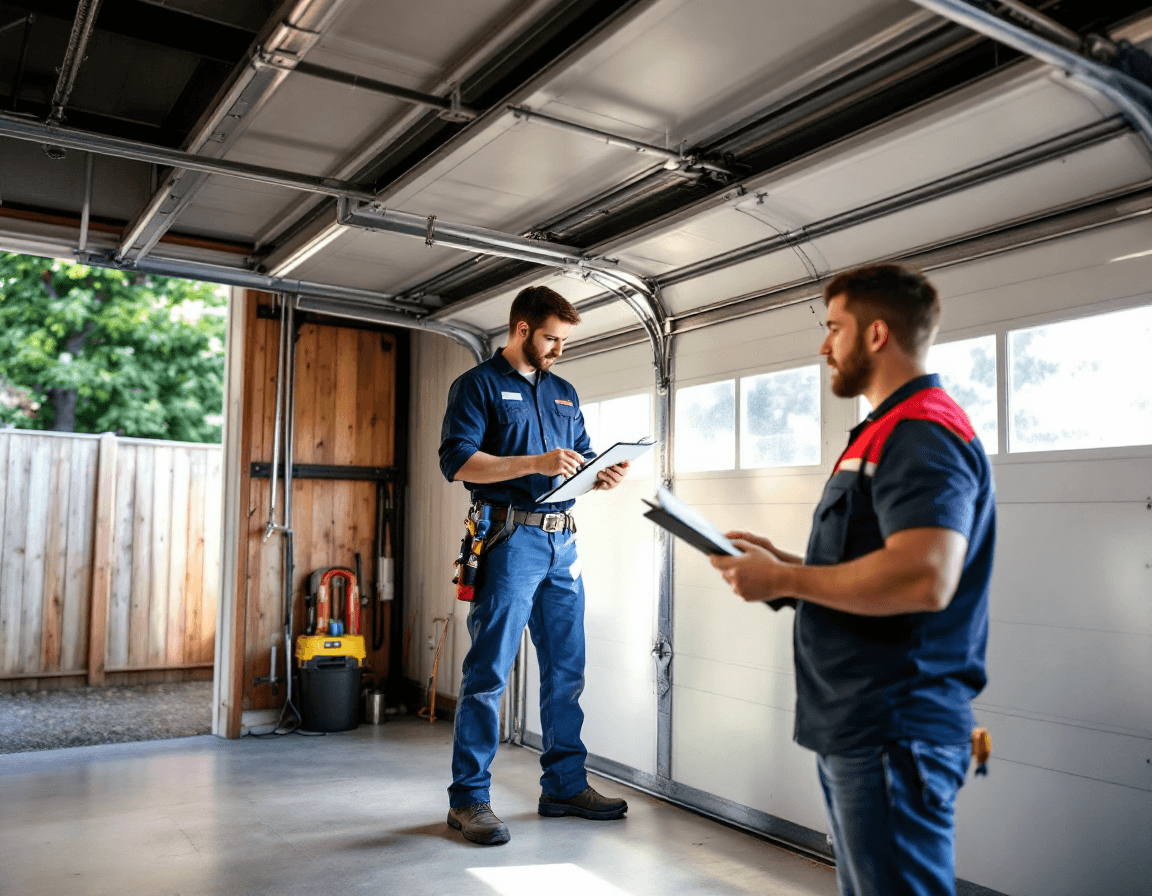
Garage Door Maintenance & Tune-Ups in Algona, WA is one of the most practical ways to keep a two-car door running quietly and safely through the damp, gray months that define the Puget Sound lowlands. Algona sits in the Green River valley south of Auburn, where winter rain is steady, humidity stays high for long stretches, and the temperature swings between seasons are moderate but persistent. Those conditions slowly work on every moving part of a garage door, from the rollers and hinges to the torsion system and the opener's drive. A scheduled tune-up catches that gradual wear before it becomes a stuck door on a cold morning.
Many Algona homeowners don't think about their garage door until something goes wrong. A grinding sound that started as a faint squeak, a door that stops halfway up, or an opener that hums longer than it used to are all signs that the system is working harder than it should. A tune-up is designed to find these problems while they are still small. It's a planned visit with a clear checklist, not an emergency call on a rainy Tuesday night when you need to get the car out for work.
Our multi-point tune-up is priced between $89 and $149, depending on the door type, the opener model, and the condition of the components we find. It combines a safety inspection, lubrication, balance testing, and opener safety testing into one visit. Throughout this page, we'll explain what each part of that visit involves, what it can and cannot fix, and when you should consider a repair instead. If you have questions about your specific door, you can call us at (888) 799-3819.
Why Algona's Wet Winters Are Hard on Garage Doors
The climate around Algona is mild by national standards, but it is hard on metal and wood components that are not protected from moisture. Rain and fog can linger for days, and the humidity inside an attached garage often stays higher than in the rest of the house. Steel tracks can develop surface rust at the joints, and the lubricant on hinge pins and roller bearings can wash out or collect grit. Wooden doors, which are still common on older Algona homes, absorb moisture and can swell or warp, changing how the panels sit in the track.
Temperature changes add another layer of stress. Cool, damp mornings cause metal parts to contract slightly, and afternoons that warm up quickly can expand them again. Over many seasons, these small movements loosen bolts, shift brackets, and wear the edges of rollers. The effect is cumulative, which is why a door that felt fine last spring might now rattle or track unevenly.
Because the moisture is persistent rather than seasonal, we recommend scheduling maintenance before the heaviest rain arrives in the fall and again in late winter or early spring. A visit in those windows lets us address lubrication and hardware while the door is dry and easy to inspect. It also gives us time to order any replacement parts before the busiest weeks of the year.
What a Multi-Point Tune-Up Actually Covers
A multi-point tune-up is a structured visit, not a quick spray and goodbye. We start by reviewing the door type, the opener, and any history you can share, such as previous repairs or the age of the springs. Then we move through the system in a consistent order so nothing is skipped. The inspection covers the panels, hinges, rollers, tracks, weather seals, bottom brackets, and mounting points, and each one is checked for wear, looseness, or damage.
The visit also includes a review of the safety features that protect people and property. That means checking the photo-eye sensors that tell the door to reverse when something blocks the path, confirming that the auto-reverse force is set correctly, and testing the emergency release cord. We look at cable condition and drum alignment as part of the overall inspection, and we note anything that needs professional attention. The goal is a clear picture of the door's condition, not just a list of things we happened to touch.
Here is what a typical multi-point visit includes:
- Visual inspection of panels, hinges, rollers, tracks, and bottom seals
- Tightening of accessible hardware, brackets, and mounting bolts
- Lubrication of rollers, hinge pins, bearings, and the track where appropriate
- Balance testing with the door disconnected from the opener
- Opener safety testing, including photo-eye alignment and auto-reverse checks
- A written summary of findings, with any recommended repairs explained plainly
Spring and cable adjustments are part of the inspection, but they are not something a homeowner should attempt. The torsion springs on a garage door are under very high tension, and mishandling them can cause serious injury. If we find a spring that needs replacement or a cable that is frayed, we will explain the issue and provide a repair quote from our licensed team.
Reading the Noise: What Your Door Is Trying to Tell You
Garage doors are noisy by nature, but there is a difference between normal operating sounds and warning signs. A soft, even rumble as the door travels is usually fine. A squeal that starts at the top of the track, a clicking that changes pitch as the door rises, or a grinding that repeats at the same point each cycle is worth investigating. Each type of sound tends to point toward a specific part of the system.
Squeaks often come from dry rollers or hinge pins that have lost their lubricant. Rattling and popping can indicate loose brackets, worn roller stems, or a track that has shifted slightly out of alignment. Grinding is more serious and often means a roller bearing has failed or debris is trapped in the track. A thumping or banging sound at the end of travel can signal an issue with the bottom bracket or a door that is not balanced evenly.
The good news is that many of these noises are caught early in a tune-up, long before they lead to a failure. We listen to the door during the visit, run it through several full cycles, and note where the sound originates. If the noise is simply dry metal, lubrication and tightening will usually solve it. If it points to a worn component, we'll show you the part and explain what replacement involves before any work begins.
Balance Testing on a Door That Feels Heavy
Balance is one of the most important and most overlooked parts of garage door performance. A properly balanced door should feel roughly weightless when lifted by hand with the opener disconnected. It should stay in place when raised halfway, and it should not drift up or down on its own. When a door feels heavy, lurches as it starts, or slides down unexpectedly, the balance has likely shifted.
Balance problems can come from several sources. Springs lose tension over time, and a worn spring on one side can leave the door leaning. Cables can stretch or fray, and rollers that have worn unevenly can cause the door to hang at an angle. In Algona's damp climate, bottom brackets and track hardware sometimes shift as the door expands and contracts, which can alter the balance even when the springs are in good shape.
During a tune-up, we perform a manual balance test with the opener disconnected and carefully observe how the door moves through its travel. This test tells us a great deal about the door's condition without requiring any spring adjustment. If the door is out of balance, we will explain the likely cause and whether the fix is a simple alignment or a spring replacement by our licensed technicians. Please do not attempt to adjust springs or cables yourself, even if you have seen it done online.
Opener Strain, Slow Travel, and Safety Reversal
The opener is the engine of your garage door, and it works hardest when the door is out of balance or the track is dirty. Signs that the opener is struggling include slow travel, a motor that sounds labored, a door that stops partway and reverses, or a unit that runs longer than usual before the limit switch engages. Some homeowners notice that the opener gets hot after a few cycles, which is a sign it is working beyond its comfortable range.
Opener safety testing is a non-negotiable part of a multi-point tune-up. Modern openers are required to reverse the door if the photo-eye beam is interrupted or if the door meets resistance while closing. We test this function by placing an object in the door's path and confirming that the door reverses. We also check that the photo-eyes are aligned, clean, and mounted at the correct height, since a misaligned sensor can fail silently.
Limit settings and force settings are checked as well. If the opener is set too tightly, it may reverse unnecessarily or wear out faster. If it is set too loosely, it may not reverse when it should. We adjust these settings to match the door's current weight and condition, and we document the results so you know the system was tested on the day of the visit.
Lubrication Done Right, and What to Avoid
Lubrication sounds simple, but using the wrong product or applying too much can cause real problems. Garage doors need lubricant on the rollers, hinge pins, bearings, and the springs themselves, but not on the tracks, where lubricant attracts dust and grit that can jam rollers. Heavy grease can also collect dirt in the Algona climate, turning into a sticky film that slows the door and makes noise.
We use a silicone-based or lithium-based lubricant designed for garage door hardware. The product goes on the roller bearings and hinge contact points, and the excess is wiped away so it does not drip onto the floor or the door's weatherstripping. The tracks are cleaned rather than lubricated, which removes the grit that causes rollers to wear and squeal. Springs are lightly coated for protection against rust, but this step is done carefully and is part of the professional service rather than a homeowner task.
Please avoid using household oils like WD-40 as a long-term solution on garage door parts. It works as a cleaner and temporary quieter, but it evaporates quickly and does not provide durable lubrication. Avoid spraying the tracks, and never apply lubricant to the photo-eye sensors or the opener's electrical components. If you're unsure which product to use, ask us during the visit and we will show you what we recommend for your door.
Buying a Home in Algona? Make the Garage Part of Your Inspection
Many people who buy a home in Algona focus their inspection on the roof, plumbing, and foundation, and the garage door receives only a quick glance. That is understandable, but it can leave a new owner with an unexpected repair bill in the first few months. A garage door that has not been serviced in more than a year may look fine from the driveway while hiding worn rollers, weak springs, or an opener that no longer reverses reliably.
If you are in the middle of a purchase, we recommend requesting a multi-point tune-up as part of your due diligence. It gives you a clear record of the door's condition and identifies any safety issues before you take possession. Sellers sometimes respond well to reasonable repair requests when the findings are documented, and the report can also guide your budget for the first year of ownership.
For homes that have been vacant or rented for a while, a tune-up is especially valuable. Vacant properties often have dry hinges, debris in the tracks, and openers that have not been tested recently. A quick service visit can confirm that the system works safely and give you a baseline for future maintenance. If you have a closing date coming up, call us at (888) 799-3819 and we will help you schedule a visit that fits your timeline.
Budgeting for Maintenance Without Surprises
Garage door maintenance is one of the most cost-effective ways to protect a major household system. A multi-point tune-up priced between $89 and $149 is a modest expense compared to the cost of an emergency service call, a damaged vehicle, or replacing an opener that failed prematurely. Regular service also tends to extend the life of springs, rollers, and openers by keeping friction and misalignment under control.
The final price depends on the door type, the number of sections, the opener model, and the condition of the components. A single-car steel door with a straightforward opener usually falls at the lower end of the range, while a larger wood or custom door with a more complex setup may land higher. We will tell you the expected range before the visit, and if we find a repair that needs approval, we will present it clearly and let you decide how to proceed.
Planning ahead helps you avoid surprises. Many Algona homeowners schedule a tune-up once a year, typically in early fall or early spring, and keep a simple log of each visit. That record is useful when you sell the home, file an insurance claim, or talk to a technician about a recurring problem. It also helps you spot patterns, such as a door that always starts making noise in November.
When a Tune-Up Becomes a Repair Conversation
Sometimes a tune-up reveals a problem that lubrication and tightening cannot solve. A cracked panel, a broken spring, a frayed cable, a bent track section, or a failed roller bearing all require repair, and some of these need specialized tools and training. We are upfront about these findings and will never recommend work that the door does not need. If a repair is necessary, we explain the reason, the options, and the expected outcome.
Common repair triggers include a worn torsion spring that has reached the end of its cycle rating, a cable that shows fraying or kinks, a bottom bracket that has pulled loose from the panel, or an opener that fails the safety reversal test. In each case, the safest path is professional repair by a licensed technician. Springs and cables store significant energy, and improper handling can cause severe injury, so we do not recommend DIY work on these components.
If your door is old, we may also discuss whether replacement is more cost-effective than continued repair. That conversation depends on the door's age, condition, insulation, and how often it needs service. We aim to give you an honest assessment so you can make a decision that fits your home and budget.
Keeping Spring and Cable Work in Licensed Hands
Torsion springs and lift cables are the most dangerous parts of a garage door system. The springs hold tremendous tension even when the door appears to be at rest, and a spring that breaks can release that energy suddenly. Cables can snap under load and whip through the air. For these reasons, spring and cable work should always be performed by a licensed, bonded, and insured professional with the right tools and training.
Homeowners sometimes try to adjust springs or replace cables after watching a video or reading a forum post. While the intention is understandable, the risk is significant, and even experienced DIYers have been seriously hurt. A tune-up gives you the chance to have these components inspected by trained technicians, who can tell you whether the springs are still within their expected service life and whether the cables are safe to continue using.
Our team handles spring and cable repairs as part of our licensed service. If your door needs this type of work, we will explain the scope, the materials, and the timeline before anything begins. You will never be pressured into a repair that your door does not need. For questions about your Algona garage door, including scheduling a multi-point tune-up, call (888) 799-3819 and our team will help you find the right appointment time.
Keeping your garage door in good working order is a practical investment in safety, convenience, and home value. A scheduled tune-up before the wet season, a careful listen for new sounds, and a quick check of the safety reversal can prevent many of the problems that catch Algona homeowners off guard. When you're ready to book, we'll be glad to help you get your door running smoothly again. Call (888) 799-3819 to schedule your multi-point tune-up today.