
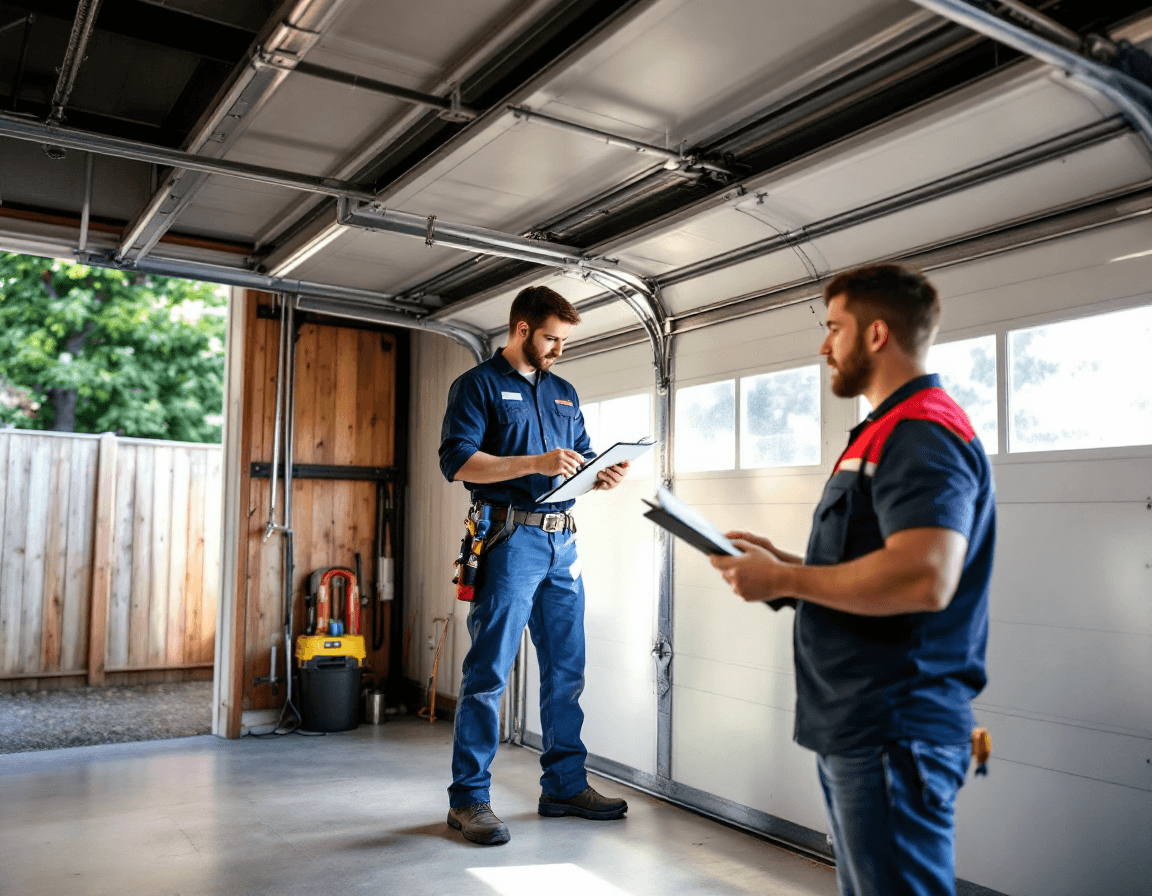
Garage door maintenance in Federal Way is less about dramatic failures and more about slow wear that builds quietly through wet winters, damp springs, and the daily open-and-close cycle of a busy household. A door that was perfectly quiet two years ago can start grinding, lurching, or stopping partway up without any obvious reason. A scheduled multi-point tune-up from Seattle Garage Door Fix, priced at $89 to $149, catches those small problems while they are still inexpensive to fix. This page explains what that visit involves, why it matters in our corner of King County, and how to tell when your door is due for attention.
Federal Way homes sit in a climate that is mild by most national standards but hard on mechanical parts. Winters bring long stretches of rain and high humidity, and summers are usually dry enough that temperature swings and moisture cycles stress metal, wood, and insulated panels in turn. Steel tracks can develop surface rust in the bends, rollers can pick up grit from driveway runoff, and weatherstripping can stiffen and split. Over time, those conditions change how a door moves, and the opener has to work harder to compensate. Regular maintenance is the simplest way to keep that drift from turning into a service call on a cold Monday morning.
Before the first visit, it helps to know that a tune-up is not the same as a repair. A repair fixes a specific failure, such as a broken cable or a dead sensor. A tune-up looks at the whole system so that small issues are identified and corrected before they cause a breakdown. The goal is a door that moves smoothly, balances correctly, stops and reverses safely, and gives you predictable warning before anything fails. The sections below walk through each part of that process.
Why Federal Way Garage Doors Benefit From Routine Attention
Many of the homes in Federal Way, including those in established neighborhoods near Twin Lakes, were built with attached garages that see heavy daily use. Families come and go on school and work schedules, delivery drivers pull in and out, and many garages double as the main entry to the house. Doors in these settings often cycle several times a day, which adds up to thousands of cycles a year. Every cycle puts load on the springs, rollers, hinges, and opener, and that load slowly loosens hardware and wears lubricant down to nothing.
Moisture is the other constant factor. Western Washington's wet season brings water into the garage through the bottom seal, through tracks that collect runoff from the driveway, and through humidity that condenses on cold metal surfaces. Once moisture reaches the hinges and bearings, it washes away lubricant and invites corrosion. Homes with mature landscaping and tree cover may also see moss, needles, and fine debris collecting at the threshold, which can jam rollers and push the door slightly out of square. A tune-up cleans and inspects these zones so they do not progress unnoticed.
Routine attention also protects the warranty and resale value that many homeowners care about. Some opener and door manufacturers ask for periodic maintenance to keep coverage valid, and a documented service history gives a future buyer confidence that the door has been looked after. Keeping the door in good working order is one of the most practical steps a Federal Way homeowner can take to protect their investment.
What a Multi-Point Safety Inspection Actually Covers
A multi-point safety inspection is a structured walkthrough of the parts that keep a garage door moving safely. The technician starts by observing the door through a complete open and close cycle, listening for grinding, popping, or hesitation and watching for uneven movement at either side. Next, the technician checks the panels, hinges, and rollers for cracks, bends, loose fasteners, and wear. Each of these points gives a clue about the health of the whole system, and a trained eye can usually spot early warning signs that a homeowner would miss.
The inspection also includes the hardware that holds the door in place. Brackets, track bolts, bearing plates, and the center or end support brackets are checked for tightness and alignment. Tracks are examined for dents, gaps, and rust, and the technician confirms that they are level and properly spaced. Weatherstripping along the bottom seal and the side jambs is inspected for tears or flattening, since a failing seal lets in water and drafts that can affect both comfort and the garage's interior condition.
Finally, the inspection covers the safety systems. Photo-eye sensors near the floor are checked for alignment and clear sight lines, and the wiring to them is looked at for damage. The opener's force settings and auto-reverse function are tested, and the emergency release cord is confirmed to work. These checks matter because a door that does not reverse properly when it meets an obstacle is a real hazard, especially for children and pets. The technician documents findings so you know exactly what was checked and what, if anything, needs attention.
Lubrication That Helps Without Creating New Problems
Lubrication is one of the most valuable parts of a tune-up, and also one of the most misunderstood. Many homeowners reach for a household spray and assume it will quiet a noisy door, but general-purpose penetrating oils are not designed for garage door hardware and can attract dust and grit that make the problem worse over time. A proper service uses a lubricant formulated for garage door components, typically a silicone-based or lithium-based product that stays put and resists water washout.
The technician applies lubricant to the parts that need it most. Hinges and their pivot points, roller stems, and the track surfaces where rollers travel are usually the main targets. Some rollers are sealed and do not need additional lubrication, and a good technician knows the difference and avoids flooding parts that will not benefit. Springs also receive attention, but this is one area where the work should stay with a licensed professional because spring tension can cause serious injury if mishandled. Excess lubricant is wiped away so that it does not drip onto the garage floor or collect dirt.
Here are some lubrication habits that help Federal Way homeowners keep their doors quiet between visits:
- Wipe down the tracks with a dry cloth every few months to remove grit and debris, especially after a wet season.
- Avoid using WD-40 or other penetrating oils as a long-term lubricant on rollers, hinges, or tracks.
- Keep the area under the door clear of leaves, gravel, and wet clippings that can get pulled into the rollers.
- Note any new squeak or chirp and mention it at your next tune-up instead of applying a random spray.
Lubrication is maintenance, not a cure. If a door grinds loudly even after being properly lubricated, the cause is often a worn roller, a loose bracket, or a track that has shifted, and those need inspection rather than more oil.
Balance Testing: What the Test Tells You
A garage door is designed to be balanced, which means the springs carry most of the weight so the opener does not have to lift the door alone. When a door is well balanced, it should stay roughly in place when raised manually to about waist height and released, rather than sliding down or shooting upward. A door that is off balance places extra strain on the opener, wears the drive components faster, and can make the door feel unexpectedly heavy when someone lifts it by hand.
The balance test is performed carefully with the opener disconnected. The technician raises the door partway, releases it, and observes whether it holds position or drifts. Testing is repeated at several points in the travel to identify whether the imbalance is consistent or only appears in certain sections. Drift can come from worn springs, stretched cables, uneven spring tension between the two sides, or hardware that has shifted. Each cause requires a different fix, which is why testing is part of an honest diagnosis rather than a guess.
Homeowners can get a rough sense of balance themselves, but this check has to be done safely. Always disconnect the opener first, keep hands and fingers clear of pinch points, and never attempt to adjust, loosen, or touch the springs or cables. If the door feels heavy, slides on its own, or sits crooked when open, schedule a service instead of trying to fix it. Spring and cable work involves stored energy that can cause severe injury, so it belongs with a licensed, insured technician.
Opener Strain, Slow Travel, and Reversal Safety
An opener that sounds like it is working much harder than it used to is often telling you something important. Straining, humming without moving the door, or a slow, labored travel speed can point to a door that has become unbalanced, a track that has developed friction, or a motor that is nearing the end of its service life. Because the opener is the component most likely to be overworked by an underperforming door, it is worth checking during every tune-up.
During the opener safety test, the technician confirms that the auto-reverse function responds properly when the door meets resistance. This is typically tested by placing a test object, such as a wooden block, in the path of the closing door and observing whether the door stops and reverses within the required distance. The photo-eye sensors are tested by interrupting the beam while the door is closing, and the result should be an immediate reversal. These checks protect people and property and are among the most important items on the inspection list.
The technician also reviews the opener's limit settings, which determine where the door stops when fully open and fully closed. Incorrect limits can cause the door to slam shut, stop short of closing, or strain against the floor. Adjusting these settings after a balance or track correction is a normal part of a complete tune-up. If your opener's lights flicker, the remote works inconsistently, or the door reverses for no apparent reason, mention those symptoms so the technician can investigate the wiring, the sensors, and the logic board together.
Noise That Grows Over Time: Reading What Your Door Is Saying
Most garage doors do not become loud overnight. The change is usually gradual, so a homeowner might not notice the increase until a visitor comments or a neighbor's window rattles. A new squeak, a rhythmic clatter at a certain point in the travel, or a deep grind at startup each carry different meanings. Learning to distinguish them helps you describe the problem accurately when you call for service and can shorten the diagnosis.
A high-pitched squeak often points to dry hinges or rollers that need lubrication. A rattle or clatter at a specific spot usually suggests a loose bracket, a bent track section, or a roller that has developed flat spots. A grinding or scraping sound may indicate that rollers are worn, that the track is out of alignment, or that debris has lodged in a bend. A booming or banging noise at the top or bottom of the travel can mean the door is hitting its stops harder than intended, often because the opener's limits or the balance have drifted.
Pay attention to when the noise occurs as well. Noise that appears only on cold mornings may relate to contraction in metal and lubricant thickening. Noise that appears only after rain may point to water in the track or a swollen weatherstrip. Noise that gets worse with each passing month is a sign that wear is advancing, and that is a good reason to schedule a tune-up before the sound becomes a failure.
Buying a Home in Federal Way? Start With a Baseline Tune-Up
Many people who purchase a home in Federal Way have no idea when the garage door was last serviced, or whether it was ever serviced at all. The previous owner may have used the door lightly, or may have ignored a growing noise, and you inherit whatever condition the door is in. A baseline tune-up gives you a clear picture of the door's current state, documents its safety features, and establishes a maintenance schedule that fits your household.
This is especially useful in neighborhoods with a mix of older and newer construction. Doors installed decades ago may use hardware that is no longer produced in its original form, and a technician can assess whether repairs are practical or whether replacement is worth considering. In newer builds, the inspection may focus more on verifying that the opener, sensors, and insulation were installed correctly and that the door was set up with appropriate balance from the start. Either way, you gain information that helps you plan repairs and budget wisely.
If you are buying a home near the Twin Lakes area or elsewhere in the 98003 and 98023 ZIP codes, consider scheduling the tune-up within the first few weeks after closing. That timing lets you address any issues before the first winter and avoid surprises during a busy season. Keep the inspection report with your home records so you can track the door's condition over time and know when the next service is due.
Salt Air, Moss, and Moisture: Environmental Wear Near Dash Point and the Sound
Homes closer to the water, including those in the Dash Point direction, face a somewhat different set of environmental pressures. Air near Puget Sound carries more moisture and, in some conditions, a light mineral content that accelerates corrosion on exposed metal. Garage doors in these areas may show surface rust on hinges, brackets, and track fasteners sooner than doors farther inland. Regular inspection and lubrication help slow this process, and prompt treatment of any rust spots prevents them from spreading.
Shade and tree cover add another layer of challenge. Many Federal Way properties have mature trees and shaded driveways that stay damp longer after rain, encouraging moss and algae to form on concrete and near the threshold. When the door closes, those growths can be pressed into the bottom seal or track, leaving residue that interferes with smooth travel. A tune-up includes checking the threshold area for this buildup, and homeowners can help by keeping the driveway edge clear and rinsing away debris that collects against the door.
Finally, seasonal swings in moisture affect the door's alignment and seal. Wood doors can warp when humidity rises and fall back when it dries, while steel doors can expand and contract slightly with temperature changes. These movements are usually small, but they can cause the bottom seal to lose contact at one corner or the door to rub against a jamb. Checking these areas during a tune-up keeps the door sealed, quiet, and square through the full range of Western Washington seasons.
Keeping Springs and Cables in the Hands of a Licensed Professional
Springs and cables are the heart of a garage door's lifting system, and they are also the most dangerous parts to handle. Torsion springs and extension springs store enormous amounts of energy, and a broken or improperly adjusted spring can cause serious injury in a fraction of a second. Cables carry significant tension and can snap or unwind unexpectedly. For these reasons, any inspection, adjustment, replacement, or tensioning of springs and cables should be performed only by a licensed, bonded, and insured professional with the proper tools and training.
Homeowners can still play a useful role by noticing warning signs and reporting them promptly. Visible gaps in a spring coil, a cable that looks frayed or has come off a drum, a door that sits crooked or drops suddenly, or a loud bang from the spring area all deserve attention. Do not attempt to fix these issues yourself, and keep people and vehicles away from the door until a technician can inspect it. If the door is partially open and will not move, do not try to force it, and avoid standing beneath it.
During a tune-up, the technician inspects the springs and cables for wear, corrosion, and proper tension without making adjustments that require specialized equipment. If a component needs replacement, the technician will explain the options and provide a clear recommendation. This approach keeps your household safe and ensures the work meets professional standards.
Preventing the Surprise Breakdown: A Practical Maintenance Rhythm
The most effective way to avoid an unexpected failure is to follow a simple, consistent maintenance rhythm. Many homeowners benefit from a tune-up at least once a year, and doors that see heavy use, face the coast, or have been neglected for a long time may benefit from more frequent attention. Between professional visits, a few quick habits can catch problems early and extend the life of the door and opener.
Consider building these checks into your household routine:
- Once a month, watch the door through a full open and close cycle and listen for new sounds, hesitation, or uneven movement.
- Every few months, test the auto-reverse by placing a light object in the closing path, and confirm that the door stops and reverses.
- After heavy rain or windstorms, look for water in the track, debris at the threshold, and any shift in the door's alignment.
- Keep the remote batteries fresh and confirm the wall control and keypad respond consistently.
- Schedule a professional tune-up if the door has not been serviced in more than a year, or sooner if you notice new symptoms.
Following this rhythm turns maintenance into a habit rather than an emergency response. You will learn what your door normally sounds and looks like, which makes it far easier to recognize when something has changed.
What the $89–$149 Tune-Up Includes and How to Prepare
A full multi-point tune-up from Seattle Garage Door Fix is priced between $89 and $149, depending on the size and configuration of your door, the number of components involved, and the condition of the system at the time of service. The visit typically includes the multi-point safety inspection, lubrication of the appropriate parts, a balance test, and a complete opener safety check. The technician will explain what was found, which items are operating normally, and which may need attention in the future.
To prepare, clear the area around the door so the technician has room to work and can access the opener and sensors. If you have noticed specific symptoms, such as a new noise, a slow opener, or a door that feels heavy, write them down so you can describe them clearly. Let the technician know if the door has not been serviced in over a year, if you recently purchased the home, or if you have concerns about safety features. Having these details ready helps the visit go smoothly and ensures nothing important is overlooked.
Once the tune-up is complete, ask for a summary of the findings and any recommended follow-up work. A good technician will separate urgent items from those that can wait, so you can plan repairs on your own schedule. Keep that summary with your home records and use it as the baseline for your next service.
Schedule Your Federal Way Garage Door Tune-Up
If your door is getting noisier, feels heavy or off-balance, is straining or moving slowly, or has not been serviced in more than a year, now is a good time to book a tune-up. Whether you live near Twin Lakes, close to Dash Point, or in the Wild Waves area, a timely inspection can prevent a surprise breakdown and keep your household safe. Call Seattle Garage Door Fix today at (888) 799-3819 to schedule your multi-point tune-up and get your door moving smoothly before the next rainy season arrives.