
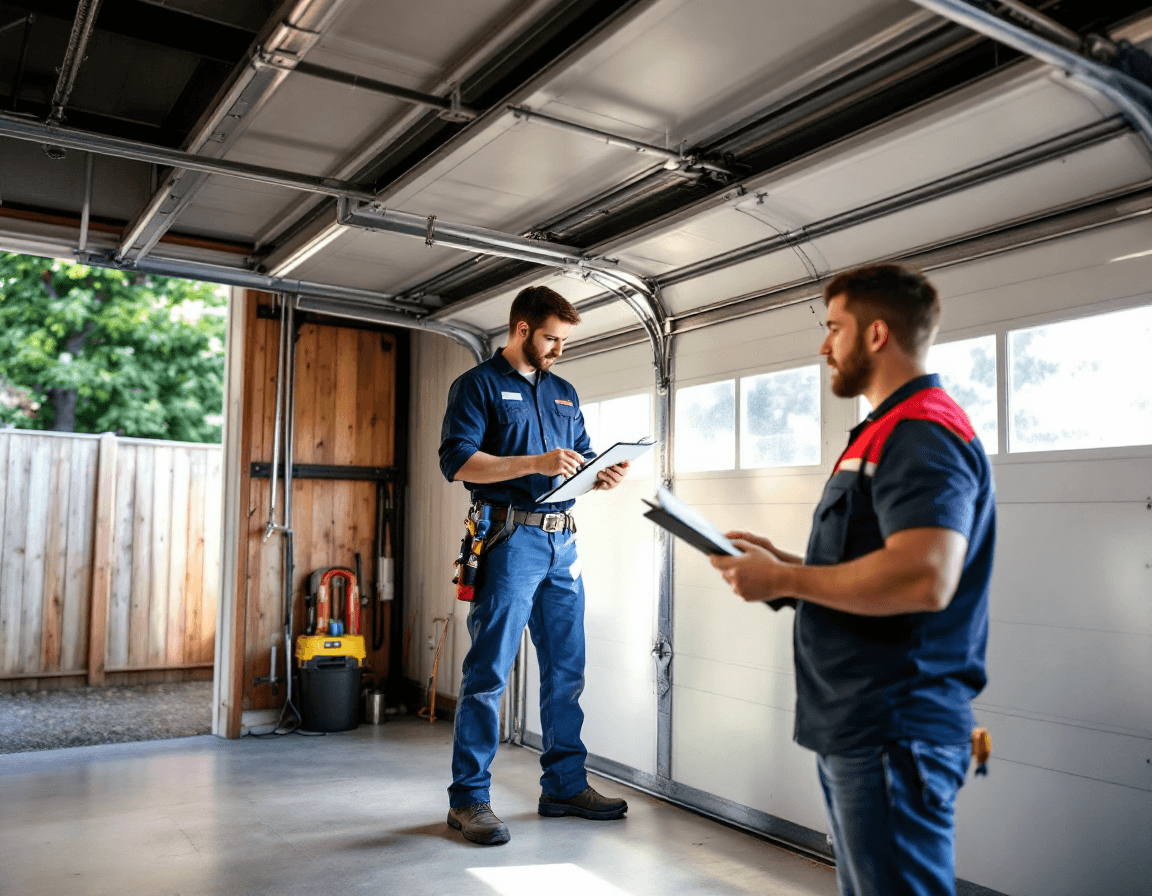
Garage Door Maintenance & Tune-Ups in Des Moines, WA is less about a single chore and more about staying ahead of the salt air, damp winters, and daily cycling that gradually wear down a door near the Sound. Homes in the 98198 area, from the bluff-side streets above Redondo to the older blocks closer to the Des Moines Marina, often have garages that take a steady beating from marine air and rain. A door that works fine in July can start groaning by November, and most homeowners don't notice the slow change until something sticks or the opener starts working harder than it should.
This page walks through what a proper tune-up covers, what the warning signs look like, and how to tell when a problem is minor maintenance versus something that needs a licensed technician right away. We'll also cover the homeowner checks you can do yourself safely and the points where you should stop and call a pro. If you're weighing a service visit, the typical range for a full multi-point tune-up is $89–$149, and the details of what that includes are below.
Salt Air, Damp Winters, and What Des Moines Garages Endure
Garages along the Des Moines shoreline live in a different environment than garages a few miles inland. Salt-laden air drifts across the water and settles on exposed metal, and that moisture accelerates surface rust on hinges, track brackets, and the steel of the door panels themselves. Even homes that sit back from the beach pick up this influence, because the prevailing marine air moves through the whole neighborhood on most days. Over several seasons, that corrosion can seize a roller or stiffen a hinge pin before the homeowner ever sees a visible problem.
Winter adds a second layer of stress. Western Washington's long stretches of drizzle and cool humidity keep garage floors damp and make it hard for metal to dry out between storms. Moisture gets into the bottom seal, pools in the track near the floor, and can soften weatherstripping that was supposed to keep the cold and wet out. When the temperature swings from chilly mornings to milder afternoons, condensation forms on cold metal and feeds the rust cycle even further.
Because of this, a garage door in Des Moines benefits from a maintenance rhythm that accounts for the coastal climate rather than a generic schedule written for dry regions. Many local homeowners find that a check in early fall, before the wettest months, and another in late spring gives them a clean picture of how the door handled the season. The goal is to catch corrosion, loosened hardware, and worn seals while they are still cheap and easy to correct.
What a Multi-Point Tune-Up Actually Covers
A multi-point tune-up is a structured inspection rather than a quick look-over. The technician works through the door system component by component, checking for wear, alignment, and safety function, then performs the adjustments and lubrication that the door needs at that visit. Because a garage door is a combination of springs, cables, rollers, hinges, tracks, and an opener, the value of a full inspection comes from covering all of those parts in a single pass. A visual glance can miss the early signs of trouble that show up only under tension or during operation.
A typical multi-point tune-up in our service area includes the following checks:
- Torsion or extension spring inspection, including visual condition and winding status, with any spring repair or replacement handled by a licensed technician
- Cable inspection for fraying, kinks, or slack, along with drum and cable seating
- Roller inspection for cracked nylon wheels, worn bearings, and stiff or wobbling axles
- Track alignment, bolt tightening, and checking for bends or gaps that cause binding
- Hinge, bracket, and end-cap inspection with tightening of loose fasteners
- Lubrication of rollers, hinges, bearings, and the track using products appropriate for steel and nylon components
- Weatherstripping and bottom seal inspection for cracks, compression, and gaps
- Balance testing to confirm the door holds position when lifted partway
- Opener safety testing, including auto-reverse and photo-eye function
- Opener travel limit and force setting review
The price range of $89–$149 generally reflects a full pass through this list, though the final scope depends on the door's age, the number of components that need attention, and whether any parts need replacement. A technician who spots a worn component will explain what it is, why it matters, and what the repair would involve before doing additional work. Homeowners should expect a clear explanation rather than pressure to approve everything at once.
Reading the Noise: What a Squeal, Grind, or Bang Is Telling You
Garage doors speak through sound long before they fail, and learning to interpret those noises can save a lot of frustration. A high-pitched squeal usually points to dry or contaminated metal contact, often at the rollers or hinges, and it tends to grow louder as the door ages. A grinding or gravelly noise often means rollers are wearing down or that debris has worked its way into the track. A sharp bang at the top or bottom of travel can signal a loose bracket, an out-of-level track, or a misaligned roller that is slamming against a rail.
Noise that gets gradually worse over months is one of the most common reasons Des Moines homeowners call for a tune-up. The change tends to happen so slowly that the door seems normal until someone visiting the house mentions how loud it is. Other families only notice after they return from a trip and the door sounds completely different than when they left. When you hear a new noise, try to note when it happens, whether it occurs on the way up or down, and whether it is worse in damp weather, since those details help a technician narrow the source quickly.
It's also worth recognizing that some noises are not maintenance problems at all. A sudden loud crack or snap, especially one accompanied by the door dropping or sagging, can indicate a broken spring or cable. In that situation, keep people and vehicles clear of the door, do not attempt to force it open or closed, and contact a licensed technician. Noise alone rarely calls for emergency action, but a loud event followed by unusual movement should always be treated as a safety concern.
Balance Testing Without Guesswork
A garage door that is properly balanced should stay roughly in place when you lift it by hand partway up, with the springs doing most of the work. If the door drops quickly when released, or if it rises on its own when you let go, the balance is off, and the opener is probably compensating for it. Homeowners sometimes describe this as the door feeling heavy, lopsided, or as though one side is fighting the other. Any of those descriptions deserves a closer look during a tune-up.
Balance testing involves disconnecting the opener and carefully checking how the door behaves at several heights. The technician evaluates whether the springs are delivering the right amount of lift and whether one side is carrying more load than the other. Imbalance can come from uneven spring wear, a cable that has stretched or slipped, or a track that is not level. Because these adjustments involve high-tension components, the correction work belongs to a licensed professional, even though a homeowner can notice the symptoms and report them clearly.
A word of caution is warranted here. Never attempt to adjust, wind, or release a torsion spring yourself, and never try to loosen or remove a cable under tension. These parts store enough energy to cause serious injury. Balance is best confirmed with the door disconnected from the opener and only after a technician has verified the spring and cable condition. If you suspect imbalance, the safest first step is to schedule an inspection rather than experiment.
Opener Strain, Slow Travel, and the Force Settings Nobody Checks
The garage door opener is the part of the system most homeowners assume is fine, right up until it starts working visibly harder. A straining motor, a slow close, or a door that stops partway and seems to hesitate can all mean the opener is compensating for a mechanical problem elsewhere. Many openers also have force and travel settings that drift over time or were never set correctly at installation. If the door has become heavier to operate because of corrosion or imbalance, the opener may be pushing against resistance it was never sized to handle comfortably.
A tune-up includes reviewing these settings and checking whether the opener's limits are configured for the door's current weight and travel. Travel limits control where the door stops at fully open and fully closed, while force settings determine how much pushing or pulling the opener will apply before it stops and reverses. Setting force too low can cause nuisance reversals, while setting it too high can defeat the safety function the opener is supposed to provide. A technician will adjust these carefully to match the door's actual behavior, not simply accept whatever was set years ago.
Opener strain is also tied closely to the coastal environment. Corroded hardware and dry rollers increase friction, and moisture can work into the opener's trolley and rail system, slowing movement. Homeowners sometimes assume they need a new opener when the real issue is a dirty track, a stiff roller, or a door that has gone out of balance. A proper inspection separates those possibilities so that you aren't paying for a replacement you don't need.
Safety Reversal Testing You Can Do Tonight
Every automatic garage door opener manufactured to current safety standards should reverse when it meets resistance on the way down, and it should stop when the photo-eye beam is interrupted. Testing these functions is one of the most valuable things a homeowner can do between service visits, and it takes only a few minutes. A technician will confirm these systems during a tune-up, but routine checks help you spot a change in behavior early.
Here is a simple way to check the basics safely:
- Place a flat piece of wood, about two inches tall, on the floor directly under the closing door, then close the door with the opener and confirm it reverses when it contacts the wood.
- Wave an object through the photo-eye beam while the door is closing and confirm it stops and reverses immediately.
- Check that the photo-eye lenses are clean, aligned, and free of cobwebs or dust, since a dirty lens can cause false stops.
- Confirm that the door stops at the correct fully closed and fully open positions without slamming or hesitating.
- Listen for grinding, popping, or unusual sounds during the full cycle, and note whether they change from one trip to the next.
If the door fails any of these tests, stop using the automatic function and call for service. A door that does not reverse safely is a serious hazard, particularly in a household with children or pets. Do not attempt to repair the safety sensors or bypass them to get the door working. Because the reversal system is a core safety feature, any failure should be treated as urgent, and a licensed technician should evaluate the system before the door is used again in automatic mode.
Buying a Home Near Redondo or Woodmont? Start With a Baseline
Homebuyers in the Des Moines area often ask for a garage door check during the inspection period, and it is one of the smartest things to do before closing. The previous owner's maintenance habits are largely unknown, and a garage that has sat near the water for years may have corrosion or wear that is not obvious at a walkthrough. A baseline tune-up gives you a clear record of the door's condition on the day you take possession, along with a list of anything that needs attention.
This matters for neighborhoods like Redondo and Woodmont, where many homes have been updated in some places but not others, and where garages may have original hardware or mixed-age components. A new buyer might find a relatively new opener paired with century-old-looking track brackets, or a modern door installed on an older frame. Knowing the actual state of each component lets you budget for repairs and avoid surprises during the first winter in the house. It also gives you a documented starting point if you later need to show that the system was functioning at a certain time.
If you are buying a home, it helps to bring the seller's disclosures and any service records you can get to the appointment. Ask whether the door has had spring work, opener replacements, or track repairs, and note the dates if they are known. Even when records are missing, a thorough inspection reveals a great deal about how the system has been treated. A baseline visit is an inexpensive way to replace guesswork with a clear picture of what you are moving into.
When the Last Service Was More Than a Year Ago
Many garage doors in Des Moines have gone a year or more without any professional attention, and that is when small issues start to compound. Lubrication dries out, hardware loosens from repeated vibration, rollers develop flat spots, and seals harden. None of these changes necessarily stops the door, but together they increase the load on the opener and raise the odds of a sudden failure on a cold or rainy morning. A door that has been untouched for a long stretch is often the one that breaks at the worst possible time.
A tune-up after a long gap usually reveals a mix of minor and moderate issues. Typically, the technician will address lubrication and fastener tightening on the spot, then recommend any parts that have reached the end of their service life. Rollers and hinges are common replacements because they wear steadily, and weatherstripping often needs renewal after several years of coastal exposure. Springs, cables, and drums fall into a different category, because they can fail suddenly and should be replaced by licensed professionals who can do the work safely and correctly.
Homeowners who have gone a long time without service sometimes feel embarrassed, but the situation is common and easy to fix. The best approach is to schedule the visit, share what you have noticed, and let the technician establish a new baseline. From there, a regular interval, often annually for most households and more often for busy doors or heavy use, keeps the system from drifting back into neglect.
Lubrication Done Right: Products, Points, and Mistakes to Avoid
Lubrication is one of the most effective maintenance steps, and also one of the most commonly misdone. The goal is to reduce friction at moving joints without attracting dirt or leaving sticky residue that collects grit. In our service area, where moisture and salt are constant, the right product matters. Silicone-based lubricants and lithium-based greases designed for garage door components are generally preferred for hinges, rollers, and bearings, while the track typically needs a light, clean application rather than heavy grease that catches debris.
Common mistakes include spraying lubricant directly onto the track, which can cause dirt to stick and build up over time, and applying too much product in a way that drips onto the floor or onto the door's bottom seal. Some homeowners also use household oils that break down quickly or attract dust. A careful technician wipes away old buildup before applying fresh lubricant and focuses on the parts that actually move, such as hinge pivots, roller bearings, and the spring coils where appropriate. Lubrication is not a substitute for repair, but it does extend the life of many components.
Do not lubricate the opener's internal mechanism unless the manufacturer's instructions specifically call for it, and never lubricate the photo-eye lenses or the safety sensor wiring. If you do your own light maintenance between visits, stick to wiping the track clean, applying a small amount of approved lubricant to rollers and hinge pivots, and checking that nothing is rubbing or catching. Anything involving the springs or cables should be left to a licensed technician.
Springs and Cables: Where DIY Stops and Licensed Techs Start
Springs and cables are the high-stakes heart of a garage door, and they deserve clear boundaries. Torsion springs, mounted on a shaft above the door, store tremendous energy when wound. Extension springs run along the sides of the track and can also release sudden force if they fail. Cables carry the door's load and wind onto drums that must sit correctly for the door to lift evenly. A failed or improperly adjusted component in this group can drop the door, cause injury, or damage the opener and the door panels.
For this reason, spring and cable work is always handled by a licensed technician. During a tune-up, the technician will inspect these parts visually and under controlled conditions, checking for rust, gaps between coils, fraying cables, and drum seating. If a spring is worn or a cable is damaged, the recommendation will be replacement by a professional, and you should follow that advice promptly rather than waiting for the component to fail. Because springs carry a substantial lifespan that varies with use, their condition is a major reason regular inspections matter.
Homeowners can and should keep an eye on the area around these parts. Watch for visible rust on springs, unusual gaps between coils, cables that look frayed or kinked, and any sign that the door sits unevenly. If you notice any of these, avoid operating the door until a licensed technician has evaluated it. Never try to wind, unwind, or adjust a spring yourself, and never attempt to cut, splice, or re-hang a cable.
What the $89–$149 Visit Looks Like and How to Prepare
A full multi-point tune-up generally takes a focused block of time, and understanding what happens during the visit helps you get the most value from it. The technician will usually start by listening to your concerns and asking how the door has been behaving, including any noise, slowdowns, or balance issues you have seen. From there, they move through the inspection checklist, test the door manually and electrically, and make adjustments and lubrication as needed. At the end, you should receive a clear summary of what was done, what looks good, and what may need attention in the future.
To prepare, clear the area around the door and the track so the technician can work safely. Note any symptoms you have noticed, including when they occur, and mention whether you have had recent weather events or other changes at the house. If you have records of past service, parts replacements, or the opener's make and model, have those available. Make sure remote controls and keypads are accessible, since the technician will want to confirm that every control point works.
After the visit, take a few minutes to operate the door and listen for changes. Test the safety reversal functions again, and keep the service summary for your records. If the technician recommends additional work, ask for the reasoning and, where appropriate, a written estimate before approving it. A good maintenance relationship is built on clear communication, and Des Moines homeowners who keep their doors inspected regularly usually find that small repairs stay small.
For homeowners across Des Moines and the surrounding 98198 area who want a clear inspection of their garage door, from the Des Moines Marina side of town to the quieter blocks near Woodmont, a multi-point tune-up is one of the most practical steps you can take this season. Call Seattle Garage Door Fix at (888) 799-3819 to schedule a service visit, ask about the scope of a full tune-up in the $89–$149 range, and get your door checked by a licensed, bonded, and insured technician before the next wet stretch of weather arrives.