
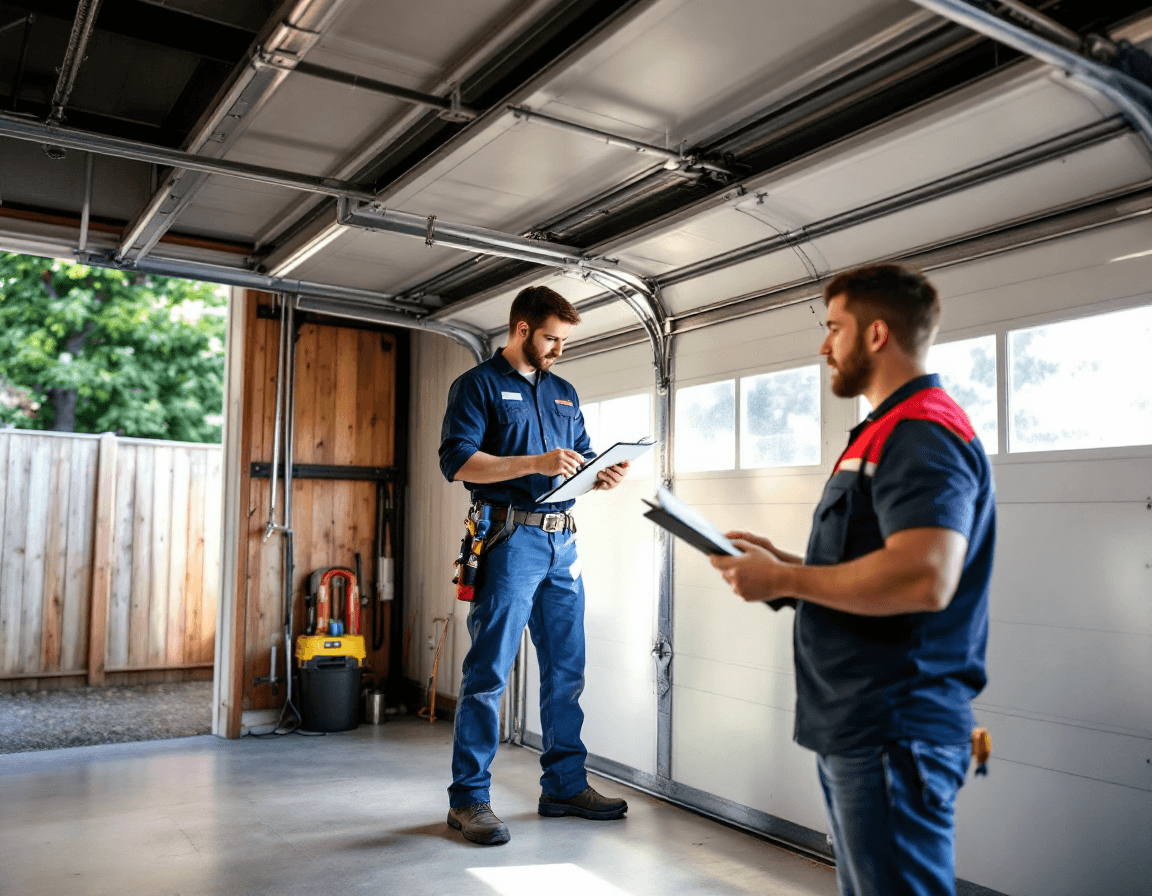
Garage Door Maintenance & Tune-Ups in Kent, WA is one of the most practical things a homeowner can schedule before a problem starts. Kent sits in the Green River valley, where winters bring steady rain, damp mornings, and long stretches of gray that never quite dry out. Those conditions work quietly on every moving part of a garage door, from the steel rollers to the opener's drive system. A tune-up gives a technician the chance to catch wear while it's still cheap to fix.
Our crews serve homes across Kent and the surrounding communities in ZIP codes 98030, 98031, 98032, and 98042. We see the same pattern repeatedly: a door that worked fine for two years starts to sound different, then drags a little on one side, and eventually stops in the middle of the driveway on a school morning. Most of those breakdowns are preventable. A scheduled multi-point tune-up, typically priced between $89 and $149 depending on the door and opener, is a modest investment compared with an emergency call, a damaged vehicle, or a replacement part that could have been avoided.
This page explains what a Kent tune-up covers, why local weather matters, and what you can check yourself between visits. It also draws a clear line between simple homeowner observations and the spring and cable work that belongs only with a licensed, bonded, and insured professional. Read it as a field guide from people who spend their days inside Kent garages, not as a sales brochure. If anything here matches what you're hearing or seeing at home, a call to (888) 799-3819 is the fastest way to get a real answer.
Why Kent Garages Feel the Valley Climate Differently
Kent's climate is mild by national standards, but mild does not mean harmless to a garage door. The valley holds moisture, and many homes, especially those near the river corridor and in older blocks, experience long periods of high humidity from October through April. Steel components rust slowly in that environment, and the rust often starts where you cannot see it, inside hinge knuckles, along the roller stems, and on the back of track brackets. By the time surface corrosion is visible, the friction has usually been building for months.
Temperature swings matter too. Kent rarely sees the deep freezes that stress doors in colder parts of the country, but it does get the occasional cold snap that stiffens old lubricant and makes the door feel heavier on the first morning of the year. Wood and composite doors respond to moisture by expanding and contracting, which can shift panel alignment and push weatherstripping out of position. Those small changes add up, and a tune-up is where a technician measures them instead of guessing.
Many Kent homes also have garages that double as workshops, storage space, or a second entry. Dust, damp cardboard, and tracked-in leaf debris settle into the track channel and become abrasive over time. A technician checks the track for debris and bends, confirms the door is sitting square in its opening, and clears anything that would make the rollers work harder than they should. The goal is a door that moves smoothly through every season the Pacific Northwest throws at it.
What a Multi-Point Safety Inspection Actually Covers
A multi-point inspection is a structured walk-through, not a quick glance from the driveway. The technician works through the door system in a set order so nothing gets skipped, and the findings are explained to the homeowner before any work is recommended. On a standard residential tune-up, the review typically includes the following checkpoints.
- Torsion or extension spring condition, checked visually for gaps, rust, or stretching, with no adjustment performed by the homeowner
- Cable inspection for fraying, slack, or drum misalignment, with any repair referred to licensed spring and cable work
- Track alignment, including level, plumb, and gap at the rollers, plus tightness of track bolts and brackets
- Roller condition, looking for cracked nylon wheels, worn bearings, and loose or bent stems
- Hinge and bracket tightness, including the center and end brackets that carry the door's weight
- Bottom seal, top seal, and side weatherstripping for cracking, compression, or mildew
- Door panels for dents, separation, and cracked sections that could affect balance
- Opener mounting, rail alignment, belt or chain tension, and bracket security on the header
Each item is checked against what a healthy door should look like at that age and material. Some findings are routine maintenance, like tightening a loose bracket or wiping grime from a track. Others are early warnings, such as a roller that is starting to flatten or a spring that shows surface rust. The inspection gives you a clear picture of what is fine today, what should be watched, and what needs attention soon, so you can plan rather than react.
Lubrication That Helps and Lubrication That Hurts
Lubrication is the part of a tune-up homeowners often think they understand, and it is also the part they most often get wrong. Garage door rollers, hinges, and bearings need a lubricant designed for metal-on-metal contact and for the moisture Kent homes deal with. A light silicone-based spray or a white lithium grease is typically appropriate for rollers and hinge pivots, applied sparingly so it does not collect dust. Heavy grease on the track invites grit, so technicians usually keep the track surface clean and dry and limit lubrication to where moving parts actually meet.
Many people reach for a penetrating oil or a general household spray, and that is a mistake. Those products evaporate, leave a sticky residue, or attract grime that turns into a gritty paste within a season. In a damp Kent garage, that residue can also hold moisture against the metal, which speeds up the very corrosion you were trying to prevent. A professional tune-up uses products suited to the door's materials and includes cleaning the old residue before fresh lubricant goes on.
Lubrication also should not be treated as a cure for a noisy or heavy door. If the door squeals or grinds after a fresh application, the problem is usually a worn roller, a bent track, or a bearing that has failed, and more lubricant will only mask it. A technician uses the lubrication step to confirm what the door is telling them. Quiet movement after cleaning and lubrication is a good sign, while persistent noise points to a component that needs replacement.
Reading the Balance: Why a Heavy Feel Deserves Attention
A properly balanced garage door should feel almost weightless when you lift it by hand, with the springs doing most of the work. When the door feels heavy, or when one side seems to rise faster than the other, the balance has shifted, and that imbalance places extra strain on the opener, the cables, the tracks, and the rollers. Over time, an unbalanced door can wear out components well before their expected lifespan, and it can also make the door behave unpredictably under load.
A balance check during a tune-up is simple in principle and careful in practice. With the opener disengaged using the emergency release, the technician lifts the door by hand to about waist height and observes whether it stays put. A door that drifts down or rises on its own is out of balance, and the cause could be spring tension, cable condition, a bent track, or a binding roller. Because the springs and cables store significant energy, the adjustment itself is work only a licensed technician should perform.
Homeowners can do a safe observation at home. Pull the release cord only when the door is closed and the vehicle is out of the way, then lift the door gently by the handle and note whether it feels uneven or stays where you leave it. If it slides down, rises unevenly, or feels like it is fighting you on one side, stop and schedule service. Do not attempt to adjust tension yourself, and do not stand under a door that is unsupported.
Opener Safety Testing: Reversal, Photo Eyes, and the Release Cord
The garage door opener is the part of the system that stops a closing door when something gets in the way, and that protection deserves regular testing. Modern openers include two main safety systems: an auto-reverse feature that detects resistance during closing, and photo eyes mounted near the bottom of the tracks that detect a beam interruption. Both should be checked during every tune-up and are worth a quick self-check between visits.
A simple reversal test uses a flat object such as a standard 2x4 laid on the floor in the door's path. When the door closes and contacts the board, it should reverse immediately. Photo eyes can be tested by waving a cardboard box or hand through the beam while the door is closing, and the door should reverse or stop when the beam is broken. If the door fails either test, do not keep using it as a routine, and schedule a technician before the next closing cycle.
The emergency release cord also needs attention. It should pull easily, release the trolley cleanly, and allow the door to be lifted manually when the opener is disconnected. A stiff or tangled release cord can leave a family stuck during a power outage or when the opener fails, and it can be a hidden safety issue for children who may play near the door. Technicians check the cord's condition, its attachment point, and whether the trolley engages and disengages smoothly during the test.
- Test auto-reverse on the floor with a flat board monthly, and confirm the door reverses on contact
- Test photo eyes by breaking the beam during closing, and confirm the door reverses or stops
- Check that the emergency release cord is intact, unobstructed, and easy to pull
- Confirm the opener's light, remote, and keypad respond normally, and replace batteries when signals weaken
- Look for loose opener brackets, rattling rail sections, or belts and chains that appear slack
Listening for Noise Creep Before It Becomes a Breakdown
Most garage doors do not fail without warning. They get noisier, slower, or rougher over months, and the change is so gradual that the household stops noticing. A tune-up is a good time to compare how the door sounds now with how it sounded when it was new, because a technician can usually identify the source of a sound quickly. A squeak, a rumble, a clatter at the top of travel, or a grinding noise during the middle of the cycle each points to a different problem.
Squeaks often come from dry hinges or rollers and are usually easy to fix. A rumble that changes with the door's speed may come from a worn bearing or an unbalanced panel. Clatter near the top of travel can indicate loose brackets or track bolts that need tightening. Grinding or a rhythmic thump often points to a cracked roller or a track section that has shifted, and those issues should be addressed promptly before the door binds in the middle of its path.
Kent households also notice noise changes after a wet season or after a sudden shift in temperature. A door that sounded fine in August may complain in January when the metal contracts and the lubricant stiffens. Keep a short mental note of when the sound started and what the weather was doing, and mention it when you book a tune-up. That detail helps a technician isolate the cause faster and makes the service visit more efficient.
When the Opener Strains, Slows, or Hesitates
An opener that sounds like it is working harder than usual is usually telling you something important. Straining, long pauses before the door moves, or a slow travel speed can result from a door that is out of balance, from a track that has developed a binding point, from worn rollers, or from a motor and drive system that is tired. Ignoring these signs often leads to a sudden failure, and the replacement cost is usually higher than the tune-up cost that would have caught the issue earlier.
During a tune-up, the technician measures how the opener performs under normal load and checks the drive system's condition. Belt-drive and chain-drive openers each have different maintenance needs, and the technician verifies tension, alignment, and the condition of the carriage and rail. If the opener is many years old, the technician may also discuss whether repair or replacement makes more sense based on the diagnosis. The aim is an honest recommendation that matches what the equipment needs.
Homeowners can watch for early clues at home. Notice whether the door pauses partway up or down, whether the motor sounds labored on one side of the cycle, and whether the door creeps to a stop rather than settling smoothly. Also pay attention to whether the opener's lights flicker or the motor smells warm after a single cycle. Any of those observations are a good reason to schedule service before the next busy week.
Buying a Home in Kent? Put the Garage Door on the Walkthrough List
Many of our Kent customers call for a tune-up shortly after closing on a home. That timing makes sense, because a garage door is one of the few major mechanical systems in a house that most buyers are not sure how to evaluate. The inspection may note that the door opens, but it rarely explains how smoothly it runs, whether the safety systems are calibrated, or how much life remains in the springs and rollers. A focused tune-up gives you that clarity before you start your first season in the home.
A useful first-week routine is to run the door through several full cycles, both open and closed, while you listen and watch. Note any uneven movement, scraping, or pauses, and check whether the photo eyes and auto-reverse behave as expected. Look for rust on the hinges and springs, daylight around the bottom seal, and any panel damage that might have been hidden by a previous owner's quick cleanup. Write down everything you see, and bring that list to the technician.
Older homes in East Hill and other established parts of Kent often have doors that have been repaired several times over the years, sometimes with mismatched parts. A new owner benefits from knowing whether the spring system is original, whether the track has been modified, and whether the opener has been upgraded or simply patched. The tune-up report gives you a baseline, so you know what to budget for and what to monitor. It also prevents the surprise of discovering a problem during the first hard freeze or the first big storm.
Humidity, Mildew, and Seals in the Green River Valley
The valley's humidity has a direct effect on garage door seals, and the damage is easy to overlook until the garage smells damp or the floor stays wet after rain. Bottom seals can crack and harden, side seals can lose compression, and top seals can separate from the header. Each of those problems lets water and cold air into the garage, which accelerates rust on the lower panels and makes the space less comfortable for anything stored there. A tune-up identifies which seals are still doing their job and which need replacing.
Mildew is another local concern. Vinyl and rubber weatherstripping can develop dark spotting in damp corners, especially on north-facing walls and in garages with limited airflow. Mildew itself does not usually damage the door, but it signals that moisture is sitting in the space longer than it should. A technician may recommend better ventilation, a dehumidifier in a problem garage, or simply regular cleaning of seals with a mild, non-abrasive solution. Good airflow helps the entire system last longer.
Sealing decisions should match your door type and your garage's exposure. Wood doors need consistent finish care to resist swelling, and steel doors need protection where paint has chipped. Insulated doors need intact seals so their insulation performs as designed. During a tune-up, the technician can explain which seal replacements make sense now and which can wait a season, so you are not paying for work you do not need.
A Simple Maintenance Calendar for Kent Households
Consistent maintenance works better than occasional heroic repairs. Most Kent homeowners find it easier to follow a simple calendar that matches the seasons: a quick monthly check, a professional tune-up each year, and a closer look after storms or long dry spells. The schedule below is a practical starting point, and your technician can adjust it based on how heavily the door is used and what condition it is in.
- Monthly: Run the door through a full cycle, test auto-reverse with a flat board, and wipe the photo eye lenses clean
- Every spring, before the rainy season peaks: Clean the tracks, check weatherstripping, and look for rust on hinges and rollers
- Every fall, before the first heavy rains: Confirm the door closes fully, check seal contact, and make sure the garage floor drains properly
- Once a year: Schedule a full multi-point tune-up with a licensed technician
- After a storm, a break-in attempt, or an impact: Inspect for panel damage, track displacement, and any change in sound or movement
Keep a small notebook or a note on your phone with dates of service and any unusual sounds or behavior. That record helps the technician spot trends and can be valuable when you are deciding whether a repair or replacement makes sense. It also makes the annual visit more productive, because you can share specifics rather than trying to remember what the door was doing last winter.
Where Homeowner Checks End and Licensed Work Begins
Some garage door tasks are simple enough for a careful homeowner to observe, clean, or test. Other tasks involve stored energy and can cause serious injury if handled incorrectly. Torsion springs, extension springs, cable drums, and spring tension adjustments all fall into the second group. Even a door that appears to be lifting normally can hold enough force in its springs to cause harm if a spring fails or a cable slips during work. For that reason, spring and cable work must be left to a licensed, bonded, and insured professional.
Homeowners should never attempt to wind, unwind, or adjust torsion springs, and should not try to remove or replace cables. If a spring is broken, a cable has come off the drum, or the door is hanging unevenly, keep people and pets clear of the door, avoid lifting it manually, and call for service. The same caution applies if the door drops suddenly or if you notice a gap that suggests a spring has failed. A technician has the tools and training to release tension safely and to replace components correctly.
Our tune-up work respects those boundaries. The inspection identifies spring and cable conditions, explains what the homeowner should know, and schedules any necessary spring or cable repair as separate licensed work. That approach keeps the homeowner informed and the household safe, and it means you always know exactly what is being done to your door and why.
Our team at Seattle Garage Door Fix provides multi-point garage door tune-ups across Kent, from homes near Kent Station and the older streets of East Hill to the neighborhoods around Panther Lake and throughout ZIP codes 98030, 98031, 98032, and 98042. Tune-ups typically run $89 to $149, depending on the door and opener, and each visit includes a clear explanation of what we found, what needs attention now, and what can wait. If your door is noisier than it used to be, feels heavy, has gone more than a year without service, or you have just bought a home and want a baseline, call (888) 799-3819 to schedule your tune-up.