
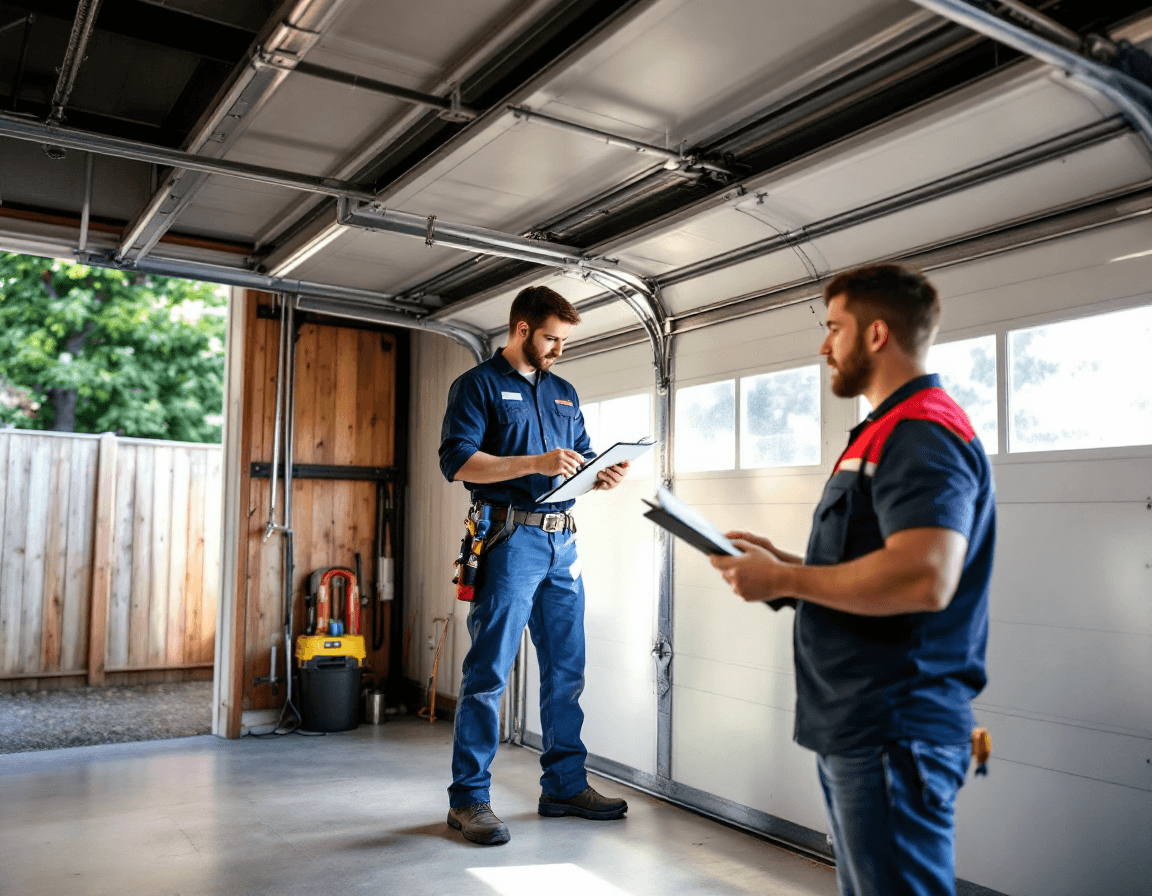
Garage Door Maintenance & Tune-Ups in Renton, WA keeps a heavy, mechanical door working safely in a climate that is hard on metal, wood, and electronics alike. Renton sits in the Green River Valley at the southern end of Lake Washington, where long gray winters bring steady rain and humidity can linger well into spring. Those conditions quietly work on every moving part of a garage door, from the torsion springs above the header to the rollers riding inside the tracks. A well-timed tune-up catches small problems before they turn into a door stuck halfway open on a cold morning.
Homes across 98055, 98056, 98057, 98058, and 98059 see a wide mix of door types, from older two-car doors in established neighborhoods to newer insulated steel doors in developments built over the last two decades. Some households park in detached garages on sloped lots, while others have attached garages that open onto a flat driveway. Each setup wears differently, which is why a maintenance visit should look at the actual door in front of the technician rather than follow a single checklist. Our approach is to inspect, lubricate, test, and adjust, then explain what we found in plain language.
A full multi-point tune-up typically runs $89 to $149 depending on the door's size, the number of components involved, and the opener model. That range covers the inspection, lubrication, balance testing, and opener safety testing described below. If the visit uncovers a part that needs replacing, you will get a clear explanation and an itemized quote before any work begins. You are never obligated to approve repairs on the spot. Call (888) 799-3819 whenever you want to schedule a visit or ask what your particular door needs.
Why Renton Doors Wear Faster Than the Calendar Suggests
Mileage on a garage door is measured in cycles, not years, and a household that uses its door several times a day can rack up thousands of cycles in a single year. Renton's damp winters add a second kind of wear that has nothing to do with use. Moisture settles into hinges, roller bearings, and the steel of the bottom bracket, where it accelerates corrosion and dries out the factory lubricant. Wood and composite doors absorb humidity, swell slightly, and can rub against weatherstripping or the jamb in ways that make the opener work harder.
Temperature swings matter too. A cold snap that drops the garage below freezing can stiffen old grease until the opener strains to lift the door, while a warm afternoon can soften the same grease and cause the door to drift. Many Renton garages are not insulated, so the door experiences the full range of outdoor conditions every day. Over several seasons these small changes add up to a door that feels different even though nothing has visibly broken.
Homes near Lake Washington and the Cedar River corridor can also deal with heavier moisture and a bit more airborne grit from road traffic and nearby industrial activity. Garages near busy arterials sometimes collect a film of fine dust on tracks that combines with lubricant to form a gritty paste. Regular maintenance is the simplest way to clear that buildup before it grinds into rollers and hinges. Treating the door as a system that ages with the weather is far more useful than waiting for a dramatic failure.
Reading the Noise: What a Louder Door Is Telling You
Most homeowners notice a garage door getting louder long before they notice anything else. The change often happens so gradually that it sounds normal until a neighbor mentions it or a visitor comments on the racket. A rhythmic squeal usually points to dry hinges or rollers that need lubrication. A grinding or scraping sound more often signals debris in the track, a roller with a worn stem, or a bracket that has loosened.
A sharp bang or clunk at the top or bottom of travel can mean the door is reaching its limits and the stop-to-stop mechanics are out of adjustment. A hollow rattle when the door starts moving may indicate loose hardware along the panels or a worn cable drum bearing. Each of these sounds has a common cause, but the fix depends on confirming which part is responsible. Guessing and lubricating everything in sight can mask a real problem for a few weeks before it returns.
When you hear a new noise, try to note when it happens: first thing in the morning, during the afternoon, only when the door is fully closed, or only on the way up. Those details help a technician narrow down the source quickly during a tune-up. A quiet door is not automatically a healthy door, so it is worth having the system inspected even if the noise has faded. Some of the most serious wear develops without any sound at all.
Inside a Multi-Point Safety Inspection, Step by Step
A multi-point safety inspection follows a sequence designed to check the parts that carry the most load and the parts that protect people. The technician begins by looking at the door in the closed and partly open positions, checking panel alignment, the seal along the bottom, and the condition of the rails. From there the inspection moves through the hardware and the moving parts that determine how smoothly the door travels.
Typical checkpoints include the following:
- Torsion or extension spring condition, including visible gaps, rust, or signs of stretching, with no hands-on spring adjustment performed by the homeowner
- Cable inspection for fraying, slack, or drum misalignment, along with confirmation that both cables are seated properly
- Roller condition, checking for cracked nylon, worn stems, and smooth rotation on the bearing
- Hinge and bracket tightness, including fasteners that may have backed out over time
- Track alignment, level, and clearance, plus a look for dents or bends that could cause binding
- Weatherstripping and bottom seal integrity, which affects both energy use and pest entry
- Opener mounting, belt or chain tension, and the condition of the rail
- Safety sensors, auto-reverse function, and manual release operation
Each item gets a quick visual and functional check, and anything outside normal range gets noted for discussion. The inspection is not a teardown. It is a structured look at the door's overall health so you know what is working well, what is starting to wear, and what needs attention soon. Our technicians explain findings as they go, which helps homeowners decide whether to schedule follow-up work or simply keep an eye on a particular component.
Lubrication Without the Guesswork: Matching Product to Part
Lubrication sounds simple, but using the wrong product can make a garage door worse. Heavy grease on a metal track collects grit and turns sticky in cold weather, while a thin spray oil on a high-load bearing may not last through a single wet month. Good lubrication means choosing a product suited to each component and applying it in the right amount, not drenching everything the same way.
Rollers, hinges, and bearings generally benefit from a lightweight lithium-based or silicone-based lubricant that resists moisture and stays flexible through temperature changes. Tracks should be cleaned first and then lightly treated so the rollers glide without collecting debris. Springs and cables call for a specific lubricant that protects against corrosion without attracting dirt, and that application is one of the reasons we recommend leaving spring and cable service to trained technicians. Opener chains or belts usually need their own product, and rails are often best kept clean and only lightly coated.
Lubrication also needs to be checked, not just applied. A door that was serviced last spring may already be dry after a wet fall, especially if it sits near a drip line or receives road spray. Regular tune-ups keep lubrication at the right level throughout the year instead of leaving the door to wear dry between visits. Think of it as protecting the parts that take the most daily stress, rather than treating the whole door as one surface.
Balance Testing on Hillside Driveways and Sloped Lots
Balance testing shows whether the door's springs are carrying the right share of the load so the opener is not doing all the lifting. A properly balanced door stays put when you lift it manually to about waist height and let go, and it moves smoothly without sudden drops or hard jerks. A door that feels heavy, drifts downward, or rises unevenly is often out of balance, and that imbalance wears the opener, cables, and rollers faster than normal use would.
Renton has a fair number of homes on hillside lots and gently sloped driveways, particularly in the Highlands and around Talbot Hill, where garages may sit above or below the street grade. A slope can change how the door reacts to gravity and how the opener engages, which makes a balance check especially useful in these settings. Technicians look at how the door behaves through its full travel and note whether the load shifts unevenly from one side to the other. If you notice the door sits lower on one side or stops unevenly, mention it when you schedule so the technician can plan the test accordingly.
It is important to understand what a balance test does and does not involve for the homeowner. Checking balance is a diagnostic step, and adjusting spring tension is work that requires training, the right tools, and an understanding of the stored energy involved. Our technicians are licensed, bonded, and insured, and they handle that adjustment safely. If you suspect a balance issue, avoid trying to adjust the springs yourself, and keep children and pets clear of the door while you wait for a visit.
Opener Safety Testing: Reversal, Force, and the Photo Eye
Modern openers include safety features that stop or reverse the door when something blocks its path. Testing those features is a central part of any tune-up because they protect children, pets, vehicles, and household members. The auto-reverse function should respond when the door contacts a solid object on the way down, and the photo-eye sensors near the floor should stop the door when the beam is broken.
During opener safety testing, the technician checks the sensors for alignment and clean lenses, verifies that the wiring is secure, and confirms that the door reverses at the expected force. Our team also looks at the force settings, which can drift over time as the door and opener wear. A door that retains too much force can cause injury, while one with too little may fail to reverse reliably, so the goal is a calibrated middle point that the manufacturer's specifications support.
Renton's damp winters can affect sensors in particular. Condensation, spider webs, and road grime can fog the lenses or interrupt the beam, causing intermittent failures that are frustrating and sometimes mistaken for an opener problem. Cleaning the lenses and confirming alignment often resolves those issues quickly. Still, if the sensors work only some of the time, schedule a visit rather than bypassing them, because a sensor that is disabled or taped in place is not protecting anyone.
Buying a Home in Renton? Checking the Garage Door at Closing
Many buyers focus on roofs, foundations, and kitchens and overlook the garage door, which can represent a significant repair cost if it is near the end of its service life. A garage door is one of the largest moving objects in a house, and it deserves the same attention. A tune-up after closing gives you a clear baseline and can reveal problems that the seller may not have known about or mentioned.
Homes in neighborhoods such as Fairwood and the areas near The Landing are often older or have had several owners, so the door may have gone a long time without service. Scheduling a multi-point tune-up soon after you move in is a practical way to learn what you are working with. Our technicians can document the door's condition so you have a record for future reference, insurance purposes, or conversations with a contractor.
A quick self-check before the inspection can also help you ask better questions. Look over the list below and note anything that stands out during your first few weeks in the house.
- Does the door open and close without a long pause, grinding, or sudden stops?
- Is the door level and tracking evenly along both sides?
- Does the opener reverse when you place a box in the door's path?
- Are the safety sensor lights steady and aligned?
- Does the door stay put when you lift it manually to waist height?
- Is there visible rust, cracked rollers, or loose hardware on the panels?
When a Tune-Up Is Enough and When It Is Not
A tune-up is a preventive service, and it works best on a door that is basically sound and simply needs regular care. It cannot undo damage that has already progressed, such as a broken spring, a cracked panel, or a severely corroded track. Knowing the difference helps you decide whether a maintenance visit will solve your problem or whether a repair is the more honest next step.
If the door has been silent but suddenly stops, shows a visible gap in a spring, or has a cable that has jumped off the drum, a tune-up is not the right answer. Those conditions call for prompt repair by a licensed technician, and continuing to operate the door can make the damage worse. Likewise, a door that has been neglected for several years may need a combination of repairs and maintenance before a tune-up can deliver lasting results.
On the other hand, many doors that feel sluggish or noisy respond very well to a tune-up. Cleaning the tracks, lubricating the right components, correcting minor alignment issues, and testing the opener can restore smooth operation for a surprising number of homes. An honest technician will tell you which situation applies to your door, and our goal is to recommend only the work your system actually needs.
Spring and Cable Work Belongs to a Licensed Professional
Torsion springs and lift cables store large amounts of energy, and mishandling them can cause serious injury. Even a small spring can release violently if it is removed, adjusted, or wound incorrectly. Because of that risk, spring and cable replacement or adjustment should always be handled by a licensed, trained professional with the right equipment, never by a homeowner working from a video.
A maintenance visit includes inspection of springs and cables so you know their condition, but the hands-on work of tensioning, replacing, or re-routing these components belongs to a qualified technician. If a spring shows gaps, rust, or visible stretching, or if a cable looks frayed or slack, stop using the door until a professional has inspected it. Continuing to run a door with a failing spring can strain the opener and create a sudden failure when you least expect it.
We recommend keeping a safe distance from the door while it is operating, especially if the springs look worn or the door has a history of uneven movement. Never stand beneath a door that is being lifted or lowered manually, and keep hands and fingers out of the track and hinge areas. These habits cost nothing and protect everyone who uses the garage, including visitors and delivery drivers.
Building a Maintenance Rhythm Through Renton's Seasons
Renton's seasons suggest a natural maintenance rhythm for a garage door. Late summer and early fall are a good time for a tune-up, because the door can be cleaned and lubricated before the wet season begins and the rain washes away protective coatings. Scheduling service then gives the door a fresh start for the months when moisture, cold, and dampness are most demanding.
Spring is another useful checkpoint. After a wet winter, the tracks may hold grit, the bottom seal may have shifted, and the opener may have settled into a new pattern of wear. A spring visit is a chance to catch those changes and confirm that the door is ready for more frequent use as the weather improves and outdoor activity picks up.
Between professional visits, homeowners can do a few simple things that extend the life of the door. Keep the tracks free of leaves and debris, wipe down the door's bottom edge after rain, and watch the sensor lenses for dirt or fog. Notice changes in sound or movement and write them down. A consistent maintenance rhythm turns the garage door from a source of surprises into a predictable, dependable part of your home.
If you are ready to schedule a multi-point tune-up in Renton, or you want advice about a door that has started to sound or feel different, our team is ready to help. Call (888) 799-3819 to book an appointment, ask about pricing for a full multi-point tune-up in the $89 to $149 range, and get a clear inspection of your door before a small issue becomes a costly one.