
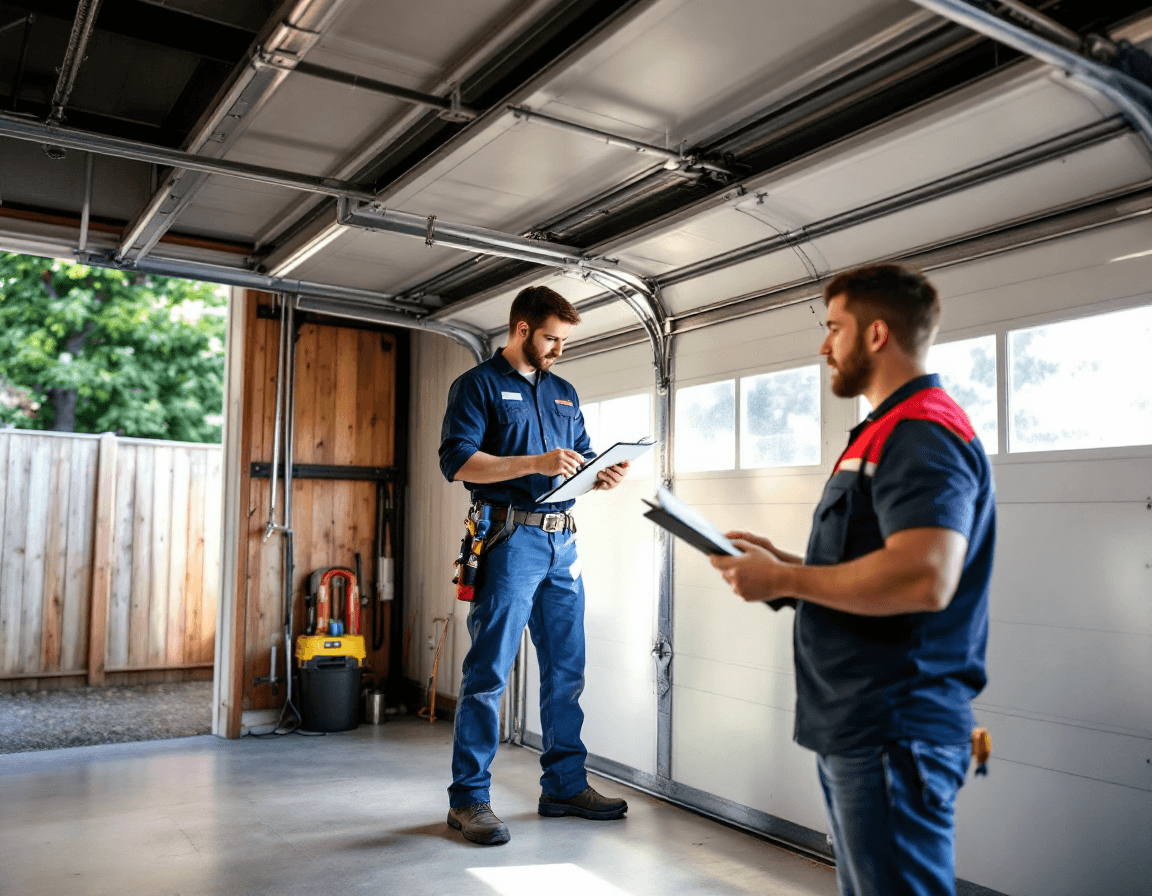
Garage Door Maintenance & Tune-Ups in Newcastle, WA is one of the most practical ways to keep a home running smoothly, because the garage door is the largest moving object most households operate every day. Homes across the 98056 and 98059 ZIP codes sit in a landscape of wooded slopes, Cougar Mountain foothills, and frequent rain, and that combination puts steady demands on every component of a door and its opener. A door that works fine in July can start groaning by November, and most owners don't notice the gradual change until something stops working.
A scheduled tune-up is a short visit that looks at the whole system instead of one broken part. A licensed technician checks the springs, cables, rollers, hinges, tracks, seals, and opener in a single pass, then adjusts, lubricates, and tests what needs attention. Our multi-point tune-up is priced between $89 and $149 depending on the door and opener, and it is designed to catch small wear before it becomes an emergency call on a cold morning. If your door hasn't had professional attention in more than a year, or you simply want to know where it stands, this page explains what happens during the visit and why each step matters.
Throughout this guide we will describe the work in plain terms, so you can have an informed conversation with the technician and understand what you're paying for. We will also point out the tasks that homeowners should never attempt themselves, particularly anything involving torsion springs or tensioned cables. Those components store enormous force, and adjusting them without the right tools and training is one of the most common ways people get hurt around a garage. Read on for a neighborhood-level look at how this work applies to Newcastle homes.
How Pacific Northwest Dampness Wears Down Newcastle Garage Doors
Newcastle's climate is mild by national standards, but its long, wet stretches are hard on steel and wood alike. Rain and humidity settle into hinge pivots, roller bearings, and the bottom of steel panels, and the result is surface rust, sticky lubricant, and metal that slowly loses its smooth movement. Many doors in the 98056 and 98059 area see the worst of this from late autumn through early spring, when the air rarely dries out for more than a day or two. The moisture also finds its way into weatherstripping, which can swell, stiffen, or split after repeated soaking and drying cycles.
Organic debris is another local factor. Tree cover around Cougar Mountain and the wooded lots common in the area means needles, catkins, leaves, and moss drop onto driveways and track bottoms, where they trap water against the door's lower edge. Over time that debris can hold moisture against the bottom seal and the floor-level track, encouraging rot in wood trim and corrosion on the lowest roller brackets. Homeowners often sweep the driveway but overlook the track, which is exactly where a technician will look first.
Seasonal temperature swings matter too, even if they are modest compared with inland regions. A cold snap can thicken lubricant that was perfectly adequate during the summer, causing the opener to strain as it lifts the door. When a door has been sitting in damp conditions for months, a sudden cold morning can reveal stiffness that wasn't noticeable before. A tune-up before the wet season gives the system a fresh start and reduces the odds of a February surprise.
What a Multi-Point Tune-Up Actually Covers
A full multi-point tune-up follows a consistent checklist, though every door has its own quirks. The technician starts with a visual inspection of the panels, hinges, end caps, brackets, and track alignment, then moves on to the parts that carry the load. Each item is checked for wear, looseness, corrosion, and proper function, and anything out of tolerance is noted so you know exactly what was found. Because the visit covers the entire system, problems that would otherwise appear weeks apart can be identified in one appointment.
The typical scope of a multi-point visit includes the following items:
- Visual inspection of springs, cables, drums, and mounting hardware for visible wear, fraying, or gaps (inspection only; adjustments to tensioned parts are performed by licensed technicians)
- Track alignment, roller condition, and hinge tightness checked at each section
- Lubrication of rollers, hinges, bearings, and the lift mechanism using products suited to the metal and climate
- Balance testing to see whether the door lifts evenly and stays put when partially opened
- Weatherstripping and bottom seal inspection for cracks, gaps, and compression loss
- Opener safety testing, including auto-reverse and photo-eye function
- A short written summary of findings, with any recommended repairs explained in plain language
The visit does not replace a repair, and it is not a sales pitch. If the technician finds a cracked spring or a frayed lift cable, that part is flagged and explained, and you decide when to schedule the repair. Knowing what the system looks like at a given moment gives you the freedom to plan around budget and schedule rather than reacting in a hurry.
Balance Testing: Is Your Door Lifting Evenly?
Balance is one of the most useful checks in a tune-up, and it is easy to underestimate. A properly balanced door should feel roughly equal in weight at every point of travel, and it should hold its position when lifted partway and released. When a door feels heavy on one side, drifts downward, or lurches as it leaves the floor, the lifting force is no longer matched to the door's weight, and both the opener and the springs are working harder than they should.
To test balance, the technician disconnects the opener, lifts the door by hand to about waist height, and releases it to see whether it stays put. Some doors creep downward, others rise on their own, and each pattern points to a different cause. Uneven spring wear, a stretched cable, a damaged drum, or a bent track section can all produce symptoms that look similar from the driveway. Identifying the right cause matters because the fix ranges from a simple track adjustment to replacing a spring, and only the second requires specialized tools.
Homeowners sometimes try to test balance by pulling the emergency release cord while the door is closed, and that practice can be dangerous. A door that is not balanced can drop suddenly once it is disconnected, and a person standing underneath or reaching in can be injured. Leave balance testing to a trained technician who knows how to perform it safely, and never attempt to adjust the springs or cables yourself, since they hold substantial tension even when they look relaxed.
Lubrication Matched to Local Hardware and Weather
Lubrication sounds simple, but the wrong product can make a door worse. Many household oils attract dust and grit, turn gummy in cold weather, or wash away after the first heavy rain. A tune-up uses lubricants formulated for garage door hardware, applied to the specific points that need them: roller stems, hinge pivots, bearing surfaces on the lift mechanism, and the track where rollers ride. Excess product is wiped away so that dirt does not stick to the surfaces.
Lubrication is also about the track, not just the moving parts. The steel track should be clean and free of debris, with smooth rollers that spin freely and do not wobble on their stems. In areas with heavy tree cover, the track often collects a dark film of pollen, moss residue, and damp grit, which can cause rollers to skip or scrape. Clearing that film and applying the right product restores quiet operation and reduces the load on the opener.
Some parts should not be lubricated with a standard spray at all. Nylon rollers, for instance, may need a different approach than steel ones, and the opener's chain or belt may require its own product and tension check. A technician will know which parts to treat and which to leave alone, and will tell you how often the door should be lubricated between visits. Ask for that schedule so you can plan around the wet season.
Opener Safety and Auto-Reverse Testing
The garage door opener is the part of the system most homeowners think about only when it fails, yet it plays a central safety role. Modern openers are required to reverse direction when they encounter resistance, and they are also equipped with photo-eye sensors near the floor that stop the door if a beam is interrupted. These features protect children, pets, vehicles, and adults, and they should be tested regularly rather than assumed to work.
During a tune-up, the technician tests the auto-reverse function by placing an object of the right height on the floor in the door's path and confirming that the door reverses when it contacts it. The photo-eyes are checked by interrupting the beam and watching for the door to stop and reverse, and the sensor alignment and wiring are inspected for damage. Force settings are reviewed as well, because a door that is set too aggressively can fail to reverse in time, while one that is set too gently can nuisance-trip in cold weather when the track is slower to respond.
If an opener is straining, running slowly, or making grinding noises, that is a signal to schedule an inspection rather than simply pressing the button again. An opener working against an unbalanced or stiff door may overheat, shorten its own lifespan, and fail to reverse reliably when it should. Testing the safety features and the mechanical load together gives a far more accurate picture than either check alone.
Reading the Noises Your Garage Door Makes
Garage doors speak in sounds, and learning to read them can help you spot trouble early. A high-pitched squeal usually points to dry or dirty rollers or hinges that need lubrication. A rumbling or grinding noise can indicate worn bearings or a track that is out of alignment, while a sharp clunk at the top or bottom of the travel often means a loose bracket or a roller that has come out of its groove. A chattering sound in the opener may come from a worn drive gear, a loose carriage, or a chain that needs tension.
Noise that grows gradually over several months is common in Newcastle's damp climate, and it is often the first sign that a tune-up is overdue. Moisture settles into the joints and the track, and each wet season adds a little more friction to the system. Homeowners sometimes assume the noise is normal aging and live with it for years, not realizing that a quick adjustment and lubrication could restore the door's original quiet operation.
Not every noise is harmless, though. A sudden bang, a snapping sound, or a door that drops unexpectedly should be treated as urgent. Those symptoms can mean a broken spring, a failed cable, or a damaged drum, and the door should stay closed and out of use until a licensed technician has inspected it. Continuing to operate a door with a suspected broken spring can cause further damage and create a serious hazard.
Hillside Driveways and the Quirks of Newcastle Lots
Many Newcastle properties sit on sloped lots, and that terrain affects how a garage door performs. A driveway that rises or falls toward the garage can change the way water flows across the threshold, and a door opening onto a slope may see uneven wear on one side. Retaining walls, landscaping beds, and tree roots near the foundation can also shift slightly over time, nudging the garage floor and the door frame out of their original alignment. Even a small change in the floor can throw off track geometry.
Older homes in the area sometimes have garage openings that were framed before modern door systems became standard, which means the track, headroom, and side clearance may be tight. In those cases the door hardware may be working harder to clear obstructions, and the balance may be marginal from the start. Newer homes may have larger, heavier doors with insulated panels and windows, which add weight and require springs sized to match. Knowing the door's make, weight, and original spring rating helps the technician evaluate whether the current setup still fits the load.
Because so many properties in the 98056 and 98059 area have trees, slopes, and mixed construction ages, no two tune-ups look exactly the same. A technician familiar with local homes will pay attention to the floor, the threshold, and the approach as well as the door itself. If your property has any of these features, mention them when you book so the visit can account for them from the start.
Buying a Newcastle Home? Start With a Baseline Check
Buying a home is a busy time, and the garage door often gets a quick glance and little more. Yet a garage door can carry hidden wear that will become expensive later, especially if the previous owner ignored lubrication or delayed repairs. A baseline tune-up soon after closing gives you a clear, documented starting point for the door and opener, and it can reveal whether the system is due for spring or cable replacement before a problem appears.
A baseline visit is especially useful if the home has been vacant for a while, since doors that sit for months can seize, lose lubrication, and develop corrosion in the track. It also helps if you are unsure how old the springs are, because many homeowners have no record of when the door was last serviced. The technician can estimate the remaining life of the major components based on their condition, which lets you budget with more confidence.
Think of the baseline check as a fresh set of eyes on a system you will rely on every day. You will learn how the door should sound and feel when it is healthy, which makes it easier to notice changes later. Keeping the written summary with your home records also gives future buyers or service providers a clear snapshot of the door's condition.
Warning Signs That Call for a Visit Sooner Rather Than Later
Some symptoms should move a garage door to the top of your list. A door that reverses unexpectedly, stops halfway, or refuses to close may have a safety sensor issue or an imbalance that needs attention. Visible gaps in the track, a door that sits crooked in its frame, or panels that have separated can also indicate that the system is under stress. Each of these signs deserves a prompt inspection, especially if they appear after a storm or a long dry spell.
Other warning signs are quieter but just as important. Watch for these conditions:
- The door takes noticeably longer to open or close than it used to
- The opener strains, hums loudly, or shuts off before the door completes its travel
- Rollers wobble, skip, or leave black marks on the track
- Weatherstripping is cracked, missing, or no longer seals against the floor
- The door has not been serviced in more than a year
- You see rust on hinges, brackets, or the lowest panel section
- The door feels heavy when lifted by hand or seems to pull to one side
If you notice any of these, a tune-up is a reasonable first step. The technician can determine whether the issue is simple maintenance or a sign of a larger repair. Catching the problem early often costs far less than waiting until the door is stuck open in the driveway on a rainy evening.
What the Price Covers and What Comes Later
A full multi-point tune-up is priced between $89 and $149, with the final figure depending on the door's size, type, and opener. That range covers the inspection, lubrication, balance testing, and opener safety testing described above, along with a written summary of what was found. It is designed to give you a complete picture of the system's health in a single appointment, so you can decide how to proceed without guessing.
The tune-up does not automatically include parts or major repairs. If the technician finds a worn spring, a frayed cable, a damaged roller assembly, or an opener that needs replacement, those items are quoted separately and explained before any work begins. You are never obligated to approve a repair during the visit, and the technician will walk you through the options so you understand the reasoning behind each recommendation.
Some homeowners find it helpful to ask what the next recommended service interval looks like. For many households in Newcastle's damp climate, a yearly tune-up keeps the system quiet and predictable, while doors with heavy use or unusual exposure may benefit from a visit each year before the wet season begins. Your technician can recommend a schedule based on what they observe during the first visit.
A Simple Maintenance Calendar for Newcastle Households
Consistent maintenance is easier to keep when it follows a simple rhythm. Many homeowners find that a few reminders throughout the year prevent most of the common problems, and they stretch the time between larger service visits. The following calendar is a practical starting point for households in the area, and your technician can adjust it for your door and opener.
- Late summer: Schedule the annual tune-up before the wet season sets in, and clear debris from the track and threshold.
- Early autumn: Wipe down the door panels, check the bottom seal for cracks, and make sure gutters are not dumping water near the garage floor.
- Mid-winter: Watch for changes in opener speed or noise during cold, damp stretches, and note anything unusual for your next visit.
- Spring: Test the auto-reverse and photo-eyes by hand, confirm the door balances, and look for rust spots that need attention.
Between visits, keep the door's surfaces clean with mild soap and water, avoid pressure-washing near the seals and hinges, and never use household solvents on the track. Do not attempt to adjust springs, cables, or the drum yourself, and keep children and pets clear of the door while it is in motion. If the door begins to behave differently, pause the routine and call a licensed professional rather than trying to work through the problem alone.
Keeping your garage door in good shape is one of the most dependable ways to avoid a mid-week breakdown and protect the people who use the space every day. To schedule a multi-point tune-up in Newcastle or nearby communities, call Seattle Garage Door Fix at (888) 799-3819. Our licensed, bonded, and insured technicians will inspect the system, explain what they find in plain language, and help you plan the next steps so your door is ready for whatever the Pacific Northwest season brings.