
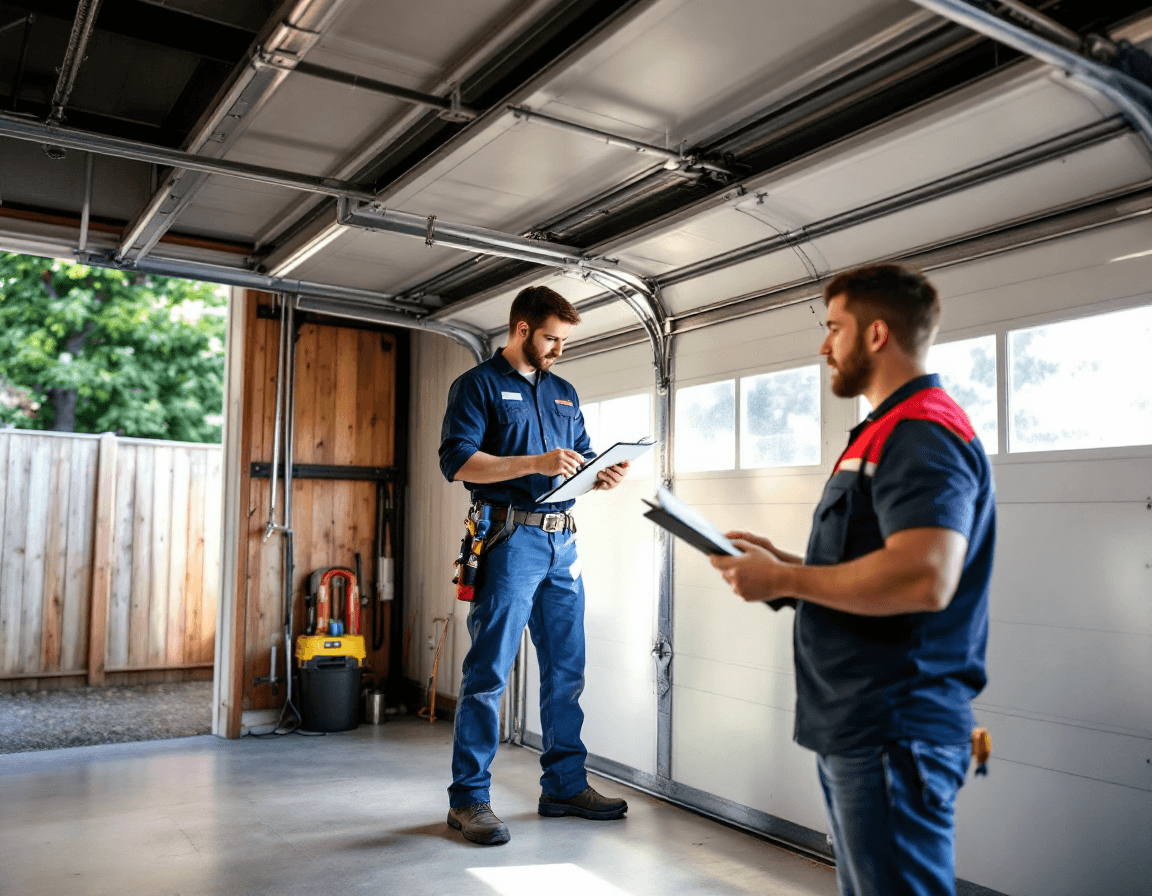
Garage door maintenance in Bellevue is less about dramatic failures and more about slow, steady wear that most homeowners never notice until something stops working. Garage Door Maintenance & Tune-Ups in Bellevue, WA is one of the most practical things you can schedule for your home, because a door that runs quietly and balances properly is safer, easier on your opener, and far less likely to leave you stranded on a weekday morning. Our team at Seattle Garage Door Fix serves homes across Bellevue and the surrounding King County communities, and we see the same patterns repeat: doors that were installed years ago, rarely checked, and gradually working harder than they were designed to. A routine inspection catches those patterns early.
Bellevue homeowners also deal with a unique mix of housing styles, from mid-century ranchers and split-levels to newer townhomes and hillside houses with sloped driveways. Each setup puts different demands on the door, the tracks, and the opener. A tune-up is the chance to look at your specific system rather than relying on general advice, and it gives you a clear picture of what needs attention now versus what can wait. Whether you live near Downtown Bellevue, around the Crossroads area, or out in Lake Hills, the goal is the same: a door that moves smoothly, stops safely, and holds its position without drama.
If you are reading this because something sounds or feels off, you are in the right place. This page explains what a full multi-point tune-up includes, which warning signs deserve a closer look, how the Pacific Northwest climate affects your hardware, and what to expect from start to finish. We have written it to be useful whether you are planning routine upkeep, recently bought a home, or noticed a problem and want to understand the options before calling anyone.
How Bellevue's Damp Winters and Mild Summers Wear Down Your Door
The Pacific Northwest rarely gives garage doors a hard freeze, but it gives them something arguably harder on hardware: months of moisture. Bellevue winters bring long stretches of drizzle, morning dew that lingers, and humidity that settles into the bottom of a garage that never fully dries out. Steel components that are not properly protected begin to surface rust along the bottom panel, the hinges, and the roller stems. Wooden doors, which remain popular on some older Bellevue homes, can swell at the seams and warp if they have been finished poorly or have lost their sealant.
Summers here are comparatively mild, but a few warm stretches can change the picture quickly. Heat expands metal and can shift the alignment of tracks that were perfectly level in spring, and temperature swings between a cool evening and a warm afternoon add stress to springs and cables over time. Dust and pollen from the tree-lined streets, along with the fine debris that accumulates near roads and construction zones, get carried into rollers and track channels. Over a few seasons that grit becomes an abrasive paste that quietly chews through lubrication.
Because our climate is damp more than it is extreme, many homeowners assume their door is fine. In practice, the most common problems we address during tune-ups are corrosion at contact points, dried-out rollers, and loosened hardware that vibrates a little more each time the door cycles. A maintenance visit is designed around those local realities, focusing on the moisture-related wear that tends to build up between one season and the next.
What a Full Multi-Point Tune-Up Covers
A multi-point tune-up is a structured inspection rather than a quick once-over. We begin by checking the overall condition of the door panels, the weatherstripping along the bottom seal, and the top and side seals that keep drafts and water out. From there we move through the components that carry the load: springs, cables, drums, hinges, rollers, brackets, and the track system. Each point gets a visual check, a physical check for play or looseness, and a functional check as the door operates through its full range of travel.
Next we evaluate balance and operation. A properly balanced door should stay in place when you lift it partway and let go, which tells us the springs are doing their job. We also watch how the door starts, travels, and stops, listening for scraping, binding, or uneven movement that suggests a track is out of plumb or a roller is wearing unevenly. The opener is checked as part of the same visit, including its force settings, travel limits, and how it responds when the door meets resistance.
Finally, we lubricate the components that need it and tighten hardware that has worked loose. Lubrication is applied where it belongs rather than sprayed everywhere, because excess product on tracks attracts dirt and can make the problem worse. You receive a plain-language summary of what we found, what we corrected during the visit, and what we recommend monitoring or repairing later. The full multi-point tune-up is priced between $89 and $149, depending on the size and configuration of your door and the number of components that need attention.
Reading Early Warning Noises Before They Turn Into Breakdowns
Garage doors almost always announce trouble before they fail, usually through sound. A door that gets gradually noisier over time is telling you that something is losing its smoothness, whether that is a dry roller, a loose bracket, or a track that has shifted slightly out of alignment. Most homeowners learn to tune out this background noise because it arrives so slowly, which is exactly why a periodic inspection is valuable. A technician hears the difference between harmless settling and the grinding that signals a worn part.
It helps to know which sounds point to which problems. Keep an eye out for the following patterns, because each one is worth describing when you call us:
- A squeal or chirp when the door starts moving, often pointing to dry hinges or rollers that need lubrication.
- A rhythmic thumping or clicking as the door passes certain points, which can indicate a damaged roller or a track section that is out of alignment.
- A grinding noise from the opener motor or the drive chain or belt, suggesting worn gears or insufficient lubrication on the drive system.
- A loud bang at the top or bottom of travel, which often means the door is stopping hard against its limits or that a spring or cable is under unusual stress.
Noise on its own is not an emergency, but it is information. If the sound has changed recently, or if it is accompanied by vibration, jerky motion, or a door that seems to hesitate, schedule a visit sooner rather than later. Catching these changes while the damage is still minor usually means simpler repairs and less downtime.
Checking Balance: The Lift-and-Release Test and Why Heaviness Matters
Balance is one of the most important and most overlooked aspects of garage door performance. A door that feels heavy, drags on one side, or seems to fight you on the way up is often off balance, meaning the springs are not supporting the weight evenly. This puts uneven stress on cables, drums, and the opener, and it can accelerate wear on components that were never meant to carry the difference. Over time an imbalanced door can also begin to lean or bind in the tracks.
A simple test can give you a rough sense of where things stand. Close the door fully, then pull the emergency release cord to disconnect it from the opener, and lift the door by hand to about waist height. If it stays put without drifting up or down, the balance is probably sound. If it sinks, rises on its own, or one side seems to drop faster than the other, the door likely needs professional adjustment. Please do this test only with the door fully closed and the opener disconnected, and never place your hands or fingers near the springs, cables, or tracks while you do it.
That last point matters because the springs that counterbalance your door store a great deal of energy. Adjusting, replacing, or winding torsion springs is dangerous work, and it should be left to a licensed professional with the proper tools. What a homeowner can safely do is observe and report: note which side seems heavier, whether the door moves unevenly, and whether you hear any unusual sounds during the test. That information helps a technician arrive prepared and diagnose the cause more quickly.
Opener Safety Testing That Protects Children, Pets, and Passing Cars
Your garage door opener is more than a convenience. Modern openers are required to include safety reversal features, and these features need to work reliably every time. During a tune-up we test the auto-reverse mechanism by placing an object in the door's path and confirming the door stops and reverses. We also verify the photo-eye sensors near the bottom of the door, checking that they align properly, are clean, and interrupt the closing cycle when the beam is broken.
Opener force and travel settings receive the same attention. If the force is set too high, the door may keep pushing against an obstacle longer than it should. If the limits are set incorrectly, the door may not close fully or may reverse unnecessarily, which can be just as frustrating as a door that fails to stop. Straining or slow operation is often a sign that the opener is compensating for a door that has become heavier to move, whether from a balance problem, dry rollers, or a bent track section.
We recommend that every household test these safety features at home between professional visits, because it takes only a minute. Place a piece of wood or a sturdy object on the floor where the door closes, press the close button, and watch whether the door reverses on contact. If it does not, or if the door seems to close with unusual force, stop using the opener and schedule service right away. Opener and safety-sensor problems are among the most important reasons to keep up with maintenance, especially in homes where children or pets spend time near the garage.
Lubrication Done Right: What Goes Where, and What Stays Off
Lubrication sounds simple, but applying it correctly makes a real difference. Garage door components have different needs, and the wrong product can attract grit or gum up moving parts. Our technicians typically use a silicone-based or lithium-based lubricant on rollers, hinges, and the bearings of the drive system, and apply it sparingly so that it does not drip onto the floor or collect dust along the track. Heavier greases may be appropriate on certain drive components, but they should be used exactly as the opener manufacturer recommends.
Where lubricant should not go is just as important. Avoid spraying lubricant directly onto the door's weatherstripping, since many rubber seals can degrade or become sticky with the wrong product. Keep the track channels clean rather than oily; a thin film is helpful on the rollers as they pass through, but a heavy coat of oil simply holds dirt that will grind against the rollers over time. Petroleum-based products can also damage nylon rollers and certain plastic parts, so it is worth checking the manufacturer's guidance before using anything other than what a technician recommends.
Lubrication is also a good example of why professional service pays off. A technician knows which points need attention on your specific door model, how often they should be serviced in your conditions, and how to clean the track before applying anything. Between visits, a gentle wipe of the tracks with a dry cloth and a visual check of the rollers can extend the time between tune-ups, but the deeper work is best handled during the scheduled service.
Buying a Bellevue Home? Why a Door Checkup Belongs on Your Closing Checklist
Many homeowners in Bellevue purchase a property without knowing the condition of its garage door. The previous owners may have ignored noises, replaced parts piecemeal, or never serviced the system at all. A door that appears fine during a showing can still hide worn cables, unbalanced springs, or an opener whose safety reversal has started to drift. Getting a tune-up soon after you move in gives you a clear baseline and tells you whether the system needs repair, replacement parts, or simply regular care.
A post-purchase checkup is also a good time to confirm the basics: the make and model of the opener, whether remotes and keypads are programmed, whether the emergency release works, and whether any previous repairs were done carefully. We can help identify the door's age and components, note anything that looks like an earlier improvised repair, and recommend a schedule that suits the home. For older Bellevue houses, this kind of inventory is especially useful, because original hardware may be decades old and hard to source if it fails unexpectedly.
If you are buying a home with a detached or converted garage, or one where the door opens onto a steep driveway, the checkup matters even more. Those setups can put unusual stress on the opener and track alignment, and a technician can explain what to expect and how to keep the system running smoothly from the start.
Neighborhood Notes: Hillside Driveways, Older Doors, and Condo Garages
Bellevue is not one uniform landscape, and the way garage doors wear can vary from one neighborhood to another. In Somerset and parts of Lake Hills, many homes sit on sloped lots where driveways grade steeply toward the garage. Doors in these locations often experience uneven weight distribution and can be affected by runoff during heavy rain, so inspecting drainage at the threshold and checking seal condition is a regular part of our work there. Sloped approaches also mean openers may run longer cycles, which makes lubrication and force settings more important.
In the Crossroads area and around Factoria, you will find a mix of older single-family homes and newer infill construction. Older doors may still use original springs and hardware that have been operating for many years, and their tracks may have settled out of alignment over time. Newer installations sometimes come with fewer visible adjustment points, which means that small problems can go unnoticed until they become larger. Either way, a periodic inspection is the best way to catch changes early.
Downtown Bellevue has its own character, with townhomes, condominiums, and mixed-use buildings that include shared or tightly configured garages. Doors in these settings may see more frequent cycling and may be used by several households, which accelerates wear on rollers and the opener. Clearances can also be tight, so track and bracket alignment matter. Wherever you live in the 98004, 98005, 98006, 98007, and 98008 ZIP codes, we can tailor the tune-up to the particular conditions of your property.
What Happens When Maintenance Is Skipped for a Year or More
Going a year or more without service does not usually cause an instant failure, but it quietly adds risk. Lubrication dries out, grit builds up in the tracks, and hardware that was snug begins to loosen. Springs and cables that are under constant load can start to show fatigue, and an imbalance that began as a minor issue can gradually stress the opener and the door panels. The problem is that these changes happen gradually enough that homeowners often accept them as normal.
Eventually the costs of neglect show up. A worn roller can crack a track section. A frayed cable can slip or snap, creating a serious safety hazard. An opener that has been straining for months may burn out its motor or drive components. These repairs are almost always more expensive than the routine maintenance that would have prevented them, and they tend to arrive at inconvenient times, such as a cold morning when the car needs to leave or a weekend when a family is away.
Think of a tune-up as a way to control the timing and scope of repairs. You choose when to service the door, you learn what needs attention, and you avoid the emergency call that happens when a spring or cable fails outright. For many Bellevue households, an annual visit is a sensible rhythm, with more frequent checks for heavily used doors or systems that have shown recent symptoms.
What to Expect on Visit Day and How Pricing Works
When you schedule a multi-point tune-up with Seattle Garage Door Fix, a licensed and insured technician arrives ready to work through the full inspection. We will ask about any noises, sticking, or changes you have noticed, and we will walk you through the door's operation before we begin. The visit typically includes the inspection, balance and operation checks, opener safety testing, lubrication, and hardware tightening, followed by a clear summary of our findings. Please keep the area around the door clear so we can access the tracks, springs, and opener without delay.
Our full multi-point tune-up is priced between $89 and $149. The final figure depends on the size and configuration of your door, the type of opener you have, and how many components need attention during the visit. We will explain any recommended repairs before doing additional work, and you are never obligated to approve parts or services beyond what you choose. If we identify a spring, cable, or other high-tension component that needs replacement, that work is performed only by licensed professionals, because it carries serious risk when handled improperly.
We also want to be clear about safety boundaries. Spring and cable work should never be attempted by homeowners, regardless of how simple the online instructions may appear. Torsion springs store enough energy to cause serious injury, and cables under tension can fail without warning. If you are unsure whether a problem is a DIY-friendly task such as cleaning tracks or testing the remote, or whether it needs a professional, call us first and we will help you decide.
Garage Door Maintenance & Tune-Ups in Bellevue, WA is a straightforward way to protect your home, your schedule, and the people who use your garage every day. If your door has grown noisier, feels heavy, has not been serviced in over a year, or simply needs a checkup after you bought your home, call Seattle Garage Door Fix at (888) 799-3819 to schedule a multi-point tune-up. Our licensed, bonded, and insured team serves Bellevue and nearby King County communities, and we will walk you through exactly what we find so you can make confident decisions about your garage.