
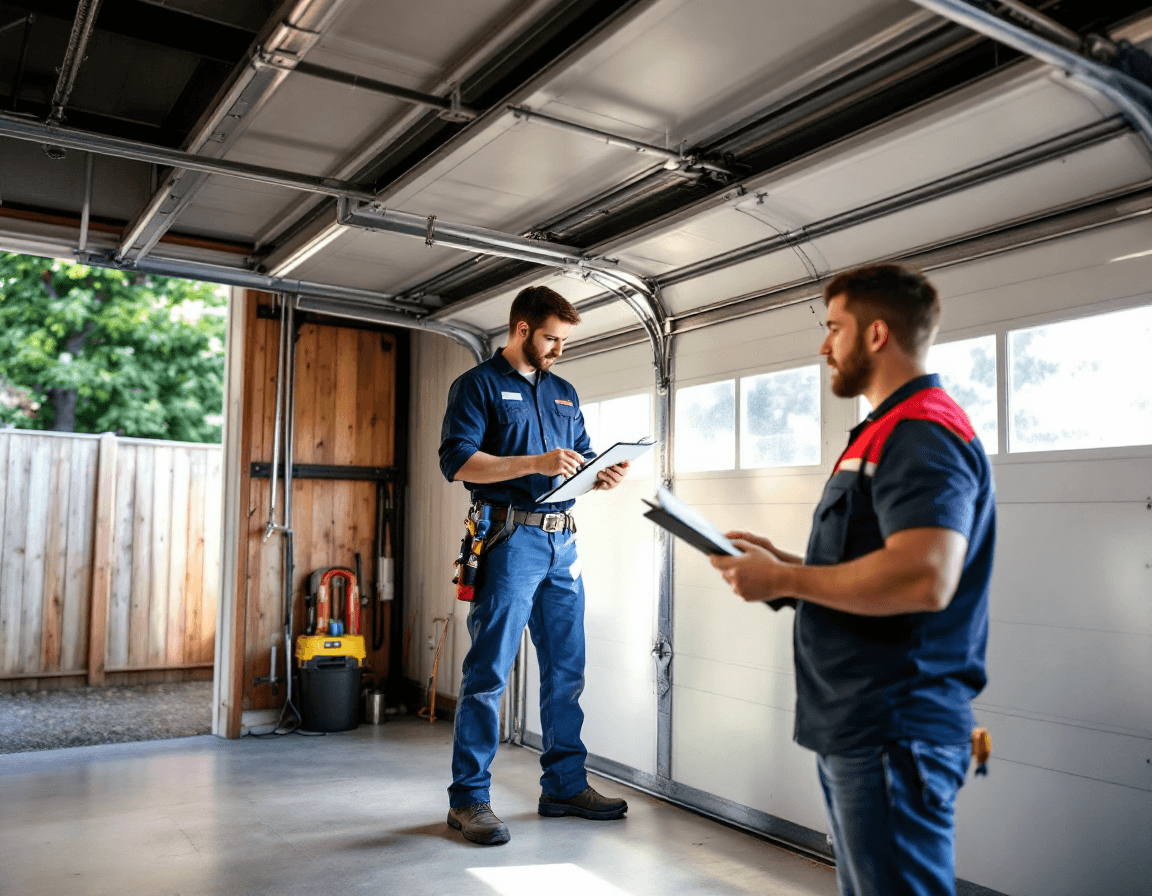
Garage Door Maintenance & Tune-Ups in Redmond, WA is one of the most overlooked jobs on a household checklist, mostly because a garage door tends to run quietly until the day it stops. Redmond sits in the mild, damp, and often overcast part of King County, where rain can fall steadily for weeks at a time. That moisture works its way into hinges, roller stems, and track seams, and the changes build slowly enough that most homeowners don't notice them. A planned tune-up lets you catch wear while it is still inexpensive to fix.
Our technicians serve homes across the 98052 and 98053 ZIP codes, from older single-family houses near the quieter streets of Education Hill to newer townhomes around Overlake and Downtown Redmond. Each house has its own garage, its own door style, and its own history of use, so a tune-up always starts with looking at what is actually in front of us. We aren't here to sell a replacement you don't need. We want the door to be safe, balanced, and quiet, and we want you to know exactly why.
This page explains what happens during a multi-point tune-up, why the Pacific Northwest climate matters, which warning signs justify booking one sooner, and where the work stops and a licensed specialist should take over. If you have been putting off service because the door still opens, read on. A door that still opens may simply be a door that is working harder than it should.
Why Redmond Garages Age Differently Than Dry-Climate Garages
Redmond's weather rarely produces dramatic extremes, which is part of why garage doors here often feel like they should last forever. The reality is that the region's steady drizzle, high humidity, and frequent cool mornings do their own kind of damage. Galvanized steel parts can develop surface corrosion where moisture collects in seams, and wooden or composite doors can swell slightly and rub against weatherstripping. Temperature swings between a warm afternoon and a chilly night also cause metal to expand and contract, which loosens fasteners over time.
Homes near Marymoor Park and the wooded lots along Education Hill often deal with extra debris, including fir needles, moss, and leaf litter that settles into the bottom of tracks and gathers around the threshold seal. When that material stays damp for long stretches, it can hold grit against moving parts and speed up wear on rollers. Garages attached to older Redmond homes may also have less ventilation than newer builds, which keeps humidity higher inside the space.
Because these conditions are gradual, the problems they create tend to appear as small changes in how the door behaves rather than as one obvious failure. A tune-up is designed to catch exactly that kind of slow drift. Many of the issues we find would have turned into a repair call later, and a few would have become a real safety concern if left alone for another season.
Inside a Multi-Point Safety Inspection, Step by Step
A full multi-point tune-up is more than a quick spray and a wave of the hand. Our technician works through the door and opener in a consistent order so nothing gets skipped, and we explain findings as we go. The inspection covers the door panels, the tracks, the rollers, the hinges, the opener, and the safety systems that keep the door from closing on people, pets, or vehicles. Each item is checked for wear, looseness, misalignment, and corrosion, and anything that falls outside normal operating limits gets noted on your service summary.
Here is the general sequence we follow during a standard multi-point tune-up:
- Visual check of the door panels, sections, and seals for cracks, dents, delamination, or gaps at the bottom weatherstripping
- Track alignment, including vertical and horizontal checks, bolt tightness, and any bends that could cause binding
- Roller inspection for cracks, flat spots, or worn bearings, along with a check of the stem and hinge connections
- Spring and cable condition assessed visually only, with any concerns referred to a licensed specialist
- Opener mounting, belt or chain tension, and noise level evaluation
- Photo-eye sensor alignment and cleanliness testing
- Auto-reverse function check, including the force and reversal response
- Manual release function confirmed so you can operate the door during a power outage
Once the inspection is complete, we walk you through what we found, what we corrected on site, and what we recommend monitoring. Some findings are minor and can be fixed on the spot. Others may warrant a follow-up visit, and we will tell you clearly which is which. The goal is that you leave the appointment understanding the condition of your door rather than wondering about it.
Lubrication Where It Counts and Where It Doesn't
Lubrication is one of the most common parts of a tune-up, and also one of the most misunderstood. Many homeowners grab whatever spray is closest and coat everything in sight, which creates a sticky mess that attracts dust and grit. In a damp climate like Redmond's, that buildup can turn into a paste that makes the door noisier, not quieter. Proper lubrication is targeted, measured, and matched to the parts involved.
We apply lubricant to the roller bearings, the hinge pivot points, the track surfaces where rollers travel, and the lock mechanism where appropriate. We use products suitable for garage door hardware and avoid spraying penetrating oils onto nylon rollers or into the opener's motor, since those can degrade materials over time. Tracks are wiped clean before any product goes on, because lubricating over grit only spreads the abrasion around. Weatherstripping gets a light conditioning treatment where it has dried out, which helps it seal against drafts and rain.
We also tell you what not to lubricate. Torsion springs and cables should not be coated by homeowners, and anything involving tension or stored energy belongs to a trained professional. If we see a part that is cracked, pitted, or worn past its useful life, lubrication will not fix it, and we will say so instead of masking the problem with a fresh coat.
Balance Testing: The Quick Test That Reveals Strain
Balance is one of the most useful diagnostics in a tune-up because it shows how hard your opener and springs are working. A properly balanced door should stay roughly in place when you lift it by hand partway up and let go, without sliding down or rising quickly. If the door drops or jumps, the opener is compensating for an imbalance, and that extra load shortens the life of the motor, the gear, and the drive components.
During balance testing, we disconnect the opener and carefully check how the door behaves at several heights. We look for drift in both directions, listen for popping or grinding, and note any section that seems to resist movement. A door that feels heavy in the middle of its travel, or one that pulls harder on one side, may have a spring or cable issue that needs professional attention. We do not adjust spring tension ourselves on this page's recommended scope, and when balance problems point toward springs or cables, we refer that work to a licensed garage door specialist.
Balance testing matters most for homeowners who have noticed that the door feels heavier than it used to, or that the opener seems to labor at the start or finish of its travel. Catching an imbalance early can prevent the opener from burning out prematurely and can reduce the chance of a sudden spring failure.
Opener Safety Reversal and Force Settings, Checked With Care
Every modern garage door opener is required to have an auto-reverse feature, which is designed to stop and reverse the door if it contacts an obstruction while closing. That safety system matters a great deal in households with children, pets, or frequent vehicle traffic. Over time, however, the force settings can drift, sensors can get bumped out of alignment, and wiring can loosen, which means the reverse function may not respond the way it should.
During our opener safety testing, we check the photo-eye sensors mounted near the floor on either side of the door. We confirm they are aligned, clean, and wired correctly, and we verify that the door reverses when the beam is interrupted. We also test the auto-reverse response when the door meets resistance on the closing path, using safe methods designed for that purpose. If the door does not reverse as expected, we adjust the settings where possible or flag the unit for repair.
Opener housing, lights, remote codes, and the manual release cord are also reviewed. The manual release cord should hang within easy reach and should not be dangling where a vehicle antenna could snag it. Homeowners sometimes forget that the manual release is a backup safety tool, so we make sure it works and show you how to use it.
Reading the Noises Your Door Is Trying to Tell You
Garage doors speak in a fairly consistent vocabulary, and learning a few of the common sounds can help you decide when to call for service. A rhythmic squeal often points to a dry roller or hinge. A grinding or rasping noise may suggest debris in the track or a worn roller bearing. A sharp bang at the top or bottom of travel can mean the door is hitting the stops because the balance is off or the tracks have shifted.
Here are several signs that a tune-up is worth scheduling soon:
- The door has become noticeably louder over the past several months, especially during the first few cycles in the morning
- The opener sounds strained, pauses partway through travel, or takes longer than usual to open or close
- The door feels heavy to lift by hand or seems to shift when you release it halfway up
- You have not had any service on the door or opener in more than a year
- The auto-reverse does not seem to react consistently when you test it with a safe obstruction
- Weatherstripping at the bottom has cracked, peeled, or no longer seals against rain
Any of these signs can be a normal part of aging, but together they often point to the same thing: the system is being asked to do more work than it was designed for. Booking service early keeps a manageable problem from becoming a failed roller on a cold Monday morning.
Overlake and Downtown Redmond: Townhomes, Condos, and Tight Driveways
Many homes around Overlake and Downtown Redmond present their own set of garage door considerations. Townhomes and multi-unit buildings often share walls, which can limit the space available for track geometry and opener placement. Some garages are shallower than typical single-family garages, and the opener may be mounted closer to the door or on a limited ceiling bracket. These constraints can affect how vibration travels through the structure, which is why a door that is only slightly noisy can sound much louder to neighbors on the other side of the wall.
Downtown Redmond properties sometimes include older garages that have been converted or adapted over decades. In those situations, the track may have been installed with a different header height, or the door may be a replacement panel set that does not perfectly match the original hardware. We pay close attention to these details during a tune-up because mismatched components are a common reason a door wears unevenly.
Overlake's newer construction tends to include more modern openers with smart features and quieter belt drives. Even so, those systems still depend on balance, track alignment, and sensor condition, and a quick tune-up helps keep the advanced features working reliably. A smart opener that fails to report its status correctly is no help if the door itself is struggling underneath.
Education Hill and Marymoor-Area Homes: Older Doors, Newer Expectations
Homes on Education Hill and in the neighborhoods near Marymoor often feature a mix of older and newer garage doors. Some are original builds with steel doors that have been repainted several times, while others have been upgraded with insulated panels and newer openers. The combination can create surprises, such as a heavier insulated door paired with an older opener that was sized for a lighter door.
Those mismatches are worth checking, because an opener working near the limit of its rated capacity runs hot, wears faster, and may stall unexpectedly. We look at the door weight, the opener model, and the spring setup when we can see them, and we tell you plainly if the pairing looks marginal. Replacement decisions are always yours, and we will not push you toward one without a clear reason.
Tree cover in parts of Education Hill can also mean more moisture and debris reaching the garage area. Gutters that overflow near the door can drip onto the threshold, and that water can wick into the bottom seal and the floor track. Clearing those areas and checking the threshold is part of what we look for during a tune-up, since those are small details that make a real difference to how the door performs through a wet season.
Buying a Home in 98052 or 98053? Use the Tune-Up as a Walkthrough Checkpoint
If you have recently bought a home in Redmond, a garage door tune-up can give you a clearer picture of what you actually inherited. Home inspections cover many systems, but garage doors are often reviewed only at a surface level, and the previous owner's maintenance habits are rarely documented. A focused tune-up after closing lets you know whether the door is safe, balanced, and properly adjusted before you start relying on it every day.
We recommend scheduling the visit within the first few weeks after move-in, when you still have a clear view of the garage and can ask questions. The technician can show you the manual release, explain the opener's safety features, and note any items that should be watched or scheduled for repair. Having that baseline also makes future service easier, because you will know what the system looked like when you took over.
This is especially useful for buyers in newer neighborhoods where the builder's hardware may have been installed quickly and not fine-tuned. Small adjustments made during the first year can prevent problems that would otherwise appear just as you settle in.
What the $89–$149 Tune-Up Covers and What It Doesn't
Our multi-point garage door tune-up is priced between $89 and $149, with the final figure depending on the size and type of door, the opener, and the number of items that need attention. The base service includes the multi-point inspection, lubrication, balance testing, and opener safety testing described above. Minor adjustments that fall within routine maintenance are generally handled during the visit, and we will discuss any additional work before proceeding.
It is also important to be clear about what a tune-up does not include. Replacement parts such as rollers, hinges, cables, springs, sensors, or opener components are billed separately when needed. Spring and cable replacement is specialized work that carries serious safety risks because springs store large amounts of energy. Our tune-up identifies whether those parts show wear or imbalance, but any corrective work on tensioned components is handled by a licensed professional.
We would rather tell you that a repair is outside the scope of a tune-up than pretend a surface fix will solve a deeper problem. Honest pricing and clear expectations are a big part of how we want to earn your trust.
Safety Limits: Springs and Cables Belong to Licensed Hands
Garage door springs, whether torsion or extension, are under substantial tension even when the door appears to be at rest. Cables and drums are designed to work with that tension and can fail suddenly if they are worn, frayed, or improperly installed. For that reason, we consistently recommend that homeowners never attempt to adjust, remove, or replace springs or cables themselves, and that they avoid standing directly beneath a door that is being serviced.
Our role during a tune-up is to inspect those components visually, identify signs of wear such as rust, gaps between coils, frayed cable strands, or a drum that appears to be slipping, and explain what we see. When spring or cable work is needed, we refer it to a licensed specialist who is trained to handle the tension safely. We believe that honest guidance is more valuable than a quick fix that puts your household at risk.
If you ever notice a snapped spring, a cable hanging loose, or a door that suddenly drops, keep people and pets clear of the area, avoid using the opener, and call for professional help. Those situations should never be treated as a do-it-yourself project.
Redmond homeowners who want a clear picture of how their garage door is holding up can schedule a multi-point tune-up with Seattle Garage Door Fix by calling (888) 799-3819. We will inspect the door and opener, explain what we find in plain language, and recommend next steps only when they are truly needed.