
Garage doors in Duvall live a harder life than most people realize. Between the wet winters off the Snoqualmie Valley, the damp air that settles around the Tolt River in the early morning, and the wind that rolls through the foothills during storm season, the door and opener are working against moisture, temperature swings, and grit every day. Garage Door Maintenance & Tune-Ups in Duvall, WA is one of the most practical ways to keep that equipment safe and dependable, and it usually costs far less than the emergency call that follows a snapped roller or a dead opener on a cold morning.
This page explains what a professional tune-up actually covers, why Duvall homes often need a slightly different schedule than homes in drier parts of the state, and how to tell when your door is asking for attention. Whether you live near Main Street, out along the quieter roads toward Cherry Valley, or on a larger lot with a detached shop, the same principles apply. We have written it the way a technician would explain things across a driveway: plainly, with the reasoning behind each step.
Our full multi-point tune-up is priced between $89 and $149, depending on the door type, the number of components involved, and the condition of the opener. Throughout this guide you will see why each check matters and what the warning signs look like. If anything you read here matches what your door is doing right now, the sections below will help you decide whether a tune-up is enough or whether a repair should come first.
Why Duvall Garages Need a Different Maintenance Rhythm
Many homeowners were told to service their garage door once a year and forget about it, but that guideline assumes a fairly dry climate and steady temperatures. In Duvall, the seasons do not follow a neat script. Autumn brings long stretches of drizzle, winter adds freezing nights in the valley bottoms, and spring keeps the air heavy with moisture well into summer. Each of those conditions puts a slightly different kind of stress on metal, lubricant, and electronics.
Because of that, a sensible schedule for most Duvall households is a tune-up at least once a year, with a closer look in late summer if the door sees heavy daily use or if it is more than fifteen years old. Homes with a detached garage, a workshop that gets cold and damp, or a driveway that collects leaf litter and runoff may benefit from checking hardware a little more often. Doors that open many times a day, such as those used by a family with teenagers and two cars, wear their rollers and hinges faster than a door opened only a few times a week. Think of the annual visit as the baseline, then adjust based on how your household really uses the space.
A maintenance plan also helps you catch problems while they are still small. A worn roller is an inexpensive fix when it is caught early, but if it breaks while the door is closed, the nearby panels, track sections, and sometimes the opener can be damaged as well. The purpose of a tune-up is not to make a perfectly functional door look new, but to find the minor issues that would otherwise become expensive, inconvenient, or unsafe.
Valley Damp, River Fog, and What Moisture Does to Steel Tracks
The Snoqualmie Valley is known for morning fog and nights that hold moisture close to the ground. That dampness collects in places most people never look, such as the inside of the track, the hinge knuckles on the bottom panel, and the seam where the weatherstrip meets the concrete. Over time, that moisture can cause surface rust on the track, dull the finish on the rollers, and create a film of grime that holds dirt against moving parts. Even a door that looks fine from the street may be quietly developing these conditions.
Track alignment is one of the most common things affected by damp weather and seasonal shifts. Concrete floors in older Duvall garages sometimes settle or heave slightly, and the track bolts can loosen as the door cycles daily. A track that is out of plumb by even a small amount forces rollers to ride against the edge of the channel, which creates friction, noise, and extra strain on the opener. During a multi-point tune-up, the technician checks that the track is square, level, and secure to the wall and ceiling, and tightens anything that has backed out.
Weatherstripping deserves attention too. The rubber seal along the bottom of the door keeps out drafts, leaves, and pooled rainwater, but it hardens and cracks after several seasons of sun and cold. In Duvall, a cracked bottom seal can allow water to run under the door during a heavy storm and soak the garage floor, which then feeds moisture back into the lower panels and hardware. Replacing a worn seal is usually straightforward and inexpensive, and it protects both the door and the things stored inside.
Reading the Noises Your Door Makes Before They Become a Breakdown
Most garage doors do not fail without warning. They tend to announce their problems through sound long before anything actually breaks. A door that is getting noisier over time is almost always telling you that a part is dry, worn, loose, or misaligned. The trick is learning to tell the difference between a harmless quirk and a sign that a component is near the end of its life.
A grinding or scraping noise, especially at the start of travel, often points to dry or contaminated rollers or hinges. A squeal that comes and goes usually suggests a roller stem that needs lubrication or a bearing that is starting to wear. Popping or clicking near the top of the door can mean the track is loose or that a hinge has shifted. A deep thud when the door reaches the floor may indicate a problem with the bottom bracket, weatherstripping that has hardened, or an uneven close caused by a balance issue.
Keeping a simple mental log of when the noise happens can help a technician diagnose the problem faster. Does the sound occur only when the door is cold? Does it happen when the door is fully open, or only halfway? Does it get louder after rain? These details tell us a lot about where to look. If you hear anything that sounds like a snap, a bang that rattles the whole structure, or a cable that appears frayed, stop using the door and call a licensed professional right away.
Inside a Multi-Point Safety Walkthrough, Step by Step
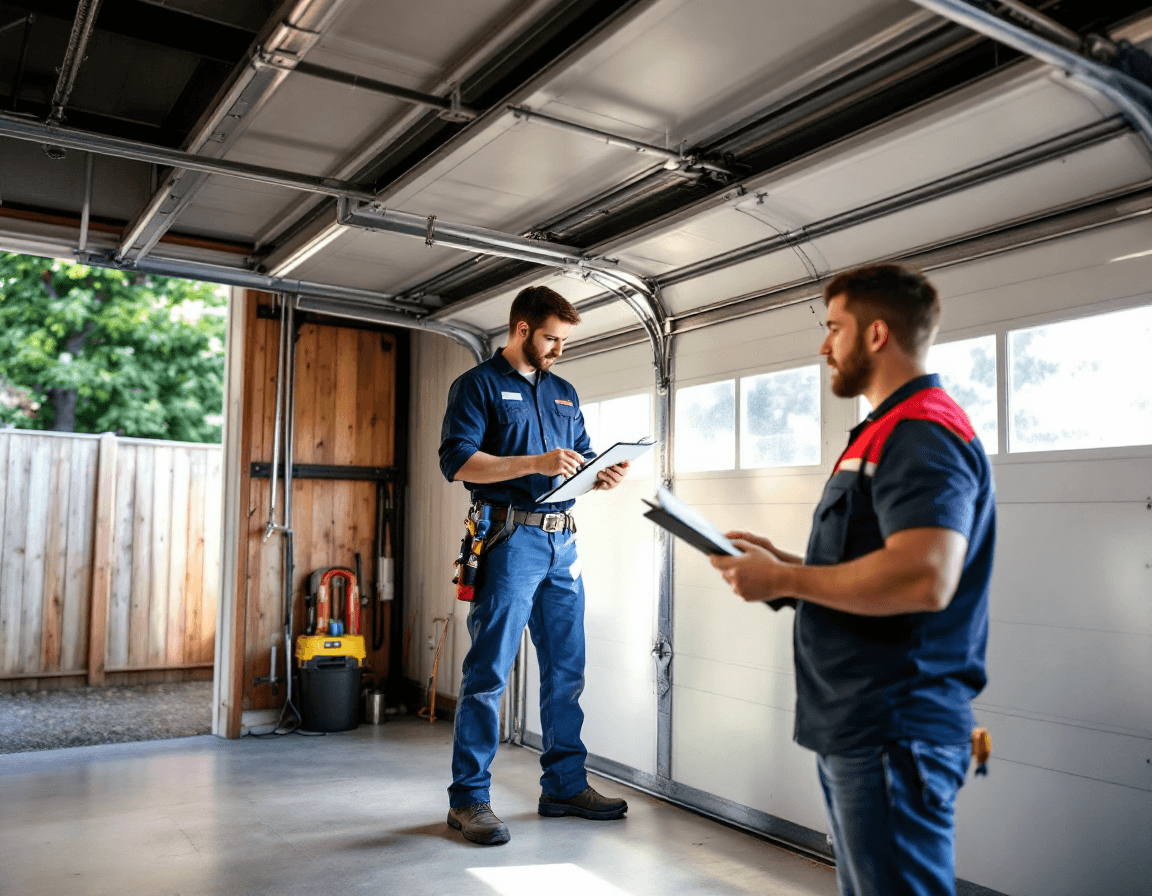
A full multi-point tune-up is more than a quick spray and a glance. It is a sequence of checks designed to confirm that the door is moving safely, that the opener is responding correctly, and that every major component is within its normal range. Depending on the setup, the visit typically covers the following areas:
- Visual inspection of the springs, cables, drums, and brackets for wear, rust, or visible damage
- Track alignment, mounting hardware, and clearance at the top and sides of the door
- Roller condition, including stems, bearings, and any signs of cracking or flat spots
- Hinge and bottom bracket tightness, plus the condition of the end caps
- Lubrication of rollers, hinges, bearings, and the moving parts that need it
- Balance testing with the opener disconnected to see how the door holds at different heights
- Opener safety testing, including the auto-reverse feature and photo-eye sensors
- Weatherstripping and bottom seal inspection
- Opener force settings, limit adjustments, and a check of the travel speed under load
Each of these steps catches something different. The opener safety test is particularly important, because a door that does not reverse properly when it meets resistance can injure a child, a pet, or an adult who steps under it. The technician places a board flat on the floor in the door's path, runs the door closed, and confirms that it stops and reverses on contact. The photo-eye sensors, which sit near the floor on either side of the opening, are cleaned and checked to make sure they are aligned and not blocked by dust, cobwebs, or a stray bicycle wheel.
The walkthrough also gives you a chance to ask questions. A good technician will explain what they found, show you the worn parts, and tell you which items can wait and which should be addressed promptly. You should never feel pressured into a repair you do not understand.
Balance Testing and Why a Heavy Door Is Trying to Tell You Something
A garage door should be balanced so that, when you disconnect the opener and lift the door by hand, it stays where you leave it. If the door drops quickly, it is too light at that point of travel. If it rises on its own, it is too heavy. Either condition makes the opener work harder than it should, causes uneven wear on rollers and tracks, and can make the door dangerous to operate manually during a power outage.
Homeowners in Duvall sometimes notice that a door feels heavier in winter than in summer. That is partly because cold metal and stiff lubricant increase resistance, and partly because the springs lose a bit of tension over time. The change is often gradual enough that people adjust without noticing, but the opener eventually starts to strain, run longer, or stop mid-travel. A balance test during a tune-up reveals whether the springs are still doing their job or whether one side is carrying more of the load than the other.
A quick self-check is worth doing once in a while. Pull the emergency release cord, which should be handled carefully and only while the door is closed, and lift the door about halfway by hand. If it stays put, the balance is likely good. If it slides down or drifts up, note the result and schedule a professional visit. Please do not attempt to adjust springs or cables yourself. Spring tension is stored energy and can cause serious injury, so balance corrections belong with a licensed technician who has the right tools and training.
Opener Strain, Slow Travel, and Keeping the Motor Honest
An opener that is straining, running slow, or pausing partway through a cycle is usually sending a clear message. Sometimes the cause is simple, such as a dirty track or a weak battery in the backup system. Other times it points to a worn drive belt or chain, a failing motor, or a door that has become unbalanced. The opener is designed to handle normal loads, but it cannot compensate indefinitely for mechanical resistance elsewhere in the system.
During a tune-up, the technician checks the opener's force and limit settings to make sure they match the door's current weight and travel. Overly aggressive force settings can hide a developing problem by letting the motor push through friction, which then shortens its life. Limit settings that are set too close to the floor or ceiling can cause the door to stop short or reverse unexpectedly. A balanced door with correct settings runs smoothly and quietly, and it is far less likely to surprise you on a dark winter evening.
Many newer openers include Wi-Fi connectivity and smartphone alerts, which are convenient but not a substitute for hands-on testing. Those features also depend on a stable signal in the garage, and metal structures or distance from the router can cause dropouts. If the opener's app shows errors or the door responds slowly to remote commands, the technician can check the receiver, the wall control, and the power supply during the visit.
Battery backup systems deserve a mention because Duvall, like much of western Washington, can lose power during winter windstorms. A backup battery that has aged out will not carry the opener through an outage, and you may find yourself stuck inside or outside the garage when you need the door most. Checking the backup battery during your annual tune-up is an easy way to avoid that frustration.
Lubrication Done Right, and the Products That Do More Harm Than Good
Lubrication sounds simple, but using the wrong product or applying it in the wrong place can attract dirt and make the problem worse. A good garage door lubricant should stay in place through temperature changes, resist moisture, and avoid collecting grit. Silicone-based and lithium-based products are commonly used for this purpose, and a technician will select the one that suits the components and the local climate.
Certain parts should receive lubrication regularly. Roller bearings, hinge pivot points, the lock mechanism, and the moving parts of the opener's trolley or rail are all good candidates. The springs also benefit from a light coat of appropriate lubricant during a professional service, since they run hot and stiff when unlubricated. Tracks, on the other hand, should generally be cleaned rather than heavily oiled. Adding grease or thick oil to a track invites dust and debris to stick, which slows the rollers and creates a gritty film that wears them down faster.
Some household products are popular but poorly suited to garage door maintenance. WD-40 is an excellent penetrating cleaner and displacement spray, but it is not a long-term lubricant and can leave a residue that attracts dust. Automotive grease can be too thick for roller bearings and may build up in the track. A technician will usually clean existing residue before applying a proper lubricant so that the new layer bonds well and performs as intended.
Buying a Home in Duvall? Get a Baseline Before You Move Your Boxes In
If you have recently bought a house in Duvall, a garage door tune-up is one of the most useful inspections you can schedule in the first few weeks. Home inspectors often comment on the garage door at a high level, but they rarely test the balance, measure the track alignment, or confirm that the opener's safety features are working as intended. A dedicated visit gives you a clear picture of the equipment you now own and a list of anything that needs attention.
Homes around Cherry Valley and the older blocks near downtown sometimes have garage doors of mixed age, with newer openers installed on original tracks or hardware that has been patched several times. Those combinations can work well, but they also create compatibility issues that are easy to miss unless someone looks closely. A technician can tell you whether the existing components match, which parts are original, and whether any repairs were done in a way that could compromise safety.
Ask the previous owner, if possible, when the door was last serviced and whether any repairs were made. Keep copies of any paperwork, and note the make and model of the opener so future service is faster. A baseline record helps you track wear over time and makes it easier to spot changes in noise, speed, or balance during your annual tune-ups.
Pricing, Scheduling, and What the $89 to $149 Range Covers
Our full multi-point tune-up is priced between $89 and $149. The exact figure depends on factors such as the number of doors, the type of door, the age and brand of the opener, and how much lubrication, cleaning, and minor adjustment the system needs. A single standard door with a typical opener is generally at the lower end of the range, while a larger or more complex setup may fall higher. You will receive a clear explanation of what was found before any additional work is recommended.
The tune-up itself is designed to be a diagnostic and preventive visit, not a sales pitch. If the technician identifies a worn roller, a frayed cable, or a spring that needs replacement, they will explain the reasoning, show you the part, and give you the option to schedule a repair. Spring and cable replacement must be performed by a licensed professional because the stored tension in those components can cause severe injury if handled incorrectly. We will never ask you to attempt that work yourself.
Scheduling is flexible, and many homeowners find that a weekday morning or early afternoon visit works well. If you are preparing for a winter storm season or a busy time for your household, booking a tune-up a few weeks ahead can help you avoid waiting for a convenient slot. For questions about timing, service area, or what your particular door needs, call (888) 799-3819 and a team member can talk through the options with you.
When to Call a Licensed Pro Instead of Trying a Quick Fix
Some garage door tasks are reasonable for a homeowner, such as wiping down the photo-eye lenses, clearing debris from the track, checking the weatherstripping, or running the balance test described above. Other tasks are not appropriate for anyone without the right training and equipment. Spring replacement, cable repair, drum adjustments, and any work that involves releasing tension are in that second group, and they should always be handled by a licensed and insured professional.
The reason is simple: garage door springs store a large amount of energy, and cables and drums can fail suddenly under load. Even experienced homeowners have been injured by a spring that released unexpectedly during a seemingly routine adjustment. A licensed technician has the correct winding bars, safety equipment, and training to work on that hardware without putting themselves or your household at risk.
If you are unsure whether a problem is something you can safely check, the best approach is to stop and call. A short conversation with a qualified technician can save you time, money, and the risk of making a dangerous situation worse. Our team is happy to walk you through what the symptoms might mean and whether a tune-up or a repair visit makes the most sense.
Simple Habits Between Tune-Ups That Keep Your Door Reliable
Between professional visits, a few simple habits can extend the life of your door and make problems easier to spot. Run the door through a full cycle once a month and listen for changes in sound, speed, or smoothness. Look at the bottom seal and the photo-eye sensors, and wipe away any dust or cobwebs. Keep the area around the track clear of boxes and tools that could be knocked into the path of the door.
Other habits help with Duvall's damp climate. Ventilating the garage on dry days helps reduce humidity, and keeping the floor clear of standing water prevents moisture from wicking into the lower panels. If your garage stays cold, consider running the door less often in extreme cold snaps, since frozen lubricant and stiff weatherstripping increase strain on the opener. A little attention each month goes a long way toward preventing the surprise breakdowns that catch many households off guard.
- Test the auto-reverse feature monthly with a board placed flat on the floor
- Wipe the photo-eye lenses and check that the sensor indicator lights are steady
- Look for loose bolts, gaps at the track, or hardware that seems to have shifted
- Keep the bottom seal free of debris and check for cracks after storms
- Note any new noise, pause, or change in speed and mention it at your next visit
- Avoid heavy coats of oil or grease on the tracks
These habits will not replace a professional tune-up, but they help you notice problems early and give your technician better information when you call. A door that gets regular attention is safer, quieter, and far less likely to leave you stranded on a rainy Tuesday morning.
Keeping your garage door running well in Duvall is a matter of understanding the local climate, paying attention to the sounds and behavior your door gives you, and scheduling professional care before small issues grow into costly repairs. A multi-point tune-up covers the safety testing, lubrication, balance checks, and opener evaluation that most homes need once a year, and it gives you a clear record of your equipment's condition. If your door is noisy, heavy, slow, overdue for service, or newly yours, now is a good time to act. Call Seattle Garage Door Fix at (888) 799-3819 to schedule your Duvall tune-up, and our licensed team will take it from there.