
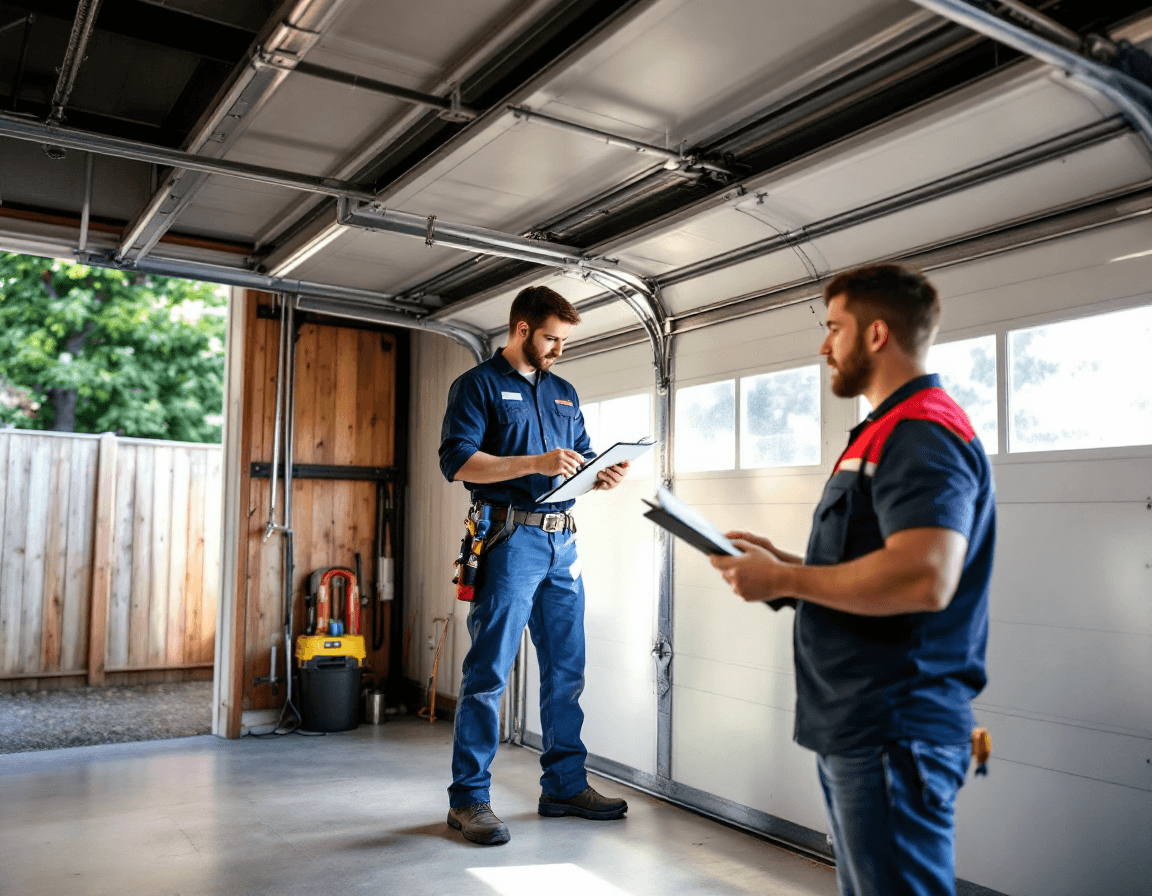
Garage Door Maintenance & Tune-Ups in Carnation, WA is one of the most practical things a homeowner can schedule before the wet season really settles in. Carnation sits where the Snoqualmie Valley opens up around the Tolt River, and the air here stays damp for long stretches from fall through spring. That moisture works on steel springs, rollers, and hinges in ways that are easy to overlook until a door starts grinding at 6:45 on a weekday morning. A routine tune-up catches those small changes while they are still small.
This page explains what a full multi-point tune-up covers, why local conditions make it more valuable here than in many drier parts of the state, and how to tell whether your door is ready for one. We also cover what we check on the opener, why balance testing matters even when the door looks fine, and what to expect when you book. Pricing for a full multi-point tune-up runs $89 to $149, depending on the door's size, type, and what the inspection turns up. Our technicians work with homeowners across Carnation and the wider King County area, including the 98014 ZIP code.
Whether you have lived in your house for twenty years or closed on it last month, the goal is the same: a door that opens and closes smoothly, stops safely, and gives you no reason to wonder what it will do next. If you have been putting off service because the door still works, keep reading. The sections below walk through the warning signs, the work itself, and the steps you can take between visits to keep small problems from becoming expensive ones.
Why the Valley Damp Works on Carnation Garage Doors
Carnation's location in the Snoqualmie Valley means your garage sees a different kind of weather than a door in a drier pocket of the Eastside. Morning fog can settle along the river corridor and linger well after sunrise, and fall and winter bring long runs of drizzle that never quite dry out between storms. Humidity like this is hard on any metal that is not regularly protected. Torsion springs, hinge pins, and roller bearings all collect a film of moisture that, over months, turns into surface rust and stiff, gritty movement.
Temperature swings add another layer of stress. A cold snap can drop the temperature inside an unheated garage well below what the lubricant on your rollers was designed for, while the next warm afternoon softens it again. That cycling makes the door feel slightly different from one week to the next, which is why many owners describe their door as "fine most days" yet occasionally sluggish. The metal expands and contracts, the track shifts a few thousandths of an inch, and the rollers start to run in a slightly different path.
Many Carnation homes also have attached garages that double as workshops, storage space, or a spot for a second vehicle. Dust from yard work, soil tracked in on boots, and the occasional splash of rain blown in under a worn weatherseal all find their way onto the track. Over time that grit acts like sandpaper inside the roller races. A tune-up is the time to clean those surfaces, check the seals, and make sure nothing has begun to bind before the grit does real damage.
Reading the Signs Your Door Is Asking for Attention
Most garage door problems send signals long before the door stops working. The first is usually sound. A door that has become noticeably louder over the past year is rarely just "getting old." More often a roller is starting to wear, a hinge needs lubrication, or the track has a bit of misalignment that causes the rollers to rub instead of roll. If you hear a new squeal, a rhythmic clack, or a metallic rattle at the top of the travel, it is worth scheduling an inspection.
Weight and balance give you another clue. Lift the door by hand once the opener is disconnected (a step you should only take with the door fully closed, and only if you know how to do it safely) and notice whether it wants to drift up or drop. A door that feels heavy, lifts unevenly, or sits at a slant when partly open is often out of balance. Imbalance forces the opener to work harder than it was designed to, and it puts extra load on cables and rollers that were never meant to carry it.
Several symptoms are worth taking seriously because they point toward safety rather than convenience:
- The opener strains, hums longer than usual, or stalls partway through its travel.
- The door reverses for no clear reason, or it fails to reverse when it meets an obstacle.
- Visible gaps appear between sections, or one side sits lower than the other when closed.
- You notice orange or brown rust on springs, bearings, or hinge hardware.
- The door has not been serviced in more than a year, which is common in homes that changed hands recently.
If any of these sound familiar, do not wait for a failure to make the decision for you. A door that has been getting noisier or heavier over time is almost always easier and cheaper to correct than one that has finally let go.
What a Multi-Point Tune-Up Actually Covers
A full multi-point tune-up is a structured inspection, not a quick spray of lubricant. Our technician starts with the door itself: checking each panel, hinge, and end cap for cracks, loose fasteners, or distortion. The rollers come next, including their stems, bearings, and whether they sit properly in the track. We inspect the track from bottom to top for dents, gaps, and any spot where it has pulled away from the wall or ceiling bracket.
The spring system is inspected visually and for tension-related wear, but any adjustment or replacement of springs and cables is a job for a licensed professional with the right equipment and training. Springs store a large amount of energy, and mishandling them is one of the most common ways people get hurt during DIY repairs. During the tune-up we note the condition of the springs, cables, drums, and center bearing, then tell you plainly what we see and what, if anything, should be addressed.
The opener is checked as part of the same visit. We test the force settings, confirm the auto-reverse function responds correctly, check the safety sensors and their alignment, and look at the opener's rail, chain or belt, and mounting hardware. Hinges, brackets, and the weatherseal at the bottom of the door are also reviewed. You receive a clear summary of the findings, and any lubrication is applied at the points where it is actually needed rather than sprayed indiscriminately.
Balance Testing: The Check Most Homeowners Never Ask For
Balance testing is one of the most useful parts of a tune-up, and one of the least understood. A properly balanced door should stay in place when you stop it partway open, and it should move up and down with only modest effort when the opener is disengaged. If it crashes down, rises on its own, or sits at an angle, the springs are not matched to the door's weight, or something in the lifting system has changed.
In Carnation, balance can drift for reasons tied directly to the climate. Moisture-related corrosion can change the way a spring carries load, and sections of a door can warp slightly after repeated wet and dry periods. Heavier accessories added over the years, such as a new window insert, a heavier opener motor, or a storage shelf mounted to the track, can also shift the balance even though the door itself looks identical.
Balance testing matters for safety as much as for comfort. A door that is significantly out of balance places uneven stress on the opener, the cables, and the drum assembly, and it can fail suddenly. Because adjusting tension is a hazardous task, the test itself is simple, but any correction should be made by a licensed technician. If the door fails the balance check, we will explain what is needed and give you a clear recommendation rather than leaving you to guess.
Lubrication That Holds Up in a Damp Valley Garage
Lubrication sounds like the simplest part of a tune-up, yet it is where a lot of avoidable wear begins. The wrong product can attract dust, gum up in cold weather, or wash off after the first heavy rain. For Carnation's conditions, we generally use a lubricant suited to garage door components that resists moisture and holds up through temperature changes, applied to the parts that need it: roller bearings, hinge pivot points, the lock mechanism, and the track's rolling surfaces where appropriate.
Application matters as much as product choice. Track surfaces should generally be kept clean and free of heavy grease, because excess lubricant collects grit and turns into a paste that slows the rollers down. Hinges and bearings, on the other hand, benefit from a light, targeted application that penetrates the moving joint. Over-lubricating is a common homeowner mistake, and it often makes a door noisier in the short term because the grease traps dust.
Homeowners can help between visits by wiping the track with a dry cloth every few months, especially after a long wet stretch, and by keeping the bottom weatherseal clear of debris. If you notice a sudden squeal after a rainy week, it is often a sign that moisture has reached a bearing and that a light re-lubrication is due. Do not use household products that are not intended for garage door hardware, and avoid spraying lubricant onto the springs, which should be handled only by a professional.
Opener Safety, Reversing, and Strain Checks
The opener is the part of the system most people interact with every day, and it is the part most likely to hide problems. A healthy opener should run smoothly, reach its limits at the expected points, and reverse promptly if the door meets resistance. Strain often appears first as a slower-than-usual travel, a motor that sounds labored at the start of the cycle, or a door that stops halfway and then starts again.
During the tune-up we test the auto-reverse function by placing a safe test object in the door's path and confirming that the door reverses as designed. We also check the photo-eye safety sensors mounted near the floor. These sensors must be aligned and clean, and their wiring should be secure. A sensor that has shifted, been bumped by a bicycle or a shopping cart, or been coated in dust may fail to detect an obstacle, which is why this check matters so much.
The force settings and limit adjustments are reviewed as well. Opener force is not something you should set aggressively to compensate for a heavy door, because that masks a balance or track problem and can make the reversing feature less reliable. If the opener is working harder than it should, the root cause is usually found elsewhere in the system, and we will point you toward it.
Newly Purchased Homes: Getting a Baseline Before You Settle In
If you recently bought a home in Carnation, a tune-up is one of the most useful early steps you can take. You rarely know how the previous owners maintained the door, whether the springs were replaced recently, or whether the opener's safety features were ever tested. A baseline inspection gives you a clear picture of the system's condition on day one, which makes future decisions easier.
This is especially true in homes where the garage has been used for storage or as a workshop. Heavy shelving, stored equipment, or a second refrigerator can put extra weight on the door or interfere with the track. The first inspection can also reveal older repairs that were done with mismatched parts, a common issue when a previous owner handled a repair themselves. Knowing about those issues early is far less stressful than discovering them during a winter storm.
We recommend scheduling the tune-up before you move heavy items into the garage. That way the inspection reflects the door's real condition rather than a load it was never designed to carry day to day. You will also have a written summary of what was checked and what, if anything, needs attention, which is useful to keep with your home records.
Rural Lot Realities: Dust, Vibration, and Detached Garages
Carnation properties often include larger lots, detached garages, shops, and outbuildings that see a different pattern of use than a typical suburban attached garage. Detached structures may have less insulation, more exposure to wind off the valley floor, and doors that open more frequently during farm or property work. Dust, mud, and fine debris are common, and a door that sees heavy seasonal use can wear faster than the owner expects.
Vibration is another consideration. Garages that house tractors, lawn equipment, or tools that run for long periods can transmit vibration into the door's hardware. That vibration gradually loosens fasteners, shifts brackets, and can cause the track to drift. A tune-up is an opportunity to tighten and check these connections before they loosen enough to cause a noisy or unbalanced door.
If your garage is detached, pay attention to the threshold seal and the gap at the bottom of the door. Wind-driven rain can push moisture under a worn seal, and small animals sometimes find their way in through gaps that seem trivial. These are easy fixes when they are caught early, and a tune-up includes a look at them so you can decide whether a seal replacement is worth scheduling.
Why Springs and Cables Belong with Licensed Professionals
We want to be direct about one point: torsion springs, extension springs, and lifting cables should be handled only by a licensed, trained professional. These components hold a great deal of stored energy, and when a spring is under tension, even a small mistake during a repair can cause serious injury. Homeowners who attempt spring work with improvised tools or without proper training are taking a risk that is not worth the savings.
During a tune-up we inspect the springs and cables for wear, rust, fraying, and signs of stress, and we will tell you clearly whether they are in good condition. If a spring is failing or a cable shows damage, we explain the options and recommend the appropriate repair. We do not recommend that homeowners try to adjust tension, replace a spring, or repair a cable on their own. Those tasks belong to a licensed technician who carries the right equipment and insurance.
This is also why we encourage you to keep children and pets away from the door during any inspection, and to avoid standing directly beneath a door that is being tested or serviced. Safety is part of every visit, and a good technician will always explain what is being checked and why.
Pricing, Scheduling, and What the Visit Looks Like
A full multi-point tune-up typically falls in the range of $89 to $149. The final figure depends on the type and size of the door, the number of openers, and any additional items that the inspection identifies. We always explain findings before doing additional work, and you are never obligated to approve repairs beyond the tune-up itself. If we recommend a repair, you will receive a clear description of what is needed and why.
A typical visit begins with a walk-through of the door's current operation, followed by the inspection of the panels, rollers, track, springs, cables, and hardware. Next comes balance testing, lubrication at the points that need it, and the opener safety checks. The technician then reviews the findings with you and answers questions about anything you noticed during the visit. Most homeowners find that the process is straightforward and that the explanations are easy to follow.
Scheduling is flexible, and we work with homeowners across Carnation and the surrounding area. If your door has not been serviced in over a year, or if you are simply hoping to get ahead of the wet season, booking in the early fall or late winter is a good time to plan. Calling ahead helps us confirm the best time for your home and the door details we will need.
A Simple Routine Between Tune-Ups
A professional tune-up is most valuable when paired with a few simple habits between visits. Once a month, watch the door as it operates. Listen for new sounds, notice whether the travel looks smooth, and check that the door reverses when a safe test object is placed in its path. Make a note of any change, even a small one, and mention it during your next service.
Every few months, wipe the track with a dry cloth to remove grit, and inspect the bottom weatherseal for cracks or gaps. Keep the area around the door clear of stored items that might interfere with the rollers or the sensor path. If the garage floor gets wet from rain blown in under the door, dry it promptly, since standing moisture accelerates corrosion on the lower hardware.
Finally, keep a simple record of your tune-up dates and any repairs. That history helps a technician spot patterns, such as a bearing that wears faster than expected, and it makes it easier to plan the next service. Good records also help when you sell the home, because a documented maintenance history gives the next owner confidence in the door.
Garage Door Maintenance & Tune-Ups in Carnation, WA is a small investment that protects a large and heavily used part of your home. If your door has grown noisier, feels heavy or off-balance, has gone more than a year without service, or if the opener is straining or slow, now is a good time to act. Call Seattle Garage Door Fix at (888) 799-3819 to schedule a multi-point tune-up, and our licensed technicians will walk you through the inspection and explain every finding before any further work is discussed.