
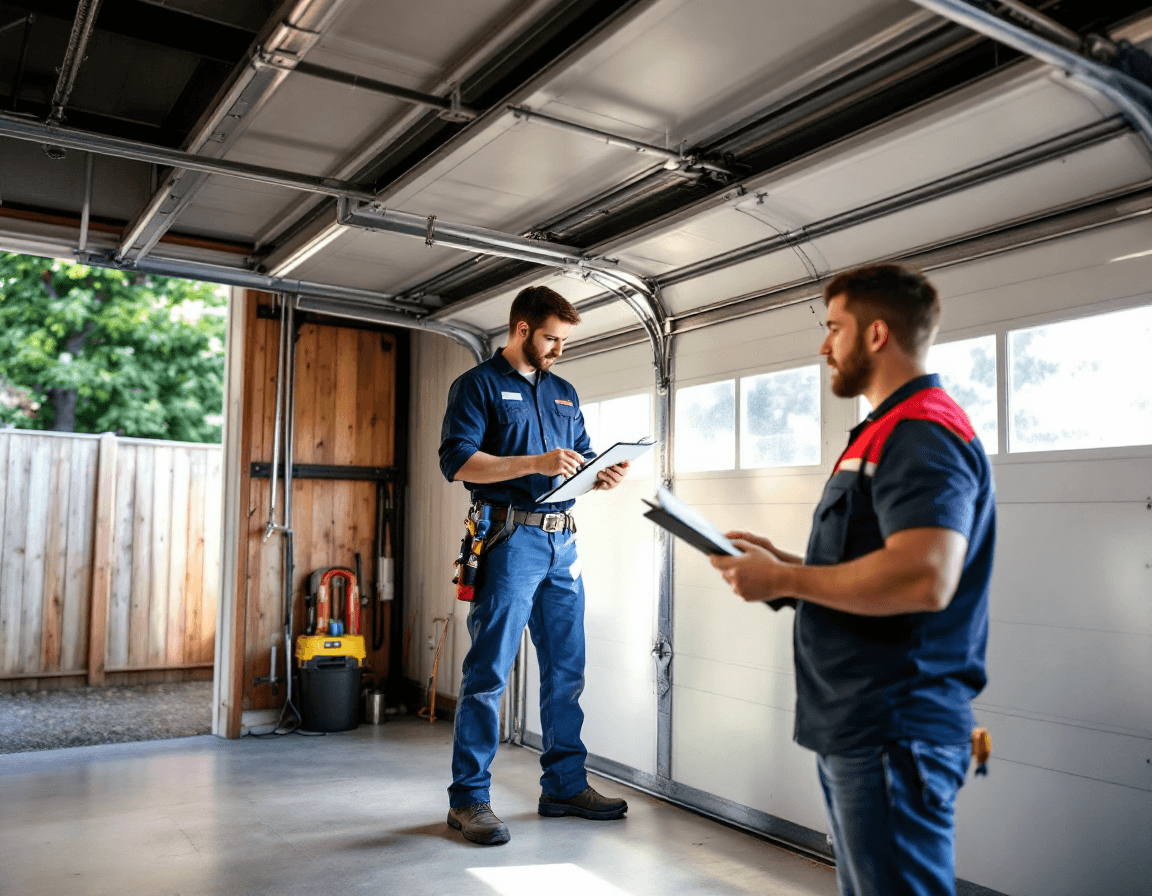
Garage Door Maintenance & Tune-Ups in Snoqualmie, WA is one of the most practical things a homeowner can schedule for the garage, and it matters more here than in many drier parts of the country. Snoqualmie sits in the foothills of the Cascades along the Snoqualmie River, where the air stays damp for much of the year and the temperature can swing a good deal between a cold November morning and a mild afternoon in April. Those conditions quietly work on every moving part of a garage door system, from the steel rollers and hinges to the springs and the opener's drive components. A door that runs fine in July can start grinding or drifting out of balance by the first hard frost.
A tune-up is a scheduled inspection and adjustment, not a repair. Our technicians work through a multi-point safety and performance check, lubricate the parts that need it, test whether the door is balanced, and confirm that the opener's safety features respond the way they should. For most single-car and double-car residential doors, the visit is short and the goal is to catch small problems before they turn into a call at 6 a.m. with a car stuck inside. The full multi-point tune-up is priced between $89 and $149, depending on the door type, its age, and what the technician finds during the visit.
This page explains what that service covers, why local conditions in Snoqualmie change the picture, how to recognize the signs that a door is overdue, and what you can and cannot safely do yourself. If you would rather talk through your particular door, call (888) 799-3819 and a licensed technician can tell you what to expect.
Why Snoqualmie Garages Earn a Closer Look
Snoqualmie homes range from older residences in the historic town core to newer construction on the hillsides and across the Snoqualmie Ridge area. Garage doors in these homes often face a mix of challenges: some sit in shaded driveways where moisture lingers, others take direct wind and rain on exposed slopes. The common thread is that the Pacific Northwest rarely gives a garage a truly dry season, so metal parts stay damp longer than they would in an inland climate. Over several years, that moisture can dull the finish on hinges, roll the edges of tracks, and dry out lubricant that was never reapplied.
Many homeowners in the area also tell us that their garage is used for far more than parking. It holds bikes, kayaks, winter gear, tools, and in many cases the only entrance to the house from the car. A door that is slow, noisy, or uneven is not just an annoyance when it is the main route in and out of the home during a storm. Scheduling maintenance before the weather turns is a far better plan than waiting for the first freeze to reveal a weak spring or a sluggish opener.
It is also worth remembering that doors are heavy. A standard residential door can weigh well over a hundred pounds, and the springs and cables that counterbalance it carry real tension. Preventive service is the best way to keep that system predictable, and it gives a trained eye the chance to catch wear before anyone needs to stand underneath the door to fix it.
How Valley Moisture and Ridge Weather Wear Down Hardware
Moisture is the main story in western King County. Rain and fog settle on the door panels and seep into the bottom seal, the rollers, and the track joints. When water sits in a roller's bearing or on the track's bend, it encourages corrosion, and corrosion makes rollers wobble and stick. A roller that binds for only a moment each cycle can strain the opener, shorten the life of the drive belt or chain, and cause the door to move unevenly from side to side.
Winter temperatures in the area can also dip below freezing on clear nights, especially on higher ground near the Ridge and in the shadowed pockets around the Falls. Cold makes lubricant thicken and makes rubber weatherstripping stiffen. A door that glided smoothly in September may hesitate at the bottom in December, and that hesitation is often the first sign that the lubrication needs attention. Technicians see this pattern every season, which is why a fall tune-up is often more useful than a spring one for Snoqualmie homeowners.
Wind matters too. Gusts coming off the surrounding hills can rattle panels, push on the door when it is partially open, and loosen fasteners over time. Hinge bolts, bracket screws, and the mounting hardware for the header and jamb can back out slightly, which changes how the door tracks and how evenly the load is carried. A tune-up includes checking these fasteners so that small looseness does not become a misaligned door.
What a Multi-Point Safety Inspection Covers
A multi-point inspection is a structured walk-through rather than a quick glance. The technician begins with the door in the closed position, looking at panels, seals, and the alignment of the door against the opening. From there, the inspection moves through each component that affects safety and performance. Because every door system is built a little differently, the exact steps can vary, but a thorough visit generally includes the following points:
- Spring condition, including visible wear, gaps between coils, and the condition of the winding cones and mounting hardware, with a reminder that spring adjustments belong only to a licensed professional
- Cable condition, checking for fraying, kinks, slack, or cable that has come off the drum or sheave
- Roller inspection, looking for cracks, flat spots, worn bearings, and rollers that no longer turn freely
- Track alignment, verifying that the tracks are plumb, level, and secured, and that no sections have bent or loosened
- Hinge and bracket check, confirming that every bolt is snug and that no hinge is cracked or pulling away from the panel
- Weatherstrip and bottom seal review, noting cracks, compression, and gaps that let in water, cold air, or pests
- Opener mounting and rail inspection, checking that the opener is firmly attached and that the rail is aligned and not sagging
- Safety reversal and photo-eye testing, which we cover in more detail below
Each item is either within acceptable condition, scheduled for monitoring, or flagged as a repair recommendation. The technician will explain what was found in plain language so that you can decide what to address now and what can wait. A good inspection is less about selling parts and more about giving you an accurate picture of the system.
Lubrication Without the Guesswork
Lubrication is the most familiar part of a tune-up, and it is also the most often done incorrectly by homeowners who grab whatever spray can is nearby. The right approach depends on the component. Rollers and hinges generally benefit from a light lithium-based or silicone-based lubricant, applied sparingly so it does not attract dirt. Tracks should be cleaned of debris and old, gritty residue before any lubricant is applied, because a dirty track with fresh oil simply creates a paste that holds grit against the rollers.
The springs and cables need a different approach. Lubricating the torsion spring coils and the cable can help reduce friction and noise, but it must be done with products suited to those components and with awareness that the spring is under high tension. Our technicians handle this step with the appropriate tools and care, and we do not recommend that homeowners attempt spring or cable work themselves. A tension spring can release stored energy with enough force to cause serious injury, which is why this part of the service is reserved for trained professionals.
The opener's chain or belt, along with its bearings, also receives attention. A chain drive should be lubricated lightly and evenly, while belt-drive systems typically need minimal lubrication and mostly require checking tension and wear. Over-oiling is a common mistake. Excess lubricant drips onto the floor, collects dust, and can migrate onto the door's weatherstripping, so the goal is always a thin, targeted application rather than a soaked component.
Balance Testing: The Check You Can Watch Yourself
Balance testing tells you whether the door's springs are doing their job. When the door is properly balanced, it should stay roughly where you leave it when you lift it manually to about waist height with the opener disconnected. A well-balanced door does not drift upward or slam downward on its own. An off-balance door puts extra strain on the opener, wears components faster, and in more serious cases can cause the cable to slip or the door to fall unexpectedly.
To perform the basic test yourself, first close the door completely. Then disconnect the opener by pulling the emergency release cord, which should hang from the trolley and typically has a red handle. Lift the door by hand to about waist height and carefully let go. Do this only when the door is fully closed and the area beneath it is clear. If the door stays put, the balance is likely good. If it rises rapidly, sinks, or moves unevenly, the door needs professional adjustment.
Our technicians perform this test as part of the tune-up and may also check the door at several heights to confirm consistent behavior along the full travel. They will note whether the door is heavier on one side, which can indicate a worn spring, a loose cable, or a track issue. Balance is one of the most important indicators of overall system health, and it is one of the reasons we recommend tune-ups rather than waiting for something to fail.
Opener Safety Testing and Reversal Checks
Every modern garage door opener is required to include safety features, and one of the most important is the ability to reverse when it encounters resistance. Our opener safety testing confirms that the door reverses reliably when it contacts an object placed on the floor, and that the photo-eye sensors near the bottom of the tracks stop and reverse the door when the beam is interrupted. These features protect children, pets, vehicles, and anyone walking under a closing door, so they deserve careful testing rather than a quick assumption that they work.
During the test, the technician confirms that the photo eyes are aligned, clean, and securely mounted, and that the wiring is intact. Dirty lenses are common in areas where dust, pollen, and wet weather accumulate, so cleaning may be part of the service. The technician also checks the opener's force settings and confirms that the door reverses within expected limits when it meets resistance. If a sensor is misaligned or the system does not respond correctly, the door should not be operated until the issue is resolved.
Opener testing also includes checking the travel limits, which determine where the door stops when opening and closing. Incorrect limits can cause the door to stop short, slam into the floor, or fail to close fully. If you notice the door closing too hard or not reversing consistently, do not wait for the next tune-up. Contact a licensed technician promptly, because the safety system is one area where a small problem can have serious consequences.
Warning Signs That Your Door Is Overdue
Most garage doors send signals long before they fail, but those signals are easy to dismiss as normal wear. Learning to recognize them can help you schedule service at the right time. Common indicators include a door that has not been serviced in over a year, a noticeable increase in noise over the past few months, and an opener that seems to strain or move more slowly than it once did. Homeowners who have just bought a home and do not know the service history should treat the first tune-up as a baseline check.
Pay attention to the sound and feel of the door. Grinding from the rollers, squeaking from the hinges, or a rattling noise at the top of travel usually points to lubrication or fastener issues. A door that feels heavy by hand or seems slightly off-balance may have a spring or cable problem that needs prompt professional evaluation. Look at the door's movement as well: a door that jerks, pauses, or travels crookedly along the track is telling you that something is not square.
Here are signs worth scheduling a tune-up for soon:
- The door has not had professional service in more than a year, or you cannot confirm when it was last serviced
- Operation has grown noisier over time, especially with grinding or popping sounds
- The opener sounds strained, runs longer than usual, or pauses mid-travel
- The door feels heavy when lifted manually or drifts when released at mid-height
- You notice visible rust, flaking paint, or loose hardware on hinges and brackets
- The bottom seal is cracked or the door lets in drafts, water, or pests
If any of these apply, call us at (888) 799-3819 before the problem grows. Early service is almost always simpler and less expensive than an emergency visit.
Understanding the Price of a Snoqualmie Tune-Up
The full multi-point tune-up is priced between $89 and $149. The range reflects differences in door type, size, age, and the number of components that need attention. A single-car steel door with a standard opener and no unusual hardware will generally sit toward the lower end, while a larger or more complex installation may fall higher. The technician will confirm the final price based on what is present at your home, and you will hear about any recommended repairs before work proceeds.
It helps to think of the tune-up as a preventive investment. A worn roller that is caught early may be a small replacement, while the same roller left in place can damage the track, strain the opener, and eventually lead to a more involved and costly repair. The same logic applies to springs and cables, where early detection can prevent an unexpected failure. Many homeowners find that the inspection itself is the most valuable part, because it gives them a clear, documented sense of the door's condition.
We do not believe in pressuring homeowners into unnecessary work. If the door is in good shape, the technician will say so. If repairs are needed, we will explain the reasons and offer options. Our goal is a door that works safely and predictably through the wet winters and cool springs that define life in Snoqualmie.
Preparing for Your Appointment and Knowing Your Limits
Preparing for a tune-up takes only a few minutes. Clear the area around the door and move vehicles, bikes, and stored items away from the track and the floor beneath it. If you know when the door was last serviced, note the date. Make sure the opener remote and wall controls are accessible, and let the technician know about any concerns you have noticed, such as noise, slow movement, or a door that does not close fully. Pets and children should be kept out of the garage during the visit.
It is equally important to know what should stay with a professional. Do not adjust torsion springs, do not attempt to re-tension cables, and do not remove or loosen components under tension. Avoid standing directly beneath a door that is being lifted manually or released from the opener, and never try to force a stuck door open. Homeowners can safely keep tracks clean, remove debris, test the emergency release, and report problems, but anything involving springs, cables, or high-tension hardware belongs to a licensed, bonded, and insured technician.
If you are unsure whether a problem is minor or serious, the safest course is to call. A short phone conversation can often clarify what you are hearing or seeing. When you are ready to schedule your Garage Door Maintenance & Tune-Ups in Snoqualmie, WA, call (888) 799-3819 and our team will help you find a convenient time to get your door checked, cleaned, balanced, and tested before the next wet season sets in.