
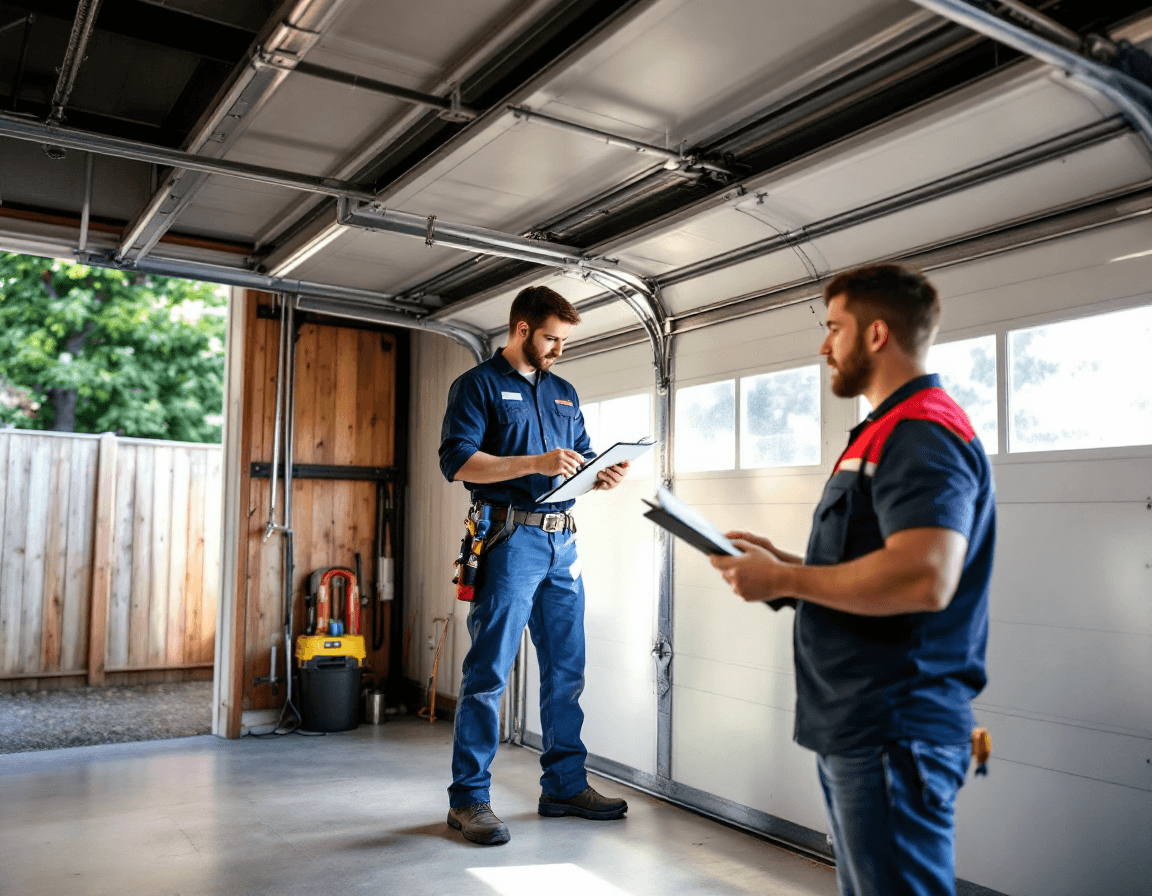
Garage door maintenance and tune-ups in North Bend, WA are one of the most practical ways to keep your home running smoothly through a Snoqualmie Valley winter. Our technicians serve homeowners across the North Bend area, including the 98045 ZIP code, with a multi-point inspection that checks the parts most likely to wear out first. Because the door is often the largest moving object on your property, a little attention now can prevent a stuck door on a dark weekday morning. This page explains what a tune-up involves, why local conditions matter, and how to tell when your door is asking for help.
Living in the shadow of Mount Si means your garage sees a particular mix of weather. Mild, damp winters, frequent drizzle, and cool nights in the valley can all work against metal, springs, and the seals along the bottom of the door. Homeowners in Downtown North Bend and out toward Tanner often notice that doors which ran quietly during drier summer months begin to complain once the rain settles in. A scheduled tune-up gives our technicians a chance to catch those changes early, before a small problem turns into a call for emergency service.
Whether you have lived in North Bend for decades or just closed on a home here, the goal of a tune-up is the same: confirm that the door moves safely, balances properly, and works with the opener that powers it. The visit typically runs in the range of $89 to $149 for a full multi-point service, depending on the size and type of door and the condition of the hardware. If you have questions about your specific setup, call (888) 799-3819 and a team member can talk through what to expect before we arrive.
Why Valley Damp Air Wears on North Bend Garage Doors
The Snoqualmie Valley has a climate that is kind to lawns and hard on hardware. Rain is common for much of the year, and the moisture that comes with it does not always leave the garage quickly, especially in homes where the door faces a shaded side yard or sits beneath tall evergreens. Humidity encourages surface rust on exposed steel, softens the wood of older wood-panel doors, and can cause nylon or plastic rollers to swell slightly over time. Those changes are gradual, which is exactly why owners rarely notice them until the door begins to sound or move differently.
Temperature swings add another layer. A cold morning can stiffen grease that performed well in September, and that stiffened lubricant forces the rollers, hinges, and bearings to work harder than they were designed to. Repeated expansion and contraction also loosens fasteners that hold brackets to the framing, particularly on homes where the garage wall has settled. Over several seasons, these small movements can shift the door out of its original alignment.
Local homes also vary widely. Some properties near the river have garages that stay cool and damp, while others are attached to heated living space and dry out more. Our technicians look at how your particular garage handles moisture, because the right maintenance plan for a detached shop building is not always the same as the plan for an attached two-car garage. Knowing how your space behaves helps us decide which parts deserve the closest attention during each visit.
What a Multi-Point Safety Inspection Covers on Your Door
A multi-point safety inspection is a structured walk-through, not a quick glance at the door panels. We begin by operating the door manually and then with the opener, observing how it starts, travels, and stops in both directions. We check the tracks for straightness, looseness, and debris, and we inspect the rollers for cracks, flat spots, or wobble. The hinges, end brackets, and center bearing receive the same attention because a failure in any of those areas can change how the door behaves under load.
On the safety side, the technician examines the photo-eye sensors near the floor, confirming that they are aligned, clean, and communicating with the opener. We look at the auto-reverse function, check the cables and drums for visible fraying or wear, and verify that the door stays level as it travels. We also inspect the weatherstripping along the bottom seal and the side jambs, since worn seals let in water and drafts, and they can allow pests into the garage. Any finding is explained in plain language so you can decide what to address now and what can wait.
It is important to understand where the inspection stops. Torsion springs and cable systems carry significant stored energy, and adjusting or replacing them is dangerous work that should only be handled by trained, licensed professionals with the right equipment. If we see a worn spring or a damaged cable during your tune-up, we will document it clearly and recommend the appropriate repair. Please do not attempt to wind springs or loosen cable fittings yourself, no matter how straightforward a video makes it look.
Lubrication Done Right: Rollers, Hinges, and the Track
Lubrication is the part of a tune-up that homeowners most often assume they can handle alone, and it is also the part most often done incorrectly. Many household oils attract dust and grit, which then forms a paste that grinds against the rollers and tracks. A proper service uses a lubricant designed for garage door components, applied to the moving surfaces where metal meets metal or where a roller turns on its shaft. Overapplication is just as problematic, because excess product drips onto the floor and collects debris that the door then drags through the track.
During a North Bend tune-up, we clean the track first, removing the grime that builds up along the lower sections where rain and road dust tend to collect. We then lubricate the hinge pivots, roller stems, and the bearing surfaces on the center support and the spring assembly, while keeping lubricant off the tracks themselves in the areas where it can attract dirt. Nylon rollers generally do not need the same type of lubricant as steel ones, and the technician will match the product to the components on your door. Rollers that show cracks or uneven wear are flagged, because lubrication cannot restore a roller that has already failed.
Lubrication also gives us a useful diagnostic moment. A door that runs smoothly after cleaning and lubrication may simply have needed attention, while one that still grinds, hops, or stalls points toward a mechanical issue. We will tell you which category your door falls into so you can plan the next step with confidence. Many homeowners find that a consistent maintenance schedule makes the difference between a quiet door and one that has to be repaired every year.
- Ask for a clean track and targeted lubrication rather than a general spray over every surface.
- Watch for lubricant dripping onto the floor or the bottom seal, which can signal over-application.
- Note whether the door is quieter right after service; a sudden return of noise often means a worn part rather than a dry one.
Balance Testing and the Heavy, Off-Kilter Door
A garage door should feel nearly weightless when you lift it by hand with the opener disengaged, at least in the sense that it should lift smoothly and stay where you place it. When a door feels unusually heavy, lifts unevenly from one side, or drifts downward when you let go partway up, it is out of balance. Balance problems put extra strain on the opener, the cables, the springs, and the rollers, and they can make an otherwise solid door behave unpredictably. In the Pacific Northwest, where wet conditions can subtly change how a door's components move, balance drift is worth checking regularly.
Balance testing is a controlled procedure. The technician disconnects the opener, lifts the door to several heights, and observes whether it holds position or pulls to one side. Because this involves the spring system, the adjustment itself belongs with a licensed technician who can safely manage the tension. We record what we find, explain whether the imbalance is minor or significant, and recommend the correct repair if the spring or cable system needs attention.
Homeowners sometimes mistake an off-balance door for a weak opener. While an opener can struggle with a door that is out of balance, the reverse is also true: a healthy opener can be overworked by a door that is heavier than it should be. Testing the balance first tells us whether the problem lies in the door's mechanics or in the opener's power, and it saves you from replacing equipment that is still working well.
Opener Safety Testing and Reversal Checks
Every garage door opener should reverse when it meets resistance, and the safety features that make this happen need to be tested, not assumed. During a tune-up, we check the photo-eye sensors by interrupting the beam and confirming the door stops and reverses as expected. We also test the force settings, making sure the opener does not push harder than the system needs to, and we verify that the door reverses when it contacts a test obstacle placed under the travel path. These checks matter most for households with children, pets, or anyone who walks in and out of the garage often.
Opener safety testing also reveals wiring or alignment problems that homeowners rarely see. A sensor bracket knocked slightly out of line by a stray bicycle or a backing vehicle can stop communicating reliably, and a loose connection at the wall control can cause intermittent behavior that feels random. We check the connections, confirm the logic board is responding correctly, and review whether the opener's travel limits are set properly for the current door. Adjusting these settings is part of keeping the door both safe and efficient.
If a safety feature fails during testing, we will explain whether the fix is a simple realignment or a component replacement. We will also note whether the failure appears related to moisture, which is worth knowing in a valley where dampness can affect electrical contacts. Please avoid bypassing sensors or disabling reversal features to make a door close, even temporarily, because those protections exist to prevent serious injury.
Noise Creep: Reading What Your Door Is Telling You
Most garage doors do not become loud overnight. The change happens gradually, often over months, and homeowners tend to adapt to the new sound until a neighbor or a houseguest points it out. Squeaks usually point to dry hinges or rollers, grinding often indicates debris in the track or worn bearings, and a rhythmic clunk can suggest a loose bracket or a roller that has developed flat spots. Learning to read these sounds gives you a head start on a maintenance visit before a minor issue becomes an expensive one.
A North Bend tune-up is designed to pinpoint the source of noise rather than simply silencing it with lubricant. We listen to the door during operation, note where the sound originates, and then examine the suspect components. Sometimes a noisy door has a simple cause, such as a loose nut on a bracket that a few turns of a wrench will address. Other times the noise is a sign that a roller, bearing, or cable has begun to fail, and the correct response is a repair rather than another application of grease.
Keeping a simple record can help. Jot down when the noise started, whether it is worse in the morning or after rain, and which part of the door seems to make it. Bring those notes to the appointment, and the technician can compare them with what they find on the door. A few clear observations often shorten the visit and make the final recommendation more precise.
Opener Straining, Slow Travel, and Motor Strain
An opener that strains, hums without moving the door far, or takes noticeably longer to complete its cycle is working harder than it should. This often happens gradually, which is why the change can go unnoticed until the door stops mid-travel or reverses for no obvious reason. In many cases the root cause is not the opener itself but the door it is lifting. Friction in the tracks, a sluggish roller, or an unbalanced panel can all force the motor to compensate, and over time that extra effort shortens the life of the drive components.
During the tune-up, we measure how the opener performs under normal operation and compare that with how the door moves when it is lubricated, balanced, and properly aligned. We check the drive belt or chain for tension and wear, inspect the trolley and release mechanism, and confirm that the opener's limit settings match the door's actual travel. If the opener is struggling despite a healthy door, we will explain whether the motor is nearing the end of its service life or whether a specific component needs replacement.
It is also worth paying attention to how the opener sounds. A grinding or whining motor, or a belt that seems to slip, is a sign that something inside the unit is wearing. Catching those symptoms early allows for a planned repair rather than an unexpected failure on a day you need to leave the house. Our technicians will tell you honestly whether a repair makes sense or whether the opener has reached the point where replacement is the better value.
Buying a Home Near Mount Si? A Pre-Purchase Door Check
Buying a home is a busy process, and the garage door often gets only a passing glance during showings. Yet the door is one of the most heavily used components of the house, and its condition can affect everything from security to daily convenience. A pre-purchase tune-up gives you an objective picture of how the door, the opener, and the safety systems are actually performing, rather than relying on how they looked during the walkthrough. For buyers settling into North Bend neighborhoods, that information can be useful for negotiations or for planning the first year of ownership.
We recommend scheduling the inspection early in the transaction if possible, so that any findings can be discussed with your agent and, if needed, the seller. The technician will test the door, the opener, and the safety features, document the condition of the rollers, springs, cables, and tracks, and note any signs of moisture damage or prior improvised repairs. If the home has a detached garage or an unusual door configuration, we will explain how those details affect long-term care. The goal is to give you a clear starting point for maintenance, not to create surprises.
Previous owners sometimes leave behind mismatched hardware, loose brackets, or openers that were installed without proper safety testing. None of this means the house is a poor purchase, but it does mean you should know what you are inheriting. A documented tune-up at the start of ownership establishes a baseline that makes future service visits easier to compare and plan.
Timing Your Tune-Up Around Valley Seasons
The best time for a garage door tune-up in North Bend is usually before the heaviest rain arrives and again before the coldest weather settles in. Scheduling in early autumn lets us clean and lubricate the components before moisture and cold stiffen them, while a late-winter or early-spring visit can catch damage that developed during the wet months. Some homeowners prefer a rhythm of once a year, while others with heavy daily use, or doors that face the weather directly, may benefit from a visit every six months. Your schedule should match how you actually use the garage.
Life around Tanner and Downtown North Bend can be busy, with school runs, weekend trips toward the trailheads at Mount Si, and early commutes. A door that fails at the wrong moment is more than an inconvenience, so planning a tune-up before a big trip or a busy season is a practical step. We aim to offer appointments that fit around your routine, and our team can help you choose a window that avoids the rush.
If you have not had your door serviced in more than a year, consider scheduling sooner rather than later. A door that has gone that long without attention may already show early signs of wear, and catching them now is typically more affordable than waiting for a breakdown. Calling (888) 799-3819 is the quickest way to confirm availability and ask about any concerns before the visit.
What a $89–$149 Tune-Up Covers and What It Doesn't
Transparent pricing helps homeowners plan, so it is worth describing what a typical full multi-point tune-up includes within the $89 to $149 range. That range generally covers the safety inspection, track cleaning, targeted lubrication, a balance check, and opener safety testing, with pricing adjusted for door size, style, and the complexity of the opener. The final figure depends on what the technician finds and on whether any part of the door needs replacement. We will explain the scope before any additional work is recommended.
A tune-up is not the same as a repair. If the inspection reveals a worn spring, a frayed cable, a cracked roller, or a failed sensor, those repairs are quoted separately so you can decide how to proceed. Spring and cable work in particular must be performed by licensed professionals, and we will never pressure you into a repair you do not need. Our goal is to leave you with a clear report, a safe door, and a realistic sense of what the next year will look like.
Keep in mind that the lowest price is not always the best value. A rushed service that skips the balance test or the sensor alignment may leave you with the same problems a few months later. A thorough tune-up, performed on a regular schedule, is usually the more economical path over the long term because it reduces the chance of emergency calls and extends the life of your opener and hardware.
Simple Checks Between Professional Visits
Between scheduled tune-ups, a few simple observations can help you spot problems early. Watching and listening to the door once a month takes only a minute and gives you a useful baseline. Look for changes in sound, movement, or alignment, and make a note of anything that seems different. None of these checks require tools or touching the springs, and all of them are safe to perform.
- Run the door with the opener once a month and listen for new squeaks, grinding, or clunks.
- Look at the bottom weatherstripping for cracks, flattening, or gaps that let in water and drafts.
- Check that the sensors are clear of cobwebs, dust, and stored items, and that their lights are steady.
- Watch whether the door stays level as it travels and whether it stops cleanly at the top and bottom.
- Note any hesitation, reversal, or sudden stop, and record the date and conditions when it happens.
If any of these checks reveals a concern, call a licensed professional rather than attempting the repair yourself. Springs, cables, and opener internals carry real risk, and a qualified technician can diagnose the cause quickly. Keeping a simple log of your observations makes every service visit more productive, and it helps you see patterns that a single snapshot might miss.
Your garage door should move quietly, balance evenly, and stop safely every time you use it. If your door has been noisier lately, feels heavy, or has not been serviced in over a year, a multi-point tune-up is a sensible next step. Call (888) 799-3819 to schedule your North Bend garage door maintenance visit and get a clear, honest assessment from licensed professionals who understand how the valley climate affects your home.