
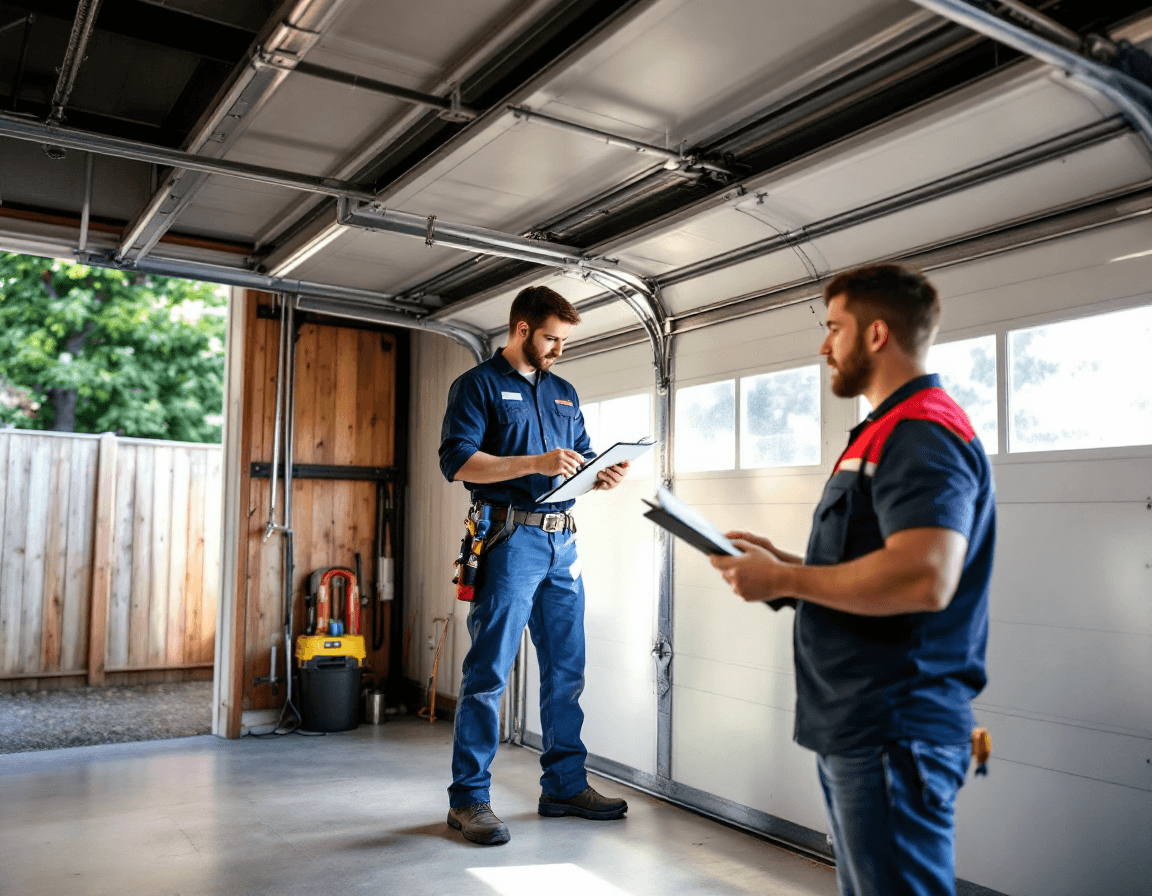
Garage door maintenance and tune-ups in Issaquah, WA are less about fixing one dramatic failure and more about keeping a heavy, constantly moving panel running smoothly through a long, damp Pacific Northwest year. Homes across the Issaquah Highlands, the streets around Gilman Village, and the wooded lots climbing toward Squak Mountain all deal with the same problem: a door that opens several times a week is also exposed to rain, cool mornings, and humidity that rarely lets steel and hardware dry out completely. Most homeowners don't think about the door until it groans at six in the morning or stops halfway up its track. A scheduled tune-up is the least expensive way to catch small problems before they turn into emergency calls. Our multi-point service, which typically runs $89 to $149 depending on the door and opener, covers the safety, balance, and lubrication checks that a quick glance from the driveway never reveals.
This page explains what a tune-up actually involves, why Issaquah conditions affect garage hardware differently than drier parts of the country, and how to tell whether a noise or sluggish movement is a minor maintenance issue or a sign of something more serious. You'll find practical checks you can perform yourself, along with clear boundaries around the work that should only be handled by a licensed technician. We have written it for homeowners who want to understand their door rather than simply hand it off without questions. Some sections are specific to newer neighborhoods, older blocks, and wooded properties, because the realities of each vary more than people expect. Read through the sections that match your situation, and skip ahead to the ones that answer the questions you already have.
If you live anywhere in the 98027 or 98029 ZIP codes and your door has been making new sounds, feeling heavier than it used to, or simply hasn't been looked at in more than a year, a tune-up is a sensible next step. You don't need to wait for a visible problem. The goal is to find wear while it is still easy and inexpensive to address, and to give you a clear picture of your door's condition heading into the next season of rain.
Why Issaquah's Damp Winters Quietly Wear Down Garage Hardware
Western Washington winters are rarely brutally cold, but they are persistently wet, and that is often harder on a garage door than a short, hard freeze. Moisture gets into the bearings of the rollers, settles onto the steel track, and sits against the hinges and bottom bracket for days at a time. Over months, that combination encourages surface rust on exposed hardware, dulls the protective coating on the track, and washes lubricant out of moving joints. The door may still look fine from the street while its internal parts are slowly losing the film that keeps them moving quietly.
The shoulder seasons create their own issues. Early fall brings wet leaves and fir needles that collect along the bottom of the door and in the track channels, where they hold moisture against the metal. Spring rains followed by warm afternoons cause panels and tracks to expand and contract slightly, which can shift alignment just enough to make rollers bind. Summer is comparatively gentle, but the dry stretches often reveal problems that were hiding under winter moisture, such as a roller that has started to flatten or a hinge that has worn loose.
Because the wear happens gradually, most homeowners only notice it after the door begins to complain. A tune-up resets the picture. Technicians can clean and re-lubricate the moving points, check whether rust has begun to form on critical surfaces, and confirm that the track is still seated correctly. For Issaquah homes, scheduling a tune-up in late summer or early fall, before the heavy rain arrives, is often the most effective timing.
What a Multi-Point Inspection Actually Covers
A full multi-point inspection is a structured walk through every component that keeps the door safe and balanced. It is not a quick wipe-down or a single spray of lubricant. The technician starts with the door itself, looking at panels for dents, cracks, separated sections, and weather seal damage along the bottom and sides. The inspection then moves through the hardware and the mechanical systems that control movement. Our standard multi-point service typically includes the following checks:
- Torsion or extension spring visual inspection for visible wear, gaps, or corrosion, with no adjustment or tensioning performed by the homeowner
- Cable condition, drum alignment, and pulley checks for fraying, slippage, or misalignment
- Roller inspection for cracks, flat spots, worn bearings, and proper track seating
- Hinge, bracket, and bottom roller bracket tightness, including fastener checks
- Track alignment, vertical and horizontal, along with clearance at the top and sides
- Balance testing with the opener disconnected, as described in the balance section below
- Opener safety testing, including auto-reverse and photo-eye function
- Lubrication of rollers, hinges, springs, and track points using appropriate products
- Weather seal and bottom seal condition, since gaps there let in water and drafts
Each item is checked against what should be happening for that specific door. A technician isn't simply ticking boxes; the goal is to catch the small early signs that tell you what might fail in the next year. If something needs attention beyond a tune-up, you'll get a clear explanation of what it is and whether it can wait.
Reading the Noise: What Squeaks, Grinds, and Pops Are Telling You
Garage doors speak through sound, and learning to interpret those sounds is one of the most useful skills a homeowner can develop. A high-pitched squeal during opening usually points to dry hinges or rollers that have lost their lubricant, and it is often the first sign that a tune-up is due. A grinding or rumbling sound that starts in the middle of the travel more often suggests worn roller bearings or debris lodged in the track, and it tends to get worse quickly if ignored. A sharp pop or clunk, especially at the top of the travel, can indicate a loose bracket, a slipped cable, or a hinge that has started to separate from the panel.
Timing matters as much as pitch. If the noise appears only on cold, damp mornings, moisture in the bearings and track may be the cause, and a good cleaning plus lubrication usually settles it. If the sound is constant and has gradually grown louder over several months, it typically reflects steady wear that will continue without attention. If the noise is accompanied by the door jerking, drifting, or stopping unevenly, stop using the door in automatic mode and schedule an inspection promptly, because those symptoms can signal a balance or spring issue that deserves careful, professional handling.
Keep a rough mental log of what you hear and when. Many technicians find that a homeowner who can say "the door grinds only in the last few feet on rainy mornings" gives them a far better starting point than "it's making a noise." That kind of detail helps narrow the inspection and often shortens the appointment.
The Manual Balance Test Every Owner Can Safely Do
A properly balanced garage door is one of the most important indicators of overall health, and it is something you can check yourself with care. The test is simple, but it must be done with the opener disconnected and the door closed. Pull the emergency release cord, which should be clearly marked and hang near the opener rail, so the door is no longer connected to the motor. Lift the door by hand, slowly, to about waist height, and then let go. A balanced door should stay roughly where you left it. If it drifts upward, the springs may be overtensioned, and if it sinks down quickly, they may be too weak or failing.
Perform this check on a cold door, not one that has just been running, and make sure nobody is standing underneath or near the door during the test. If the door feels extremely heavy, binds, or moves unevenly from side to side, stop immediately and do not attempt to lift it further. Never try to adjust the springs, loosen spring fasteners, or remove parts of the tension system yourself. Torsion springs store a large amount of energy and can cause serious injury when mishandled, and extension springs under tension can also be dangerous. Adjustments and replacements belong to a licensed professional who has the proper tools and training.
Once you've completed the test, reconnect the opener carefully, and confirm it engages before running the door in automatic mode. Recording the result, whether the door held position or drifted, gives you a useful baseline for future tune-ups. During a professional service, the technician will repeat the balance test with full attention to the cables, drums, and spring condition, and will advise you if any correction is needed.
Opener Safety Testing: Reversal, Photo Eyes, and Force Limits
The garage door opener is responsible for much of the day-to-day safety on your door, and its safety features need regular verification. Modern openers are designed to reverse the door if they encounter resistance, and they rely on photo eyes near the floor to detect objects or people in the door's path. Over time, those systems drift. Photo eyes can become misaligned by a bump, a dusty lens, or a sun glare from the driveway, and force settings can change as hardware wears. A tune-up includes testing these functions so the door behaves as it should when something gets in its way.
A basic check you can do yourself is to place a sturdy object, such as a piece of wood about two inches tall, on the floor directly under the closing door, then press the close button. The door should reverse when it contacts the object. Next, test the photo eyes by waving a hand through the beam as the door closes; it should stop and reopen. If either safety system fails, do not keep using the opener until it has been checked. Many openers also have a force adjustment, but changing those settings incorrectly can make the door unsafe, so leave adjustments to the technician unless the manufacturer's instructions are clear and you feel fully confident.
Opener testing also looks at the motor's performance. A strained or slow motor may simply need lubrication of its drive components, but it can also be a sign that the door is heavier than it should be, which points back to balance and spring condition. Catching that link early keeps the opener from working harder than it was designed to, which extends its service life and avoids unexpected stops.
Lubrication Done Right: Products, Points, and Common Mistakes
Lubrication is the most visible part of a tune-up, and it is also the most frequently done incorrectly. The right product matters. A silicone-based or lithium-based garage door lubricant suits most moving points, including rollers, hinges, and bearings. Avoid using heavy grease on the track itself, because it attracts dust and grit that can create a sticky film, and avoid standard penetrating oils as a long-term solution, since they evaporate and leave little protection behind. Spraying the track with a general-purpose product is a common mistake that can make a door noisier over time.
Focus on the points that actually move. Roller bearings and hinge pivots need a light coating, applied sparingly so excess product does not drip onto the floor or the weather seal. Springs benefit from a thin layer of appropriate lubricant to reduce friction and corrosion, but this should be applied carefully and generally by a technician, because working near tensioned springs carries risk. The track should be cleaned of debris and wiped down before any lubrication is applied, and the technician will typically check that rollers are seated fully in the track after cleaning.
Here are a few habits that help the lubrication last longer between visits:
- Wipe the track with a dry cloth every few months, especially after a wet stretch or heavy fir needle drop
- Avoid over-spraying, since excess lubricant attracts dirt and can migrate onto the weather seal
- Keep the bottom seal and door edges free of grit so they don't drag and wear unevenly
- Note any roller that squeaks while the rest of the door is quiet, because it may be the first to need replacement
Homes in the Issaquah Highlands and Newer Garage Setups
Many homes in the Issaquah Highlands were built within a relatively recent development framework, and that affects how a tune-up looks. Newer homes often feature larger garage openings, wider doors, and sometimes insulated panels that are heavier than older single-layer designs. Those extra pounds mean the springs and balance system are working harder, and small imbalances can become noticeable sooner. A homeowner in a larger door may notice the door feels heavier when lifted manually or that the opener seems to labor more than it used to, and these are good reasons to schedule an inspection.
Newer neighborhoods also tend to have properties with tighter driveway spacing, and some garages may sit close to walkways or shared areas. That makes proper safety reversal and photo-eye alignment particularly important, since the door's path may pass near people, pets, or vehicles more often than in more open settings. During a tune-up in these homes, technicians pay close attention to the reversal sensitivity and the photo-eye positioning to make sure the door responds reliably in everyday use.
If your door is part of a higher-end setup with a smart opener, a keypad, or a remote system, the tune-up also includes confirming that those accessories still communicate properly with the motor. Connectivity issues are common after a power outage or a firmware update, and they are easy to overlook until the door refuses to respond to a phone or remote.
Gilman Village and Older Garages: Settling, Rot, and Weather Seals
Older homes near Gilman Village and along the established residential streets around downtown Issaquah bring a different set of maintenance questions. Garages on older properties may have settled slightly over the years, which can shift the door opening and throw off the track alignment. A floor that has settled or sloped can also change how the door closes, causing the bottom seal to press unevenly against the threshold. A tune-up on these properties often includes measuring the opening and checking that the track is still level and plumb relative to the current slab.
Wood framing and older trim around the garage opening can also be affected by moisture, particularly if the door's weather seal has deteriorated. When water gets behind the header or along the jambs, it can soften wood and loosen the mounting points for the track and brackets. Technicians look for these signs during the inspection, and a homeowner can check for them by looking at the edges of the door frame for staining, flaking paint, or soft spots after a wet season.
Weather seals in older garages are often the easiest and most cost-effective upgrade. Replacing a cracked or flattened bottom seal reduces drafts, keeps water and leaves out, and lessens the wear on the bottom roller bracket. A tune-up is a good time to decide whether the existing seal can be serviced or whether it should be replaced before the wet months settle in.
Squak Mountain Properties: Debris, Moisture, and Tree Exposure
Homes on the slopes near Squak Mountain sit amid forest, which brings its own maintenance considerations. Tree cover keeps the air humid and the surfaces damp for longer periods, and it also drops a steady supply of needles, cones, leaves, and small twigs. Those materials collect in the bottom track corners, behind the bottom seal, and sometimes in the opener rail area. Debris held against metal in damp conditions speeds up corrosion, and it can cause rollers to bind or ride unevenly in the track.
Mossy or lichen-covered driveways and exterior surfaces are common in wooded areas, and they can transfer moisture and grime to the lower panels of the door. Over time, that residue can dull the finish and trap water against the bottom of the door, which accelerates surface rust in hardware. Regular rinsing of the lower panels and a dry wipe-down of the track help prevent that buildup, and a tune-up adds a professional cleaning and inspection that catches problems earlier.
Wooded properties can also face occasional falling branches and wind-driven debris during storms. After a significant windstorm, check the door for dents, cracked panels, and displaced weather seals, and check that the track and brackets remain secure. If you notice damage, schedule an inspection rather than waiting for the next routine tune-up, because a bent track or damaged section can quickly affect the balance and safety of the entire door.
When a Tune-Up Turns Into a Repair Conversation
Most tune-ups end with a clean bill of health and a few minor recommendations, but occasionally the inspection reveals a component that needs professional repair or replacement. Knowing what those signs look like can help you prepare and avoid surprises. Common indicators that a repair conversation is coming include a door that won't stay balanced, visible gaps or wear on a spring, a cable that is fraying or has slipped off its drum, a track that is bent or out of alignment, and an opener that repeatedly fails its safety tests. Any of these conditions warrants prompt attention.
Springs and cables deserve special emphasis. These parts store large amounts of tension, and working on them without the correct training and tools is genuinely dangerous. If your technician recommends spring or cable work, that repair should be handled by a licensed professional, not by a homeowner with a wrench and a YouTube video. Our team carries the proper licensing, bonding, and insurance for that work, and we will explain the scope, the reasons behind the recommendation, and the options before anything begins.
Repair recommendations should never feel rushed or vague. A good technician will show you the worn part, explain how it affects the door, and tell you whether it can safely wait for a few weeks or should be addressed immediately. You should leave the appointment with a clear understanding of your door's condition and a plan you are comfortable with.
Pricing, Timing, and What to Expect From Your Appointment
Our full multi-point tune-up is priced between $89 and $149, with the final figure depending on the door's size, the number of components that need attention, and the type of opener you have. That price covers the inspection, cleaning, lubrication, balance testing, and opener safety testing described above. If the inspection uncovers a repair need, the technician will explain the scope and cost separately, and you are never obligated to proceed beyond the tune-up itself. Clear communication about cost is part of how we want every appointment to work.
Plan for the appointment to take a reasonable amount of time, since the technician needs to test balance, operate the door through multiple cycles, and verify safety functions. Clearing the area around the door and making sure the path is free of stored items helps the process go smoothly. It's also helpful to tell the technician about any noises, sticking, drifting, or changes you've noticed, along with the approximate date they began. That information often leads to a faster, more accurate diagnosis.
For Issaquah homeowners, late summer and early fall are often the most practical times to schedule a tune-up, before the heavy rains and fir needle season arrive. Spring is another good window, especially after the wettest months have passed and before summer use increases. Whatever season you choose, the best time is before a problem forces the issue.
Scheduling a multi-point tune-up in Issaquah takes only a moment, and we serve the 98027 and 98029 ZIP codes along with many surrounding communities. If your door is noisier than it used to be, feels heavy or off-balance, hasn't been serviced in more than a year, or you've just purchased a home and want its garage door checked, call Seattle Garage Door Fix at (888) 799-3819 to set up your appointment and keep your door running safely through every Pacific Northwest season.