
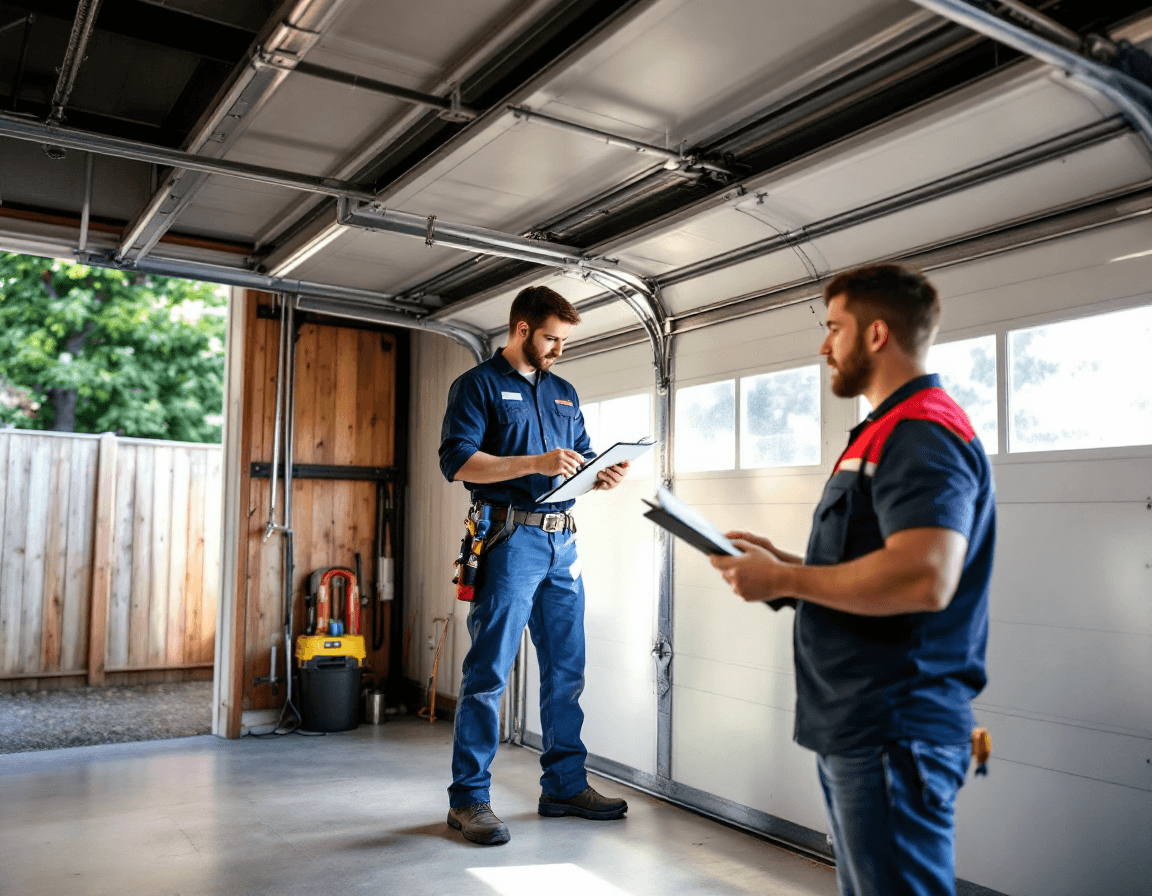
Garage door maintenance in Sammamish is less about dramatic failures and more about slow wear that builds quietly until a morning when the door sticks halfway up or the opener strains and stops. Homes across the plateau, from the neighborhoods near Sammamish Commons to the lakeside streets around Pine Lake and the homes in Klahanie, share a few conditions that make a routine tune-up worthwhile. Our technicians see garage doors that are noisier than they used to be, openers that labor on cold mornings, and doors that have simply gone a year or more without anyone looking at them. A scheduled multi-point tune-up is one of the most practical ways to catch those problems while they are still inexpensive to fix.
Our full multi-point tune-up runs $89 to $149, and the final price reflects the size of your door, the type of opener, and what the inspection turns up. The visit combines a safety inspection of the door and its hardware, lubrication of the moving parts, balance testing, and a safety check of the opener's reversing and force settings. We perform this work for homeowners in 60+ cities across Western Washington, and we work in Sammamish ZIP codes 98074 and 98075 every week. If you are ready to book, you can call us at (888) 799-3819 at any time.
This guide walks through what happens during a tune-up, why each step matters in our climate, and how to tell when a door needs attention before it becomes an emergency. It also explains where homeowners should stop and call a licensed professional, because some garage door components store serious energy and should never be adjusted without training. Read on if your door has been getting louder, if you just bought a home and want a clear baseline, or if you simply want to avoid being stranded on a weekday morning.
Why Sammamish Garage Doors Benefit From a Scheduled Check
Sammamish sits on the eastern side of Lake Sammamish, and the weather pattern here is classic Puget Sound: long, damp stretches from October through April, cool nights even in shoulder seasons, and a steady drizzle that never quite dries off a driveway. A garage door in this environment is constantly exposed to moisture that finds its way into hinges, rollers, and the metal track. Over several seasons, that moisture turns into surface corrosion, stiff rollers, and misaligned sections that no longer sit evenly in the track. None of this happens overnight, which is exactly why it is easy to miss.
Many Sammamish homes were built with attached two-car garages that were designed for a single season of use rather than the daily cycling most families now put on them. A household that opens the door for school runs, recycling pickups, and weekend projects can easily cycle a door several times a day. Those cycles add up, and the springs, bearings, and opener drive components each carry a share of that wear. A scheduled tune-up gives a technician the chance to measure that wear before it turns into a failed part.
Preventive visits also save time and frustration. A door that has been overlooked for a year or more often gives warnings: a new squeak, a slightly slower lift, a hesitation at the top of its travel. When those signs are addressed during a planned visit, the repair is usually smaller and more predictable. When they are ignored, a homeowner ends up calling for same-day service with a door that will not open at all.
What the Multi-Point Inspection Covers Behind the Panels
The inspection is the foundation of the entire tune-up, and it looks at far more than the panels you see from the driveway. Our technicians start with the door sections themselves, checking for cracks, separated joints, bent panel edges, and damaged weatherstripping along the bottom seal and the side jambs. They then move to the track system, confirming that the vertical and horizontal runs are straight, securely fastened, and free of dents that could cause rollers to bind. Loose mounting brackets and worn hinge connections are noted during this stage as well.
Next comes the hardware inspection, which covers rollers, hinges, end caps, cable drums, and the bearing plates that hold the shaft. Rollers are checked for cracked nylon or metal wear, and bearings are checked for play, grinding, or looseness. The inspector also looks at the condition of the lift cables and the spring system for visible fraying, rust, or gaps in the wind-up, but the actual spring tension and any repair to those components belong to a licensed technician with the proper tools and training. Our role during a tune-up is to identify those concerns clearly so you know what needs attention.
The last part of the inspection focuses on the opener and its connection to the door. We check that the trolley engages and releases properly, that the rail is secure and not sagging, that the opener mounting bracket is solid on the ceiling and wall, and that the safety sensors are aligned and clean. Many homeowners are surprised by how often a sensor has been knocked out of alignment by a bin or a bicycle. A tune-up catches these small problems before they cause the door to reverse unexpectedly or fail to close.
Lubrication That Targets the Right Friction Points
Lubrication is one of the most useful parts of a tune-up, but it is also one of the most misunderstood. Many homeowners grab a can of spray lubricant and coat everything they can reach, which often attracts dirt and grit that then grind into the very parts that needed protection. A proper lubrication service is more selective. We apply the right type of lubricant to hinges, rollers, bearings, and the track surfaces where friction actually matters, and we wipe away the old residue before adding new product.
The Pacific Northwest environment makes product choice important. Moisture and temperature swings can cause some lubricants to thicken or wash away, leaving metal parts exposed. Our technicians use products suited to garage door hardware and avoid heavy greases on track surfaces, where they collect dust and debris. For the opener's chain or belt drive and the trolley mechanism, we follow the manufacturer's guidance so the drive stays clean and quiet without damaging the gearing.
Lubrication also needs to be done in the right order. Cleaning comes first, because lubricant applied over grit simply creates a paste. Moving parts should then be cycled by hand to distribute the product evenly, and any excess should be wiped away so it does not drip onto the floor or your vehicle. A well-lubricated door should open and close with a smooth, consistent sound, and many customers notice an immediate drop in noise after this step alone.
Balance Testing: The Quick Check Most Owners Never Do
Balance is one of the most important indicators of a healthy garage door, and it is something most homeowners never think to test. A properly balanced door should feel roughly weightless when you lift it by hand, and it should stay put when you stop it partway open. If the door drops, rises on its own, or feels heavy on one side, the springs and cable system may be out of sync, and the opener is being forced to make up the difference.
During a tune-up, our technicians perform a balance test by disconnecting the opener and carefully checking how the door behaves through its travel. This is a quick, low-risk check that reveals whether the weight is distributed evenly across the door. If the door shows an imbalance, the technician will note it and explain the likely cause, whether that is worn hardware, an aging spring, or a cable that needs attention. Adjusting spring tension itself is work for a licensed professional, because the springs store enough energy to cause serious injury.
Balance testing matters especially for homeowners who have noticed their door feeling heavy or slightly off-kilter. A door that is out of balance puts extra strain on the opener, shortens the life of the rollers and hinges, and can cause uneven movement that stresses the panels. Catching the problem early is far cheaper than waiting for a spring or cable to fail, and it also reduces the risk of a sudden drop when the door is in motion.
Opener Safety Reversal and Force Testing
Modern garage door openers are equipped with safety features designed to protect people, pets, and property. The most important are the photo-eye sensors near the floor, which stop and reverse the door if the beam is broken, and the force settings that tell the opener how much resistance to tolerate before it reverses. A tune-up includes testing both features so you can be confident they work when you need them.
Sensor testing is straightforward but very important. Our technician checks that the sensors are mounted at the correct height, aligned so the beam connects, and clean enough to read reliably. In Sammamish, where dust, pollen, and wet leaves can collect on the lenses, a sensor that looked fine last spring may now be blocked or misaligned. We test each sensor by placing a safe object in the path and confirming that the door reverses as expected, and we check the opener's auto-reverse feature by applying light resistance to a closing door in a controlled way.
Force settings also need attention over time. As a door becomes harder to move through wear or imbalance, the opener may compensate by pushing harder, which can make the force settings drift out of their ideal range. A tune-up confirms that the opener is still set appropriately for the door's actual weight and movement. If the settings need adjustment, we will make the change and explain what we did, so you understand how the system is protecting your household.
Moisture, Moss, and the Plateau Weather Problem
Western Washington weather is one of the most demanding environments for garage door hardware, and Sammamish homeowners feel it in several specific ways. The long wet season soaks the bottom of the door and the threshold, which can cause the lower panels to swell and the weatherstripping to lose its grip. Cold, damp mornings can make metal parts feel stiff, and the opener may hesitate or grind until the hardware warms up. Over time, that moisture encourages rust on exposed metal and can break down finishes on steel and aluminum sections.
Outdoor conditions also matter. Many Sammamish driveways and garage entries are shaded by mature trees, which keeps them damp longer and allows moss, algae, and needles to collect along the threshold and track. Fine debris from fir and cedar can work into the bottom seal and into the lower track, adding friction and grit to parts that should be moving freely. We check for these conditions during the inspection and clean the track and threshold area as part of the service.
Humidity inside the garage is another factor, particularly in homes where the garage shares a wall with living space or where laundry and drying happen nearby. Stored items and vehicles can trap moisture, and that moisture lingers around the door hardware. Simple habits such as keeping the floor clear, letting the garage air out after wet days, and wiping down the track after heavy storms can make a noticeable difference between tune-ups.
Reading the Noises Your Door Is Trying to Tell You
One of the most common reasons homeowners call us is a door that has gradually become louder. Garage doors almost never go from quiet to loud overnight, so the change is usually a slow process that many people stop noticing. Learning to read those sounds can help you decide when a tune-up is due and what the sound might indicate, even though the actual repair should always be handled by a professional.
A high-pitched squeal during movement often points to dry rollers or hinges that need lubrication. A rhythmic clicking or ticking can suggest loose hardware, a worn roller that is catching on a track seam, or a section that has shifted slightly out of alignment. A deep grinding or rumbling is more concerning and can indicate worn bearings, a stressed opener drive, or a rail that needs support. A sudden bang or thud at the top or bottom of travel may signal a balance issue or a spring problem that deserves immediate inspection.
The following list outlines common sounds and what they typically suggest, so you can describe the problem accurately when you schedule a visit:
- Squealing during lift or lowering, often linked to dry rollers, hinges, or track surfaces that need cleaning and lubrication.
- Rhythmic clicking or popping, which can point to loose brackets, worn roller stems, or a track section that has shifted.
- Grinding or rumbling from the opener, frequently tied to a worn drive belt or chain, a dry trolley, or a loose rail.
- A loud bang at the top of travel, which may indicate a balance problem or a weak spring that should be checked immediately.
- Uneven movement with a shudder, often a sign of imbalance or a roller that is binding in the track.
If you hear any of these sounds and the door also feels heavy or stops partway, do not force it. Keep people and pets clear of the door, use the manual release only if you are certain it is safe, and call a licensed technician to inspect the system.
Signs Your Opener Is Working Harder Than It Should
Your garage door opener is designed to do most of its work effortlessly, so when it starts straining, the cause is usually somewhere in the door system rather than in the opener itself. Common signs include a slower-than-normal lift, a motor that sounds labored, a door that stops and starts, or a trolley that seems to hesitate at the beginning or end of its cycle. Some homeowners also notice the opener running longer than it used to before the door fully closes.
Many of these symptoms trace back to balance, friction, or misalignment. A door that is heavier on one side, a roller that is binding in a track seam, or a hinge that has loosened can all force the opener to work harder than it should. The opener then draws more power, runs hotter, and wears its drive components faster. A tune-up addresses the underlying causes first, which often restores smooth operation without replacing the opener.
Some openers also show their age through weaker performance even when the door is in good shape. If a tune-up reveals that the opener's motor, logic board, or drive is nearing the end of its useful life, we will explain what we observed and what your options are. Our goal is to give you a clear, honest assessment, not to push a replacement you do not need.
Buying a Home in Pine Lake or Klahanie? Start With a Baseline
Buying a home is a busy time, and the garage door is often the last thing on a new owner's checklist. Yet garage doors can be among the most expensive components to repair or replace, and a door that has been neglected by a previous owner can hide problems that become obvious only after move-in. Homes in established neighborhoods like Pine Lake and Klahanie often have garage systems that have been in place for many years, so a baseline inspection is a sensible step early on.
A tune-up shortly after closing gives you a clear picture of the door's condition, the opener's safety settings, and any wear that needs attention. It also creates a record you can use for future planning. When you know which rollers were replaced, which sensors are aligned, and how the balance tested on the day you moved in, you have a reliable starting point for maintenance. This is especially helpful if the previous owner's records are incomplete or nonexistent.
Our technicians will walk through the findings with you and explain what matters most and what can wait. Some homeowners prefer to address everything right away, while others prioritize safety items and schedule the rest. Either approach is reasonable, and we aim to give you the information you need to make a confident decision about your home.
How Often to Schedule Tune-Ups and What $89–$149 Includes
Most homeowners benefit from a professional tune-up at least once a year, and more often if the door is heavily used, exposed to salt air or extreme weather, or already showing signs of wear. Households with frequent garage traffic, teenagers coming and going, or a home-based business that depends on the door may find that twice-yearly visits make sense. The right schedule depends on how your door is used and how it is performing now.
Our full multi-point tune-up is priced between $89 and $149, and the final figure depends on the size and type of your door, the opener model, and any additional work the inspection identifies. The base visit includes the multi-point safety inspection, lubrication of the appropriate components, balance testing, and opener safety testing. We will tell you about any recommended repairs before performing additional work, so you can decide how to proceed. Parts and extended repairs are quoted separately, and we will never begin significant work without your approval.
To schedule your tune-up, call (888) 799-3819. Our team serves Sammamish ZIP codes 98074 and 98075 along with 60+ cities across Western Washington, and we can help you plan a visit that fits your household's schedule.
When to Leave the Work to a Licensed Professional
Every homeowner should understand where safe maintenance ends and professional repair begins. Garage door springs are under very high tension, and cables and drums can cause serious injury if they release unexpectedly. Adjusting, replacing, or winding springs, repairing cables, and working on the torsion system should always be left to a licensed, bonded, and insured technician with the proper tools and training. Even experienced do-it-yourselfers can be injured by a spring that releases at the wrong moment.
What homeowners can safely do is limited but useful. You can keep the track and sensor lenses clean, keep the area around the door clear, watch for changes in sound or movement, and test the auto-reverse feature in a controlled way by placing a soft object in the door's path. If you notice frayed cables, visible gaps in the spring coils, a door that drops suddenly, or a door that will not stay open, stop using it and call a professional right away. Do not attempt repairs on your own.
Our technicians are trained to handle the high-tension components safely, and we will always explain our findings in plain language. A tune-up is a good opportunity to ask questions about your system, and we welcome them. Protecting your household means knowing both what you can maintain yourself and what needs an expert's hands.
Garage door problems rarely announce themselves politely, but a regular tune-up gives you the chance to address wear, balance, and safety before they interrupt your day. If your door has gotten noisier, your opener sounds strained, or it has been more than a year since anyone looked at the system, now is a good time to schedule a visit. Call Seattle Garage Door Fix at (888) 799-3819 to book your multi-point tune-up in Sammamish, and our team will take it from there.