
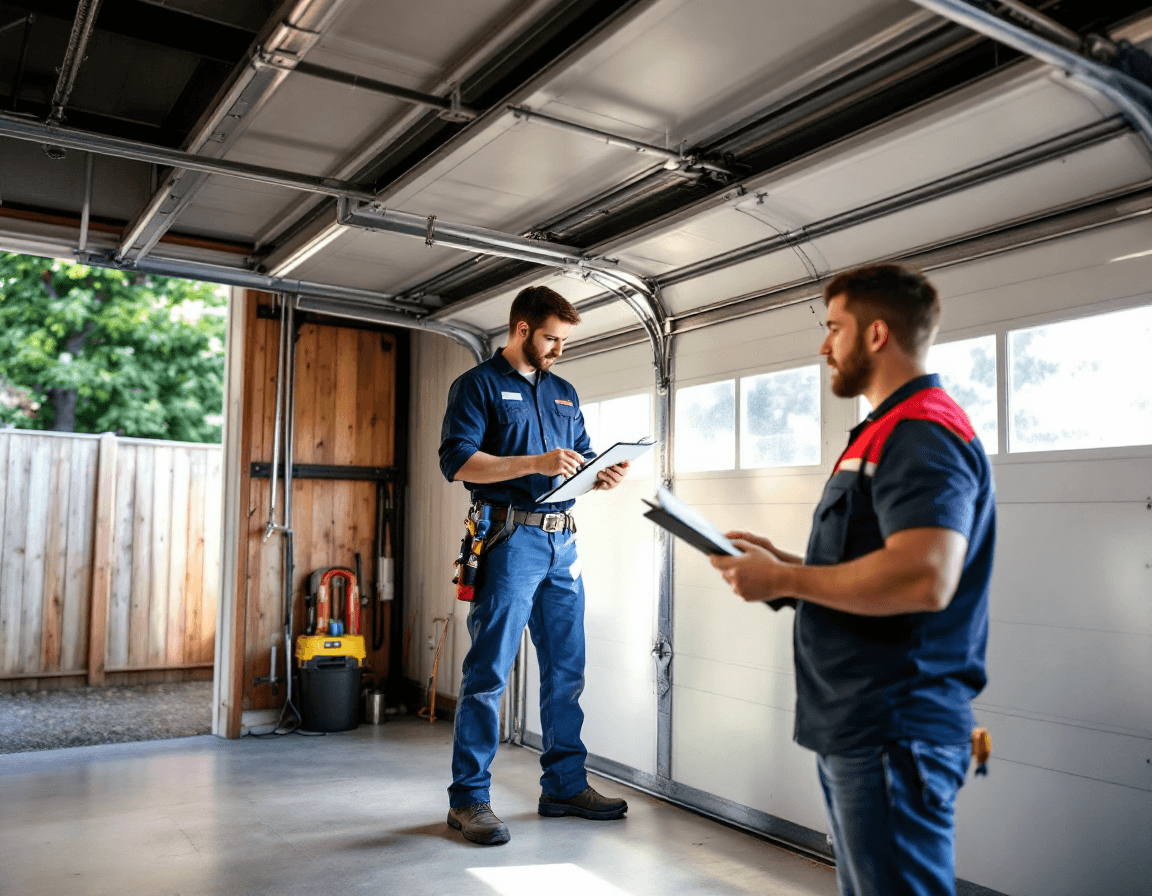
Garage Door Maintenance & Tune-Ups in Woodinville, WA are often overlooked until a door groans, stalls halfway up, or refuses to close after a rainy week. Most garage doors in our part of King County work hard every day without much attention, yet they carry hundreds of pounds of steel or wood on springs, cables, rollers, and hinges. A scheduled tune-up catches small wear while it is still small, and it gives you a clear picture of how the door and opener are doing before a minor issue becomes an expensive repair.
Homes from Hollywood Hill down to the lower valley near the Sammamish River see the same general pattern: long, damp winters, mild but occasionally dry summers, and garages that are not always climate controlled. Those conditions shape what fails first, and they shape what a good inspection should look for. This page explains what a multi-point tune-up involves, what the warning signs look like, and why the local climate makes a regular check worth scheduling. It also explains where a homeowner should stop and call a licensed technician.
Why Woodinville Garages Wear Differently Than Garages Elsewhere
A garage door in Woodinville lives in a more demanding environment than many homeowners realize. The region's rain is frequent rather than intense in most months, which means metal parts rarely get a chance to dry completely between storms. Moisture sits in track channels, collects at hinge pivots, and works its way into the seams of wood and composite panels. Over time, that moisture drives surface rust, softens lubricant, and encourages the kind of grit buildup that turns a quiet door into a noisy one.
Garages in the area are also used differently. Many double as workshops, storage rooms, bike sheds, or the main entry for muddy boots and recycling bins. Each time the door moves under an uneven load, the rollers and hinges absorb a little extra stress. A door that rides up and down twenty or thirty times a week will show wear sooner than one that opens only for weekend errands, and the tune-up schedule should reflect how your household actually uses the space.
Because of this, we treat a tune-up as a system check rather than a single-part fix. The door panels, tracks, springs, rollers, hinges, cables, weatherstripping, and opener all interact. A worn roller can overload a spring, a misaligned track can strain the opener, and a sagging seal can let water and cold air into a room that holds your water heater or freezer. Looking at the full system is the only reliable way to spot those connections early.
How the Pacific Northwest Climate Works on Steel, Wood, and Lubricant
The mild, damp climate of Western Washington is kind to lawns and hard on hardware. Winter days often stay in the 40s and low 50s, with long stretches of drizzle and high humidity that rarely dries out indoors. Steel parts can develop surface oxidation even when nobody sees a puddle, especially along the bottom of the door where runoff and splashed water collect. Galvanized components resist this well, but the protective coating still wears through at contact points like roller stems and the hinge ends.
Wood doors and some composite models respond to humidity by swelling and contracting. A panel that fits snugly in August can rub against the weatherstripping or bind in the track by January. Many homeowners notice this as a door that seems heavier on wet mornings, which is often a sign that the balance is fine but friction has increased. Our technicians check for panel alignment, sealing, and track clearance so the door is not fighting its own frame.
Lubricant is the other variable. Grease and oil thin out with heat and wash away with rain, and a dry winter followed by a wet one can leave a door unprotected for months. Silicone-based or lithium-based products handle the local moisture better than many general-purpose sprays, though the correct product depends on the components involved. Applying lubricant to the wrong surfaces can attract dust and create the grime that causes squeaking in the first place, so a tune-up includes cleaning old residue before fresh lubrication goes on.
What a Multi-Point Tune-Up Covers, Step by Step
A full multi-point tune-up is a structured visit, not a quick spray and a handshake. Our technicians work through the door in a consistent order so nothing is missed. The visit typically includes a visual and hands-on inspection, cleaning and lubrication of moving parts, a balance test, a check of the opener's force and safety features, and a review of the hardware for wear that should be addressed before it fails. The full service is priced between $89 and $149, depending on the door type and the number of components involved.
Here is what the inspection usually covers:
- Torsion or extension spring visual condition, including signs of rust, gaps, or stretching (visual only; adjustments and replacement are handled by licensed professionals)
- Cables, drums, and pulleys for fraying, slack, or uneven winding
- Roller condition, including worn nylon wheels, bent stems, and loose brackets
- Track alignment, bolt tightness, and any gaps or dents that could catch rollers
- Hinges, end brackets, and center brackets for cracks, looseness, or corrosion
- Weatherstripping at the bottom seal and along the jambs for gaps or brittle sections
- Opener mounting, rail alignment, and chain or belt tension
- Photo-eye sensors, auto-reverse function, and manual release operation
Lubrication follows the inspection and is applied to specific points such as hinge pivots, roller bearings, and lock mechanisms, rather than sprayed indiscriminately. Track surfaces are usually cleaned rather than oiled, since oil on the track can collect grit. The goal is smooth, quiet movement without creating a mess that attracts the next round of debris.
Once the door is lubricated, the technician performs a balance test to see how the door behaves when released at different heights. We also run the opener through a full cycle and confirm that safety reversal works when the door meets resistance. You receive a plain-language summary of what was found, what was corrected on the spot, and what should be monitored or scheduled for later.
Noises That Tell You Something Before the Door Gives Out
Garage doors rarely fail without warning. In most cases, they announce trouble through sound long before the door stops working. The challenge is that homeowners tend to get used to a gradual change, so a door that has been squeaking for three years can seem normal even though the noise is a signal. Learning to recognize the difference between harmless operating noise and a warning sign makes a real difference in how quickly you call for service.
A high-pitched squeal during opening usually points to dry or contaminated roller bearings or hinge pivots. A rhythmic clicking that speeds up as the door climbs often indicates a loose roller, a bracket working free, or a track bolt that has backed out. Grinding or scraping along the track suggests debris, a bent track section, or a roller that has worn flat on one side. A deep thump at the top or bottom of travel can mean the door is hitting a stop, the opener is adjusting for an imbalance, or a cable is slipping on its drum.
Some noises deserve immediate attention. A snapping or banging sound when the door starts moving, especially if the door then sags unevenly, can mean a spring or cable has failed or is about to. Stop using the door in that condition, keep people and vehicles clear of the opening, and contact a licensed technician. Do not attempt to adjust or replace spring hardware yourself, because the tension stored in those components is substantial and can cause serious injury.
Balance Testing and Why a Heavy Door Is Trying to Tell You Something
A properly balanced garage door should lift smoothly with light effort and stay put when partially open. If you can lift the door by hand from the middle with minimal resistance and it stays suspended at most heights, the balance is probably close to correct. A door that rises quickly on its own, drops when released, or feels unusually heavy in one spot has a balance problem that deserves attention.
Balance problems are common in our region because wet weather and humidity change how a door behaves across seasons. A door balanced in a dry October may pull unevenly after a wet February, especially if the springs are aging, the rollers are sticking, or the panels have shifted. Uneven lift also places side loads on the track and the opener, which is why an imbalanced door often leads to a strained opener and premature wear on the drive system.
During a tune-up, the balance test is performed with the opener disconnected so the door's behavior can be observed directly. The technician checks whether the door drifts up or down at several heights and whether one side lifts faster than the other. If the balance is off, the correction usually involves spring tension or cable adjustment, which is work reserved for licensed professionals. A homeowner who notices a heavy or off-balance door should schedule service promptly and avoid manually forcing the door open or closed.
When the Opener Strains, Stalls, or Travels Too Slowly
The opener is the component homeowners interact with most, and it often gets blamed for problems that begin somewhere else. An opener that slows down, pauses midway, or makes a labored humming sound may be compensating for a door that is out of balance, binding in the track, or resisting because of dried lubrication. Replacing the opener in that situation would not solve the root issue, and it could cost far more than a tune-up.
Safety features deserve careful attention. Modern openers are required to reverse when they meet an obstruction, and the photo-eye sensors near the floor should stop and reverse the door if the beam is interrupted. During a tune-up, our technicians test these functions and confirm that the force settings are appropriate for the door's weight and condition. A door that reverses too easily can be annoying, while one that fails to reverse can cause serious injury, so both extremes need correction.
Opener mounting and rail alignment are often overlooked. A loose ceiling bracket, a bent rail, or a belt or chain that has stretched can all cause jerky movement and extra noise. Many Woodinville homes have garage ceilings that are attached to framing that flexes slightly with temperature and moisture changes, which can gradually loosen brackets. Checking these connections during a tune-up helps the opener maintain consistent travel and reduces the strain on the motor.
Hillside Driveways and Older Homes Around Hollywood Hill and Cottage Lake
Homes on and around Hollywood Hill and in the Cottage Lake area often present conditions that differ from flatter lots. Sloped driveways can change how a door sits in its opening, and garages built into hillsides may have floors and walls that settle unevenly over time. A door that was level when installed can develop a slight tilt that affects both balance and track alignment, so inspections in these neighborhoods pay close attention to plumb and level.
Older homes in the area sometimes have original door hardware or custom openings that were never designed for modern openers. We frequently see retrofit brackets, mismatched track sections, or weatherstripping that was cut to size by hand decades ago. These installations are not necessarily unsafe, but they tend to drift out of adjustment over time, and the wear pattern can be harder to read without a careful look at every connection.
Wind exposure can also matter on higher ground. Gusts can push on large panels and rattle the door against its tracks, and repeated stress can loosen fasteners that were tightened years ago. A tune-up on a hillside property often includes extra attention to the bottom bracket, the center hinges, and the track bolts, since these are the points that see the most movement when a door is buffeted or when it travels over a slightly uneven floor.
Wine Country Corridor Homes, Workshops, and Heavy Garage Use
The Woodinville Wine Country area draws visitors, events, and steady traffic through local roads, and many homeowners in the surrounding neighborhoods use their garages for more than parking. Workshops, hobby spaces, seasonal storage, and home wine or beverage projects are common, and each use can change how often the door opens and what kind of debris reaches the floor and tracks. Garages with heavy storage loads can also place extra weight on the door when items are stacked near the bottom panels or shelves are mounted to the door itself.
A tune-up is a good opportunity to review how the garage is used and whether the door is set up for that use. If shelving or heavy cabinets are attached to the door or positioned where they could interfere with the opening, the technician will note the issue and recommend a safer arrangement. Garage doors are engineered for their rated load, and loads hung from the panels or placed against the door in the travel path can change the balance and stress the hardware in ways the original installation never anticipated.
Dust and fine debris from workshop use are another consideration. Sawdust, grinding residue, and general grit can work into roller bearings and hinge pivots, which is why we often recommend cleaning and lubricating more often in garages that double as shops. The schedule should match the actual demands on the door, and a homeowner who uses the space heavily may benefit from a shorter interval between visits.
Buying a Home in Woodinville? Check the Garage Door Before Closing Day
A home purchase is a good moment to have the garage door inspected, even if the seller says everything works. Many homeowners inherit doors that have gone years without service, and the previous owner may not have known about noises, balance issues, or sensor problems. A tune-up before or shortly after closing gives you a baseline of the door's condition and helps you plan for any repairs that will be needed in the first year.
When we inspect a newly purchased home, the technician looks for signs of previous repairs, mismatched components, missing safety hardware, and areas where the installation was done in a hurry. Some of these issues are minor and easy to correct, while others may indicate that a spring, cable, or track system needs replacement soon. Knowing this early helps you budget and avoids the stress of a surprise failure during the first rainy season in your new home.
If you are working through a purchase and have questions about the door's condition, bring them up with your agent and your inspector. A garage door inspection is separate from a general home inspection and usually goes deeper into the mechanical and safety components. Having that information in hand gives you a stronger position when discussing repairs or credits, and it helps you understand what you are taking on.
Going More Than a Year Without Service: What Quietly Catches Up
Many homeowners assume that a garage door can go years without attention if it still opens and closes. In practice, the door is usually accumulating small problems that are invisible until they combine. Lubricant breaks down, rollers flatten, brackets loosen, and track bolts back out, all while the door continues to function well enough to avoid a service call. By the time a noticeable failure happens, the repair often involves more parts and more labor than a routine tune-up would have required.
A door that has gone more than a year without service is worth inspecting even if it seems fine. Look for changes in sound, uneven movement, rust on hinge ends or along the bottom bracket, daylight at the bottom seal, and any sign that the opener is working harder than it used to. Also check whether the door reverses properly when it meets resistance, because safety features can drift out of calibration without anyone noticing. These checks are useful, but they do not replace a hands-on inspection by a trained technician.
A practical way to think about maintenance is in terms of prevention. A tune-up costs far less than an emergency service call, and it can extend the life of springs, cables, and the opener by keeping them within their intended operating range. It also reduces the chance of a door that closes on a vehicle, a child, or a pet because a sensor or reversal function was not working as designed. For most households, a yearly visit is a reasonable baseline, with more frequent visits for heavy-use garages or doors that have shown early warning signs.
Leave Springs, Cables, and Drum Work to Licensed Professionals
Every good maintenance guide needs a clear boundary, and this is where it matters most. Torsion springs and extension springs store large amounts of energy, and cables, drums, and pulleys operate under tension that can cause severe injury if released unexpectedly. Homeowners should never attempt to wind, unwind, adjust, or replace spring components, and they should not try to disconnect cables or remove drums to free a stuck door. These tasks require proper tools, training, and an understanding of how the system is loaded.
Homeowners can safely do a few things. Keep the tracks clear of debris, wipe down the weatherstripping, avoid hanging heavy items on the door, and test the auto-reverse by placing a stable object in the path of the closing door, but only if you are certain the door is in good condition. Use manual release only when the door is closed and you know the cause of the problem. If the door is off-balance, sagging, or hanging unevenly, disconnect the opener, keep everyone clear, and call a licensed professional.
Licensed technicians handle spring and cable work because the risks are real and the correct repair requires precise measurement and safe procedures. A proper tune-up identifies these issues and explains them in plain terms, so you know what needs attention and why. Our team is licensed, bonded, and insured, and we recommend that all spring, cable, and drum work be performed by qualified professionals rather than attempted as a do-it-yourself project.
Garage Door Maintenance & Tune-Ups in Woodinville, WA are a practical way to protect your door, your opener, and the people who use your garage every day. If your door is getting noisier, feels heavy, strains the opener, has gone more than a year without service, or you have just bought the home, call Seattle Garage Door Fix at (888) 799-3819 to schedule a multi-point tune-up for your Woodinville home in ZIP codes 98072 or 98077.