
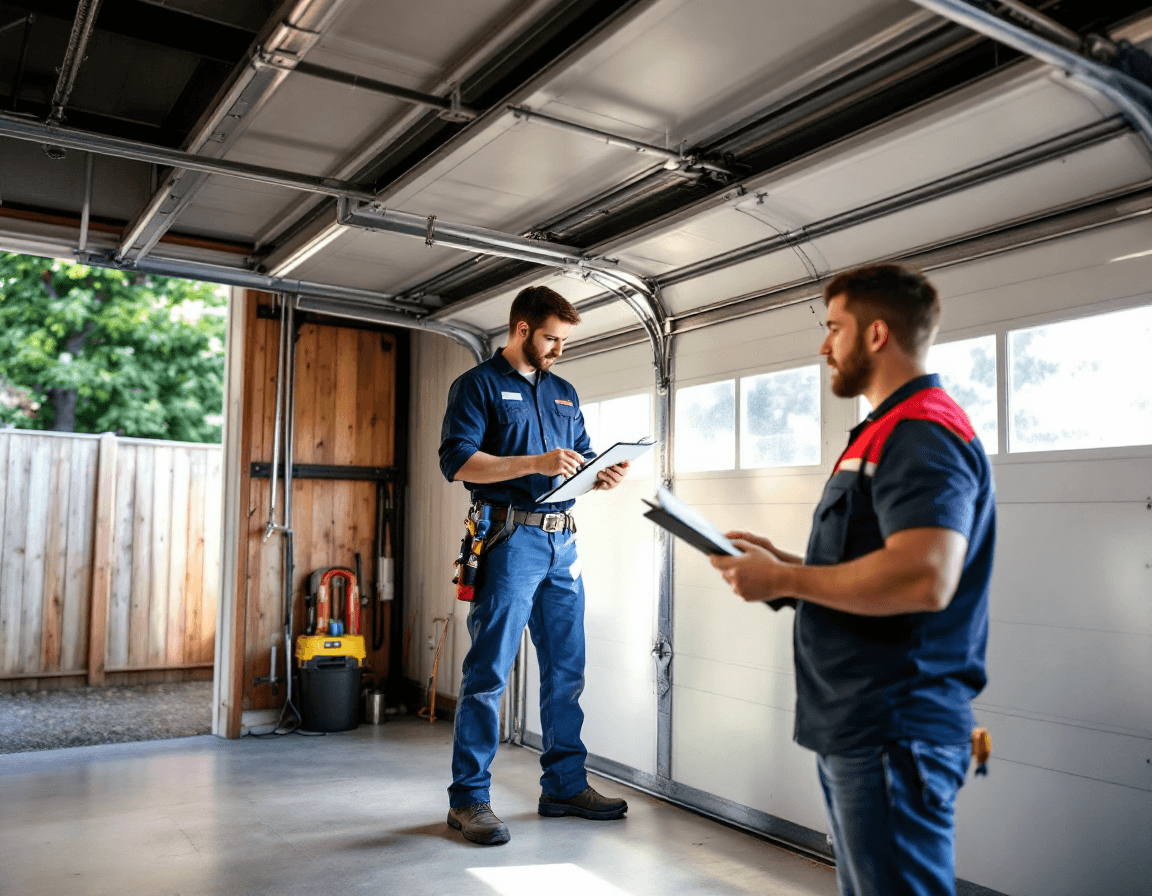
Garage Door Maintenance & Tune-Ups in Bothell, WA is one of the most cost-effective ways to keep your home running smoothly, and it matters more here than many homeowners expect. Bothell sits on the north end of Lake Washington, where the Sammamish River winds through town, and the damp, mild winters that define Western Washington work on garage door hardware every single day. A door that operated quietly last spring can start grinding, sagging, or stalling by the time the first heavy rains settle in, often without any obvious damage to point to.
A professional tune-up is a scheduled inspection, adjustment, and safety check that catches small problems before they turn into a failed spring, a jammed track, or an opener that quits at 6 a.m. on a workday. Our multi-point service covers the door itself, the tracks and rollers, the hinges and bottom brackets, the cables and springs, the balance, and the opener's safety systems. Pricing for a full multi-point tune-up runs $89 to $149, depending on the door type, its size, and what we find during the inspection.
Whether you live in a 1990s subdivision near Canyon Park, a newer townhome close to North Creek, or an older house a short walk from Bothell Landing, the principles are the same. The sections below explain what we check, why Bothell conditions matter, which warning signs deserve attention, and what you can reasonably handle yourself versus what belongs in a licensed technician's hands.
Why Bothell Garages Age Differently Than Dry-Climate Garages
Garage doors in the Pacific Northwest live a harder life than their manufacturers' brochures sometimes suggest. Persistent humidity, long stretches of drizzle, and a damp slab that holds moisture well into spring all encourage surface rust on torsion springs, bottom brackets, and track hardware. Steel that has been galvanized can still corrode at the cut edges and at fastener points, and once corrosion starts, friction climbs and the door begins to work against itself. In a drier climate a door might look fine for a decade, while in a wet one the same hardware can show visible wear in half that time.
Bothell's temperature swings add another layer. Cold snaps that bring the thermometer toward freezing can stiffen lubricants and make the door's rollers and hinges drag, while milder afternoons can soften grease and let it migrate off the moving parts. Those repeated shifts cause metal to expand and contract, which can slowly loosen mounting bolts and shift the track's alignment. A technician who knows the local pattern will look for these specific effects rather than running a generic checklist.
Dust and pollen also deserve attention. Spring brings a heavy coat of tree pollen across Snohomish and King County neighborhoods, and that fine material mixes with old lubricant to form a gummy film on rollers and track channels. Over a few months that film can slow the door noticeably, and it often shows up first as a faint squeak that gets louder each week.
What a Multi-Point Tune-Up Covers in Your Garage
A multi-point tune-up is designed to look at the entire system rather than a single noisy part. We start with a visual check of the door panels, sections, weatherseal, and bottom retainer, looking for cracks, delamination, separated panels, and seal damage that lets water and drafts into the garage. Next we inspect the tracks for straightness, looseness, and any dents that could cause a roller to bind. Each mounting bracket and bolt gets checked for tightness, because a loose bracket is one of the most common reasons a door starts to sway or rattle.
The hardware phase covers rollers, hinges, end caps, center bearings, and bottom brackets. We check rollers for flat spots, cracked nylon, or worn bearings, and we replace components where wear has already compromised movement. The door's cables and springs are inspected and measured for wear, fraying, and winding condition, but spring adjustment and replacement are work we reserve for licensed professionals because the tension stored in a torsion spring is dangerous to handle without proper tools and training.
Finally, the opener is evaluated on its own terms. We check the motor's operation, the chain or belt tension, the mounting hardware, the limit settings, and the safety reversal system. A tune-up also includes a balance test and a look at the door's travel, which together tell us whether the system is working as one unit or whether a single component is quietly carrying extra load.
- Visual inspection of panels, sections, seals, and bottom retainer
- Track alignment, mounting bolt torque, and bracket condition
- Roller, hinge, center bearing, and end cap inspection
- Cable and spring wear assessment, handled by licensed technicians
- Balance testing and travel observation
- Opener limit settings, chain or belt tension, and mounting check
- Safety reversal testing with the door's photo eyes and edge sensors
Reading the Warning Signs Before a Breakdown
Most garage door failures do not arrive without notice. They usually announce themselves through a slow build of symptoms that homeowners tend to ignore because the door still opens. The most common early sign is noise that grows over time. A faint squeak in the spring can become a grinding groan by fall, and that change usually points to dried lubricant, a worn roller, or grit working into the track.
Other warning signs include a door that feels heavier than it used to, a door that stops at an odd height or jerks as it closes, and an opener that sounds strained or moves more slowly than before. A door that feels heavy or slightly off-balance is often the first hint that the springs have lost tension or that a track is pinching a roller somewhere along its path. Visible gaps at the top or bottom, panels that look uneven when closed, and a door that bounces on its way up are all worth reporting.
If your door hasn't been serviced in more than a year, treat it as due for a check even if nothing seems wrong. Many local homeowners are surprised to learn how much wear accumulates in twelve months of wet weather. Waiting for a breakdown is the expensive path, while a scheduled tune-up is usually the lower-stress one.
The Balance Test: Checking Whether the Door Wants to Stay Put
Balance is one of the most useful diagnostics a technician can perform, and it is simple to understand. A properly balanced door should stay in place when lifted by hand to about waist height and released, rather than drifting up or sinking down on its own. If the door pulls down sharply, the springs may be overpowering the weight, and if it rises on its own, the tension may be too light. Either condition puts extra stress on the opener and can shorten its life dramatically.
During a Bothell tune-up we disengage the opener safely and perform a manual balance check at several points in the door's travel. We look at whether the door stays steady at the bottom, middle, and top of its path, and we watch for any tendency to bind or pivot. The results tell us whether the problem lies in the spring system, the track geometry, or a worn roller that is causing uneven movement.
Please do not attempt to adjust spring tension yourself. The springs store a large amount of energy, and mishandling them can cause serious injury. Balance testing by homeowners should be limited to the gentle, hands-off observation described here, and any adjustment or replacement belongs with a licensed garage door professional.
Opener Safety and Reversal Testing
Modern openers include a safety reversal system that is designed to stop and reverse the door if it contacts an obstacle or if the photo eyes detect something in the doorway. These features protect children, pets, vehicles, and anyone who might be standing in the path of a closing door. Because these systems are easy to forget about, they deserve regular verification.
During our safety checks we test the photo eyes by confirming that the sensors are aligned, clean, and wired correctly. We check that the door reverses when a beam is interrupted during closing, and we confirm that the reversal behavior works with the door's expected force. We also test the auto-reverse sensitivity on models that use edge sensors or force-sensing logic, because a system that is set too loosely can allow a dangerous force to build before reversing.
Opener strain is another area we watch closely. An opener that labors, hums without moving the door, or stops partway up is often working against a balance or track problem rather than failing on its own. Correcting the underlying issue usually extends the opener's service life and restores the reversal function to its intended performance.
Lubrication Choices for Wet Western Washington Hardware
Lubrication sounds like the simplest part of a tune-up, but the wrong product can make a Bothell garage door worse. Heavy grease attracts dust and pollen, which turns into a gritty paste that wears rollers and track surfaces faster than the grease protects them. Thin oils, on the other hand, can wash away quickly during winter rain and leave metal exposed.
Our approach is to clean old residue from tracks and rollers before applying a suitable lubricant at the points that need it. Hinges, roller bearings, and the opener's chain or rail typically require different products, and we match each one to its working conditions. Springs also receive protective lubrication, though spring work itself belongs with licensed professionals. Track surfaces are usually cleaned and wiped rather than heavily greased, because a clean metal surface helps rollers glide without collecting debris.
Homeowners can help between visits by wiping down tracks with a dry cloth after heavy rains and keeping the garage floor clear of leaves that get tracked into the door channels. Avoid spraying penetrating lubricants on the tracks, since they can drip onto the floor and create slip hazards. A quick monthly wipe-down is often enough to keep things moving until the next scheduled tune-up.
Neighborhood Patterns Around Bothell Landing, Canyon Park, and North Creek
Bothell covers a wide range of housing styles, and the garage door issues we see can shift depending on where a home was built and how it has been used. Homes near the older parts of town, close to Bothell Landing and the Sammamish River corridor, often have original or early replacement doors that are due for a full hardware refresh. Those doors may still work reliably, but worn rollers and aging springs commonly show up during an inspection.
Canyon Park includes a mix of residential neighborhoods and business areas, and many homes there have two-car garages that see frequent use. Doors that open and close several times a day accumulate wear faster than those used only for the occasional car trip, so the tune-up schedule for a busy household should typically be tighter. Opener strain and roller wear are common findings in these homes.
Around North Creek, newer construction is common, and many of these garages feature larger doors with insulated panels and heavier weight. Those extra pounds place more demand on springs and openers, which makes balance testing especially valuable. Our technicians check the mounting of every bracket in these doors because large panels transfer movement into the frame over time.
When You Have Owned the Home for a Year or Longer
The gap between tune-ups is one of the most common reasons garage doors fail unexpectedly. Many homeowners assume that a door without visible problems does not need attention, but the hardware keeps working under load whether or not anyone is watching it. When a door has gone more than twelve months without service, it has usually been through at least one full wet season and at least one dusty spring.
After a year without maintenance, we often find several small issues that have crept into a noticeable problem. Rollers may have developed flat spots, lubricant may have dried into a varnish-like coating, and mounting bolts may have worked slightly loose. None of these issues is dramatic on its own, but together they can make the opener work harder and increase the risk of a sudden failure.
A scheduled tune-up in these situations gives us a baseline and lets us address wear before it spreads. It also gives you a clear record of the door's condition, which is helpful if you plan to sell the home or need a repair estimate later.
Buying a Home in Bothell? Start with a Garage Door Baseline
When you purchase a home, the garage door is one of the systems that is easy to overlook during the excitement of moving in. Sellers may have operated the door regularly, but they rarely tell you about roller wear, opener settings, or the age of the springs. A pre-move-in tune-up gives you a reliable starting point and an honest assessment of what you have inherited.
During a first-time inspection we document the door's condition, verify that the opener's safety reversal works, and note any components that will need attention soon. You will learn the door's approximate spring and hardware condition, which helps with budgeting for future repairs. We can also show you how to recognize the early signs described earlier so you know when to call.
If the previous owner left the remote controls, keypad codes, or opener manuals behind, bring them along to the appointment. Those details help the technician set up the opener correctly and confirm that everything is working as intended.
What Homeowners Can Handle Between Professional Visits
Between scheduled tune-ups, there are several simple tasks that keep a Bothell garage door in good shape. These tasks are safe, require no special tools, and help catch problems early. The goal is to notice changes, not to perform repairs, and anything involving springs, cables, or heavy hardware should be left to licensed professionals.
- Wipe down tracks and rollers with a dry cloth after heavy rain or heavy pollen days
- Test the photo eyes monthly by waving an object through the beam while the door is closing
- Listen for new squeaks, grinding, or popping and note when they started
- Watch the door's movement and report any jerking, uneven motion, or bounce
- Keep the area around the tracks clear of leaves, tools, and stored items
- Confirm that the door stays in place when lifted by hand to waist height, and report any drift
If you notice a cable that looks frayed, a spring that appears to have a gap in its coils, or a door that falls rather than lowers smoothly, stop using the door and call a licensed technician right away. Those conditions can be dangerous and should not be handled by homeowners.
Setting a Tune-Up Schedule and Understanding Your Investment
For most Bothell households, an annual multi-point tune-up is a sensible starting point, with a shorter interval for doors that see heavy daily use or that are exposed to particularly harsh weather. Some homeowners prefer to schedule service in early fall, before the wettest months arrive, while others choose late winter to address wear that built up during the rainy season. Either timing can work, and the best choice depends on how your garage is used.
A full multi-point tune-up in our service area is priced between $89 and $149. The final figure depends on factors such as the door type, the number of sections, the opener model, and whether the inspection turns up components that need replacement. We will explain any recommended work before performing it, and you will always have the option to approve or defer repairs.
Keeping up with maintenance usually costs far less than responding to an emergency. A door that is serviced regularly is less likely to fail during a cold morning or a rainy commute, and it tends to operate more quietly and safely for years.
Garage door maintenance and tune-ups in Bothell, WA are the simplest way to protect your investment and avoid surprise breakdowns during the wettest months of the year. Seattle Garage Door Fix is a licensed, bonded, and insured team serving homeowners across the greater Seattle and Western Washington area, including Bothell, Canyon Park, North Creek, and nearby neighborhoods. If your door is getting noisier, feels heavy, has gone a year without service, or your opener is straining, call us at (888) 799-3819 to schedule a multi-point tune-up.