
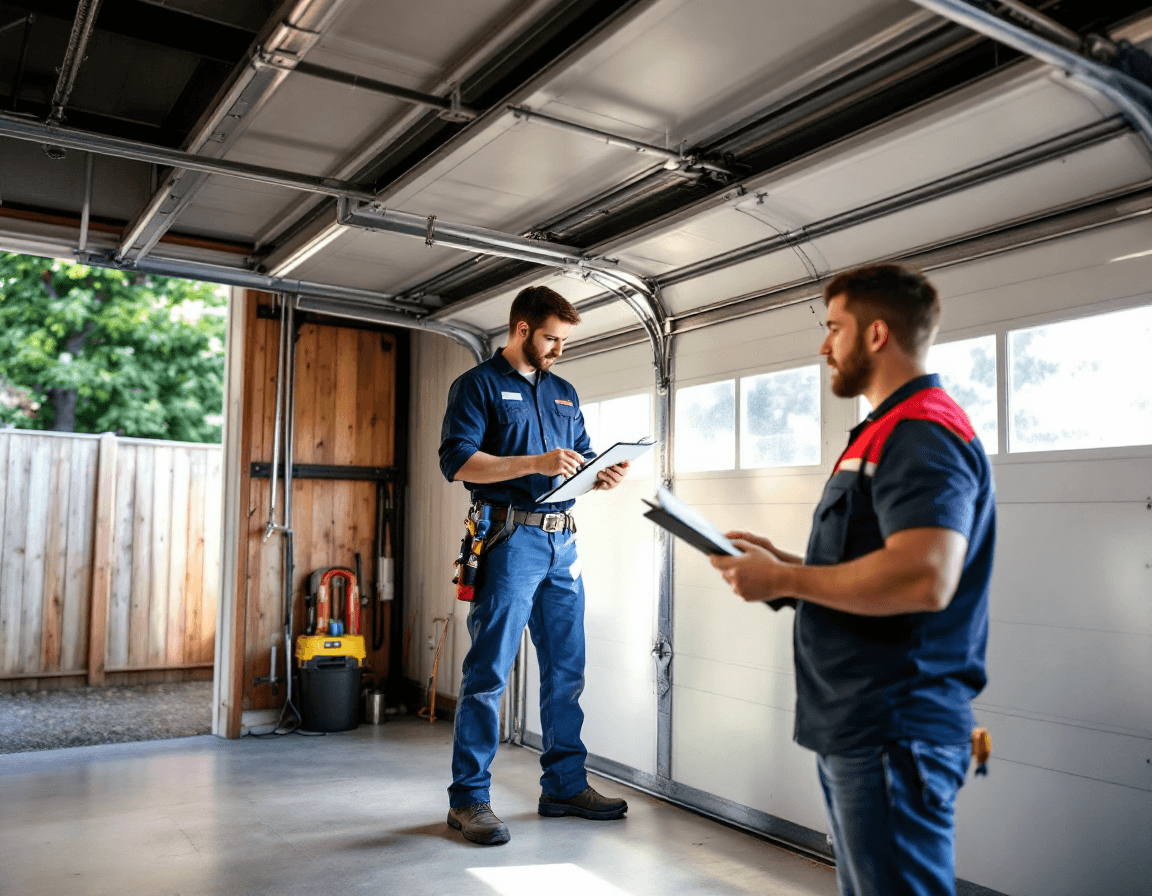
Garage Door Maintenance & Tune-Ups in Kenmore, WA is one of the most practical things a homeowner can schedule before the wet season settles in. Kenmore sits on the northeast shore of Lake Washington, where the air stays cool and damp for much of the year, and that moisture works its way into every moving part of a garage door. A tune-up gives a technician the chance to catch wear, loosen corrosion, and recalibrate the opener before a small problem turns into a stuck door on a dark January morning. Our technicians serve homes across 98028 and the surrounding neighborhoods, and the same checks apply whether your door is a decade old or was installed the year you moved in.
Many Kenmore homeowners don't think about their garage door until it makes a new sound or stops responding to the remote. By then, the hardware has usually been working harder than it should for months. A scheduled tune-up is a low-cost way to learn where your system stands, which parts are fine, and which ones deserve attention soon. The visit also gives you a clear written picture of the door's condition, so you can plan repairs on your own timeline rather than reacting in a hurry.
This page explains what a multi-point maintenance visit includes, why local conditions matter, and how to tell when your door is overdue for a look. It also covers what a tune-up does not include, particularly spring and cable work, which belongs in the hands of a licensed professional. If you are preparing to buy a home or you have noticed your door feeling heavy, noisy, or sluggish, the sections below will help you decide what to do next.
Why Kenmore's Damp Air Works Against Your Garage Door
Kenmore's proximity to Lake Washington means the surrounding air carries more moisture than many homeowners expect, especially during the long stretch from fall through early spring. Morning fog that rolls off the water can leave a thin film on exposed metal, and steady drizzle keeps garage floors and door bottoms wet for days at a time. Steel tracks and hinges that sit in this environment can develop surface rust faster than the same hardware would in a drier climate. Wood doors absorb moisture, swell, and then shrink as conditions change, which can throw off panel alignment and rub against weatherstripping.
Garages in Kenmore are also exposed to the temperature swings typical of Western Washington. A cold snap followed by a mild afternoon can make lubricants thicken overnight and then loosen up again, leaving rollers and pivot points with uneven movement. Over time those swings wear on the springs, cables, and bearings, and they make the opener motor work harder to start the door. The result is often a door that seems fine in summer but groans or lags in the cooler months.
Many residents also use their garages as everyday space. Bikes, kayaks, muddy boots, and gear from trips to Saint Edward State Park or the Kenmore Waterfront are commonly stored near the door, which means dirt and wet grit are regularly carried into the track area. Those particles act like sandpaper on rollers and bearings when they accumulate. A tune-up clears that buildup, inspects the affected areas, and replaces the lubricant that the grit has pushed out of place.
What a Multi-Point Safety Inspection Actually Covers
A multi-point safety inspection is the foundation of every tune-up we perform. The technician begins by checking the door as a complete system rather than focusing on one component. That means looking at the panels, the bottom seal, the tracks, the rollers, the hinges, the springs, the cables, the drum, the opener, and the safety sensors, one after another, in a repeatable order so nothing gets skipped. Each point is evaluated for wear, damage, looseness, and alignment, and anything that falls outside a safe range gets noted for discussion.
Key areas typically reviewed during the inspection include:
- Track alignment, level, and tightness of all mounting bolts
- Roller condition, including cracked nylon wheels or worn stems
- Hinge and bracket fasteners, along with signs of metal fatigue
- Spring and cable visual condition (inspected only, never adjusted)
- Bottom weather seal and door sweep for gaps or deterioration
- Opener mounting, belt or chain tension, and motor operation
- Photo-eye sensor alignment and auto-reverse response
The inspection is visual and functional, not a tear-down. We are checking whether the door opens and closes smoothly, whether it stops and reverses when it should, and whether any component shows damage that could lead to a failure. Where something needs deeper repair, the technician explains the finding and what it would involve, so you can decide how to proceed. The goal is clarity, not pressure.
Lubrication That Fits the Way Your Door Is Built
Lubrication is often the most visible part of a tune-up, but it is only useful when it is done correctly. Too much grease attracts dust and grit, while the wrong product can gum up a roller or leave residue on a track that collects dirt all winter. A good technician uses a lubricant designed for garage door hardware and applies it to specific points: hinge pivots, roller stems, bearing surfaces on the drum and shaft, and the opener's moving parts where the manufacturer recommends it. Tracks are generally cleaned and then lightly treated rather than flooded with product.
In Kenmore's damp conditions, the choice of lubricant matters more than many people realize. A product that resists moisture and holds up through temperature changes will keep the door quiet longer than a general-purpose spray that dries out quickly. We also wipe away old residue before applying anything new, since layering fresh product over grime only traps abrasive particles against metal. Done this way, lubrication reduces friction on the components that carry the door's weight and extends the life of the rollers and hinges.
Lubrication is not a cure for everything, though. If a roller is cracked, a hinge is bent, or a track is out of alignment, adding more grease will not solve the underlying issue. This is why the lubrication step comes after the inspection and why the technician will tell you if a part needs replacement rather than another coat of product. Honest maintenance means knowing when lubrication is the right answer and when it is not.
Balance Testing: The Simple Check That Reveals Hidden Strain
A garage door should be balanced so that it stays roughly in place when you lift it partway by hand, with the opener disengaged. A door that is out of balance will tend to drop quickly when released, rise on its own, or feel noticeably heavier on one side. Balance problems place uneven stress on the opener, the cables, and the springs, and they can cause the door to bind in its tracks. Many homeowners notice the symptom as a door that feels heavy or slightly off, but they may not connect that feeling to a real mechanical issue.
During a tune-up, balance testing is done with the door disconnected from the opener and moved slowly through its travel. The technician observes whether the door holds at several heights and whether one side is pulling more than the other. This test is quick, and it gives a clear indication of whether the springs and cables are doing their job evenly. It is also a safety check, because a badly unbalanced door can drop with more force than expected if a component fails.
Here is where we draw a firm line. Balance testing is a diagnostic step, and if the test shows that the door needs spring adjustment or cable replacement, that work must be performed by a licensed professional with the proper tools and training. Torsion springs carry significant tension, and attempting to adjust them without the right equipment can cause serious injury. We will explain what we found and what it would take to correct it, but we will never recommend that a homeowner attempt that work alone.
Opener Safety Testing and What a Slow Opener Is Telling You
The garage door opener is responsible for moving a heavy door reliably thousands of times a year, and it also serves as one of the most important safety features in the system. Modern openers are required to reverse when they encounter resistance, and the photo-eye sensors near the floor must detect obstructions and stop the door from closing onto a person, pet, or object. A tune-up includes testing these safety functions, confirming that the door reverses when it contacts a test object and that the sensors are aligned and clean.
A straining or slow opener is one of the most common reasons homeowners call for service. The motor may hum longer than usual, the door may pause partway, or the travel may feel labored compared with how it used to operate. These signs often point to a combination of issues: an imbalanced door forcing the motor to compensate, a drive belt or chain that has lost proper tension, worn rollers increasing drag, or a sensor misalignment causing the opener to hesitate. Catching these early can prevent the motor from overheating or wearing out prematurely.
Testing the opener also means checking the limit settings, which control how far the door travels when opening and closing. If those settings drift, the door may stop short of fully closing or push too hard against the floor. Adjusting the limits is part of a routine tune-up, and it helps ensure the opener is not running under unnecessary strain. Our technicians will walk through the results with you so you understand what was tested and what passed.
Listening to Your Door: How Noise Changes Over Time
A garage door rarely becomes loud overnight. Noise usually builds gradually as rollers wear, lubricant dries out, hardware loosens, and small amounts of grit work their way into the track. Homeowners often adapt to the sound without realizing how much it has changed, and by the time the racket is obvious, several components may need attention. Learning to recognize the difference between normal operating sounds and warning signs can help you act sooner.
Some noises are worth listening for. A squeal or squeak often indicates dry hinges or rollers that need lubrication. A grinding or scraping sound may suggest debris in the track or a roller that is flattening or cracking. A sharp bang at the top or bottom of travel can point to loose brackets or a limit setting that needs correction. A rhythmic clunk may mean a loose bearing plate or a worn drum. None of these sounds should be ignored, and a tune-up is the right moment to have them traced to their source.
Noise is also a useful reference point for tracking your door's condition over time. If you note how the door sounds in the fall and again in the spring, you can see whether the problem is worsening. Many people find it helpful to write down a short description of what they hear and when it happens, then share that with the technician. That information helps narrow the diagnosis and makes the visit more efficient for everyone involved.
Buying a Kenmore Home? Use a Tune-Up as a Pre-Move Checkpoint
When you are buying a home, the garage door often receives less attention than the kitchen, roof, or foundation, even though it is one of the largest moving objects on the property. Sellers may have run the door for years without service, and a door that works fine during a showing can still hide worn rollers, unbalanced springs, or an aging opener. A tune-up after closing gives you a baseline record of the system's condition and a clear list of anything that deserves near-term planning.
The timing is useful. Scheduling a maintenance visit in the first few weeks after moving in lets you see the door in its everyday state, not just during a rushed inspection. If the technician finds a worn part or an opener nearing the end of its service life, you can budget for repairs without an emergency call. Many new owners in Kenmore also discover that the safety sensors were never properly aligned, which is an easy fix once identified and an important one for a household with children or pets.
If you have a home inspection report, bring it along or review it before the visit. Garage doors are sometimes noted there with general comments, and a technician can expand on those observations with specific findings. This combination gives you both a professional's perspective and a practical plan. It also helps you understand what you own, which is one of the best ways to protect your investment.
How Often a Kenmore Garage Door Needs Attention
There is no single schedule that fits every household, but a yearly tune-up is a sensible starting point for most Kenmore homes. The combination of damp air, temperature swings, and daily use means that hardware wears steadily even when the door seems to be working well. A door that has gone more than a year without service is often due for a visit, particularly if it has never been inspected since installation. Homes with heavy daily traffic, large or insulated doors, or openers that run several times a day may benefit from a check sooner.
Several situations suggest that a door is overdue. You might notice a change in noise, a slower response from the opener, or a door that seems heavier than it used to be. You may have experienced a close call with the auto-reverse feature, or the door may have stopped partway through its travel. Each of these is a reason to schedule a visit rather than waiting for the next seasonal check.
Consider the most common signs that your door is due for a multi-point tune-up:
- The door has not been serviced in more than twelve months
- The opener sounds strained, pauses mid-travel, or runs longer than usual
- Rollers, hinges, or tracks are audibly noisy during normal operation
- The door feels heavy or seems to drop unevenly when lifted by hand
- You are preparing for a move, a seasonal change, or a longer absence
- The safety sensors have been bumped, or the door has reversed unexpectedly
Preventive maintenance costs less than emergency repair, and it reduces the chance of being stuck with a door that will not open on the day you need to leave for work.
Spring and Cable Work Belongs in Licensed Hands
Garage door springs and cables are among the most dangerous components in any residential system, and they deserve respect. Torsion springs store large amounts of energy, and when they are adjusted or replaced improperly, they can release that energy with enough force to cause serious injury. Extension springs and cables carry similar risks when they fail or are handled without proper tools. For this reason, we always recommend that homeowners leave spring and cable work to licensed professionals who have the training, equipment, and experience to do it safely.
During a tune-up, the technician will visually inspect springs and cables for signs of wear, such as gaps between coils, fraying, rust, or cable slack. We will report what we see and explain whether the component appears to be functioning normally or needs replacement. What we will not do during a standard maintenance visit is make tension adjustments that require specialized equipment, and we encourage you to avoid making those adjustments yourself. If your door has a broken spring or cable, stop using it and call a licensed technician rather than trying to fix it alone.
Our position on this is simple. The purpose of a tune-up is to keep the system working safely and to identify problems early. When a spring or cable needs work, we will explain the situation clearly and help you schedule the appropriate repair. Your safety is more important than completing a task quickly, and a careful, professional approach is the only sensible way to handle high-tension hardware.
What the $89–$149 Tune-Up Covers and What It Does Not
Our full multi-point tune-up is priced between $89 and $149, depending on the size of the door, the number of components involved, and the condition of the system at the time of the visit. The price includes the multi-point safety inspection, lubrication of the appropriate hardware, balance testing, and opener safety testing. The technician will walk through the findings with you before leaving so you know what was checked, what looks good, and what may need attention in the future.
It helps to understand what a tune-up does not include. Repairs such as replacing rollers, hinges, cables, springs, or opener parts are separate from maintenance and will be quoted individually if needed. Spring and cable adjustments fall under licensed repair work, not routine tune-up tasks. If the technician identifies a problem that requires additional work, you will receive an explanation and an estimate, and you are never obligated to proceed on the spot. Clear communication is part of how we operate.
Think of the tune-up as an investment in predictability. It will not make an old door brand new, but it will show you where the system stands and help you avoid the inconvenience and expense of a sudden failure. For many Kenmore homeowners, that clarity is worth far more than the modest price of the visit. If you are unsure whether your door needs service, a tune-up is one of the simplest ways to find out.
If your garage door is getting louder, the opener is struggling, the door feels off-balance, or it has been more than a year since anyone looked at it, now is a good time to schedule a multi-point tune-up. Call Seattle Garage Door Fix at (888) 799-3819 to set up a visit for your Kenmore home. Our licensed, bonded, and insured technicians will inspect, lubricate, test, and explain what they find, so you can keep your door safe and reliable through the damp Pacific Northwest seasons.