
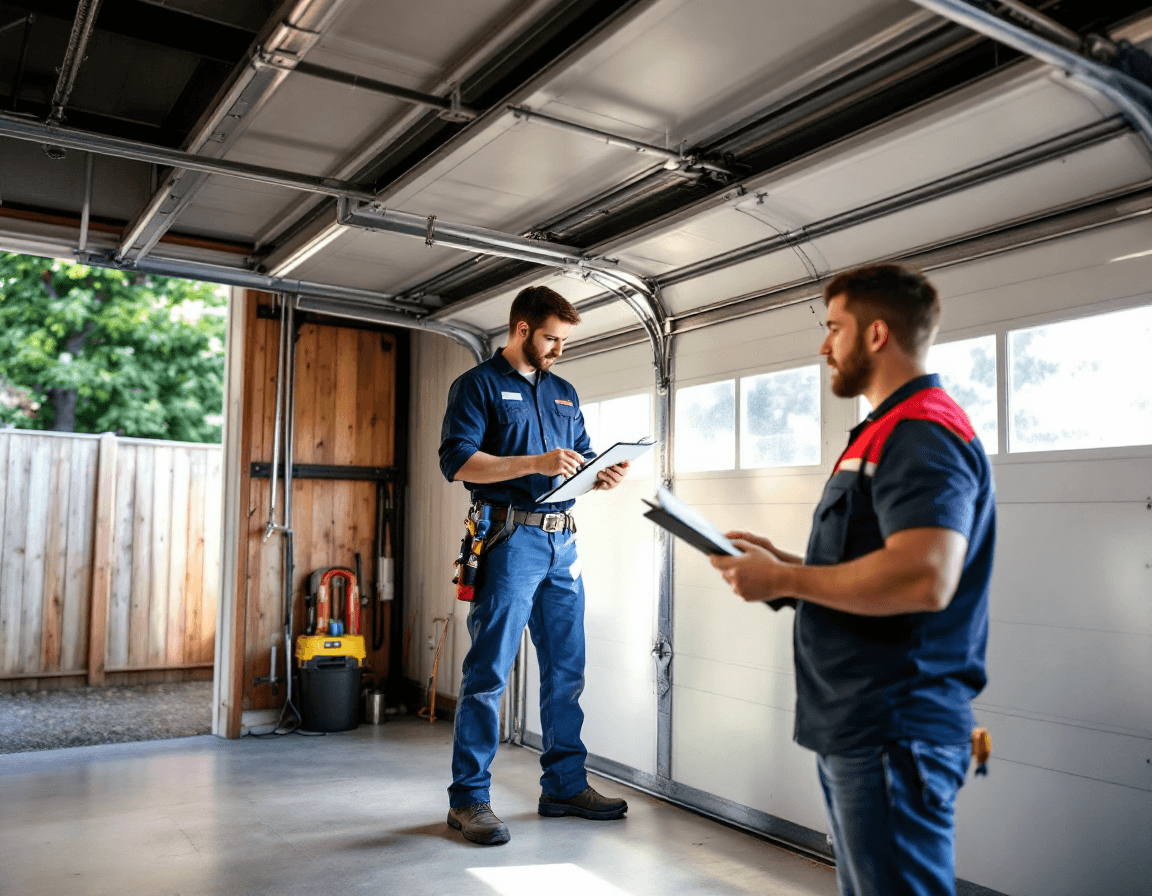
Garage door maintenance and tune-ups in Lake Forest Park, WA are often the difference between a door that opens smoothly for years and one that quits on a wet Tuesday morning. Our technicians work across north King County, and the homes around Lake Forest Park see a particular mix of conditions: long, damp winters, tall conifers that drop needles and cones into tracks, and daily temperature swings that move metal and lubricant in ways a driveway-facing door never quite forgets. A tune-up is a scheduled, hands-on review that catches small problems while they are still small.
Many homeowners in 98155 assume a garage door either works or it doesn't, but the truth sits in between. A door can open and close and still be quietly overworking its springs, rollers, and opener motor. Those hidden strains show up later as noise, uneven movement, or a sudden stop. This page explains what a full multi-point service looks like, why local weather matters, and how to decide whether your door is ready for one now or should wait until a specific warning sign appears.
If you are reading this because your garage door has been sounding different lately, or because you just closed on a house and have no service history for the door, you are in good company. Our crews handle plenty of first-time inspections for buyers who want a clear baseline before they start unpacking. The sections below walk through the checks, the local factors, the pricing, and the points where we would rather hand the job to a licensed specialist.
What a Multi-Point Tune-Up Covers on a Lake Forest Park Garage
A multi-point tune-up is a structured walk-through rather than a quick glance at the door. The technician starts by observing the door in motion through a full open and close cycle, watching for drag, wobble, or hesitation at the top and bottom of travel. From there, the visit moves through the hardware, the safety systems, and the opener, recording what is normal and what needs attention. We focus on the components that wear quietly and then fail suddenly.
The service generally includes these checkpoints:
- Visual inspection of springs, cables, drums, end brackets, and bearing plates for rust, fraying, or loose fasteners (inspection only; spring and cable replacement is handled by licensed professionals)
- Roller and hinge review, including wear, cracking, alignment, and whether fasteners have backed out
- Track alignment, level, and clearance checks at both sides of the door
- Lubrication of rollers, hinges, bearings, and the lift system using a product suited to the components involved
- Balance testing to see whether the door stays in place when released partway open
- Opener safety testing, including auto-reverse and photo-eye response
- Opener force and travel limit review, along with a check of the manual release
Every item on that list matters, but the sequence matters too. Lubricating a track that is already bent or out of level just spreads grease around a problem. Testing an opener's reverse feature before confirming the door is balanced can give misleading results. Our technicians work through the checks in an order that keeps each finding meaningful, and they explain what they found in plain language before any work is recommended.
Why Damp Winters Show Up First in Local Hinges and Rollers
Lake Forest Park's wet season is long, and moisture is the first thing we notice on many doors when we open the panel and look at the hardware. Rain and humidity find their way into hinge knuckles, roller stems, and the bottom edge of the door, where water sits after it drives in under the seal. Over a single season the effects are minor, but over several wet winters they add up to surface rust, stiff rollers, and a bottom seal that no longer closes evenly against the slab.
Temperature changes add a second layer to the problem. Cold mornings thicken ordinary lubricants, which makes the opener work harder to start the door, while warmer afternoons thin the lubricant and can let it run off the moving parts where it is needed most. A door that feels fine in July can feel noticeably heavier in January, and homeowners sometimes mistake that seasonal change for a failing opener. A proper tune-up accounts for the season and uses lubrication that matches the conditions the door actually lives in.
Garages in this area also see condensation on the interior side of the door during cold snaps, especially when a car comes in wet and the air inside cools overnight. That moisture settles on steel panels and rail sections and can start corrosion in places you cannot see from the driveway. We look for early staining, flaking paint, and white or reddish residue along the bottom panel and the tracks, because catching those signs early is far less expensive than replacing a corroded section later.
Reading the Noise: What Your Door Is Trying to Tell You
Most garage doors get louder gradually, which is why owners often stop noticing the change. A new squeak becomes the normal soundtrack, then a grinding note appears during opening, then a rattle starts at the top of travel. Each sound has a likely source, and learning to recognize them helps you describe the problem accurately when you call. A squeal that appears on the first few inches of travel often points to dry rollers or hinges, while a rhythmic clicking sometimes indicates a loose track bracket or a worn roller that is starting to wobble.
A deep groan or a low, strained hum from the opener is different. That noise usually means the motor is working harder than it should, whether because the door is out of balance, the tracks are binding, or the opener's internal parts are aging. If you hear the motor labor for a second or two before the door begins to move, that is an early sign the system is under load. Left alone, the strain tends to shorten the life of the opener and can make a surprise stop more likely.
Noise can also come from the outside of the door, such as a panel that rattles against its neighbor when the wind picks up. Those rattles are usually simple to address, but they deserve attention because loose panels can shift the balance of the door over time. We listen for these sounds during the tune-up, identify which ones are harmless and which point to wear, and then give you a clear sense of what to watch between visits.
Balance Testing Without the Guesswork
A balanced door is one of the most important safety and longevity factors in any garage, and it is also one of the easiest to overlook. When the door is properly balanced, it should stay roughly where you stop it if you release it partway open, and it should move with moderate effort rather than pulling hard in one direction. An unbalanced door places extra strain on the opener, the cables, and the spring system, and it can make the door feel heavy or slightly off-center.
Balance testing is simple in concept but requires careful observation. The technician disconnects the opener, lifts the door by hand to a few different heights, and watches how it behaves when released. A door that drops or rises on its own is out of balance, and the pattern of movement often points to which side needs attention. We record the results and explain whether the imbalance is a minor adjustment that can be handled during the tune-up or a sign that spring tension or hardware needs professional replacement.
It is important to be clear about the boundary here. Adjusting or replacing torsion springs and lift cables involves high stored tension and can cause serious injury when handled incorrectly. Our tune-up includes testing and inspection, and when balance problems trace back to spring or cable components, we recommend licensed spring and cable work rather than attempting it ourselves or asking you to try it. Doing it safely is the only acceptable way to do it.
Opener Force, Travel Limits, and Household Safety Testing
The garage door opener is the most visible part of the system and the one most people rely on every day, which makes its safety functions especially important. Modern openers are designed to reverse when they meet resistance, and they are required to stop and reverse if something blocks the door's path. Those features only protect your household if they are set correctly and tested regularly. A tune-up checks that the opener reverses reliably when it contacts a test object and that the photo-eyes near the floor are aligned and responding.
Force and travel settings are the next layer. Over time, a door can change weight through worn rollers, added hardware, or new paint, and the opener's force setting may no longer match the door's actual load. If the force is set too high, the opener may fail to reverse properly. If it is set too low, the door may stop unexpectedly during normal use. We check both the up and down travel limits, confirm that the door stops at the correct points, and verify that the manual release works smoothly so you can open the door during a power outage.
Opener safety testing is one of the places where a small adjustment can make a large difference. Photo-eyes that are misaligned by a few degrees can fail to detect a child, a pet, or a bicycle wheel in the door's path. A bent bracket can shift the eyes out of line after a minor bump with a car mirror. During our visit we look at mounting, wiring, and alignment, then test the response with a standard procedure so you know the system is doing its job before the next busy week begins.
Keeping Tracks Clear of Needles, Cones, and Grit
Homes near Sheridan Beach and the wooded lots that line the north shore of Lake Washington tend to collect a steady stream of organic debris. Douglas fir needles, cedar fronds, small cones, and seasonal leaves blow across driveways and accumulate in the tracks at the bottom edge of the door. Over time, that material mixes with road grit and damp, forming a paste that slows the rollers and can cause them to jump the track. A simple track cleaning during a tune-up removes that buildup and lets the rollers travel freely.
Tracks also drift out of alignment on older driveways where the slab has settled. Even a few millimeters of misalignment can make the door sound rough and force the rollers to ride against the track edge instead of rolling along the center. We check track level, vertical alignment, and the tightness of brackets that hold the track to the wall and ceiling. If a track has been bumped by a vehicle or a stored ladder, we note the location and explain the options for correcting it safely.
For homeowners who park near the Lake Forest Park Towne Centre area or along busier streets, road spray and salt residue from winter traffic can reach the lower panels and the track system. A quick rinse of the bottom section of the door, followed by a check for any corrosion on the track, helps keep the system clean. We tell you what to look for between visits so you can handle routine cleaning without damaging the finish or the seal.
Buying a Home in 98155? A Pre-Closing Door Review
Purchasing a house is a stressful stretch of paperwork, inspections, and deadlines, and the garage door often gets less attention than it deserves. Many buyers assume the seller's inspector covered the door, but general home inspections typically look at the door's operation rather than performing a detailed mechanical tune-up. If you have no service history for the door, a dedicated review gives you a clearer picture of its condition and helps you plan for future maintenance costs.
A pre-closing review follows the same multi-point structure as a standard tune-up, with extra attention to documentation. We note the door's style, panel construction, opener make and model where accessible, and any visible wear or repairs that appear to have been made previously. That record is useful for your own planning and can help you decide whether to request a repair credit, negotiate timing, or schedule service soon after you move in. We do not make decisions for your transaction, but we do give you facts you can use.
Buyers in the Lake Forest Park area also benefit from knowing how the door interacts with the rest of the house. A garage that shares a wall with living space may have an opener that is louder than expected, or a door with an insulation panel that has absorbed moisture. Noting those details early helps you plan for comfort and maintenance in the first year, when many homeowners are learning how their new systems behave across a full season.
Honest Pricing: What the $89–$149 Range Includes
Our full multi-point garage door tune-up is priced in the range of $89 to $149. The final figure depends on the door type, the opener model, the number of panels and tracks, and whether the visit includes any on-site adjustments that fall within the scope of routine maintenance. We aim to give you a clear sense of what the visit covers before the technician starts, so you are not surprised by the line items on the invoice.
The base service includes the inspection, lubrication, balance testing, track and roller review, and opener safety testing described above. It is a maintenance visit, not a repair, which means the technician's primary goal is to measure and record the condition of the system and address minor issues that fall within routine care. If the inspection reveals a component that needs replacement, the technician will explain the finding, describe the options, and provide a separate estimate for any recommended work. You are never obligated to approve additional service.
We believe the best way to protect your investment is to know what you are paying for and why. A tune-up in this price range is a practical way to extend the life of components that cost far more to replace after they fail. It also gives you a documented baseline, which helps when you compare the door's condition from one season to the next.
When a Tune-Up Turns into a Repair Conversation
Sometimes the honest answer is that a tune-up is not enough, and the door needs a repair. If the inspection finds a cracked spring, a frayed cable, a damaged drum, or a track that is bent beyond routine adjustment, the right next step is a repair visit, not another round of lubrication. We will tell you when the condition has moved beyond maintenance, and we will explain the safety concerns in plain language so you can make an informed decision.
Warning signs that often signal the need for a repair conversation include a door that drops suddenly when released, a visible gap in the spring system, cables that show fraying or kinks, or an opener that stops and reverses for no clear reason. Any of those symptoms deserves prompt attention. A door under high tension can be dangerous, and a component that looks merely worn can fail without warning, especially after a long stretch of cold weather or heavy use.
We also explain the trade-offs when a repair is possible but the door is aging. Replacing a single worn roller is often a sensible fix, while replacing several components on a door that is nearing the end of its useful life may not make financial sense. Our goal is to give you a clear picture of the options so you can decide what fits your home, your budget, and your plans for the next few years.
Safety Lines We Hold Firmly on Every Visit
Garage doors store a great deal of mechanical energy, and that energy is the reason certain tasks belong with licensed professionals. Torsion springs and extension springs are under high tension even when the door appears to be at rest. Cables, drums, and their mounting hardware carry significant load, and an error during adjustment or replacement can cause serious injury. For that reason, our tune-up scope stops at inspection, lubrication, and routine alignment, and we refer spring and cable work to licensed specialists.
We recommend that homeowners never attempt to wind, unwind, or remove a spring, and never attempt to disconnect or reattach a cable under tension. Those tasks require specialized tools, training, and an understanding of how stored energy behaves under different loads. If you notice a spring that looks loose, a cable that has come off its drum, or a door that has fallen unexpectedly, keep everyone clear of the door and call a licensed professional right away.
Household safety also includes the opener and the manual release. Keep the release cord out of reach of children and pets, and do not hang objects from the door or the track. If the opener reverses unexpectedly or the door begins to move on its own, disconnect power at the opener and call for service before using the door again. These precautions are simple, and they are the same ones our technicians follow every day.
Scheduling a multi-point tune-up is a straightforward way to protect your garage, your vehicles, and the people who walk through that door every day. Whether your door has grown louder over the last few months, feels heavy in the mornings, or simply hasn't been serviced in more than a year, a licensed technician can review its condition and tell you what it needs. Call Seattle Garage Door Fix at (888) 799-3819 to schedule your Lake Forest Park tune-up and get a clear, practical picture of how your door is performing.