
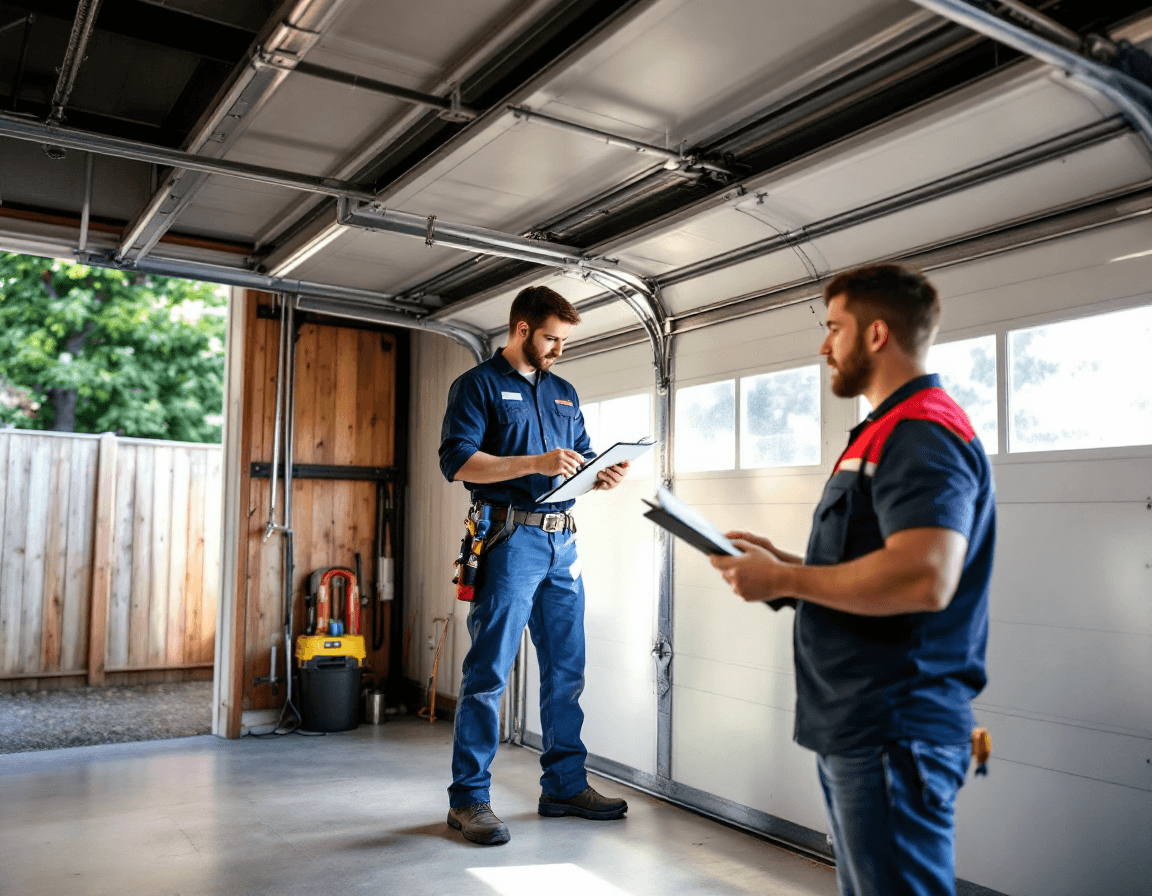
Garage Door Maintenance & Tune-Ups in Shoreline, WA is one of the most practical ways to keep a double-wide steel door or an older wood carriage-style door working safely through the seasons. Most of the trouble we see in Shoreline homes starts quietly: a faint squeak in October, a door that stops a few inches short of closing in January, or an opener that runs a little longer each month. A structured inspection catches those early signs while the fix is still a simple adjustment rather than an emergency call. This page explains what a full multi-point tune-up involves, why the Pacific Northwest climate shapes the work, and how to tell whether your door is due.
Shoreline sits between Puget Sound and the Lake Washington corridor, so garages here live in a humid, cool environment for much of the year. Moisture drifts in off the water, condenses on metal hardware overnight, and seeps into the bottom seal every November through March. That combination encourages surface rust on hinges and rollers, swells the weatherstripping, and loosens the fasteners that hold track brackets to the framing. A tune-up is designed around those local conditions, not a generic checklist written for a dry climate. If you have been meaning to schedule service, the rest of this page should help you decide how soon to book it.
Our service is priced between $89 and $149 for a full multi-point tune-up, and the final number depends on door size, the number of rollers and hinges, and whether the opener needs extra testing time. We do not treat the visit as a sales event. The technician will walk you through what is working well, what is wearing out, and what can wait another season. Work that involves high-tension springs or cables is always handled by licensed, trained technicians, because those parts store enough energy to cause serious injury. Keep reading for the details of each step.
Why Shoreline Garage Doors Age Differently
Garage doors in Shoreline face a different set of stresses than doors in drier parts of the state. Our winters bring long stretches of drizzle and fog, and the coastal air carries a fine salt and moisture load that settles on exposed metal. Garages in older neighborhoods such as Richmond Beach and parts of North City often sit on slabs that stay damp during the rainy months, which means the bottom of the door and the lower track sections see the most abuse. Even a garage that faces south and gets a little sun in summer will cycle between cold, wet nights and warm, dry afternoons.
Those swings matter for the mechanical parts. Steel panels expand and contract a little with temperature, which can shift the alignment of the rollers in their tracks. Vinyl and rubber weatherstripping stiffens in cold snaps and softens in damp spells, so the bottom seal may look fine in August and leak daylight by February. Wood doors, which are still common on homes built decades ago, respond to humidity even more dramatically and may bind if the panels swell after a wet week. A tune-up accounts for all of these movements by checking clearances and seals at the time of year when you are most likely to notice them.
Local homeowners also tend to use their garages hard. Many Shoreline households park a car inside and use the rest of the space for bikes, kayaks, tools, and seasonal gear for trips to the Interurban Trail or the beaches. That means the door may open and close several times a day, and the opener may run more often than the manufacturer anticipated. Frequent cycling accelerates wear on rollers and hinge pivots, which is why a service interval that works in a low-use garage may not be enough for a busy one.
Warning Signs That Your Door Needs Attention Now
Most garage doors send out a few warnings long before they fail, and learning to recognize them is the best way to avoid a surprise breakdown. The most common early sign is noise. A door that has grown louder over time usually has rollers that are dry, worn, or misaligned, and the squeal or grinding you hear is metal rubbing on metal. Vibration in the track, a rattle at the top of the travel, or a clunk when the door reaches the floor can also point to loose brackets. Pay attention to changes that develop gradually, since they often indicate a problem that is getting worse.
Other signs are easier to see. If the door hesitates, jerks, or stops partway through its travel, something is binding or the balance may be off. An opener that sounds strained, runs noticeably slower than it used to, or takes longer to reach the closed position may be struggling against friction or a weak drive component. Gaps around the bottom seal, daylight visible at the edges, or water spots on the garage floor after rain all suggest the weatherstripping needs replacement. Homeowners in Shoreline often notice this in winter, when a wet storm finds the gap at the threshold.
Use the following list as a quick self-check. If you recognize two or more of these, schedule a tune-up before the next rainy stretch:
- The door is noticeably louder than it was a year ago, especially when lifting or lowering.
- The opener strains, pauses, or runs slower than normal.
- The door feels heavy by hand when disconnected, or it drifts up or down on its own.
- The bottom seal leaves visible gaps or lets water and cold air inside.
- Rust, flaking paint, or white powder appears on hinges, rollers, or track sections.
- The door has not been professionally serviced in more than twelve months.
What a Multi-Point Tune-Up Covers
A full multi-point tune-up is a structured inspection that touches every major system in the door and opener. The technician begins by operating the door through several full cycles to observe how it moves, listening for noises, and noting any hesitation or uneven motion. The track is then checked for straightness, secure mounting, and proper spacing, because even a slight bend can cause rollers to bind. Hinges, end caps, and roller stems are inspected for wear, cracks, or looseness, and the fasteners are tightened where needed.
Next comes the safety and performance review. The technician checks the bottom seal and the side seals, tests the photo-eye sensors if your opener has them, and confirms that the auto-reverse feature responds correctly when the door meets resistance. Cables, drums, and springs are visually inspected for fraying, rust, or visible wear, but any adjustment or replacement of those parts is performed only by licensed professionals with the proper training and tools. Weight and balance are evaluated as part of the same visit. The lubrication step is done last, after the mechanical checks, so the right points get the right product.
We have included the core checklist below so you know what to expect from the appointment:
- Full-cycle operation test with noise and movement observation
- Track alignment, mounting hardware check, and bracket tightening
- Roller, hinge, and end-cap inspection for wear, cracking, or looseness
- Bottom seal and side seal condition review
- Photo-eye sensor alignment and auto-reverse testing
- Visual inspection of cables, drums, and springs (adjustments by licensed technicians only)
- Balance check and lubrication of moving parts with the appropriate product
Lubrication for a Damp Coastal Climate
Lubrication is one of the most misunderstood parts of garage door care, and the wrong product can make conditions worse in a humid climate. Heavy grease attracts dust and grit, which then forms a paste that clogs rollers and slows the door. Thin household oils may evaporate quickly or wash away with rain that blows under a door. For most Shoreline doors, a lightweight silicone-based or lithium-based lubricant designed for garage door components works better, because it stays in place and resists moisture. Applying a small amount to hinge pivots, roller bearings, and the springs (where accessible and safe) keeps the door quiet without leaving a sticky residue.
Overspraying is a common mistake. A few drops at each pivot point is usually enough, and any excess should be wiped away so it does not drip onto the floor or drag debris into the track. We also avoid lubricating the track itself with grease, since that invites dirt to collect in the channel where the rollers run. Track cleaning is a separate step that removes grit and old residue before the new product goes on. In Shoreline, where salt air and seasonal leaves can coat the lower track, cleaning often makes a bigger difference than the lubricant itself.
If you want to keep the door quiet between appointments, you can wipe the track with a dry cloth every few months and inspect the rollers for debris. Do not attempt to adjust tension, remove the spring assembly, or work on cables. Those tasks carry serious risk of injury, and a licensed technician is the right person to handle them. Our team brings the correct products and knows which points on your specific door should be lubricated and which should be left alone.
Balance Testing and Why a Heavy Door Is a Real Problem
Balance is the relationship between the door's weight and the spring system that counterbalances it. A properly balanced door should stay in place when raised partway, without drifting up or sliding down, and the opener should not have to work much harder than needed to move it. When balance is off, the opener strains, the door may slam or drop unexpectedly, and the components wear faster. Doors that feel heavy when manually lifted or that creep open by themselves are common signs that balance has shifted over time.
Balance testing is a standard part of a multi-point tune-up. The technician disconnects the opener carefully and tests the door at several heights to see whether it holds its position. Results are compared with the door's specifications, and any sign of imbalance is documented. Because the springs store large amounts of tension, adjustments require specialized tools and training, and they must be performed only by a licensed professional. A homeowner who tries to correct balance on their own can be seriously injured, which is why we treat this as a safety-critical step rather than a simple adjustment.
Many Shoreline homeowners ask whether they can wait until the spring or cable is obviously broken. The answer is no. A weakened spring often gives warning signs first, such as a door that feels heavier than usual or a slight sag on one side. Catching that early means a planned repair rather than a sudden failure. If your door seems off-balance, schedule an inspection instead of testing it yourself, and keep children and pets clear of the door while you wait for the visit.
Opener Performance and Safety Reversal Testing
The garage door opener does more than move the door. It is also a safety device that must stop and reverse when it meets an obstacle. During a tune-up, the technician checks the opener's motor, drive mechanism, and limit settings, then tests the auto-reverse feature using standard methods that confirm the door returns to the open position when resistance is encountered. Photo-eye sensors, which are the beams near the bottom of the door, are checked for alignment, cleanliness, and proper wiring, since a misaligned sensor can cause the door to close without detecting an object in its path.
Opener strain is one of the most common reasons homeowners call for service. Causes include worn rollers, poor balance, a dry or stiff track, a failing drive belt or chain, and an aging motor. Shoreline's damp winters can also affect electrical connections and wall-mounted controls, so the technician checks those as part of the visit. If the opener is showing signs of advanced wear, the technician will explain the options and provide a clear recommendation rather than pushing an unnecessary replacement.
Safety reversal is important for everyone in the household, but it matters most when children or pets use the garage. We recommend testing the auto-reverse feature yourself once a month using a sturdy object placed in the door's path at a low height. If the door does not reverse when it contacts the object, stop using the opener and schedule service right away. Keep the release cord in good condition, and never allow children to operate the door or play near the tracks.
Fresh Start for New Homeowners in North City and Richmond Beach
Buying a home is a good time to get the garage door checked. Sellers may not disclose every maintenance issue, and a door that operates adequately during a showing can still hide worn rollers, loose brackets, or a weakened spring. A tune-up soon after closing gives you a clear baseline for the door's condition and creates a service record you can refer back to later. Homes in North City and Richmond Beach often have garage doors that have been in place for many years, so this first visit is especially useful for understanding what the door needs.
During a new-owner visit, the technician will explain how the door and opener work, point out any safety items that need attention, and recommend a maintenance schedule that fits the home's use. Many buyers appreciate learning how to operate the manual release, where the sensors are located, and which signs to watch for during the rainy season. If the seller left behind an opener remote or keypad, the technician can confirm that the system is programmed correctly and that the auto-reverse is working as intended.
We suggest scheduling this visit within the first few weeks of moving in, before the first winter rains. That timing lets any necessary repairs happen before the damp months, when weather-related issues tend to show up. It also gives you time to decide whether to replace the seal, upgrade the opener, or make other improvements at a comfortable pace. A thorough first inspection costs far less than an emergency repair during a storm.
Setting Realistic Expectations for the $89–$149 Tune-Up
Homeowners sometimes ask what the $89–$149 range covers, and the honest answer is that it covers the full multi-point inspection, lubrication, balance testing, and opener safety testing described above. The price varies based on door size, the number of rollers and hinges, and the time required for opener testing and sensor alignment. A standard single-car door with a common opener usually falls toward the lower end of the range, while a large double-wide door or a more complex opener setup may land higher. We provide the exact price before work begins so there are no surprises.
The tune-up does not automatically include replacement parts or major repairs. If the inspection reveals a worn spring, a damaged cable, a failing opener motor, or track sections that need replacing, the technician will explain what is needed and provide a separate quote. You are never obligated to approve additional work on the spot, and you are welcome to take time to compare options or consult other opinions. Our goal is to give you a clear picture of what the door needs now and what can wait.
Some homeowners prefer to bundle the tune-up with other improvements, such as replacing the bottom seal before winter or adding a new keypad for convenience. Those upgrades are quoted separately and can be scheduled during the same visit if the timing works. Keep in mind that a tune-up identifies problems but does not replace them, so budgeting for potential repairs is a smart way to avoid delays when something needs attention.
Recognizing When Your Door Has Gone More Than a Year Without Service
Most garage doors perform reliably for years, but a door that has gone more than twelve months without service is due for an inspection, even if it seems fine. Lubricant breaks down, rollers wear unevenly, brackets loosen, and seals harden or crack. In Shoreline's climate, these changes can happen faster than many people expect, especially in a garage that sees daily use or that collects moisture during the wet season. A yearly check is a simple way to keep small issues from becoming expensive ones.
Look for clues that the door has been neglected. Rust streaks on hinges, a track that is dull and gritty, a bottom seal that has lost its flexibility, or an opener that has begun to sound different are all signs that maintenance is overdue. If you bought the home recently and cannot find any service records, treat the door as overdue and schedule a tune-up. Keeping a simple log of the date and what was done makes future visits faster and helps you track the door's condition over time.
Because garage doors are large, heavy, and mechanically complex, DIY maintenance should be limited to safe tasks such as cleaning the track with a dry cloth, wiping debris from the sensors, and testing the auto-reverse feature. Anything involving springs, cables, or high-tension components belongs in the hands of a licensed professional. A regular tune-up handled by trained technicians is the safest and most reliable way to keep your door working through another Shoreline winter.
Booking Your Shoreline Tune-Up and Preparing the Garage
Scheduling a tune-up is straightforward, and we serve homes across Shoreline including the 98133, 98155, and 98177 ZIP codes. Before the technician arrives, clear the area around the door and the opener so the team can access the tracks, the sensors, and the wall control. Remove stored items from the lower track area and make sure the path under the door is free of tools, bikes, or boxes. If you have a pet, keep it in another room during the visit for safety.
Let the scheduler know about any issues you have noticed, including noise, sluggish movement, or signs of moisture, so the technician can focus on those areas. Share the make and approximate age of the door and opener if you know them, and have any remote or keypad details handy. The more information you provide up front, the more efficient the visit tends to be. If you are unsure whether the door is due for service, describe what you are seeing and we will help you decide.
Garage doors are one of the most important safety systems in a home, and they reward regular attention. A well-timed tune-up keeps the door quiet, the opener reliable, and the household safe through the wet months ahead. To schedule your multi-point tune-up in Shoreline, call (888) 799-3819 today and let our licensed team take a careful look at your door before the next surprise breakdown has a chance to happen.