
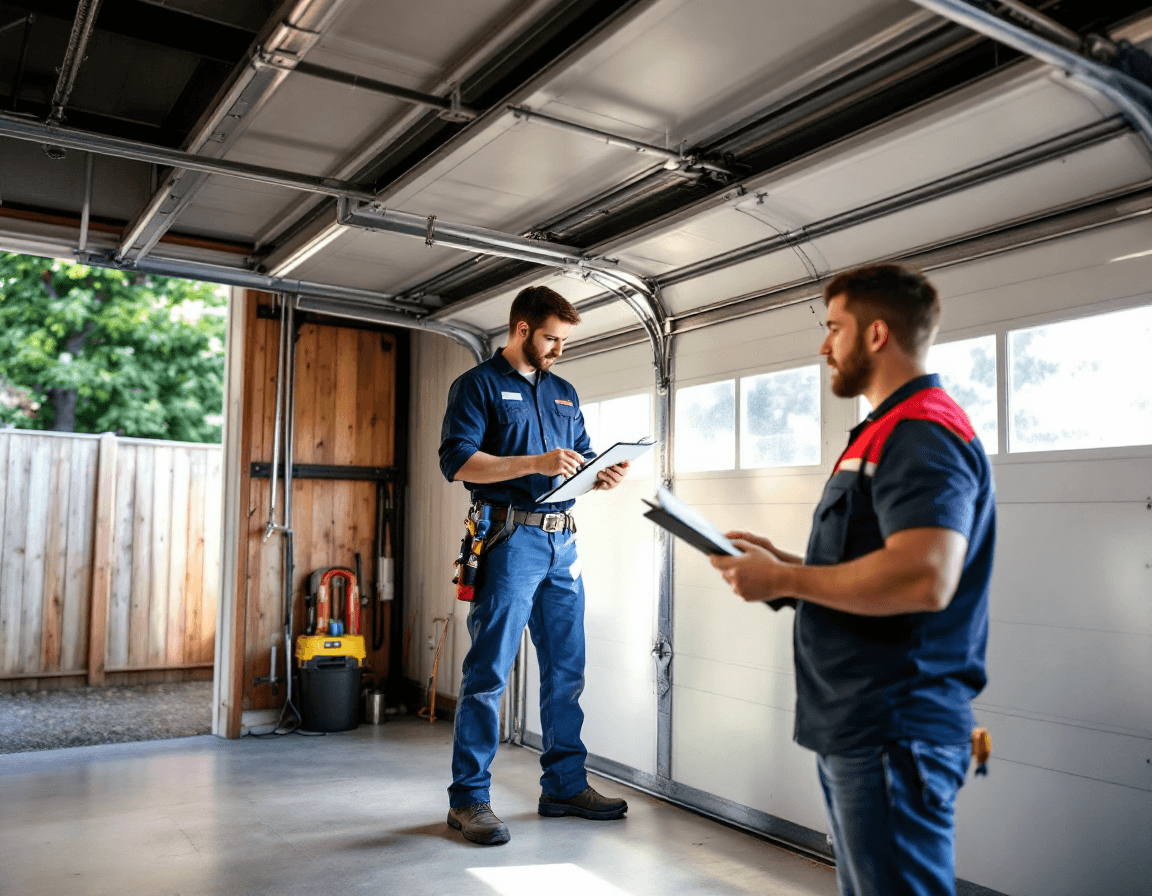
Garage doors in Mountlake Terrace work harder than most people realize. Between the wet, gray winters that settle over Snohomish County and the damp mornings that linger near Lake Ballinger, the steel, springs, rollers, and openers in a typical garage see constant moisture and temperature swings. A garage door maintenance and tune-up visit is the most practical way to catch small problems before they turn into a stuck door on a rainy weekday morning. Our technicians regularly see doors that still look fine from the driveway but are quietly working against friction, uneven tension, or failing safety features.
A professional tune-up gives you a clear picture of what your door needs right now. It covers a multi-point safety inspection, lubrication of the moving parts, balance testing, and a check of your opener's safety systems. For a full multi-point tune-up, our pricing runs from $89 to $149, depending on the size and age of the door and the number of components that need attention. The goal is not to sell you parts you do not need. It is to make sure the door you rely on every day is operating the way it was designed to.
Whether you have lived in your Mountlake Terrace home for twenty years or just closed on it last month, this page explains what a tune-up includes, why local conditions matter, what the warning signs look like, and where the line sits between safe homeowner care and work that should be left to a licensed professional. If you would rather have someone look at the door in person, our phone line is (888) 799-3819.
Why Mountlake Terrace Winters Are Hard on Garage Doors
The Pacific Northwest climate has a way of working on metal and wood slowly. Mountlake Terrace sees long stretches of drizzle and fog, followed by cold snaps that make everything contract overnight. Steel panels expand and contract with those temperature swings, and that movement can loosen fasteners, shift track alignment, and stress hinges over time. Moisture that sits in the bottom of a garage door track can also encourage surface rust on rollers and track edges, especially on doors that have never been wiped down or lubricated.
Many homes in and around Mountlake Terrace were built in the mid-twentieth century and later, which means a lot of garages still have original or older door hardware. Older torsion springs, worn cable drums, and aging opener motors may be doing more work than they were engineered for, particularly once winter humidity starts affecting lubricant that has dried out or thickened. A door that operated smoothly in July can feel sluggish and heavy by the first wet week of November.
Salt air is not the main concern here the way it is on the coast, but the mix of humidity, leaf litter, and road grit that gets tracked into garages from neighborhood streets does add up. Grit collects in the track channels and acts like sandpaper on rollers. A tune-up is a good opportunity to clear that buildup and inspect the hardware before the wet season fully settles in.
What Happens During a Multi-Point Safety Inspection
A multi-point safety inspection starts with a look at the whole system rather than one isolated part. Our technician checks the door panels for dents, cracks, or separated sections, then moves to the tracks to confirm they are straight, level, and firmly anchored to the wall and ceiling. Loose track brackets are one of the most common findings on older doors, and they can cause the door to wobble, bind, or pull out of alignment during travel.
Next, the inspection covers the hinges, rollers, end caps, and bottom brackets. Rollers are checked for cracks, flat spots, and wheel wear, and the technician looks at whether the stems are seated correctly in the track. Cables are examined for fraying, kinks, or slack, and the drum and pulley assemblies are checked for smooth rotation. The inspection also notes any hardware that looks stressed, such as bent hinge plates or elongated bolt holes where the door has been working loose.
The visual portion is only part of the picture. We also observe the door through a full open and close cycle to listen for scraping, watch for uneven movement from one side to the other, and note whether the door stops cleanly at the top and bottom. Anything that needs repair beyond the scope of a tune-up is documented so you know what you are dealing with before any work is authorized. You should never feel pressured to approve repairs on the spot.
Lubrication: Where It Counts and Where It Does Not
Lubrication is one of the most useful things a tune-up accomplishes, but it is also one of the most misunderstood. Many homeowners grab whatever spray is closest and coat everything in sight, which tends to attract dust and grit into the track. Garage door parts need appropriate lubricants applied to specific points, not a blanket spray over the entire door. Our technicians use a silicone-based or lithium-based product on the rollers, hinges, bearings, and the lift mechanism, and they wipe away excess so it does not collect debris.
The track itself generally should not be lubricated heavily. Track surfaces are meant to be clean and dry so the rollers can glide, and a thick coat of grease creates a sticky film that holds dirt. During a tune-up we clean the track channel first, then apply lubricant only where the rollers and hinge contact points need it. On the springs, lubrication helps reduce friction and corrosion, but the springs themselves are a safety-sensitive component that should only be handled by licensed professionals.
Lubrication also protects the opener. The chain or belt drive, the trolley, and the moving parts of the opener rail benefit from periodic attention, though the exact product and method depend on the opener model. Proper lubrication reduces strain on the motor and helps prevent the grinding or squealing that often signals wear. Doing this at the right intervals can noticeably quiet a door that has been getting louder over the past several months.
Balance Testing: The Quick Check That Predicts Trouble
Balance testing is one of the most valuable parts of a tune-up, and it is easy to overlook until something goes wrong. A properly balanced garage door should stay roughly in place when you lift it manually to about halfway and then let go. If it slams down or shoots upward, the springs are not carrying the correct share of the door's weight, and the opener is being asked to do work it was never sized for.
An unbalanced door places extra load on the opener motor, the gear assembly, and the cables. Over time that load can cause the opener to overheat, run slowly, or fail prematurely. It also increases the risk of a sudden drop if a cable or spring component fails under stress. For that reason, balance testing is one of the first things we check when a homeowner says the door feels heavy or slightly off.
When a door is out of balance, the correction involves adjusting spring tension, which is work that must be done by a licensed technician with the right tools and training. Spring tension can store a great deal of energy, and improper adjustment can cause serious injury. A tune-up identifies the imbalance and explains what is needed, and then the adjustment is handled by a professional who understands the specific spring system on your door.
Opener Safety Testing and Auto-Reverse Checks
Your garage door opener includes several safety features that deserve regular testing. The most important are the auto-reverse function, which should stop and reverse the door when it contacts an obstruction, and the photo-eye sensors, which are the infrared beams near the bottom of the door frame. During a tune-up we test both systems to confirm they respond as designed. Modern openers are required to include these protections, and they are only effective if they are properly aligned and clean.
The photo-eye test is simple but important. The sensors must be aligned so their beams cross the opening cleanly, and the lenses should be free of dust, spider webs, and the grime that collects near the floor. Our technician checks the wiring connections, confirms the sensor indicator lights are working, and tests the door's reaction by interrupting the beam while the door is closing. A door that fails to reverse when the beam is broken needs immediate attention and should not be used until it is corrected.
The auto-reverse test uses a controlled method to see whether the door reacts to resistance at the bottom. Any adjustment to the force settings should be made carefully, because a setting that is too tight can cause nuisance reversals while one that is too loose may not protect a child, pet, or object in the path. If your opener is more than a decade old, we will also talk with you about whether its safety features still meet current expectations.
Here is what a homeowner can check between professional visits:
- Place a flat object such as a piece of wood on the floor in the door's path and close the door, watching for an immediate reversal.
- Wipe the photo-eye lenses with a soft dry cloth and confirm both indicator lights are steady.
- Pull the emergency release cord only when the door is closed, and confirm the door can be operated manually afterward.
These quick checks are useful, but they do not replace a full inspection. If any test fails, call a professional before using the door again.
Reading the Noise: What Your Door Is Telling You
Garage doors speak in sounds, and learning to read them can help you spot trouble early. A rhythmic squeak often points to dry hinges or rollers that need lubrication. A grinding or scraping noise may mean the rollers are worn, the track is misaligned, or debris has built up in the channel. A loud bang at the top or bottom of travel can indicate a loose bracket, a worn bumper, or a spring that is beginning to lose tension.
Noise that gets gradually louder over several months is a good sign that maintenance is overdue rather than a sudden failure. This pattern is common in Mountlake Terrace homes where the door has not been serviced in more than a year, because friction slowly builds as lubricant breaks down and hardware loosens. Catching it early usually means a simpler and less expensive fix.
Some sounds call for immediate attention. A snapping or popping noise from the spring area, a cable that appears to be unspooling, or a door that suddenly drops more than usual should prompt you to stop using it and call a licensed technician. Those symptoms can signal a spring or cable failure, and they are not safe for homeowners to diagnose or repair on their own.
Opener Strain and Slow Travel in Older Snohomish County Homes
When a garage door opener starts to strain, the symptoms are usually easy to notice. The door may pause halfway up, move more slowly than it used to, or make the motor sound labored. Some openers also run hot and shut off briefly to protect themselves. These behaviors often trace back to a combination of factors rather than one failed component.
An unbalanced door is a frequent culprit. If the springs are not carrying their share of the weight, the opener has to lift the difference, and it may not have the strength to do so consistently. Worn rollers and tight track sections add friction that the motor must overcome, and a dry or dirty drive chain or belt makes the problem worse. Electrical issues, such as a loose wire at the wall control or a weak connection at the motor, can also cause intermittent slow operation.
Many Mountlake Terrace homes still have openers that were installed years ago and may now be older than their manufacturer's expected service life. In those cases, a tune-up can confirm whether the opener is simply worn or whether the door is placing an unusual load on it. Our technician will explain the difference honestly, because sometimes the best value is a tune-up and sometimes it is a replacement discussion. We will not push a replacement without showing you the test results that support it.
Buying a Home Near Lake Ballinger? Start With a Baseline
If you just bought a home in Mountlake Terrace, a garage door tune-up is one of the smartest early visits you can schedule. You do not know how the previous owner maintained the door, whether the springs were replaced, or how the opener has been used. A baseline inspection gives you a clear record of the door's condition on the day you moved in, which is useful for planning future maintenance and for knowing what to expect in the coming seasons.
Homes near Lake Ballinger, along the quieter residential streets, and in neighborhoods close to the Town Center area often have detached or attached garages that sit in shaded or damp spots. Moisture can accumulate more easily in those conditions, especially when a garage is used for storage and the door is opened only occasionally. A door that sits unused for long periods can develop stiffness and surface rust that a regular cycle would have prevented. Starting with a tune-up helps you correct those issues before they become habits.
A baseline visit also helps you make informed decisions about the rest of the home. If the inspection reveals worn cables or an aging opener, you can plan for those costs rather than being surprised later. You can also ask the technician to show you how to operate the emergency release, what the safety sensors should look like when they are working, and how to recognize early warning signs. That knowledge is one of the most practical benefits of a new-homeowner tune-up.
Tune-Up Pricing From $89 to $149 and What Shapes the Final Number
Our full multi-point tune-up is priced between $89 and $149. The exact number depends on several factors, including the number of doors in the garage, the type of door and opener, how much cleaning and lubrication the hardware needs, and whether the system includes extra features such as a smart opener or additional sensors. We will confirm the scope before beginning work so you know what is included.
A tune-up is designed to be a preventive visit, not a major repair. If the inspection identifies a problem that requires parts or additional labor, such as replacing a worn roller set, a cable, or a spring, that work is quoted separately and only performed with your approval. This approach keeps the initial visit focused on understanding the door's condition, so you are never caught off guard by a surprise charge.
Many homeowners find that scheduling a tune-up is more affordable than waiting for a breakdown. A worn roller that is caught early may cost far less to replace than a track that has been damaged by a roller that finally seized. A door that is properly balanced places less strain on the opener, which can extend its service life. Those are practical reasons to view a tune-up as an investment in reliability rather than an unnecessary expense.
Where DIY Ends and Licensed Work Begins
Homeowners can safely do a number of things to care for their garage door between professional visits. Cleaning the tracks with a dry cloth, wiping the photo-eye lenses, testing the auto-reverse with a safe object, and watching for changes in how the door moves are all reasonable and useful habits. Light lubrication of hinge pivots and rollers, using the products recommended for garage doors, can also be done carefully.
Some tasks are not appropriate for homeowners at all. Torsion springs, extension springs, and cables store significant energy and can cause severe injury if they release unexpectedly. Adjusting spring tension, replacing a cable, removing a spring, or working on a door that is hanging unevenly must be handled by a licensed and insured professional. The same applies to any repair involving the drum assembly or the bottom bracket under load.
If you are unsure whether a task is safe for you, the answer is to call a professional. A short phone call can save you from a dangerous situation and give you clear guidance about what you can handle yourself. Our team is happy to explain the difference during a tune-up visit, and we would rather you ask than guess.
How Often a Western Washington Door Should Get Attention
For most garage doors in the Mountlake Terrace area, an annual tune-up is a sensible baseline. The wet season tends to be the most demanding stretch for hardware, so scheduling a visit in the early fall gives the system time to be serviced before the rain and cold settle in for months. Some households with heavy daily use, such as a family that cycles the door several times a day, may benefit from more frequent attention.
Doors that have not been serviced in more than a year deserve a visit sooner rather than later, especially if you have noticed new noise, slower operation, or a door that feels heavy. Doors that are used rarely may still develop stiffness and corrosion from disuse, so they should not be ignored just because they do not get much traffic. Consistent attention keeps the system predictable.
Keeping a simple record helps. Note the date of each tune-up, what was lubricated, any parts that were replaced, and any issues you observed between visits. Over time that log will show you patterns, make it easier to plan ahead, and give any future technician useful background. A little consistency goes a long way toward a garage door that works quietly and reliably through every Pacific Northwest season.
If your garage door is loud, slow, heavy, or simply overdue for a checkup, our team is ready to help. Call (888) 799-3819 to schedule a full multi-point tune-up in Mountlake Terrace, WA, and get a clear, honest assessment of your door's condition before a small issue becomes a surprise breakdown.