
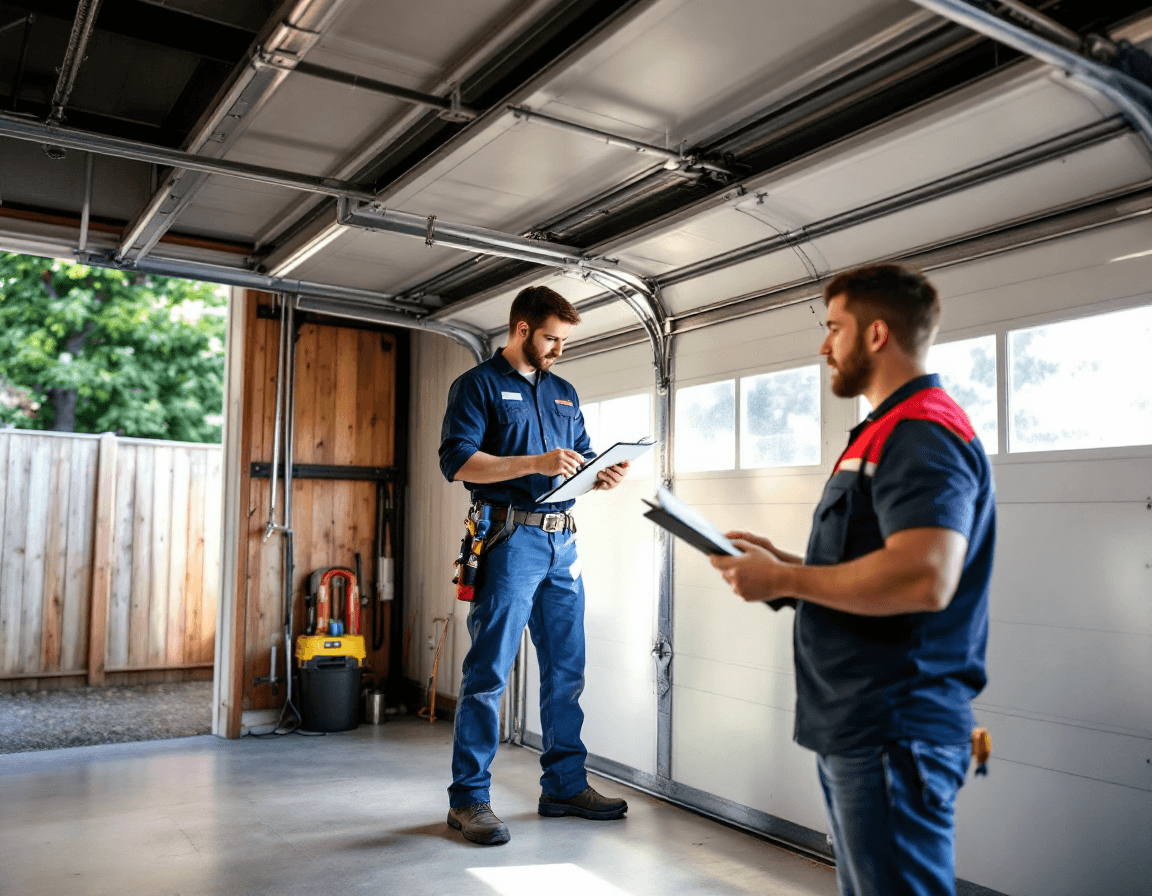
Garage door maintenance and tune-ups in Brier, WA, are often the difference between a door that quietly does its job for years and one that stops in the middle of a school drop-off. Brier sits in the Snohomish County lowlands between Mountlake Terrace, Bothell, and Edmonds, and its homes include a mix of older split-levels and rambler-style houses alongside newer builds. Many of these garages share the same problem: a door that has been running through damp winters, mild summers, and years of daily use without anyone checking the hardware. A scheduled tune-up catches small wear before it turns into a repair call.
A full multi-point tune-up from Seattle Garage Door Fix typically runs $89 to $149, depending on the door type, the opener, and how much hardware needs attention. The visit covers a safety inspection, lubrication of the moving parts, a balance test, and a check of the opener's safety systems. Each step is designed to answer a simple question: is this door moving the way it was engineered to move, and will it stop safely if something gets in its path? Homeowners who have never had a door serviced often find that the answer surprises them in both directions.
This page explains what happens during a Brier tune-up, why local conditions matter, which warning signs deserve attention, and where the line sits between work a homeowner can handle and work that belongs to a licensed technician. If you are planning service or simply wondering whether your door is due, read on, and then call us at (888) 799-3819 with any questions.
Why Wet Winters and Mild Summers Wear Down Brier Garage Doors
The Pacific Northwest climate is gentle on temperatures but hard on metal and wood. Brier gets long stretches of drizzle and overcast days from fall through spring, and humidity rarely drops far enough for garage air to dry out completely. Moisture settles into hinge knuckles, roller bearings, and the bottom of steel panels, and it speeds up surface rust on track brackets and bolts that never see direct sun. A door that looked fine in October can start grinding by February simply because the lubricant that was there has been washed away.
Temperature swings add a second layer of stress. Even on a mild Snohomish County day, the metal in a steel door expands and contracts, which can loosen fasteners and shift the track slightly out of alignment. In a garage with an uninsulated door, the temperature difference between the inside and outside surfaces can also cause condensation to form on the back of the panels. Over time, that moisture can soften the bottom seal and encourage mildew in the weatherstripping.
Older garages in the area often have their own quirks. Some were built before modern door standards were common, and their framing may flex slightly as the house settles on clay-heavy soils. Tracks mounted to aging header boards can drift, and openers bolted to thin drywall ceilings may vibrate more than they should. A tune-up gives a technician the chance to spot these local issues early, before they affect how the door tracks or how the opener loads the rails.
What a Multi-Point Safety Inspection Actually Covers
A multi-point inspection is a structured walk-through rather than a quick glance. The technician starts by checking the door's overall condition, including panels, sections, and hinges, looking for cracks, bent sections, loose connections, and signs of previous impact. Next, the track system is examined from the bottom bracket to the top bracket, with attention to alignment, rollers, and whether the track is firmly anchored to the structure. Rollers are checked for flat spots, cracks, or worn bearings, since a single bad roller can throw the whole door out of square.
The inspection also includes the components that keep the door safe in everyday use. Cables, drums, and spring assemblies are visually inspected for fraying, rust, gaps in winding, and any sign that a component is under stress it was not designed for. The technician checks that safety cables are present and correctly routed, and confirms that the bottom bracket and end caps are secure. Weatherstripping, the bottom seal, and the top seal are assessed for damage that could let water or pests into the garage.
Finally, the inspection looks at the connection between the door and the opener. The trolley arm, the mounting brackets, and the emergency release cord are all checked for wear and correct function. The technician notes anything that should be monitored over the next few seasons so you have a clear picture of your door's health rather than a vague sense that it is "probably fine." Brier homeowners appreciate a written summary of what was found, especially when planning a larger repair later.
- Panel condition, hinge tightness, and signs of impact or bent sections
- Track alignment, bracket anchoring, and roller condition
- Cable, drum, and spring visual inspection (no adjustments made by the homeowner)
- Safety cable presence, end caps, and bottom bracket security
- Top and bottom seals, weatherstripping, and gap checks
- Opener trolley, mounting points, and emergency release cord function
Reading the Noise: What a Noisy Door Is Trying to Tell You
Most homeowners do not notice a garage door getting louder. The change happens slowly, a little more squeal from the rollers each month, a little more rattle when the door reaches the top of its travel. By the time the noise is obvious, the cause has usually been developing for a while. A tune-up helps you separate harmless operating noise from sounds that indicate a worn part or a misaligned track.
Different noises point to different problems. A high-pitched squeal usually comes from dry rollers or hinges that need lubrication. A grinding or scraping sound often means debris has collected in the track, or that a roller is worn enough to drag against the track's inner edge. A deep thud or clunk at the end of travel may indicate loose brackets, a worn bottom seal that is hitting the floor too hard, or an opener that is not properly adjusted for the door's weight.
Vibration is another useful clue. If the whole door shakes when it starts or stops, the track may be loose at the header or the opener may be sharing a weak ceiling mount with other fixtures. In Brier homes where the opener is hung from older framing, that vibration can transfer into the rest of the structure. Listening carefully and describing the sound accurately when you call makes it easier for a technician to plan the right visit, whether that is a quick lubrication or a deeper inspection of the track.
Balance Testing: Why a Door That Feels Heavy Needs Attention
A properly balanced garage door should feel relatively light when lifted by hand with the opener disconnected, and it should stay in place when opened halfway and released. That second test is called a balance check, and it reveals whether the springs are doing their share of the work. A door that falls quickly, or that rises on its own when you let go, is out of balance, and that imbalance places extra strain on the opener, the cables, and the rollers.
Imbalance develops for ordinary reasons. Springs lose tension over years of cycling, panels can warp or accumulate hardware changes, and seasonal temperature swings can affect how easily a heavier door moves. A door that feels heavy or slightly off-balance may still work, but it is working harder than it should. Over time, that extra load can wear out the opener gear, stretch cables, and make the door more likely to fail at a bad moment.
Balance testing in a tune-up is a diagnostic step. The technician checks how the door behaves at several points in its travel and notes whether it drifts, sags, or resists movement. The results guide the next decision. If the door is balanced within normal range, the visit may end with lubrication and hardware checks. If the door is out of balance, the technician will explain what is causing it and what a licensed repair would involve. Spring tension is never something a homeowner should adjust personally, because the springs store a large amount of energy and can cause serious injury if they release unexpectedly.
Opener Strain, Slow Travel, and Safety Reversal Checks
The garage door opener is the part of the system most likely to draw attention when something feels wrong. A straining motor, a door that moves slower than it used to, or an opener that hesitates before starting are all signs of added load somewhere in the system. Sometimes the cause is the opener itself, such as a worn gear, a weakened capacitor, or a motor that has been running hot. Other times the opener is simply reacting to a door that is out of balance or a track that has developed friction.
Safety is the non-negotiable part of opener service. Every modern garage door opener is required to reverse when it meets resistance, and a tune-up includes testing that reversal function. The technician checks the photo-eye sensors near the floor, confirms that they are aligned and clean, and verifies that the door reverses when a beam is broken during closing. The opener's force settings are also checked, since a door set to close with too much force can injure a child or pet, and one set with too little may fail to reverse when it should.
Many Brier households use their garage as the main entry to the house, so the safety check matters more here than it might in a detached garage. The technician will also confirm that the manual release works, that the wall-mounted control is functioning, and that any keypad or remote programming is correct. If the opener shows signs of wear, the technician can explain whether it can be serviced or whether replacement is the more practical path.
- Photo-eye alignment, lens cleaning, and reversal response when a beam is broken
- Force and limit settings checked against safe closing and reversal behavior
- Manual release cord function and emergency disconnect
- Wall control, keypad, and remote programming verification
- Opener mounting security and noticeable vibration or drift
Lubrication Done Right: Where Oil Helps and Where It Hurts
Lubrication is one of the most common parts of a tune-up, and also one of the most commonly done wrong. The goal is to reduce friction on the rollers, hinges, bearings, and the opener's chain or screw drive, without leaving so much residue that dust and grit stick to everything. In the damp Brier climate, the right lubricant also needs to resist washing off, so a light, durable product is usually better than a heavy grease that attracts debris.
Different parts need different care. Roller bearings and hinge pivots benefit from a light lubricant applied sparingly, while the track itself should generally be kept clean and dry rather than oiled. Oil on the track can collect grit that then grinds against the rollers, creating the very noise homeowners are trying to eliminate. Springs may be lubricated during service, but this is done carefully as part of the technician's work, not as a do-it-yourself project.
Homeowners often apply too much lubricant, and the excess drips onto the floor, the car, or the bottom seal. A technician will wipe away excess, clean the track where needed, and apply product only where it does real work. If you are tempted to lubricate between visits, stick to the rollers and hinges, use a product labeled for garage doors, and avoid spraying the springs, cables, or track. When in doubt, ask during your next appointment.
Buying a Brier Home? Start With a Garage Baseline
If you have recently purchased a home in Brier, the garage door is one of the few major mechanical systems you can evaluate quickly and inexpensively. Sellers do not always provide maintenance records, and a door that looks fine during a showing may have been running on borrowed time. A baseline tune-up gives you a documented starting point and helps you understand how the door, track, and opener were installed and maintained before you arrived.
The baseline inspection is especially useful for homes built in earlier decades, where the original door may have been replaced once or twice without the rest of the system being updated. A mismatched opener, a track that was never properly braced, or a set of safety sensors wired incorrectly can all go unnoticed for years. Finding these issues in the first few weeks after closing lets you plan repairs on your timeline rather than during a winter emergency.
Your baseline visit also gives you a chance to ask practical questions. How old are the springs, roughly? Is the opener's safety reversal working as it should? Are there signs of water intrusion along the bottom seal or top weatherstripping? Does the door have safety cables in place? A good technician will answer these questions plainly and tell you what is urgent, what can wait, and what simply needs monitoring.
Scheduling Tune-Ups Around Snohomish County Weather
Timing a garage door tune-up is easier than most homeowners expect, because the Pacific Northwest weather gives you clear seasonal windows. Late spring and early fall tend to be the most comfortable times to schedule service, when the garage is not saturated with winter moisture and the door has not yet been pushed hard by holiday traffic or heavy rain. Scheduling in these windows also means the lubricant has a better chance to settle properly before the next wet season arrives.
A tune-up before winter is especially valuable in Brier. The months from November through February bring the most rain, the most condensation, and the highest risk of a door failing when you need it most. If the door has been noisy or sluggish through the summer, that is a strong signal to schedule service before the rainy season intensifies. A door that is already struggling is more likely to fail when the track is cold, the seals are stiff, and the opener is working harder to overcome damp friction.
Summer is a good time to address heat-related issues, such as a garage that bakes in afternoon sun and causes the door's panels and seals to soften. Even in a mild Seattle-area summer, a south- or west-facing garage can get hot enough to affect weatherstripping. If you notice the bottom seal cracking or the door binding after warm days, mention it when you book, so the technician can check that area specifically.
Tasks Homeowners Can Safely Handle Between Visits
Between professional tune-ups, there are several simple tasks that help keep your door in good shape. Keeping the track clean and free of debris, wiping down the door panels, and checking the bottom seal for cracks or gaps are all reasonable steps that do not require special tools or training. Testing the opener's auto-reverse feature every month is also a smart habit, since it confirms the safety system is responding correctly.
To test reversal, place a flat object such as a piece of wood on the floor where the door will close, then press the close button. The door should reverse as soon as it contacts the object. If it does not, stop using the automatic function and call for service immediately. Similarly, you can check the photo-eye sensors by making sure nothing blocks their lenses and that their indicator lights look normal, though realignment should be left to a technician.
Lubricating hinges and rollers with a light, garage-door-appropriate product is another task many homeowners can handle, provided they avoid the springs, cables, and track. Keep the garage door closed during rain, avoid hanging heavy items from the door, and do not attempt to force a stuck door open with the opener. If the door binds, shudders, or refuses to close fully, stop operating it and schedule a service call instead of troubleshooting the spring system.
Why Springs and Cables Belong to Licensed Hands
Springs and cables are the components that carry the weight of the door, and they are also the components that cause the most serious injuries when mishandled. Torsion springs and extension springs store a large amount of energy, and a spring that releases unexpectedly can cause severe harm. Cables under tension can snap and whip, and drums can unwind in ways that are hard to predict without training and proper equipment. For these reasons, any adjustment, replacement, or repair of springs and cables should be performed by a licensed, bonded, and insured technician.
This is also why our tune-ups include inspection and lubrication of spring components but do not involve homeowner-level adjustment of spring tension. A visual check can reveal fraying cables, gaps in spring winding, or rust that signals a component is nearing the end of its service life. Those findings are reported clearly so you can decide when to schedule licensed repair work. If you are ever unsure whether a sound or sight warrants a closer look, the safest answer is to stop using the door and call a professional.
Homeowners sometimes ask whether they can save money by doing spring work themselves. The honest answer is that the risk is not worth it. A mistake with spring tension can cause injury, and it can also damage the door, the opener, or the structure above the garage. A licensed technician carries the tools, training, and insurance to handle the work correctly, which is exactly why this step should never be a do-it-yourself project.
Pricing, Scope, and What Your Tune-Up Covers
A full multi-point tune-up from Seattle Garage Door Fix ranges from $89 to $149. The final price depends on the size and type of door, the number of components that need attention, and whether the opener requires additional testing or minor adjustments. The base visit covers the multi-point safety inspection, lubrication of the appropriate moving parts, balance testing, and opener safety reversal testing. Each step is documented so you know what was checked and what, if anything, needs follow-up.
Parts and repairs beyond the tune-up are quoted separately, so you can make decisions with clear information. If the inspection reveals a worn roller, a damaged seal, or a spring that needs replacement, the technician will explain the issue and provide an estimate before any work begins. You are never obligated to approve repairs during the tune-up visit, and you can take the written findings home to review at your own pace.
Our goal in Brier is straightforward: give homeowners an honest assessment of their garage door, perform the maintenance that genuinely helps, and recommend licensed repair only when it is needed. Whether your door is a few years old or has been running since the house was built, a tune-up is one of the most practical ways to protect your vehicles, your family, and your budget from an unexpected breakdown.
Ready to schedule a garage door maintenance tune-up in Brier? Call Seattle Garage Door Fix at (888) 799-3819 to book a multi-point inspection, balance test, and opener safety check. Our team will walk you through what we find, explain your options in plain language, and help you keep your door running safely through every Snohomish County season.