
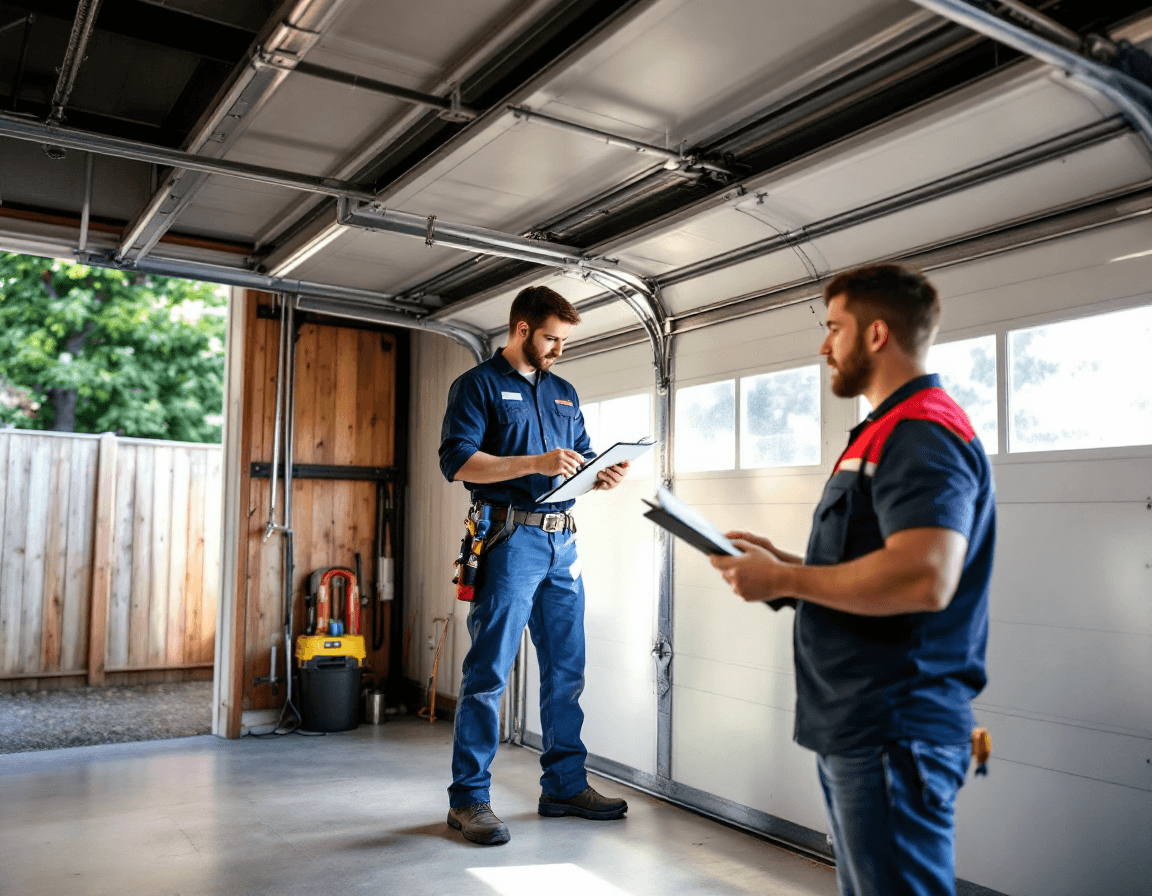
Garage door maintenance and tune-ups in Seattle, WA are about more than keeping a door moving smoothly. Our marine climate, with its long gray winters, steady drizzle, and salt-laden air near the water, slowly works on springs, rollers, hinges, and openers in ways that are easy to miss until something fails. A door that opened quietly last spring may now groan on the first cold morning, and a homeowner might not connect that change to the moisture that has been building up in the tracks all season.
A full multi-point tune-up from Seattle Garage Door Fix is designed to catch those changes early. Our technicians inspect the door system from top to bottom, lubricate the moving parts that need it, test the balance of the door, and verify that the opener's safety features are working as intended. The service is priced between $89 and $149 depending on the door and the condition of its components, and it is meant to give you a clear picture of what is healthy, what needs attention soon, and what can wait.
If your door has not been serviced in more than a year, if it has started making new noises, if the opener sounds strained, or if you have just bought a home in neighborhoods like Ballard, Capitol Hill, Queen Anne, or West Seattle and want to know what you are working with, a tune-up is a practical place to start. You can reach our team any time at (888) 799-3819 to schedule a visit or ask a question before booking.
What a Multi-Point Tune-Up Covers in a Seattle Home
A multi-point tune-up is a structured walk-through rather than a quick lubrication pass. We begin by looking at the door panels, the top and bottom seals, the weatherstripping along the sides, and the header and jamb hardware. Next we examine the tracks for alignment, level, and any loose mounting brackets, because a track that has shifted even slightly will make a door bind or chatter. Rollers, hinges, end caps, and the cables are checked for wear, fraying, and signs of corrosion.
From there, the technician evaluates the springs and the spring system without adjusting or tensioning them in an unsafe way. Torsion and extension springs store a large amount of energy, and any work on them belongs to a licensed, trained professional with the right equipment. What we can do during a tune-up is observe how the springs look, listen for unusual sounds, and note whether the door's balance suggests the springs are near the end of their useful life.
Finally, the opener is reviewed. That includes the motor and drive system, the belt or chain tension, the travel limits, the remote and keypad, and the safety sensors. Many homeowners never think about the opener until it stops working, so a tune-up is often the first time anyone has looked at the whole assembly as a connected system. We will walk you through what we found, explain the priority of each item, and leave the decisions about repairs entirely up to you.
Why Puget Sound Moisture Wears Down Garage Door Hardware
Seattle's damp season is long, and moisture is one of the most consistent sources of trouble for garage doors in the region. Rain soaks into the bottom seal and drips onto the floor tracks, and over time that water can sit in the channel and encourage rust on the rollers and track joints. Metal hardware that never gets a chance to dry completely will show surface corrosion sooner than the same hardware in a drier climate, and that corrosion can roughen the surfaces that are supposed to glide.
Humidity also affects wood. Many older Seattle homes, especially the craftsman-era houses found in Green Lake, Wallingford-adjacent blocks of the 98103 area, and parts of Queen Anne, have wooden garage doors or wooden trim around the opening. Wood can swell during wet months and shrink in the drier stretches of late summer, which can change how the door sits in its frame. A door that scrapes at the top in January may clear easily by August, and that seasonal movement is worth tracking during a tune-up.
Salt air adds another layer of wear. Homes in West Seattle, parts of Magnolia, and other properties closer to Puget Sound or the Duwamish corridor can see faster corrosion on steel hardware, especially on bare metal parts that lack a protective finish. A tune-up gives our technicians the chance to see early surface rust before it turns into pitting, and to recommend appropriate cleaning or replacement while the problem is still small.
Reading the Noises Your Door Is Trying to Tell You
Garage doors rarely become loud overnight. Most of the time, the noise grows gradually, and homeowners adapt to it until one day the racket is hard to ignore. Learning to recognize different sounds can help you explain the problem clearly when you call, and it can also help a technician narrow down the cause quickly during a visit.
A high-pitched squeal usually points to dry or worn rollers, or to hinges that have run out of lubricant. A grinding or rumbling sound often comes from the opener drive, worn gears, or a rail that is loose or out of alignment. A popping or clicking noise at the top of travel can mean a hinge or roller is not seating properly in the track, while a rhythmic thump may indicate a bent track section or a roller stem that has started to wear unevenly.
Here are the noise patterns our technicians hear most often during tune-ups in the Seattle area:
- A squeal that appears in damp weather and fades after the door has run a few times, often linked to dry rollers or hinges
- A grinding sound that gets louder when the opener is under load, which can signal drive wear or belt tension issues
- A clicking or popping at the top of the door, frequently connected to roller alignment or track bolts that have loosened
- A rumbling or shuddering as the door reaches the floor, which may indicate a bottom seal catching or a track obstruction
Noise alone does not tell the whole story, but it is a valuable clue. A tune-up lets us connect what you hear with what we see, test the door in motion, and recommend the fix that actually matches the symptom.
Balance Testing: The Simple Lift Test and Why It Matters
A properly balanced garage door should feel manageable when lifted by hand, and it should stay roughly where you leave it when you stop it partway up. A door that feels heavy, drops quickly, or rises on its own is out of balance, and that imbalance puts strain on the opener and on the spring system. Balance testing is one of the most useful parts of a tune-up because it reveals problems that may not be obvious from the outside.
During the test, the opener is disconnected and the door is lifted manually to about waist height. A balanced door will hold its position. If it sinks, the springs may be too weak. If it floats upward, they may be too strong or the cable drums may be misaligned. We also check that the cables are seated correctly on the drums and that they are not fraying or slipping.
It is important to be clear about the limits of this test. Adjusting spring tension is dangerous work, and it should never be attempted by a homeowner. If the test shows imbalance, we will explain what it likely means, document the readings, and recommend a licensed professional to handle any spring replacement or tension adjustment. Our role is to diagnose and advise, and to make sure you know exactly where the door stands before any major repair decision.
Opener Safety Checks Every Seattle Household Should Expect
The opener's safety features are some of the most important parts of the entire system, and they deserve regular attention. Modern openers are required to reverse direction when they encounter an obstruction, and most also use photo-eye sensors near the floor to detect something in the doorway. A tune-up includes testing both features so that you know they will respond when they need to.
The photo eyes should be mounted at a consistent height, usually a few inches above the floor, and aligned so that the beams pass directly across the door opening. Our technician checks that the sensors are clean, aligned, and wired securely, and that the indicator lights respond as expected. Dirt, cobwebs, and dust are common in garages, and a sensor that looks fine may be partially blocked by grime that builds up over time.
The force-reverse test is also part of the routine. With the door closing, the technician places a flat object such as a 2x4 on the floor in the path of the door and confirms that the opener reverses when the door contacts it. If the door keeps pushing or fails to reverse, the opener needs adjustment or service. Safety is not a feature to skip, especially in households with children, pets, or anyone who uses the garage as a main entry point.
Hillside Driveways and Older Doors in Queen Anne, Capitol Hill, and Green Lake
Seattle's geography creates its own set of challenges for garage doors. Many homes in Queen Anne and Capitol Hill sit on sloped lots, and detached garages in these neighborhoods may have uneven approaches that affect how the door is installed and how the track is leveled. Over time, slight settling of the foundation or the garage slab can shift the door's relationship to the opening, and that shift often shows up first as noise or binding on one side.
Older homes near Green Lake, in Wallingford, and in many parts of north Seattle often have garage doors that were installed decades ago, sometimes with hardware that has been replaced piecemeal. A mix of old and new parts can create balance and alignment issues because components are not always designed to work together. During a tune-up, we pay close attention to whether the track, rollers, and springs are a matched set, and we note any mismatch that could cause uneven wear.
Many of these properties also have narrow lots and limited clearance, which makes headroom and sideroom important. If the door is close to the ceiling or the wall, a tune-up can help identify whether the track geometry is compromised. Homeowners in these areas often appreciate knowing whether a problem is a simple adjustment or a sign that the entire door assembly is nearing the end of its life.
Rainier Valley and Mount Baker Homes: Busy Garages and Frequent Use
Garages in Rainier Valley and the Mount Baker area often see heavy daily use. Many households run two cars through the same door, or use the garage as a workshop, storage space, or main entry. Frequent cycling means more wear on rollers, hinges, and the opener drive, and it can make small issues escalate faster than in a garage that is opened only a few times a week.
A tune-up in a high-use garage is especially valuable because it catches wear before it leads to a sudden failure. We look closely at roller condition, check the bearings for smoothness, and make sure the opener's travel limits are set correctly so the motor is not working harder than necessary. Lubrication is particularly important in these homes, because the rollers and hinges absorb a significant amount of motion over the course of a year.
Homeowners in the 98118 and 98144 areas, along with neighboring communities, sometimes ask whether a tune-up can prevent emergencies. The honest answer is that it cannot eliminate every failure, because springs and cables wear out on their own schedule. What a tune-up can do is reduce the odds of an unexpected breakdown by identifying weak points early and giving you time to plan a repair.
Choosing the Right Lubricant and Avoiding Common Mistakes
Lubrication sounds simple, but the wrong product or the wrong application can cause more problems than it solves. Garage door parts need a lubricant that stays in place, resists moisture, and does not attract excessive dust. In our experience, many homeowners reach for household products that either evaporate quickly or create a sticky film that collects grit. Those products can make the door noisier over time instead of quieter.
During a tune-up, we lubricate the parts that actually need it: rollers, hinges, the track surfaces where the rollers travel, the lock mechanism, and the opener chain or screw drive if applicable. We avoid soaking the tracks in oil, and we wipe away excess so that dirt does not stick to the surfaces. Springs and cables are treated with a light coating appropriate to their material, and our technicians will tell you if they see signs of corrosion that need a different approach.
There are also a few common mistakes worth avoiding. Spraying lubricant into the opener motor, greasing the photo-eye lenses, or coating the bottom seal with oil can all create problems. The best approach is to let a technician set the baseline during a tune-up, then ask for guidance on how often to revisit specific parts in your home's particular conditions.
Buying a Home in Ballard, Fremont, or West Seattle? Start With a Baseline
When you buy a home, the garage door is one of the systems that often gets overlooked during the excitement of closing. Inspectors may note general condition, but a dedicated tune-up gives you a detailed understanding of how the door and opener actually perform. That information is useful for budgeting, for negotiating repairs if needed, and for building a maintenance schedule that fits the house.
In Ballard and Fremont, many homes have garages that were updated or converted over the years, and the door may have been replaced without a full review of the opener or track system. In West Seattle and parts of Magnolia, the salt air and moisture can mean that hardware looks better than it is, with corrosion hidden behind painted surfaces or inside the track brackets. A baseline tune-up helps reveal those conditions before they become your problem to solve.
We recommend scheduling the tune-up within the first few weeks of moving in, while the previous owner's maintenance history is still fresh in your mind. If you have questions about a specific door or opener, call (888) 799-3819 and our team can help you decide what to check first. A clear starting point makes every future decision about the garage easier.
When a Tune-Up Becomes a Repair Conversation
Not every tune-up leads to a repair, and we want you to know that going in. Many doors are in good shape and simply need lubrication, minor adjustments, and a safety check. In other cases, the inspection reveals a worn roller set, frayed cables, a tired opener, or a spring that is approaching the end of its cycle. Those findings are valuable because they give you a chance to plan rather than react.
When repairs are recommended, we explain them in plain language and separate urgent items from those that can wait. A cable showing fraying, a spring that is visibly stressed, or a safety feature that is not responding is a priority. A squeaky hinge or a slightly misaligned bracket may be worth fixing soon but does not require immediate action. We do not pressure homeowners into work that is not needed, and we always make clear when a licensed professional should perform spring or cable replacement.
Our goal is to leave you with an honest picture of your door's condition and a practical plan for keeping it safe and reliable. If the findings point toward a larger repair or replacement, we will walk you through the options and the reasons behind each recommendation so you can decide with confidence.
Scheduling Around Seattle Weather and Our Service Areas
Timing matters when it comes to garage door maintenance in the Pacific Northwest. Many homeowners think of fall as the natural time for a tune-up, because it comes before the wettest months and gives hardware a chance to be checked before the cold arrives. Late winter and early spring also work well, especially after the worst of the rain has passed and before the drier summer stretch begins. Scheduling around these windows can make the inspection more useful because the door's seasonal behavior is easier to observe.
We serve homes across more than sixty cities in the greater Seattle and Western Washington area, including neighborhoods throughout King County. Whether your home is near downtown in the 98101 area, in the Capitol Hill and Central District communities of 98122, in the Queen Anne and South Lake Union blocks of 98109, in the Ballard and Phinney areas of 98107 and 98117, or in West Seattle across 98116 and 98136, our technicians can arrange a visit that fits your schedule. Homes in Magnolia and the 98199 area, Rainier Valley and the 98118 and 98144 communities, and north Seattle neighborhoods in 98115, 98125, and 98133 are also part of our regular service area.
If you are ready to schedule a multi-point tune-up, or if you want to ask whether your door is due for one, call Seattle Garage Door Fix at (888) 799-3819. Our team can answer questions about pricing, timing, and what to expect, and can help you decide whether a tune-up is the right next step for your home. Remember that spring and cable work should always be left to licensed professionals, and we are glad to guide you to the right service for your door.