
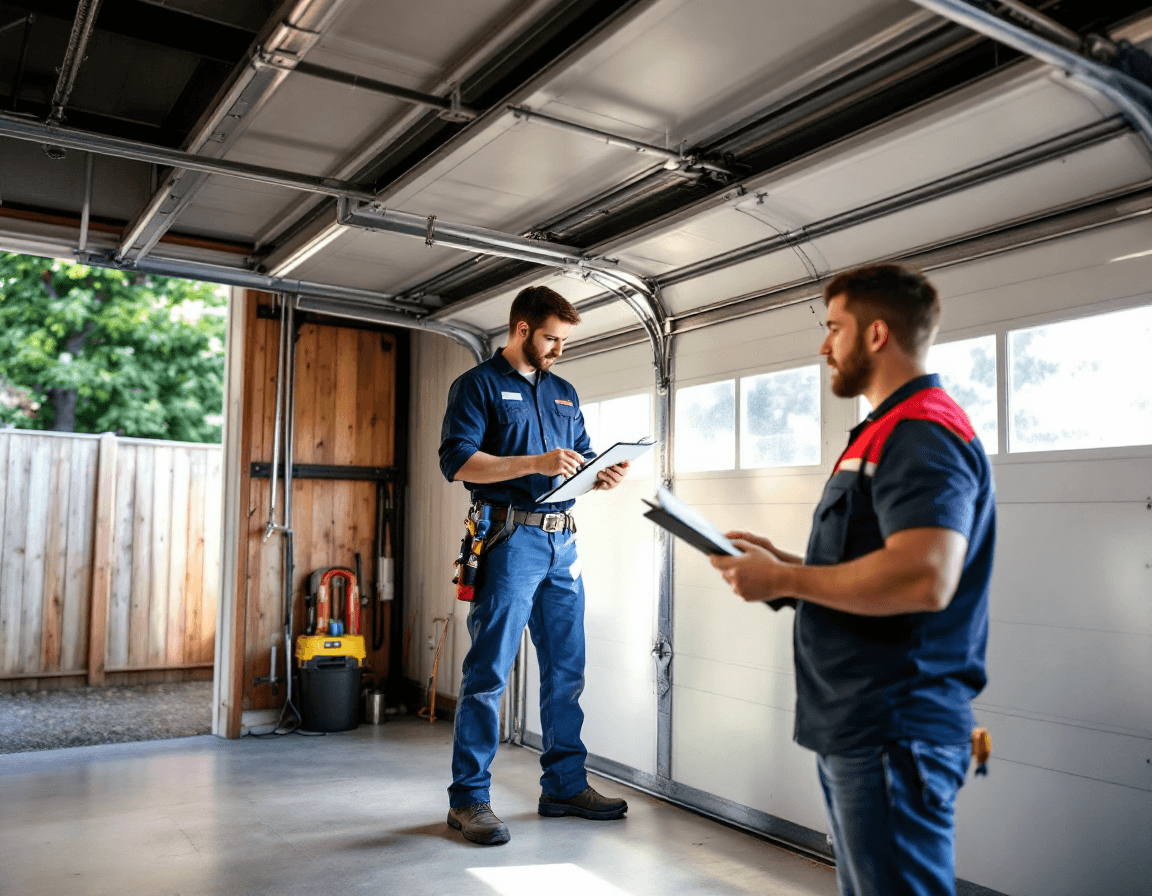
Garage Door Maintenance & Tune-Ups in Tukwila, WA are one of the most practical ways to keep a home's largest moving part working safely through the seasons. Tukwila sits in the low ground south of Seattle, where the Duwamish and Green River valleys meet the hills toward Renton and SeaTac, and that location means doors here live with damp air, long gray stretches in winter, and sudden cold snaps that test every moving component. A door that works fine in July can start grinding, sticking, or pulling unevenly by February, often without any obvious damage to explain it.
Most Tukwila homeowners don't think about their garage door until something fails. A roller seizes, a cable frays, or the opener quits halfway through a close, and suddenly the car is stuck inside or the door is sitting crooked on its track. A scheduled tune-up is designed to catch those problems while they are still small. Our multi-point service, priced between $89 and $149 depending on the door and opener setup, focuses on the parts that wear quietly: rollers, hinges, tracks, balance, and the safety features on the opener itself.
If your door has been making new sounds, feels heavier than it used to, or hasn't been looked at in more than a year, this page explains what a tune-up includes, why it matters in our climate, and what you can safely do yourself before the technician arrives. For questions or to book a visit, call (888) 799-3819.
Why Tukwila's Wet Winters Work Against Your Garage Door
Western Washington's rain rarely arrives as one dramatic storm. It settles in for weeks, leaving the air heavy and the concrete slab cold and damp for much of the year. In Tukwila neighborhoods, from the older single-story homes near Allentown to the newer townhome clusters closer to Southcenter, that steady moisture gets into steel hinges, roller bearings, and the lower edge of wood or composite panels. Over time it turns into surface rust, stiff pivots, and paint that blisters and flakes.
Temperature swings add another layer of stress. A morning that drops near freezing followed by an afternoon in the 50s causes metal to expand and contract, which can shift a track by a few millimeters and throw off the door's alignment. Those small changes are enough to make a door scrape at one corner or hesitate partway up. Many homeowners notice the problem first during the first cold week of the year, which is exactly why a fall or early-winter tune-up is so useful.
Moss, mildew, and tracked-in grit from Tukwila's roads also deserve attention. Fine dirt collects in the track channel and mixes with whatever lubricant was applied last, forming a paste that slows rollers and wears the nylon or steel wheels unevenly. A tune-up includes cleaning the track so that lubrication actually reaches moving surfaces instead of sitting on top of grime.
What a Multi-Point Safety Inspection Covers
A multi-point inspection is a structured walk-through of every system that keeps the door moving safely. We start at the bottom edge and work upward, checking the weather seal and bottom retainer, then the rollers, hinges, end caps, track brackets, and the mounting hardware that holds the track to the wall and ceiling. Every fastener is checked for looseness, because a bolt that backs out a quarter turn each month will eventually let a track separate under load.
The inspection also covers the components that most people never see. Technicians look at the drum, cables, and springs for visible wear, but spring and cable adjustments are work for licensed professionals only, because stored tension in a torsion spring is powerful enough to cause serious injury. What a tune-up does provide is a clear assessment of whether those parts show fraying, rust, or misalignment that needs attention. Our technicians will tell you plainly what they see and what they recommend, without pressure.
Here is a quick overview of what a typical multi-point visit checks:
- Rollers, hinges, and bearings for wear, play, cracking, or rust
- Track alignment, bracket tightness, and clearance from the ceiling and walls
- Cables, drums, and spring condition (visual inspection only; adjustments are done by licensed pros)
- Weather seal, bottom retainer, and panel condition
- Opener mounting, rail alignment, and the force and limit settings
- Auto-reverse and photo-eye safety sensors
- Manual release cord condition and accessibility
Every item on that list is there because it is a common point of failure in Pacific Northwest homes. None of it requires dramatic repairs during a routine visit, and most findings can be resolved in the same appointment if you approve the work.
Lubrication That Helps, and Lubrication That Causes Problems
Lubrication is one of the most misunderstood parts of garage door care. Many homeowners grab whatever spray is closest, often a household oil or a penetrating product, and apply it liberally to everything that moves. Those products can work briefly, but they tend to attract dust, gum up over time, and wash away during our rainy months. A proper tune-up uses a silicone-based or lithium-based garage door lubricant applied sparingly to the parts that actually need it.
The priority list is simple. Roller bearings and hinge pivots get a light coat so the metal surfaces glide rather than grind. Track surfaces get a thin film on the flat rails where rollers travel, but not on the spring or cable, and not on the opener's chain or screw drive, which need their own manufacturer-specified lubricant. Overspraying the track is a common mistake because it looks productive, yet excess product drips onto the floor and collects grit that makes the next noise worse.
Lubrication is also a diagnostic step. When a technician applies product to a roller and the door suddenly moves quietly for the first time in months, that tells us the problem was friction, not structure. When lubrication doesn't change the sound at all, the cause is usually a worn roller, a loose bracket, or a track that has shifted. A tune-up gives you both the cleaner operation and an honest read on whether a part needs replacing.
Balance Testing: Does Your Door Carry Its Own Weight?
A properly balanced garage door should be able to stay in place when lifted by hand to about the halfway point. If the door drops quickly, it's pulling too hard on the opener, and if it climbs on its own, the springs are overpowering it. Balance is one of the best early indicators of a developing problem, because an imbalanced door forces the opener to work harder and stresses every connection in the system.
During a tune-up we perform a balance test by disconnecting the opener and lifting the door manually, observing how it behaves at several heights. Tukwila homes with heavier insulated doors, particularly double-wide models, often show balance drift over time because spring tension gradually loses its original setting. Cold weather can also change how a door responds, so a door that felt fine in summer may need a second look in winter.
Please understand what we can and cannot do here. We will tell you whether the door is balanced, how far off it appears, and what the likely cause is. Adjusting or replacing torsion springs, cables, or drums requires specialized tools, training, and an understanding of the tension involved, so that work is performed only by licensed technicians. If you notice the door sitting crooked, sagging on one side, or suddenly heavy after a cold snap, stop using it manually and call us rather than attempting to correct it yourself.
Opener Safety Testing and Reversal Checks
The opener is the part of the system most likely to give you a false sense of security. It may run smoothly every day, but its safety functions are what protect people and pets when the door is closing. Opener safety testing confirms that the auto-reverse system responds correctly when the door meets resistance, and that the photo-eye sensors near the floor stop and reverse the door when the beam is interrupted.
A common test involves placing a standard object, such as a piece of two-by-four lumber, on the floor in the door's path and closing the door. The door should contact the obstacle and reverse immediately. We also test the photo-eyes by waving an object through the beam while the door is closing, and we confirm that the sensors are aligned, clean, and wired correctly. Sensors mounted too high, misaligned after a bump from a bicycle or recycling bin, or coated with dust from our dry summers can fail to protect as expected.
Force and limit settings are checked during the same visit. If the close force is set too high, the door may not reverse reliably. If the limits are set too tight, the door can stop short or reverse unexpectedly. A straining opener is often a symptom of settings that have drifted or a door that has become harder to move because of the same friction and imbalance described above.
Noises That Signal a Problem Before a Breakdown
Garage doors rarely fail without warning. In most cases they announce the problem through sound, and learning to recognize those sounds can save you a costly emergency call. A squeak that appears once in the morning and disappears by afternoon often points to cold-related friction in the rollers. A grinding or scraping noise near the top corners usually means a roller is worn or a track has shifted. A rhythmic clunk that repeats on each section of track can signal a loose bracket or a roller with a flat spot.
Here are common sounds and what they often mean:
- High-pitched squeal during opening: dry or dirty roller bearings or hinges
- Grinding or scraping at the top corners: worn rollers or track misalignment
- Repeated clunk on each track section: loose bracket or damaged roller
- Popping or snapping from the drum area: worn cable or spring stress; stop using the door and call a pro
- Opener motor humming without the door moving: disconnected rail, stripped drive, or a door binding at the track
Any sound linked to cables, springs, or the drum deserves immediate caution. Do not attempt to tighten, adjust, or replace those parts yourself, and keep people and vehicles clear of the door until a licensed technician has inspected it. Noises that get louder over several weeks are a sign that wear is advancing, and that is the right time to schedule a tune-up rather than waiting for a breakdown.
Using a Tune-Up as a Move-In Checkup After Buying a Tukwila Home
Buying a home in Tukwila comes with plenty of inspection items, but the garage door is one that often gets a quick glance and little more. Sellers may have run the door daily without problems, or they may have lived with noise and stiffness for years without thinking it was unusual. A tune-up soon after closing gives you a clear baseline for the system you now own, and it can reveal issues that would otherwise appear in your first winter.
We recommend scheduling the visit within the first few weeks after move-in, ideally before the wettest months. This is also a good time to ask about the door's age, the opener model, and whether the safety sensors and remote controls were ever updated. If the previous owner installed a newer opener, the technician can confirm it is wired and configured correctly. If the door is original to a home built decades ago, the inspection will help you decide whether to plan for upgrades in the coming years.
Document what you learn. Keep the service summary, note any recommended repairs, and record the date of your next suggested maintenance interval. A simple file of maintenance records makes it easier to plan future work, and it gives you a reference point if you ever sell the home and a buyer asks about the garage door.
Tailoring Tune-Ups to Older Homes, Townhomes, and Shared Garages
Tukwila's housing stock is varied. Some properties near Allentown and older residential blocks have detached garages with original doors that have seen decades of weather. Newer townhome developments and condo-style buildings nearby often have attached or shared garage arrangements, with doors that may be on a building-wide maintenance schedule or controlled by an HOA. Each situation changes how a tune-up is approached.
For older detached garages, the most common issues are worn rollers, brittle weather seals, and track brackets that have loosened over years of vibration. Older openers may lack modern safety features or use outdated sensor systems, and a tune-up can identify whether an upgrade makes sense. Because these structures often sit on settling foundations, we also check that the track is still level and the header bracket is secure, since slight floor movement can throw a door out of alignment.
Townhome and shared-garage doors bring their own considerations. Before scheduling, confirm who is responsible for the door. Some associations handle exterior components, while the homeowner maintains the opener and internal hardware. If you are unsure, check your governing documents or ask your property manager. We will work with whoever is authorized to approve the service so that the right work gets done without delay.
Understanding the $89–$149 Tune-Up Range
Our full multi-point tune-up is priced between $89 and $149. The final figure depends on the door type, the number of doors being serviced, the opener model, and how many components need attention. A standard single-car door with a typical residential opener usually falls near the lower end of the range, while a double-wide door, a heavier insulated panel, or an opener with extra accessories may push the price higher. Any repair or part recommendation is discussed with you before work begins, so you can decide what makes sense.
It helps to know what the tune-up price covers and what it does not. The base service includes the inspection, lubrication, balance check, opener safety testing, and a clear summary of findings. Parts such as rollers, hinges, sensors, or springs are separate and quoted only if needed. Spring and cable replacements are performed by licensed technicians and priced according to the specific job. We would rather tell you clearly what is needed now and what can wait than surprise you with unnecessary work.
Compared with an emergency service call, a scheduled tune-up is usually the lower-cost option. A worn roller caught early costs less than a track that has been bent by a door running off its rail. A sensor realigned during a visit costs less than a door that fails to reverse and damages a vehicle or property. Preventive care rarely feels urgent, but in a climate like ours it is one of the most reliable ways to avoid disruption.
Between Visits: What Homeowners Can Do Safely (and What to Leave to Pros)
Between professional visits, there are several simple checks you can perform safely. Once a month, with the door fully closed and the opener disconnected, lift the door by hand to see whether it moves smoothly and stays balanced. Watch for rubbing, unusual sounds, or a door that feels much heavier on one side. Look at the weather seal along the bottom, the condition of the photo-eye sensors, and whether any fasteners appear loose. Wipe dust and cobwebs from the sensors and clear the track of debris.
You can also test the auto-reverse feature with the same two-by-four method described earlier, but only if your opener is in good working order and the door is fully visible throughout its travel. Keep children and pets clear, and stop the test immediately if the door behaves unexpectedly. Test the manual release cord as well, making sure it hangs within reach and is not frayed, though you should never pull it while a vehicle is positioned under an open door unless you are certain the door is supported.
The tasks that belong only to professionals include anything involving springs, cables, drums, or track removal. Those components store or transfer significant force, and mistakes can cause serious injury. Do not wind springs, loosen spring anchors, or attempt to re-hang a door that has come off its track. If you notice damage to any of those parts, keep the door closed, avoid using the opener, and call (888) 799-3819 so a licensed technician can assess the situation.
Schedule a Garage Door Maintenance & Tune-Up in Tukwila
If your garage door is getting louder, feels heavy, seems to strain the opener, or simply hasn't been serviced in over a year, now is a good time to book a multi-point tune-up. Our licensed, bonded, and insured technicians serve Tukwila and surrounding neighborhoods, including the areas near Southcenter, Tukwila Village, and Allentown, across ZIP codes 98168, 98178, and 98188. A full multi-point service is priced between $89 and $149, and we will explain any recommended repairs before doing additional work. Call (888) 799-3819 to schedule your visit and keep your door running safely through the wet months ahead.