
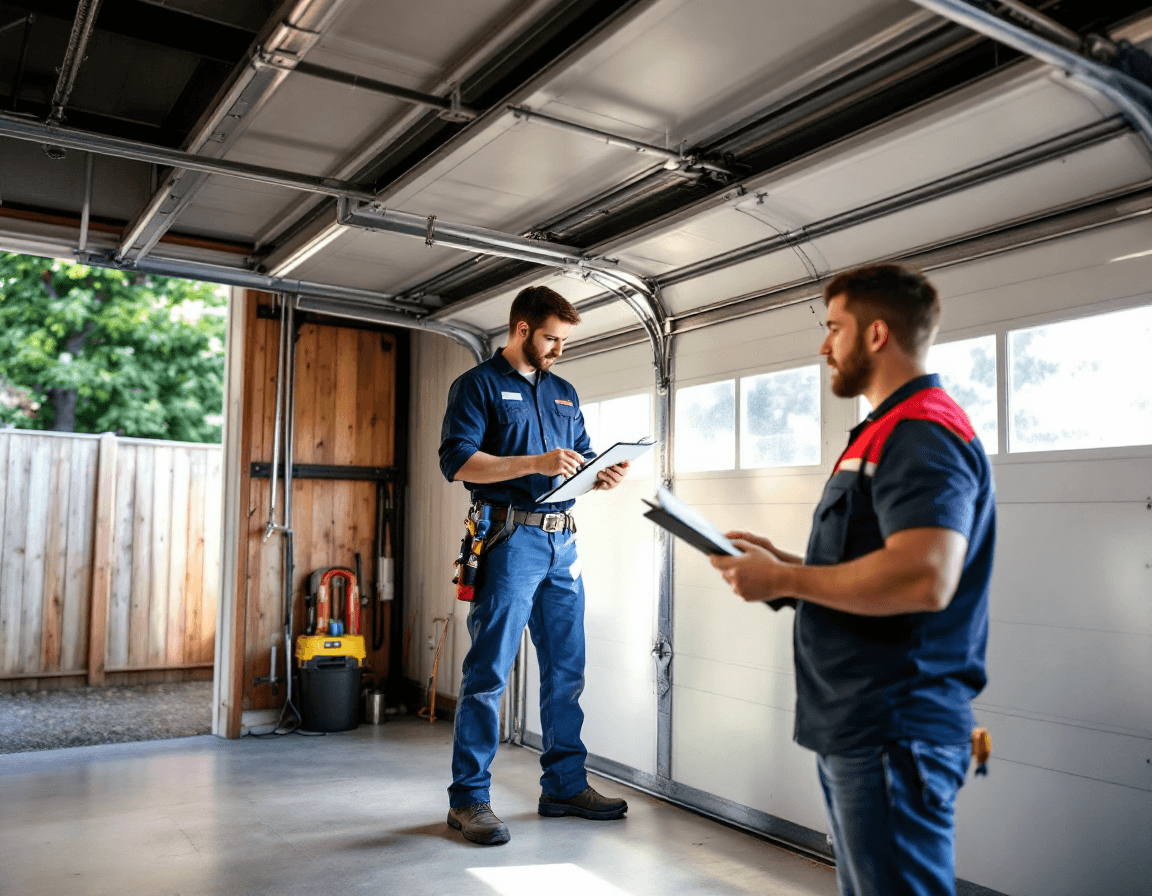
Garage door maintenance and tune-ups in Burien, WA are one of the most practical investments a homeowner can make, and they are often overlooked until something goes wrong. A door that has been running for years without attention tends to get louder, heavier, and slower long before it fails outright. Burien homes sit in a part of King County where the weather, the salt air off Puget Sound, and the rhythm of wet winters all put steady wear on the moving parts that make your door work. A planned tune-up catches that wear early, when the fix is small and inexpensive.
This page explains what a full multi-point tune-up includes, why our local climate affects your hardware differently than it would in drier regions, and how to tell when your door is asking for attention. We also cover the safety boundaries that every homeowner should understand, because some garage door work belongs in the hands of a licensed professional. Whether you have lived in your home near Three Tree Point for decades or you closed on a house in Olde Burien last month, the goal is the same: a door that opens smoothly, closes securely, and gives you no surprises.
Throughout this guide you will find specifics that matter in Burien, from the marine humidity that rolls in off the water to the mix of older and newer garage builds across neighborhoods like Gregory Heights. If you are ready to book, the team at Seattle Garage Door Fix can be reached at (888) 799-3819. Read on for a clear picture of what happens during a tune-up and how to get the most value from it.
What a Burien Tune-Up Actually Covers, Step by Step
A full multi-point tune-up is a structured inspection rather than a quick glance at the door. The technician starts by checking the overall condition of the door panels, the tracks, the rollers, and the hinges, looking for bends, cracks, loose fasteners, and uneven gaps along the edges. From there the work moves to the springs, cables, and drums, which are inspected visually only, since adjusting or replacing them is a job for a licensed pro. The opener is then evaluated for travel limits, force settings, and signs of strain under load.
Every visit follows a checklist, and the details matter because small problems hide in plain sight. Typical items include confirming the door closes fully against the weatherstripping, checking that the bottom seal is intact, and verifying that the photo-eye sensors near the floor are aligned and clean. Technicians also look at the center bearing, the end bearing plates, and the lock mechanism so that the door stays secure when closed. Each item is either passed, adjusted, or flagged for a follow-up recommendation.
- Visual inspection of panels, sections, hinges, and track alignment
- Roller condition, track cleanliness, and straightness check
- Spring and cable visual review (no adjustments by homeowners or non-licensed staff)
- Balance test and opener force verification
- Lubrication of moving parts using the correct product for each component
- Photo-eye sensor alignment and safety reversal confirmation
- Weatherstripping and bottom seal condition review
- A written summary of findings with clear next steps
The full multi-point tune-up is priced between $89 and $149, depending on the door type, opener model, and how many components need attention during the visit. That range reflects the time required to work through every item properly, not a bundled upsell. If the technician finds a worn part during the inspection, you will be told what it is, why it matters, and what it would cost to address it, so you can decide what fits your budget and timeline.
Why Puget Sound Air Wears Down Hardware Faster Than You Think
Burien's position close to Puget Sound means the air carries more moisture and, in many spots, more salt than inland areas farther from the water. Metal parts such as hinges, roller shafts, torsion components, and track brackets are particularly vulnerable to this slow chemical attack. Surface rust can start on exposed steel hardware, and once it forms it works its way into bearings and joints, making them stiffer and noisier with each season. The effect is gradual, which is exactly why it often goes unnoticed until the door begins to drag.
Our wet winters add a second layer of stress. Repeated soaking and drying cycles cause wood panels to swell and shrink, affect the adhesives used in composite and insulated doors, and encourage mildew along the bottom edge and the lower tracks. Moisture that sits in tracks also draws grit and debris, which then grinds against rollers every time the door moves. Even in a garage that feels dry to the touch, the cumulative humidity over a winter can change how the door sits in its opening.
Dry summer stretches bring their own challenges. Heat expands metal and can loosen fasteners that were tight in the cool spring, while the same sun can dry out rubber weatherstripping and make it brittle. Lubricants that worked well in the wet season can thicken or wash away, leaving metal-on-metal contact where there should be a smooth film. A tune-up timed to shift between seasons gives the technician a chance to correct these changes before they turn into bigger issues.
Reading the Noises Your Door Is Trying to Tell You
Sound is one of the most reliable early warnings a garage door can give, and learning to interpret it can save you a frustrating breakdown. A door that is getting noisier over time usually has a specific cause, and each cause points toward a different fix. A grinding or squeaking that appears during the opening cycle often means dry or dirty rollers, while a rhythmic clicking may indicate a loose hinge or a track that has shifted slightly out of level. Knowing the difference helps you describe the problem clearly when you call.
Some sounds deserve prompt attention rather than a wait-and-see approach. A loud bang or snap, particularly from the top of the door, can signal a spring or cable problem, and that should be treated as a safety matter. Vibration that you can feel through the floor, or a door that jerks or stops partway through its travel, also warrants a professional look before it gets worse. Sounds that come and go with the temperature or the weather are often connected to the moisture and expansion issues we see across Western Washington.
Keep a simple note of when you hear a new noise, what the weather was like, and whether the sound happens when opening, closing, or both. This record gives the technician useful clues and often shortens the diagnostic time. A tune-up that addresses lubrication, roller condition, and track alignment resolves many of these noises at once, which is why homeowners who have been living with an irritating squeak are often surprised by how quiet their door becomes afterward.
Balance Testing: The Quick Check That Protects Your Opener
A properly balanced door sits in a state where it stays put when you lift it partway and release it, without drifting up or sinking down. This is more important than many homeowners realize, because a door that is out of balance forces the opener to do extra work to lift or lower it. Over time that extra load strains the opener motor, gearbox, and drive belt or chain, shortening their useful life and sometimes causing the opener to stop mid-cycle. Balance is also a convenience issue, since an unbalanced door can feel heavy and sluggish even when the opener is working correctly.
The balance test is simple to perform as part of a tune-up. The technician disconnects the opener, lifts the door by hand to a midpoint height, and watches whether it holds steady. If the door drifts, the technician notes the direction and degree of imbalance and checks the springs and related components. Because adjusting spring tension is a task that carries real risk of injury, that adjustment must be done by a licensed professional with the proper tools and training.
Homeowners can perform a rough version of this check safely in a few moments, which is a useful habit between visits. With the door fully closed, disconnect the opener using the emergency release cord, then lift the door by hand a foot or two and let go. A balanced door will stay where you leave it, while a door that slides down or rises quickly needs professional service. If the door feels unusually heavy, or if you notice it resisting the lift in one spot, schedule a tune-up rather than attempting any adjustment yourself.
Lubrication Without the Guesswork
Lubrication sounds like the simplest part of a tune-up, yet it is where many well-meaning DIY efforts go wrong. The wrong product can attract dirt, gum up rollers, or break down the rubber and nylon components that the door relies on. Spraying a general-purpose penetrating oil onto every surface may quiet a squeak for a week, but it can also leave a sticky residue that collects debris and makes the noise worse over time. A professional applies the correct lubricant to each specific component.
During a tune-up, the technician typically lubricates the rollers and their bearings, the hinge pivot points, the lock mechanism, and the springs and cable surfaces where appropriate. Track surfaces are generally cleaned rather than heavily oiled, because excess lubricant on the track can attract grit that then grinds against the rollers. The opener's chain or screw drive also receives attention, since a dry chain or drive screw can create a loud grinding sound and place uneven stress on the motor.
Lubrication frequency depends on how the door is used and what the weather has been doing. A household that opens its door several times a day through a damp Burien winter will benefit from a more regular schedule than one that uses the garage only occasionally. The key principle is to keep moving parts coated with the right product without over-applying it. A tune-up gives you a clean baseline, and a short note from the technician about what to watch for can help you keep things running well between visits.
Opener Safety Testing and the Reversal Test
Every modern garage door opener is required to have safety features that detect obstructions and reverse the door, and a tune-up includes verifying that these features work as designed. The most important of these is the automatic reversal system, which should stop and reverse the door when it contacts an object. A technician tests this function on the floor, typically with a test object placed in the door's path, to confirm that the door reverses promptly. The photo-eye sensors near the floor are also checked to make sure they are aligned, clean, and properly wired.
The reversal test matters because a door that does not reverse can cause serious injury, especially to children, pets, or anyone who is in the wrong place when the door closes. Force settings and travel limits must be set correctly so that the door closes firmly without applying excessive pressure. If the opener has been installed for many years, its force settings may have drifted, or the sensors may have become misaligned after a bump from a vehicle or a stored item. A tune-up catches these changes before they become a hazard.
Homeowners can perform a basic safety check between visits. Place a piece of wood or a similar object on the floor in the path of the closing door and confirm that the door reverses when it touches the object. Also check that the sensor lights are steady and that nothing is blocking the beam. If the door fails to reverse, or if the opener seems unusually forceful, stop using the door and call a professional right away. This simple habit takes less than a minute and can prevent a serious accident.
A Fresh Look for New Homeowners in Olde Burien and Gregory Heights
Buying a home is a busy season, and the garage door often ends up at the bottom of the inspection list. Many buyers assume that because the door opens and closes, it must be in good shape. In reality, a door that was never serviced by the previous owner may be carrying years of unaddressed wear, and the opener may have been running hard under an unbalanced load. For those who have just closed on a home in Olde Burien or a house in the Gregory Heights area, a tune-up is a smart way to establish a clear baseline.
Older homes in the historic core of Olde Burien sometimes have garage doors that were installed decades ago, with hardware that has been patched more than once. Newer construction in parts of Gregory Heights may have steel or insulated doors paired with modern openers that have specific maintenance schedules. In both cases, a technician who walks through the full checklist can tell you what the door's condition really is, which parts are near the end of their life, and which items can wait. That information is valuable when you are planning your first year of home maintenance.
A new-homeowner tune-up also gives you a chance to learn how the door works. Ask the technician to show you the emergency release, explain the opener's force and travel settings, and point out any sensors you should keep clean. Request a written summary of what was found and what was done. Having that record makes it easier to track the door's condition over time and to share accurate details with a future service provider or a home inspector later on.
Seasonal Timing for Damp Winters and Dry Summers
Timing a tune-up around the seasons helps the work last longer. Many homeowners in Burien find that late summer or early fall is a good window, since the door has come through the dry months and the technician can address any heat-related loosening before the wet season sets in. A fall tune-up also means lubricants are fresh going into the period of heaviest moisture, which helps protect rollers, hinges, and bearings from the damp air and winter grit.
Spring is another practical time, especially after the wettest weeks have passed and before the summer heat arrives. Winter moisture often reveals itself in spring as swollen panels, stiff hinges, or a bottom seal that has lost its shape. A spring visit lets the technician correct those issues while the door is still settling into its seasonal rhythm. Some households schedule two visits per year, one in each of these windows, to keep the door in steady condition.
The right schedule depends on how much you use the garage and whether you have noticed changes in the door's behavior. If the door has not been serviced in more than a year, scheduling a tune-up soon makes sense regardless of the season. A visit in the middle of a wet February is still worthwhile when the door is noisy or heavy, since the technician can address the immediate issue and recommend timing for the next visit. Our team can help you choose a schedule that fits your home and your routine.
Between-Visit Habits That Extend Your Door's Life
A tune-up sets the foundation, but small habits between visits keep the door performing well. Sweep the garage floor and the bottom of the tracks regularly to prevent grit from building up, especially during the damp months when dirt clings more easily. Keep the photo-eye sensors clean with a soft, dry cloth, and avoid storing items where they might bump or block the beam. Trim vegetation that touches the door or its hardware, since leaves and branches can trap moisture against the panels.
Watch the weatherstripping along the bottom and sides of the door. A cracked or compressed seal lets in water, drafts, and pests, and it can also cause the door to hit the floor unevenly. Replacing a worn seal is a modest expense that protects the interior of the garage and reduces the strain on the opener. If you notice daylight around the edges when the door is closed, mention it at your next visit so the technician can check the alignment as well.
- Sweep tracks and floor edges monthly during wet months
- Wipe photo-eye lenses clean and confirm sensor lights are steady
- Run the emergency release and balance check once per quarter
- Keep vehicles and stored items clear of the door path
- Inspect weatherstripping for cracks, gaps, or flattened sections
- Note any new sounds, jerks, or drifting, and schedule service promptly
Avoid adjusting springs, cables, or the tension system yourself, no matter how simple it looks. These parts store significant energy, and mistakes can cause serious injury. Your job between visits is to observe, clean, and report, while the adjustments belong to a licensed technician.
Where Licensed Pros Must Take Over
Garage door springs and cables are among the most dangerous components in any home. Torsion springs and extension springs hold a great deal of tension, and a spring that fails or is adjusted incorrectly can release that energy suddenly. Cables that fray or slip off their drums can also cause the door to drop unexpectedly. These parts should never be removed, wound, or replaced by a homeowner, and they should only be serviced by a licensed, bonded, and insured professional who has the proper training and equipment.
A tune-up includes visual inspection of these components, which is a safe and valuable part of the process. The technician looks for signs of wear, such as gaps between spring coils, frayed cable strands, or rust on the spring cone, and recommends repair or replacement if needed. Any work that involves changing tension, replacing a spring, or repairing a cable drum is done by a licensed pro as a separate job. Be cautious of anyone who offers to perform spring work without proper licensing, insurance, or clear documentation.
If you hear a loud bang from the garage, see a cable hanging loose, or notice the door sitting crooked in its track, stop using the door and keep people and pets clear. Disconnect the opener if it is safe to do so, and call a professional for service. These situations are not a good place for a do-it-yourself fix, and waiting can turn a manageable repair into a more costly one.
What Your Tune-Up Investment Looks Like
For most homeowners, a full multi-point tune-up falls in the range of $89 to $149. The final figure depends on the door type, the number of components that need lubrication, the age and model of the opener, and whether the technician needs extra time to address a specific issue. Doors with more complex hardware or heavier insulated panels may take longer to balance and inspect, which is reflected in the scope of work rather than in hidden charges.
It helps to compare that cost with the expense of a breakdown. A door that fails on a cold morning can leave a car stuck inside the garage, and an emergency call usually costs more than a scheduled visit, especially when the repair involves spring or cable work that must be done right away. Regular service also protects the opener, which is one of the more costly components to replace. Spreading small maintenance costs over the life of the door is often the more affordable path.
When you book, ask what is included in your visit and request a written summary at the end. A clear report lets you see what was checked, what was adjusted, and what the technician recommends for the coming months. If something needs a separate repair, you will receive a straightforward explanation and a quote before any additional work begins. To schedule a full multi-point tune-up for your Burien home, call Seattle Garage Door Fix at (888) 799-3819 and let our team help you keep your door quiet, balanced, and safe through every Western Washington season.