
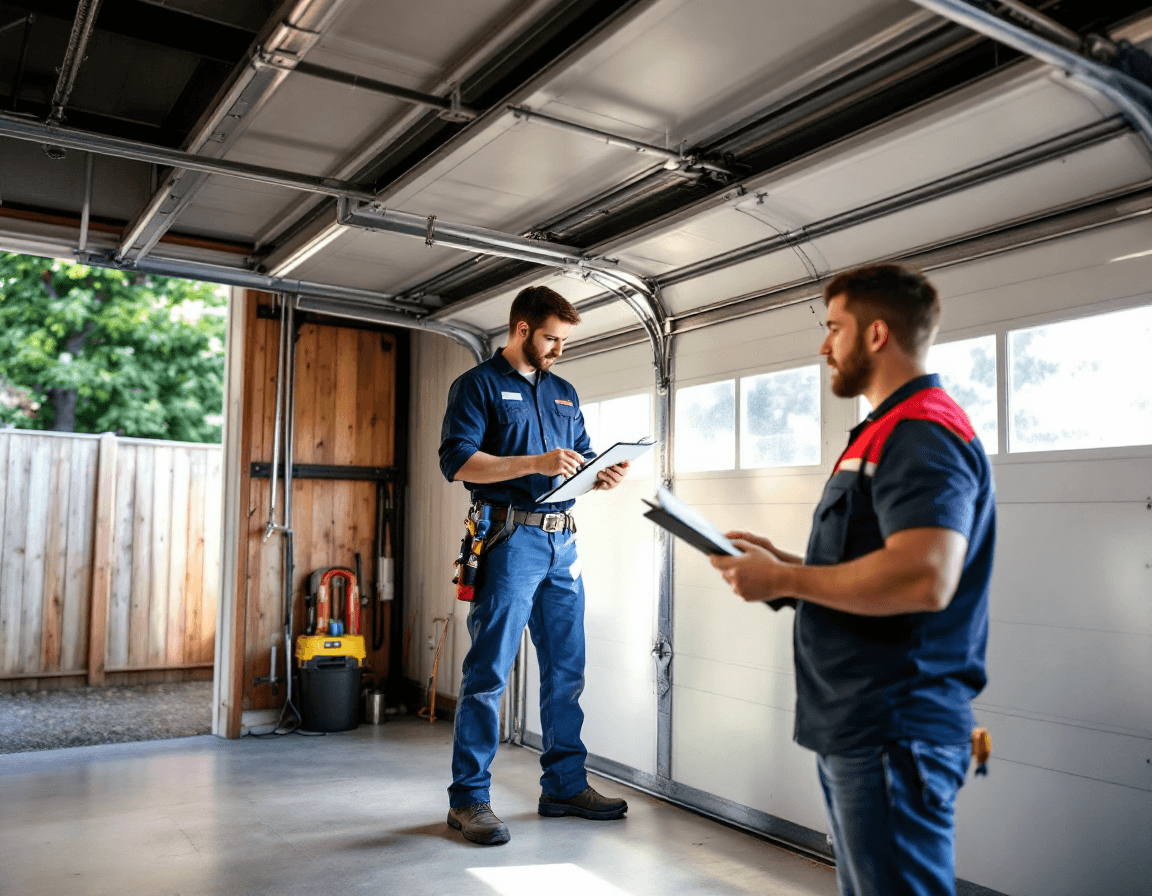
Garage Door Maintenance & Tune-Ups in Normandy Park, WA is one of the most practical things a homeowner can schedule for a door that otherwise gets ignored until it stops working. Normandy Park sits on the Puget Sound shoreline in south King County, and the combination of damp winters, salty marine air, and tree debris from the surrounding neighborhoods puts real wear on the steel, springs, rollers, and openers that make a garage door move. A door that looks fine from the driveway can still be drifting out of balance or quietly losing lubrication on its rollers and hinges.
Most garage doors in Normandy Park give plenty of warning before they fail. The door may grow louder over a season, take a little longer to open, or start to feel heavier on one side than the other. Those early changes are easy to miss when you use the door several times a day, but they are exactly what a routine tune-up is designed to catch. Addressing a small problem in an afternoon costs far less than replacing a cracked roller track or a worn opener motor after the door has jammed halfway open.
This page explains what a professional maintenance visit involves, why the Pacific Northwest climate affects garage doors differently than drier regions, how to recognize the warning signs that suggest your door is due for attention, and what to expect from a full multi-point tune-up. Our technicians serve homeowners across Normandy Park and the surrounding area, including the 98166 ZIP code, and we are licensed, bonded, and insured. Spring and cable work carries serious risk, so we cover those topics here mainly to help you understand what we inspect and why certain jobs should always stay with a licensed professional.
Why Puget Sound Air Is Hard on Garage Door Hardware
Normandy Park's position near the water means the air carries more salt and moisture than you would find a few miles inland. Salt particles settle on exposed metal, and when that metal is also damp from winter rain or morning fog, corrosion begins in places you may never look. Hinges, bottom brackets, end caps, and the steel tracks along the sides of the door are the first to show surface rust, and once the protective coating breaks down, the metal can flake and bind.
Rain and fog are not the only moisture sources. Many garages in the area have doors that sit close to the ground with limited airflow, so condensation can linger on the lower panels long after a storm has passed. Over several years, that cycle of wet and dry weakens paint, loosens fasteners, and encourages rust to creep into the rollers. Homes with covered entries or shaded driveways can stay damp for even longer stretches during the rainy months.
Summers in the region are comparatively mild and dry, which means the door is not usually stressed by heat the way it might be in a desert climate. That mild season is actually a good time for maintenance because the temperature is stable and the door is easier to inspect and lubricate without rushing. Scheduling a tune-up in late spring or early fall often helps the work go smoothly and gives the lubricant time to settle before the wet months return.
What a Multi-Point Safety and Maintenance Check Covers
A full multi-point tune-up is a systematic walk through the parts of the door and opener that work together to lift, lower, and stop the door safely. The technician begins by visually inspecting the panels, sections, and weatherstripping for cracks, dents, or gaps that let water and drafts into the garage. The tracks are checked for alignment, loose mounting bolts, and any spot where a roller may have worn a groove or pulled away from the track wall.
The next stage focuses on moving parts. Rollers are examined for flat spots, cracks in the nylon or steel housings, and bearing wear, and hinges are checked for loose fasteners and bent brackets. The springs and cables are inspected visually for obvious wear, but any adjustment, tensioning, or replacement of torsion springs and cables is a job for a licensed technician with the proper tools and training. Our role during a tune-up is to identify that work and explain it clearly, not to attempt it on the spot as a homeowner task.
Finally, the opener and its safety systems are tested. This includes confirming that the door reverses when it contacts an obstacle, checking the photo-eye sensors near the floor, reviewing the travel limits, and making sure the emergency release cord still works. Here is a quick list of items typically covered during the visit:
- Panel, section, and weatherstripping condition, including gaps that let in water or drafts
- Track alignment, bolt tightness, and any spots where rollers have worn or bound
- Roller condition, hinge tightness, and bottom bracket security
- Visual inspection of springs, cables, and drums (adjustment reserved for licensed technicians)
- Opener mounting, belt or chain tension, and travel limit settings
- Photo-eye alignment, auto-reverse function, and emergency release operation
Reading the Noises Your Door Is Trying to Tell You
Garage doors are rarely silent, but a noticeable change in sound is one of the most reliable early signs that something needs attention. A rhythmic squeak that appears on the first lift of the morning often points to dry rollers or hinges that have lost their lubricant. A grinding or scraping noise, especially one that changes pitch along the track, may suggest that a roller is out of line, a track bolt has loosened, or debris has collected at the bottom of the track.
A sharp bang or clunk at the top or bottom of travel can indicate that the door is hitting its stops harder than it should, which may mean the limit settings have drifted or the door is slightly out of balance. Rattling along the panels is often a loose bracket or a worn hinge pin rather than a major mechanical fault, but it deserves attention before the rattle becomes a crack. Over the course of a year, many homeowners in the area describe the gradual change as the door becoming "louder" rather than suddenly broken, and that gradual change is exactly what routine maintenance addresses.
Because the noise often builds slowly, it can help to take a moment each season to listen to the door as you open and close it. Notice whether the sound is steady, whether it appears only at certain points of travel, and whether it sounds different in cold, damp weather. Describing those details to a technician during scheduling makes it easier to plan the visit and to bring the right parts.
The Balance Test: A Simple Check Every Homeowner Should Understand
A properly balanced garage door should stay roughly in place when you lift it by hand partway up, without the opener engaged. If the door drops quickly, rises on its own, or feels much heavier on one side, the springs may be out of tune with the weight of the panels, or a cable may be slipping on its drum. Balance problems also put extra strain on the opener, which can make it run hot, slow down, or hesitate before reversing.
Balance testing during a tune-up is done with the opener disconnected and the door operated by hand, using controlled movements and proper technique. Our technicians evaluate how the door responds at several points of travel and compare the result to the expected behavior for that door's spring system. Homeowners are welcome to observe, but a door that is clearly off balance should be left alone until a licensed technician can inspect the springs and cables.
It is worth stressing that spring tension is one of the most dangerous parts of any garage door. Torsion springs store large amounts of energy, and a single mistake during adjustment can cause serious injury. For that reason, our guidance to homeowners is simple: if you notice a balance problem, schedule a professional visit instead of attempting repairs yourself, and keep children and pets clear of the door while you wait.
Opener Safety Testing Before a Surprise Breakdown
The opener is more than a motor that moves the door. It also contains the safety features that stop and reverse the door when something is in the way, and those features need periodic verification. During a tune-up, the technician tests whether the door reverses when it contacts a resistance on the floor, confirms that the photo-eye sensors are aligned and free of obstruction, and checks that the force and travel settings are appropriate for the door's current condition.
Photo eyes are a common source of problems in Normandy Park garages. Sun glare through a garage window, spider webs, a dusty lens, or a bumped bracket can cause the sensors to misread, leaving the door stuck open or refusing to close. Our technicians clean the lenses, realign the brackets, and test the sensors with an object to confirm they respond correctly. Because these checks are simple but important, many homeowners appreciate having them done before a seasonal change in light or a busy travel period.
If your opener is making a strained sound, running slower than usual, or stopping partway through its cycle, the safety testing will often reveal the cause. The problem may be a worn trolley, a stretched belt or chain, a failing capacitor in the motor, or a door that has become heavier than the opener was rated to handle. Catching those issues early keeps the opener from overheating and helps avoid the kind of sudden failure that leaves a family stuck in the garage on a cold morning.
Lubrication: Where Oil Helps and Where It Makes Things Worse
Lubrication is one of the simplest maintenance steps, but it is also one of the most often done incorrectly. The goal is to reduce friction at the points where metal meets metal, such as roller bearings, hinge pivots, and the opener's chain or screw drive, using a lubricant suited to garage door components. Heavy grease can attract dirt and create a sticky film that slows the door, while the wrong type of oil can drip onto the floor or the door panels and leave stains.
In the damp climate of the Pacific Northwest, the choice of lubricant matters. A product that resists moisture and stays in place is more useful than a thin spray that evaporates or washes off after a few rainy weeks. During a professional tune-up, the technician cleans old residue from tracks and rollers before applying lubricant, which keeps the new product from trapping grit. Tracks themselves are generally left dry, since lubricant on the track surface can collect dust and cause rollers to slip.
Homeowners sometimes ask whether they can handle lubrication between visits. A light application to hinges and roller bearings is generally reasonable, but spraying the springs, which can cause slippage and corrosion, is not recommended. If you are unsure which points should be lubricated on your specific door model, a technician can show you during the tune-up so you know exactly where to focus your efforts.
Signs That Your Opener Is Working Too Hard
An opener that is working too hard usually announces itself before it fails. The motor may run warm to the touch after a few cycles, the door may move at an uneven speed, or the unit may pause mid-travel before continuing. Some openers hum loudly during each operation, which can be a sign of a worn gear set or a belt that has stretched beyond its useful life. Any of these changes deserve a closer look, particularly if the door has also become heavier to lift by hand.
Frequent use compounds the problem. Households with several drivers, home offices that open the garage several times a day, or properties with long driveways may put the opener through far more cycles than a single-car home. Over time, that repeated load can wear the drive components faster than expected. A tune-up that checks the opener's condition alongside the door's balance gives a clearer picture of whether the entire system is still working as a matched set.
It is also important to recognize when the opener should not be the first suspect. An opener that strains because the door is off balance will not be fixed by replacing the opener alone. The reverse is also true: a healthy door can still appear to have a bad opener if the photo eyes are blocked or the travel limits have drifted. Our technicians look at both sides of the system so that the diagnosis addresses the actual cause rather than the most visible symptom.
Planning Maintenance Around the Seasons in Normandy Park
Because the weather in Normandy Park shifts noticeably between the wet winter months and the drier summer season, the timing of a tune-up can affect how well it lasts. Many homeowners find that late spring is a convenient time for a full visit, since the door has been through the wettest part of the year and any corrosion or loosened hardware is easy to spot. Early fall is another good window, giving the technician a chance to prepare the door for the rainy season before moisture becomes a daily factor.
A simple annual plan works well for most homes. Between professional visits, it helps to keep the garage floor clear of leaves and debris that collect near the track and bottom seal, to rinse salt residue from exterior panels occasionally, and to watch for changes in sound or movement. Here is a practical calendar many homeowners find useful:
- Late spring: full multi-point tune-up, lubrication, balance test, and opener safety check
- Summer: visual check of weatherstripping, hinges, and tracks; clear debris from the threshold
- Early fall: test photo eyes and auto-reverse before the wettest months; check door seal for gaps
- Winter: listen for new noises or slow operation; avoid running the door manually when it feels stuck or heavy
Following a seasonal plan like this does not replace professional inspection, but it helps you notice changes early and gives your technician more useful information when you schedule the next visit.
When a Recent Home Purchase Calls for an Early Check
Buying a home in Normandy Park is a good moment to have the garage door evaluated, even if the seller says the door works fine. Previous owners may have skipped maintenance for years, adjusted components in ways that are hard to see, or replaced parts with mismatched hardware. A professional inspection gives you a clear baseline of the door's condition before you start using it daily, and it helps you plan any work that may be needed in the first year of ownership.
Many new owners also want to understand the opener's age, the type of door installed, and whether the safety features are functioning. A tune-up visit can answer those questions in practical terms and can flag items that might be worth budgeting for, such as worn rollers, aging cables, or a motor that is running hot. Having that information early also makes it easier to decide whether to keep the existing system, schedule a repair, or consider a replacement later.
If the home was recently inspected by a general home inspector, a garage door check is still worth scheduling separately. General inspections often note the door's presence and basic operation but may not include detailed balance testing or opener safety verification. A focused visit from a garage door technician gives you a more specific picture of the door's mechanical health.
What to Expect From Your Tune-Up Visit and Pricing
Our full multi-point tune-up is priced between $89 and $149, depending on the size and type of door, the opener model, and the amount of work the technician finds during the visit. The base service covers the multi-point safety inspection, lubrication of appropriate points, balance testing, and opener safety testing described above. The technician will explain what was checked, what looked good, and what deserves attention, so you can decide how to proceed with any recommended work.
During the visit, the technician will typically ask about how often the door is used, whether anyone has noticed new sounds or slow movement, and whether the door has been serviced recently. Answering those questions honestly helps the technician prioritize the inspection. You are welcome to watch the process, ask questions, and request explanations of any part that looks worn, though we ask that you keep clear of the door during balance testing and opener operation.
If the inspection reveals work that requires spring replacement, cable repair, or a larger component swap, the technician will explain the options and provide the information needed to make an informed decision. Spring and cable work should always be performed by a licensed, bonded, and insured professional, and we recommend scheduling that work separately rather than attempting it yourself. We believe a clear explanation and a clear plan are the most useful things a maintenance visit can provide.
Keeping your Normandy Park garage door in good working order is much easier when you address small problems early, especially in a climate that works steadily on metal and moving parts. If your door has gotten louder, feels heavy or off balance, is straining the opener, or has not been serviced in over a year, now is a good time to schedule a tune-up. Call Seattle Garage Door Fix at (888) 799-3819 to book a multi-point maintenance visit and get your door checked by a licensed technician who knows the local conditions.